Discovering new horizons with most analysis in business

Key takeaways
MOST turns strategy into clear, aligned execution across an organisation.
- Mission sets the shared purpose and direction, so decisions stay aligned as conditions change.
- Objectives should be SMART to enable prioritisation, measurement, and realistic resource allocation.
- Strategy defines how objectives will be achieved, using internal capability and external context.
- Tactics convert strategy into accountable tasks with timelines and owners, and must be reviewed regularly.
- SWOT and PESTLE strengthen MOST by surfacing internal realities and external forces before planning actions.
Introduction to MOST analysis
What is MOST analysis?
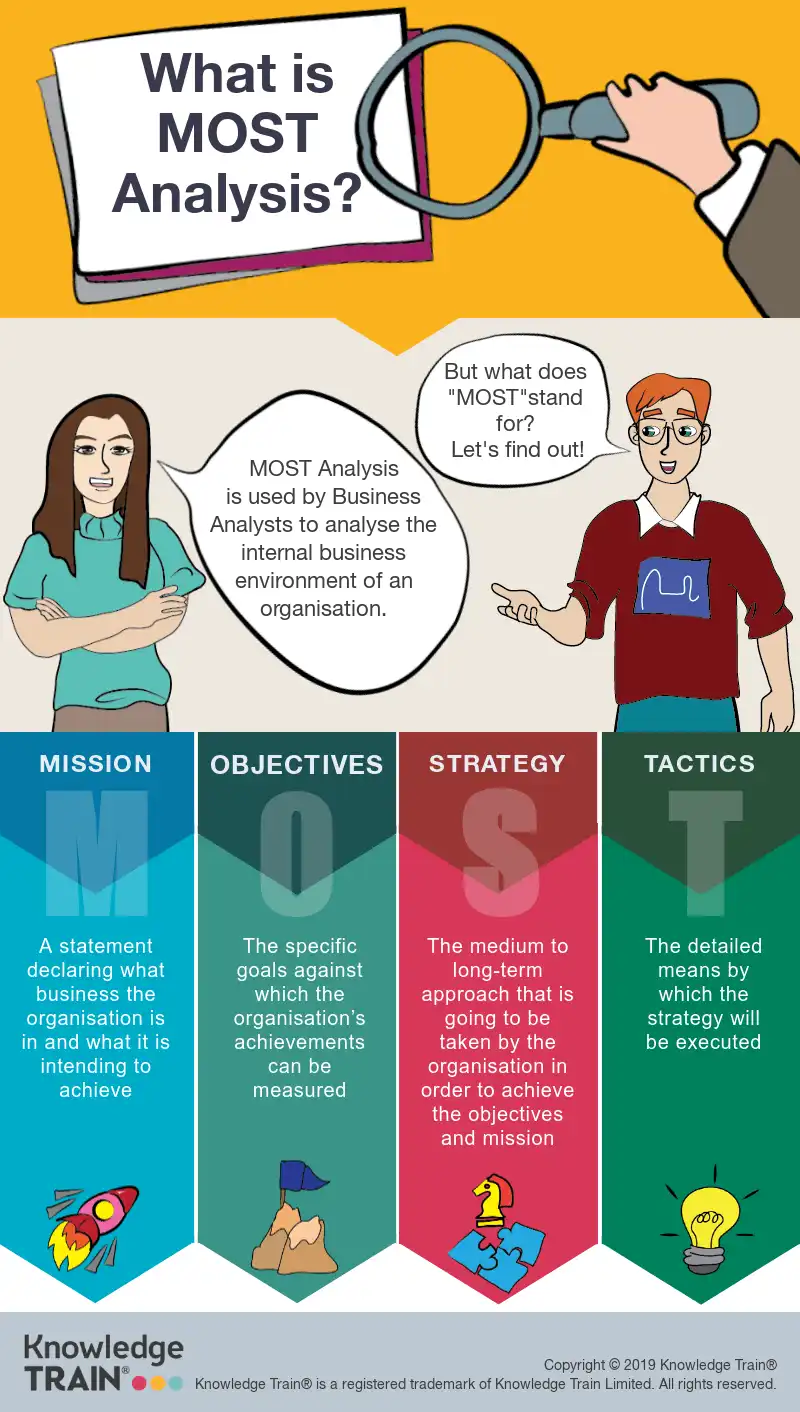
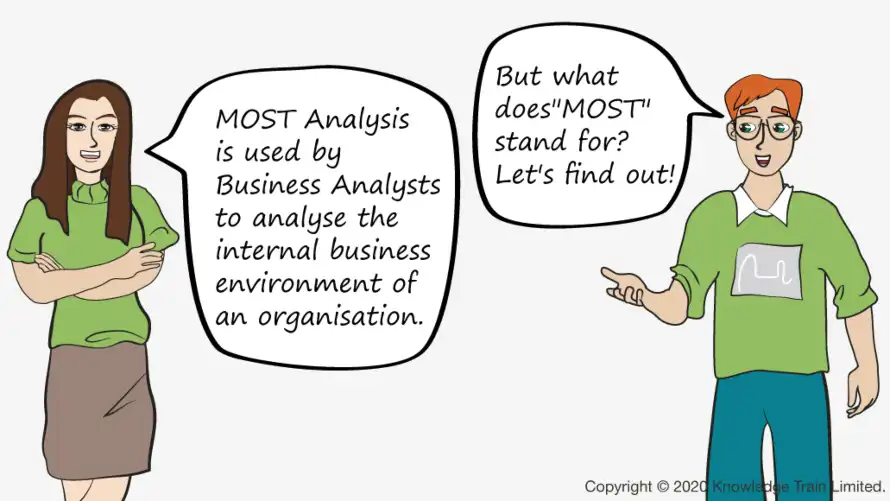
MOST analysis is a strategic framework designed to enhance organisational planning and execution. It stands for Mission, Objectives, Strategy, and Tactics. Each component serves a distinct purpose:
- Mission: Defines the core purpose and direction of the organisation.
- Objectives: Establishes specific, measurable goals aligned with the mission.
- Strategy: Outlines the approach to achieving the objectives.
- Tactics: Details the practical steps necessary to implement the strategy.
By systematically addressing each of these elements, MOST analysis provides a comprehensive overview of an organisation’s strategic roadmap.
Importance of MOST analysis in business
MOST analysis plays a crucial role in effective strategic planning and decision-making. It ensures that all activities within an organisation are aligned with its overarching mission. This alignment helps in maintaining focus amidst changing business landscapes. The framework encourages businesses to set clear, measurable objectives. This clarity facilitates better resource allocation and prioritisation of efforts.
Moreover, MOST analysis aids in developing cohesive strategies. These strategies are pivotal in guiding organisations toward their goals, ensuring that every action taken contributes to the larger mission. The tactical component of MOST analysis transforms strategies into actionable plans. These plans are essential for the day-to-day operations that drive progress.
MOST analysis provides a structured approach to strategic planning that helps stakeholders understand their roles clearly. This understanding supports an organisational culture where teams are aligned with company goals.
In summary, MOST analysis is indispensable for businesses aiming to optimise their strategic planning processes. By focusing on mission, objectives, strategy, and tactics, organisations can navigate challenges effectively and achieve sustained growth.
Step-by-step guide to conducting MOST analysis
Defining the mission
Identifying the mission is the foundational step in MOST analysis. A mission statement articulates the core purpose and long-term vision of the organisation. It serves as a guiding light, ensuring that all organisational activities align with its fundamental goals. To define the mission, engage key stakeholders in discussions that clarify the organisation’s values and aspirations. Ensure the mission emphasises common ground among stakeholders, facilitating broad support. The mission should be clear, concise, and reflective of the organisation’s ethos. It must resonate with both internal teams and external partners, fostering a shared understanding of the organisational direction. A well-defined mission statement not only guides strategic planning but also inspires employees and stakeholders to commit to the organisation’s goals.
Setting objectives
Once the mission is established, the next step is to set objectives. Objectives translate the mission into specific, achievable goals. They provide a framework for measuring progress and success. When setting objectives, ensure they are SMART: Specific, Measurable, Achievable, Relevant, and Time-bound. This approach guarantees clarity and focus, enabling teams to prioritise their efforts effectively. Involve various departments in this process to ensure the objectives are comprehensive and aligned with the mission. Clear objectives facilitate better coordination across teams and departments, ensuring that resources are allocated efficiently. By setting precise objectives, organisations can track their progress and make informed adjustments as needed.
Developing strategy
With objectives in place, the focus shifts to developing a strategy. Strategy formulation involves outlining the approaches and methods to achieve the set objectives. This requires a thorough analysis of internal capabilities and external market conditions. Consider factors such as competitive advantage, resource availability, and potential barriers. Strategies should be flexible enough to adapt to changing circumstances but robust enough to provide a clear path forward. Effective strategies align with the mission and objectives, ensuring that all efforts are directed towards achieving the desired outcomes. Engage cross-functional teams in strategy development to foster innovation and ensure a comprehensive perspective.
Planning tactics
The final step is planning the tactics. Tactics are the specific, actionable steps required to implement the strategies effectively. They translate strategic plans into operational actions. When planning tactics, detail the tasks, timelines, and responsibilities for each action. This level of detail ensures accountability and provides a clear roadmap for execution. Consider the resources and capabilities needed to implement these tactics successfully. Regularly review and adjust tactics as necessary to respond to evolving conditions and organisational needs. Well-planned tactics facilitate successful strategy implementation through clear direction. By breaking down strategies into manageable tasks, organisations can track progress towards their objectives effectively.
Integrating MOST analysis with other strategic tools
Complementary tools overview
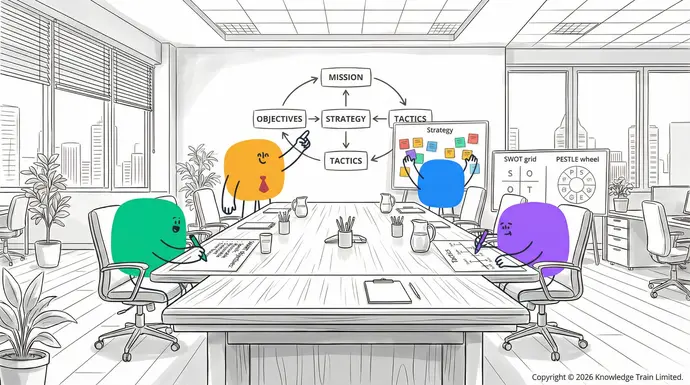
In strategic planning, tools like SWOT and PESTLE analyses are often used alongside MOST analysis to offer a comprehensive understanding. Each tool serves a unique purpose. SWOT (Strengths, Weaknesses, Opportunities, Threats) provides an assessment of internal and external factors impacting an organisation. PESTLE (Political, Economic, Social, Technological, Legal, Environmental) focuses on external influences affecting strategic decisions. When integrated with MOST analysis, these tools enhance the depth and breadth of strategic insights, creating a robust framework for effective decision-making.
Using SWOT with MOST
SWOT analysis is an excellent precursor to MOST analysis. By identifying an organisation’s strengths and weaknesses, as well as external opportunities and threats, SWOT lays the groundwork for more detailed strategic planning. This high-level overview helps organisations pinpoint areas that require attention. Once these are identified, MOST analysis can be employed to address them systematically. The mission and objectives can be aligned with the strengths and opportunities while strategies and tactics are developed to mitigate weaknesses and threats. This integration ensures that organisations not only understand their strategic position but also take actionable steps to improve it.
Combining PESTLE with MOST
PESTLE analysis complements MOST analysis by offering insights into external factors that can influence strategic decisions. Understanding these external influences is crucial for developing realistic and adaptable strategies. PESTLE analysis helps organisations identify trends and changes in the external environment that could impact their mission and objectives. When combined with MOST analysis, these insights allow organisations to tailor their strategies to fit the external context. This alignment reduces uncertainty and enhances strategic agility. By incorporating both external and internal perspectives, organisations can develop well-rounded strategies that consider all relevant factors. This comprehensive approach improves decision-making by providing greater context for strategic planning.
Best practices for effective MOST analysis
Ensuring clarity and thoroughness
Achieving clarity and thoroughness is essential for a successful MOST analysis. Start by clearly defining each component – Mission, Objectives, Strategy, and Tactics. Each element should be concise and specific, reflecting the organisation’s core goals and methods. Use precise language to prevent ambiguity and ensure every stakeholder understands the strategic plan. Regularly review the analysis to incorporate new insights and maintain its relevance. Involve diverse teams in the process to gain varied perspectives, which enhances completeness. This collaborative approach ensures that the analysis is comprehensive and considers all angles. Document each step meticulously, providing a clear reference for future evaluations. A well-documented analysis not only serves as a guide but also as a learning tool for future strategic planning efforts. This structured approach ensures that the analysis effectively guides the organisation’s strategic direction, aligning with the overall mission and enhancing operational efficiency.
Common pitfalls to avoid
Several pitfalls can undermine the effectiveness of MOST analysis. One common mistake is developing vague or overly broad mission statements that lack focus. Ensure the mission is specific and aligned with the organisation’s values. This alignment is crucial for maintaining direction and motivation among team members. Another error is setting unrealistic objectives that are not achievable with available resources. Always ensure objectives are SMART (Specific, Measurable, Achievable, Relevant, and Time-bound) to facilitate realistic planning. Ignoring external influences and internal capabilities can lead to flawed strategies. Use complementary tools like SWOT and PESTLE to gain a comprehensive view and to anticipate potential challenges. Finally, avoid neglecting to review and update tactics, as static plans can become obsolete. Regularly revisiting and adjusting the analysis keeps it aligned with current conditions, ensuring that the organisation remains agile and responsive to change.
Case studies and examples
Successful MOST analyses can provide valuable lessons. For instance, a tech company used MOST to redefine its mission, focusing on innovation and sustainability. By setting clear objectives and aligning their strategies, they improved both internal processes and market positioning. Their implementation of MOST analysis helped improve their operational processes and market approach. Another example is a retail business that identified operational inefficiencies through MOST analysis. By developing targeted tactics, they streamlined operations and improved their sales performance. These examples illustrate how a well-executed MOST analysis can lead to significant improvements in organisational performance. By learning from these successes, organisations can apply best practices and avoid common pitfalls. Incorporating these lessons into future analyses ensures continuous improvement and long-term success.
FAQs
How does MOST analysis differ from SWOT?
MOST analysis focuses on aligning an organisation’s mission, objectives, strategy, and tactics to provide a detailed action plan. In contrast, SWOT analysis identifies strengths, weaknesses, opportunities, and threats, offering a high-level snapshot of an organisation’s current state. While SWOT helps in recognising areas for improvement, MOST provides a roadmap for strategic implementation, making it more action-oriented.
Can MOST analysis be applied to small businesses?
Yes, MOST analysis is particularly relevant for small businesses. It offers a structured approach to strategic planning, which is crucial for resource-constrained environments. By clearly defining mission and objectives, small businesses can focus their efforts effectively. The strategy and tactics components ensure that even limited resources are used optimally to achieve business growth and sustainability.
How often should a company perform MOST analysis?
The frequency of conducting a MOST analysis depends on the business environment and organisational needs. The frequency varies by organisation and industry context. While some organisations align it with annual strategic planning, others may review quarterly based on their market conditions and organisational needs. This regular assessment helps in adapting to new challenges and opportunities.
What industries benefit most from MOST analysis?
MOST analysis is beneficial across various industries, especially those requiring clear strategic direction, such as technology, healthcare, and retail. Industries facing constant regulatory or market changes also find MOST analysis advantageous, as it helps in maintaining alignment with organisational goals. Its versatility makes it applicable to both service and product-based sectors.
Are there any software tools to assist with MOST analysis?
Yes, several software tools can facilitate MOST analysis, offering templates and visual aids. Tools like Microsoft Visio, Creately, and Lucidchart provide features for mapping out the components of MOST analysis. These tools help in organising information visually, improving clarity and communication among stakeholders. Additionally, project management software like Trello or Asana can assist in tracking strategy implementation.
Infographic