
Key takeawaysSearch
Strong project delivery comes from clear lifecycle control, the right framework, and disciplined communication.
- Project management guides a temporary endeavour through initiating, planning, executing, monitoring and controlling, and closing.
- Match methodology to context: Agile suits changing needs, while Waterfall and PRINCE2 fit defined scope and governance.
- Clear roles, especially sponsor, stakeholders, and project manager, reduce conflict and speed decisions.
- Use practical tools like Gantt charts, critical path, and software dashboards to manage time, cost, and risk.
- Courses and certifications build leadership, communication, and analytical skills that improve career prospects and delivery outcomes.United Kingdom
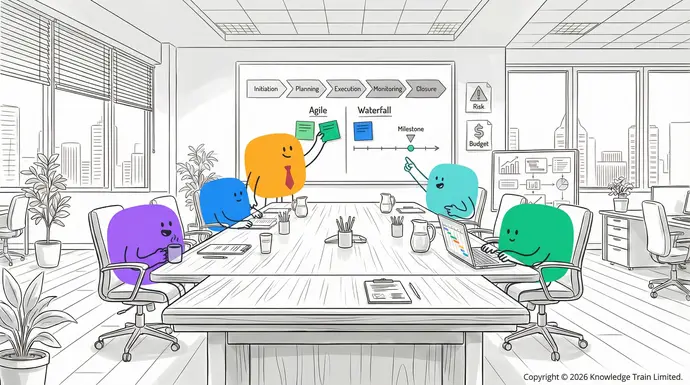
- business case , and identifying stakeholders.
- Planning : Establishing the scope, objectives, detailed schedule, risk management plan, budget, deliverables, and resource allocation.
- Executing : Coordinating people and resources, as well as meeting established milestones and deliverables.
- Monitoring and controlling : Tracking, reviewing, and regulating progress and performance, managing changes, and ensuring project stays on schedule and within scope.
- Closing : Finalising all activities, handing over deliverables to the user/customer, releasing resources, and capturing Copied!lessons learnedKey takeaways.Pick tools based on how your team works today, and how it needs to work tomorrow.
Project management methodologies & frameworksMatch core features to your workflow, including tasks, scheduling, resource allocation, reporting, and budgeting.
Multiple methodologies and models structure how Choose cloud or on-premise based on security, compliance, cost, and the need for offline access.projectsPrioritise usability and integrations so the tool fits your existing stack and gets adopted quickly. are managed:Plan implementation with a pilot, clean data migration, role-based training, and phased rollout for scale.
- Agile methodologyTrack ROI using adoption, time saved, on-time delivery, resource utilisation, and client satisfaction.: Expect more AI, automation, analytics, and remote-first collaboration features in 2025 tools.Agile is an iterative, flexible approach emphasising collaboration, adaptability and rapid delivery; commonly used in software development and rapidly changing environments. Popular Agile frameworks such as Scrum are used by teams to deliver the products specified by the customer.Contents
- Waterfall model : A sequential, linear process suited for projects with clear, fixed requirements, such as construction and manufacturing.
- Lean project managementContents: Minimises waste and maximises value; ideal for manufacturing, service improvement, and efficiency-focused projects.
- Project Management Body of Knowledge (PMBOK)Introduction: A set of standard terminology and guidelines from the Project Management InstituteUnderstanding project management software that covers all project management processesTop project management tools for 2025.
- PRINCE2Choosing the right project management tool: A highly structured methodology focussed on business justification, clear organisation and divided into manageable stages; widely adopted by UK public sector and internationally.
Project roles and responsibilitiesImplementing project management software
Projects rely on well-defined roles and accountability:
- Project managerFuture trends in project management software: Oversees planning, execution, monitoring, control and closing; manages risks, stakeholders, schedule, and budget.
- StakeholdersCase studies and success stories: Individuals or groups affected by the project or who can impact its outcome, such as clients, suppliers, and team members.
- Project teamConclusion: Specialists responsible for delivering project tasks and deliverables.
- Project sponsorFAQs: Provides financial resources and strategic guidance.Introduction
- Project board/steering committeeProject management software: High-level governance and decision making. has become an integral part of any modern business setting. These tools offer a centralised platform for teams to plan, organise, and track their work more effectively. The landscape of project management is constantly evolving, especially as workforces continue to grow more complex and remote teams become increasingly prevalent.
Effective stakeholder management and clear team communication are essential for project success. The project manager must align interests, resolve conflicts, and support collaborative team dynamics.Efficient project management tools offer the following benefits:
Essential project management skillsStreamlined collaboration and communication
The Better task tracking and deadline managementskills required by project managersResource allocation are varied.Real-time progress tracking
| SkillImproved productivity and efficiency. | DescriptionProject management tools |
|---|---|
| Leadership help organisations optimise their workflows, eliminate bottlenecks, and complete projects on time and on budget. This guide is designed to provide you with the necessary information to help you select the right project management tools in 2025. In the following guide, we will cover the following topics: | Inspiring and guiding teams towards common goals.The basics of project management tools |
| Communication | Conveying information clearly among stakeholders and team members.The best tools to use depending on your business needs and budget |
| Risk managementKey considerations to help you make an informed decision | Identifying, analysing, and mitigating risks.Implementation and adoption best practices |
| SchedulingFuture trends that are going to take over the market. | Planning timelines and managing deadlines using tools like Gantt charts and CPM.No matter if you’re the owner of a small business, a freelancer, or part of a large-scale enterprise, this article will help you find the right project management solution for your needs. We’ll look at the best free tools, paid options, and carefully compare all these tools to the following criteria: features, ease of use, scalability and more. |
| BudgetingBy the end of the article, you should be able to select and implement a project management tool that will help your team reach new levels of success and take all your | Estimating, allocating, and controlling project finances.projects |
| Scope management to the next level. | Defining and controlling what is included and excluded in the project.Understanding project management software |
| Resource allocationDefinition and key features | Assigning people, equipment and budget where needed.Project management software refers to a suite of digital tools and applications that enable teams to plan, execute, and monitor projects in an efficient and organised manner. These software solutions provide a centralised platform for collaboration, task management, resource allocation, and tracking project progress. Some key features commonly found in project management software include: |
| Problem solvingTask management | Overcoming obstacles and finding effective solutions.: Allows users to create, assign, and track tasks or activities throughout the project lifecycle. |
| NegotiationScheduling | Reaching agreement among parties to resolve issues.: Enables users to set deadlines, create timelines, and manage project milestones and dependencies. |
| Critical thinkingResource allocation | Evaluating situations and implications for decision making.: Helps teams assign team members or resources to specific tasks and monitor their workloads. |
Project management tools & techniquesCollaboration tools
- Project management software: Facilitates communication, file sharing, and document collaboration among team members.: (e.g., Microsoft Project, Asana, Trello) aids collaboration, scheduling, task assignment, budgeting, and document management.Reporting and analytics
- Gantt chart: Offers reporting capabilities and analytics to generate insights on project performance, progress, and resource utilisation.: Visual timeline for planning and tracking progress.Time tracking
- Work Breakdown Structure (WBS): Allows users to monitor the time spent on tasks or projects for time management and billing purposes.: Divides project into manageable sections.Budget management
- Critical Path Method (CPM): Provides tools to track expenses, manage project finances, and compare against budget estimates.: Identifies sequence of crucial tasks that determine project duration.Benefits of using project management tools
- Project portfolio managementProject management tools offer numerous benefits for organisations, teams, and individual project managers. Some of the key advantages include:: Prioritising, balancing, and overseeing multiple Enhanced productivityprojects: Project management tools help streamline workflows, automate tasks, and eliminate inefficiencies, leading to increased productivity. aligning with organisational strategy.Improved communication
Comparing project, programme, product management: These tools facilitate seamless communication and information sharing among team members, reducing misunderstandings and delays.
- Project managementBetter resource utilisation: Focuses on delivering a unique, timebound outcome.: Project management software assists in optimising the allocation of personnel, budgets, and other resources, leading to more efficient use of resources.
- Programme managementIncreased accountability: Oversees a group of related projects aligned to strategic objectives.: Clearly defining roles, responsibilities, and tasks within projects helps increase accountability among team members.
- : Project management tools provide real-time visibility into project progress, enabling teams to track milestones, identify bottlenecks, and address issues proactively.: Manages the lifecycle, strategy and development of a product.Data-driven decision making
- Operations management: Access to analytics and reporting capabilities allows teams to make informed decisions based on data and insights.: Manages ongoing processes for continuous delivery of products or services.Standardised processes
Best practices: Project management tools help establish standardised methodologies and processes across projects, improving consistency and efficiency.
- PMBOKRemote work support (: These tools enable effective collaboration and project management, even for distributed teams or remote workers.Project Management Body of KnowledgeTypes of project management software): Comprehensive global standard for project management processes.Cloud-based vs on-premise solutions
- PRINCE2Project management software can be classified into two main categories based on their deployment models:: Process-based methodology emphasising control and organisation.Cloud-based solutions
- Best practicesHosted on remote servers and accessed through web browsers.: Align with global standards, stakeholder engagement, clear documentation, regular reviews, and continuous improvement.Advantages: Low initial costs, automatic updates and maintenance, accessibility from any device with an internet connection.
Refer to the Disadvantages: Dependence on internet connectivity, potential security and privacy concerns.Project Management InstituteOn-premise solutions and Installed and maintained on local servers within an organisation’s own infrastructure.other authoritative sourcesAdvantages: Greater control over data security and customisation, offline access and usage, compliance with specific industry requirements. for further study.Disadvantages: Higher upfront costs, in-house IT support and maintenance required, limited scalability.
Project management certificationsIndustry-specific vs general-purpose tools
Professional Project management software can also be categorised based on its intended target audience and industry:certificationsIndustry-specific tools: validate project management knowledge and competence:Tailored to the unique needs and requirements of specific industries such as construction, software development, marketing, healthcare, etc.
- PMPAdvantages: Specialised features and functionalities, compliance with industry-specific regulations and standards. (Project Management Professional), Disadvantages: Limited flexibility and adaptability outside the specific industry, potentially higher costs.CAPMGeneral-purpose tools: (Certified Associate in Project Management) from Designed to cater to project management needs across various industries and sectors.PMIAdvantages: Flexibility, broader adoption and user base, often more cost-effective.
- FoundationDisadvantages: May lack certain industry-specific functionalities or customisation options. and The choice between different types of project management software depends on factors like organisational requirements, budget constraints, industry regulations, and specific project needs. By considering these factors, teams can select the most suitable solution to effectively manage their projects and optimise efficiency.PractitionerEnhance your skills with our expert-led courses level PRINCE2 certifications and PRINCE2 Agile certificationsInstructor-led.Introduction to Project Management course
- Foundation and £499 +vatPractitioner