PRINCE2 practices: Free ebook

Key takeaways
PRINCE2 7 practices work together through clear roles, management approaches, and regular stage-based control.Knowledge Train is an AgilePM Accredited Training Organization.
- Use the business case to test desirability, viability, and achievability at every stage boundary, and stop projects that no longer justify investment.
- Set a clear accountability structure that represents business, user, and supplier interests, with an executive and project manager that cannot be shared.Knowledge Train is a PRINCE2 Agile Accredited Training Organization.
- Plan by products and stages, baseline approved plans, and use tolerances to balance control with practical delivery.
- Define acceptance criteria and quality specifications early, then record control results to support confident product acceptance.Knowledge Train is an Agile BA Accredited Training Organization.
- Manage risk with explicit appetite and tolerances, assigned owners and action owners, and escalation for risks above tolerance.
- Control change through issue capture, impact assessment, delegated authority, and budgets, then track progress with time-driven and event-driven reporting.BCS accredited training partner for Business Analysis.
IntroductionApprenticeship training
This guide to the Custom e-Learning developmentPRINCE2 practices is one in a series of four study guides designed to prepare students for attending a PRINCE2 Foundation courseFind out more. The other three – PRINCE2 principles , PRINCE2 processes , and PeopleCONTACT US – are available to download as ebooks.
These articles have all been updated so they are based upon the 7 th edition of PRINCE2 which was released in 2023. We recommend you read all four articles.Name
Read on to learn all about the seven PRINCE2 practices and start preparing yourself for the EmailPRINCE2 Foundation exam .
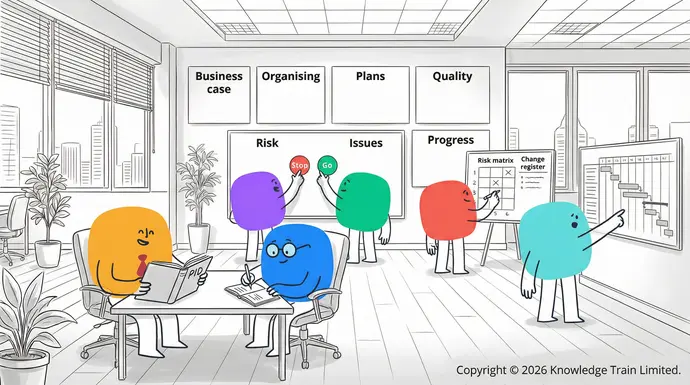
The seven practices of PhonePRINCE2 are:
The seven practicesOur 6 core values are everything we do. They include:
The seven PRINCE2 practices are designed to help the Integrityproject management teamDiversity apply and Fairnesstailor PRINCE2Quality, primarily through a suite of management approaches. The approaches define the procedures, techniques, and standards to be applied and the responsibilities for that practice to be effective.Innovation
PRINCE2Social responsibility does not prescribe how procedures, techniques, and standards should be documented, nor the level of detail required, nor how they are published and shared. The approaches could be a few paragraphs to a comprehensive and large document.
PRINCE2 SOCIAL RESPONSIBILITYmanagement productsSome of the charities we have helped over the years: describe the information required to manage the project. Two management products that are relevant to the majority of the PRINCE2 practices are the project initiation documentation (PID) and the project log .AWARDS
The We don’t go seeking awards, but here are two of the awards we have received for our training.project initiation documentation (PID) provides the direction and scope for the project and (with the stage plan) forms the ‘contract’ between the project manager Request a quote and the project board. The PID ensures the project has a solid foundation before a major commitment is made and forms a base document against which progress, issues, and ongoing viability can be assessed. It also provides a single reference about the project.
The project log is used to capture information that is continually changing. For example, the records about issues, lessons, products, quality, risk, and other formal/informal actions or events. The project log is dynamic and contains both current and historic records of project progress.+44 (0)207 148 5985
Business case
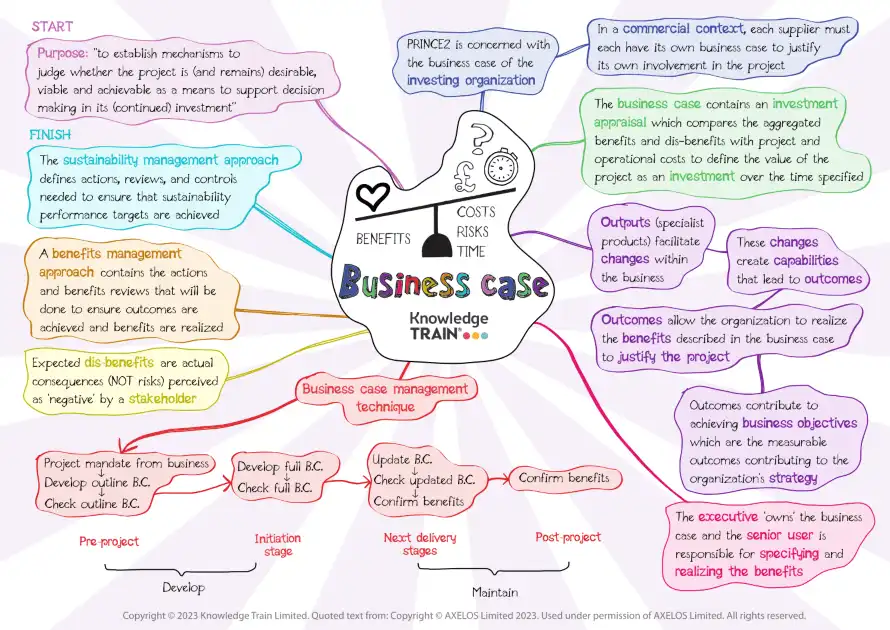
The purposeUnited Kingdom of this practice is “to establish mechanisms to judge whether the project is (and remains) desirable, viable, and achievable as a means to support decision making in its (continued) investment” [1]. In other words, it’s about deciding whether the project is a worthwhile investment.
The business investing in the project and (in a commercial environment) the supplier organizations will each have their own business case written to justify their own involvement in the project.Search
Projects deliver ‘ specialist ’ products (known as outputs ) which are used to facilitate United KingdomchangesAustria within the business. These changes create BelgiumcapabilitiesBulgaria that lead to CroatiaoutcomesCyprus allowing the business to realize the Czech RepublicbenefitsDenmark that are described in the Estoniabusiness caseFinland to justify the project. In turn, these outcomes contribute to achieving Francebusiness objectivesGermany which are the measurable outcomes contributing to the organization’s GreecestrategyIreland. Outcomes perceived as negative by stakeholders are called Italydis-benefitsLatvia.Lithuania
A business case is ‘LuxemburgownedMalta’ by the NetherlandsprojectPoland PortugalexecutiveRomania. At all times, the executive must ensure there is an acceptable business case, otherwise the project should be closed. Not wasting any more time and money on a project is better than continuing with an unjustifiable project.Slovakia
The SloveniadevelopmentSpain of the business case begins with the initial justification being communicated by the business in the Swedenproject mandateOther countries. This is then documented by the executive as the HomeoutlineProject Management version and forms part of the Project Management Coursesproject briefPractical Project Management book review. During the initiation stage{"@context":"http://schema.org","@type":"BreadcrumbList","itemListElement":[{"@type":"ListItem","position":1,"name":"Home","item":"https://www.knowledgetrain.co.uk/"},{"@type":"ListItem","position":2,"name":"Project Management","item":"https://www.knowledgetrain.co.uk/project-management"},{"@type":"ListItem","position":3,"name":"Project Management Courses","item":"https://www.knowledgetrain.co.uk/project-management/project-management-courses"},{"@type":"ListItem","position":4,"name":"Practical Project Management book review","item":"https://www.knowledgetrain.co.uk/project-management/project-management-courses/practical-project-management-book-review"}]} the outline is expanded by the project manager with more detail into the full business case and forms part of the Practical Project Management by Emanuela GiangregorioPID . The full version is then used to justify the project. Thereafter, the business case is Simon Buehringmaintained19 Feb 2026 by the Key takeawaysproject managerPractical project management works best when tools are used with judgement, not blindly followed. who must update it at the end of each stage, so that the project board can decide whether to proceed to the next stage or not.Project success depends more on understanding the intent of a method than rigidly following a scripted framework.
After the project is closed, the business case is no longer required, and the A simple, structured project plan helps turn theory into action, including SMART objectives, prioritised scope, and clear constraints and assumptions.benefits management approachA clarifications log is a low effort way to remove ambiguity early and prevent rework later. is used to guide who will measure the realized benefits (note this can also happen during the project). This approach gets updated as and when the benefits are actually realized (either at the end of a stage, or post-project).Risks, stakeholders, issues, and change need lightweight processes and templates to stay under control.
The Realistic schedules, sensible budgets, and regular status reporting keep delivery on track and support clean project closure.senior user role is responsible for both specifying the benefits of the project, and also for realizing them i.e. make sure that they are actually achieved after the project closes. This means that the people who perform the senior user role need to come from those areas of the business organization which are most often impacted by the changes ( outcomes ).
Sustainability targets and tolerances for the project are documented in the business case and should reference and contribute to the environmental, social and governance goals forming part of the organization’s business objectives. The sustainability management approach (part of the PID ) defines actions, reviews, and controls needed to ensure that sustainability performance targets are achieved.
Relationships between the ‘business case’ practice and the principles are visible when creating and maintaining the business case throughout the project; when using lessons to inform business justification; by assigning accountability for managing the business case; by ensuring decisions at stage boundaries are checked for business justification; by measuring the impact of issues and risks to the business case; by ensuring that the products produced can lead to the required outcomes and benefits; and by ensuring the level of formality and control for developing the business case is appropriate.
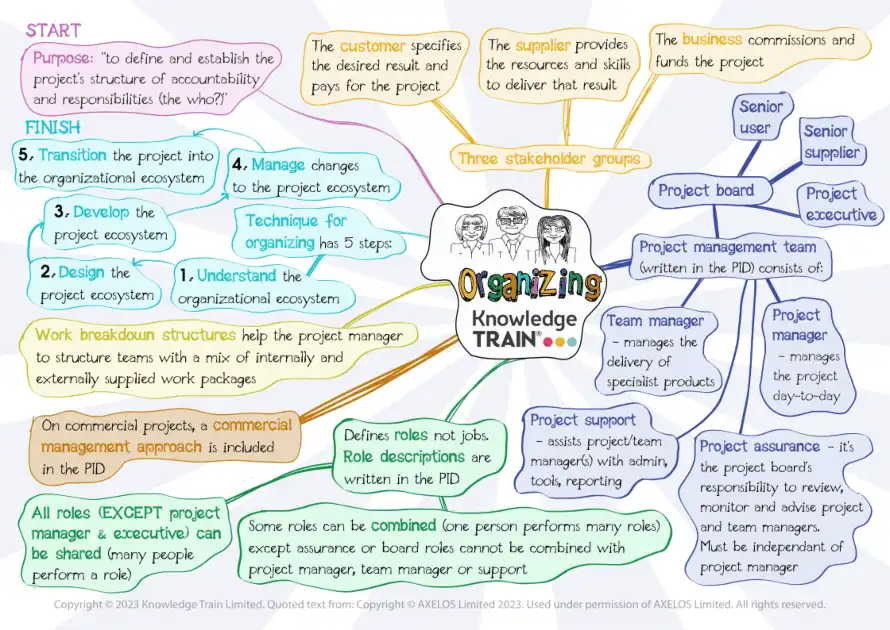
project team refers to all those people who allocate their time to the project.Most people develop their
PRINCE2 defines a set of project management skillsroles and responsibilities through practical experience, supplemented by . It does not define tasks to be allocated to people on a one-to-one basis. When tailoring, roles can be project management trainingshared where they can learn the theory. This book will help anyone who wants to apply the theory on their projects. (performed by more than one person) or Enhance your skills with our expert-led coursescombined (one person performs multiple roles), but responsibilities must always be allocated. In PRINCE2 all roles can be shared EXCEPT for the executive and project manager roles. The project assurance role cannot be combined with project manager, team manager or project support roles.
The key decision-making role is the project boardInstructor-led consisting of 3 roles: Introduction to Project Management courseproject £499 +vatexecutive , See all dates
In this book, the author condenses best-practice is included in the PID. This covers all commercial aspects such as procurement and contract management.project management methods
Work breakdown structures into a very practical and easy to read guide. All the best practices in the book will also complement the approaches of popular methods such as help support the project manager in structuring teams and setting boundaries and are most useful when there are multiple work packages and a mix of internally staffed and externally supplied work packages.PRINCE2
Relationships between the ‘organizing’ practice and the and the PMBOK Guide standard.principlesReal world experience are visible when assigning a business representative to the executive role; when using lessons to inform the team structure design and to ensure the right people in the right roles; when ensuring everyone in the PM team are aware of their responsibilities and relationships; when assessing the PM team structure at stage boundaries; when empowering decision-makers at appropriate points; when ensuring users are on the PM team who can support product acceptance; and when ensuring the PM team is appropriate to the needs of the project.The book is based upon the author’s extensive real-world experience. Her insight has enabled her to focus on the things which really matter when setting up and executing
PRINCE2projects describes a technique for the organizing practice and includes 5 steps. These are:. Packed with an extensive list of
- Understand the organizational ecosystemtemplates – this is required to successfully design the project organization and determine how the project ecosystem will develop as a distinct entity from the organizational ecosystem., the reader will find these customisable templates fit most projects.
- Design the project ecosystemChapters – this describes how to organize people and work to achieve the project’s objectives.The book follows a logical flow, starting with some core project management definitions before moving on to explaining the project life cycle. The
- Develop the project ecosystemkey roles of the project management team – this involves implementing the project organizational design and continuously improving it throughout the project. are explained, along with the core concept of the
- Manage changes to the project ecosystemproject management triangle – the project manager must make the best use of the people and resources available, enhancing capabilities where required.. The book then explains what you need when starting up a project, and the
- Transition the project into the organizational ecosystemimportance of a business case
See all datesA
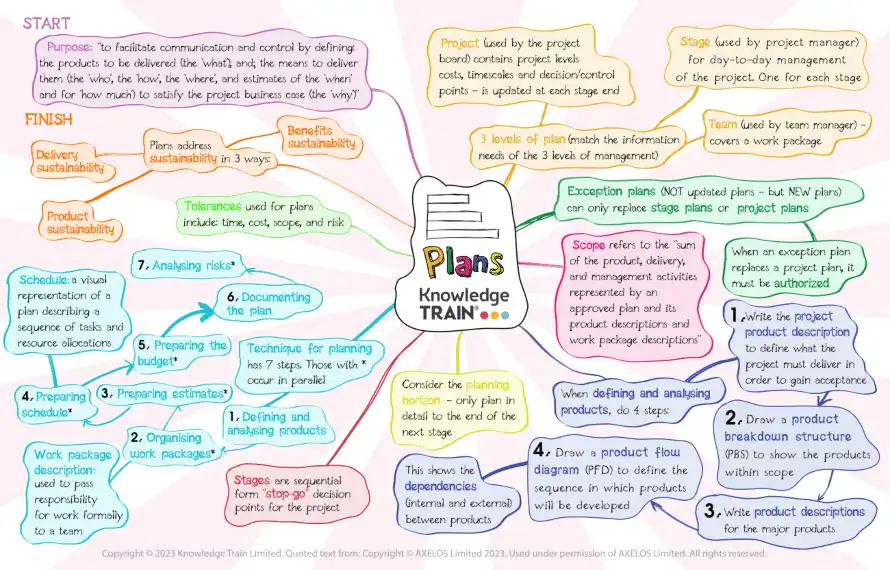
- (only for project plan) to define what the £999 +vatproject must deliver to gain acceptance. This describes the project’s major products and intended purpose. It is created in the ‘starting up a project’ process and refined in the ‘initiating a project’ process.See all dates
- Create a product breakdown structureAvailability showing the products within scope (note: external products are those that already exist or are created outside of the plan).Barnes and Noble
- Write product descriptionsFormat: for the major products. Nook book
- Create a product flow diagramBN ID: to define the sequence the products will be developed. This shows the 2940163020478dependenciesAmazon (internal and external) between products.Format:
When planning, understanding which constraints take precedence, selecting which approaches to use, and setting appropriate tolerances for control is important. Paperback, Kindle TolerancesBN ID: which can be set for plans include time, cost, scope, risk, and sustainability. The 979-8683072964PRINCE2 technique for planningKobo helps the project management team to set tolerances that balance the need for the project board to maintain effective control.Format:
Plans can address sustainability in at least three different ways: EPUB 2
- Product sustainabilityBN ID: – when specifying products, consider the environmental impact of the product through its full lifetime. 1230004183631
- Delivery sustainability20% OFF THIS BLACK FRIDAY – choices made in planning can affect the climate impacts of delivery activities. Sustainability tolerances are an effective way to keep things like fuel consumption and waste aligned with the organizational strategy. Use code
- Benefits sustainabilityBF2026 – projects often deliver benefits after closure. Achieving the expected benefits often fails because there are no means to sustain these benefits. To avoid this problem plan for benefits sustainability e.g. through ongoing training and user support after project closure. on selected courses. Book by 01 Dec 2026. Exam only purchases excluded.
Relationships between the ‘plans’ practice and the principles are visible when aligning plans’ performance targets to business case objectives; when sharing planning lessons for future
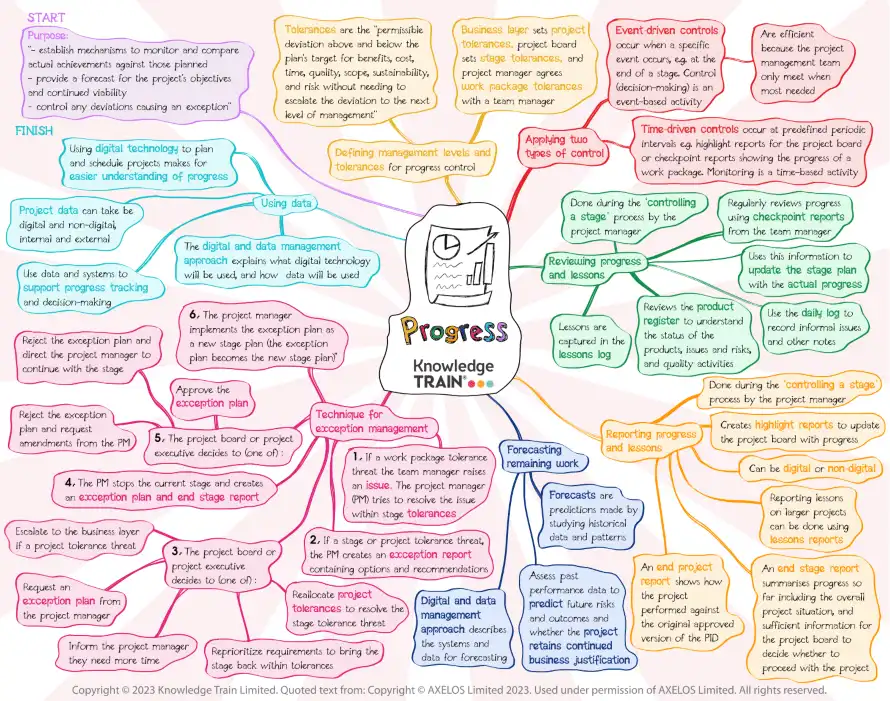
- Time-driven controls occur at predefined periodic intervals e.g. highlight reports for the project board or checkpoint reports showing the progress of a work package. Monitoring is time-based.
Reporting is both time-driven and event- driven. Using event-driven controls is efficient because the project management team only meet when most needed, not regularly which would be unnecessary.
Reviewing progress and lessons is done during the ‘ controlling a stageThe technical storage or access is required to create user profiles to send advertising, or to track the user on a website or across several websites for similar marketing purposes.’ process by the project manager who regularly reviews progress using Manage optionscheckpoint reportsManage services from the team manager and uses this information to update the stage plan with the actual progress. They also use the Manage {vendor_count} vendorsdaily logRead more about these purposes to record informal issues and other notes not captured in other management product. The project manager reviews the product registerAccept to understand the status of the products, issues and risks, and quality activities. Any lessonsDeny identified are captured in the
summarises progress so far, including the overall project situation, and sufficient information for the project board to decide whether to proceed with the project.
Forecasts are predictions made by studying historical data and patterns. When reviewing progress, the project manager forecasts the remaining work to be done. They assess past performance data to predict future risks and outcomes and whether the project retains continued business justification. The digital and data management approach describes the systems and data for forecasting.
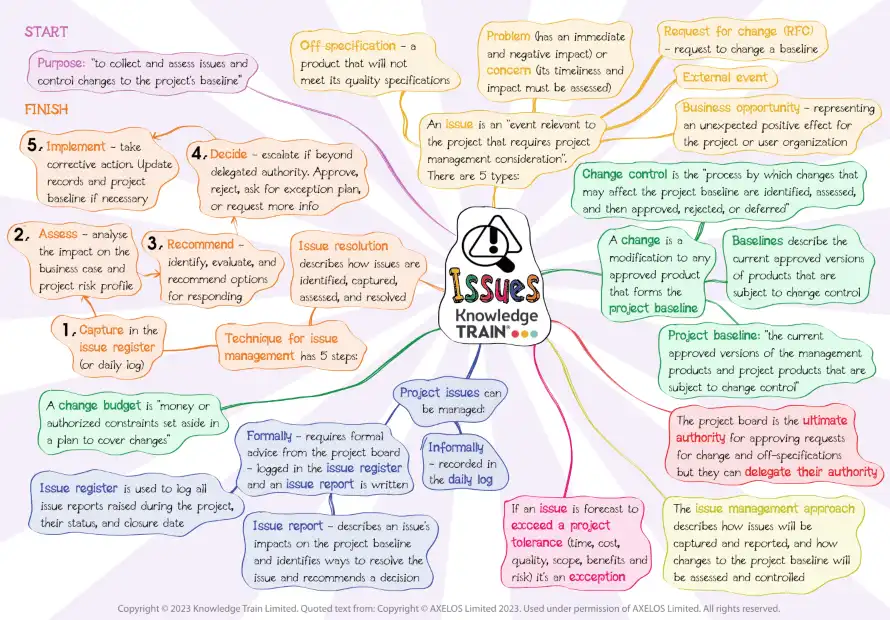
Escalating issues is done using the PRINCE2 technique for exception management containing 6 steps:
Step 1 – The team manager forecasts that the work package will finish outside its tolerances and raises an issue in the issue register. The project manager tries to resolve the issue within stage tolerances. The issue is reported in the next highlight to the project board. For formal issues, an issue report is written.
Step 2 – If the issue will breach either stage or project tolerances, the project manager creates an exception report for the project board for a decision. It contains resolution options and recommendations.
Step 3 – The project board or project executive chooses from these options:
- reallocate project tolerances to resolve the breach of stage tolerances.
- reprioritize requirements to bring the stage back within tolerances.
- inform the project manager that they need more time for consideration.
- request an exception plan from the project manager.
- escalate to the business layer for advice and direction if project level tolerances will be breached.
Step 4 – The project manager stops the current stage and inserts a stage boundary to create an exception plan, and an end stage report.
Step 5 – The project board or project executive chooses from these options:
- reject the exception plan and request amendments from the project manager.
- reject the exception plan and direct the project manager to continue with the stage.
- approve the exception plan.
Step 6 – The project manager implements the exception plan as a new stage plan (the exception plan becomes the new stage plan).
Use of data and systems to support progress tracking and decision-making is key. Project data can take many forms – digital and non-digital and can include internal and external data. Using digital technology to plan and schedule projects makes for easier understanding of progress. Having data stored within systems means that past performance can be used to predict future performance. The project’s digital and data management approach explains what digital technology will be used as well as how the data will be used, and which systems will be used for data analytics.
At the end of the project the end project report is used to review how the project performed against the original approved version of the PID.
Relationships between the ‘progress’ practice and the principles are visible when checking the viability of the business case when progress is reviewed; when identifying lessons from the output of progress management; when clarifying reporting requirements and progress management responsibilities; when dividing the project into stages, authorizing one stage at a time, and evaluating progress; when setting tolerances and delegating authority from one level to the level below; when knowing the status of each product and the project product during delivery; and when defining the approach to controlling progress, setting tolerances and controls based on the project’s specific needs.
References
[1] PeopleCert (2023). Managing Successful Projects Using PRINCE2. 7th Edition. PeopleCert. ISBN: 978-9925-34-450-5.
[2] PeopleCert (2023).
[3] PeopleCert (2023).
[4] PeopleCert (2023).
[5] PeopleCert (2023).
[6] PeopleCert (2023).
[7] PeopleCert (2023).