What is an IT course?

Key takeaways
IT courses combine theory and practical work to build job-ready digital skills.
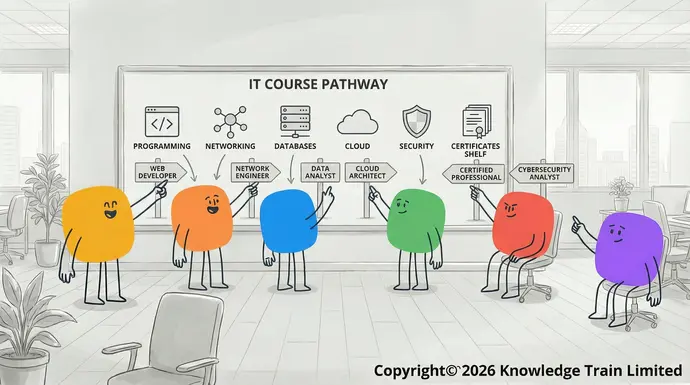
- Most programmes cover programming, networking, databases, cyber security, cloud computing, and project delivery.
- You can choose from certifications, diplomas or degrees, plus online or face-to-face study formats.
- Industry credentials such as CompTIA, Cisco, Microsoft, AWS, and CISSP can strengthen employability and salary prospects.
- Common outcomes include IT support, network administration, software development, cyber security, cloud roles, and data careers.
- Continuous learning and updated certifications help keep skills relevant as technology and threats evolve.
IT course overviewCybersecurity
An Information Technology (:IT Develop skills to protect systems from threats, covering ) course provides structured learning in the principles, technologies and practices that power computers and digital networks. Delivered by universities, colleges and online platforms, IT courses prepare you for key roles such as IT support, network administration, software development and risk managementcybersecurity and ethical hacking.. Sources from universities and accredited online providers offer in-depth knowledge and skills for the dynamic technology sector.
Core subjects in an IT course
Most IT coursesSoftware development: incorporate a combination of theoretical foundations and hands-on practical skills. Core areas typically covered include: Apply methods for designing, coding and maintaining applications.
- Diplomas and degrees:edX Longer Online (degree, micro-courses)programmesUniversity-backed, academic credit options like Diploma, Bachelor of Information Technology, or Masters in Information Technology, typically from universities or polytechnics.Universities
- Online coursesOffline/online (degree, diploma):Accredited qualifications, student support, campus facilities Flexible self-paced study on platforms like Coursera, Udemy or edX, often including micro-credential options.CompTIA/Cisco
- Offline/face-to-face courses:Certification (online/offline) Classroom-based instruction at colleges and universities with personalised support and labs.Industry-recognised certificates for networking, support, security
Key IT course providers and platformsCareer outcomes and IT jobs
| ProviderCompleting an IT course opens up diverse career paths in the technology sector. Typical job roles include: | TypeIT support specialist: | Strengths Diagnose and resolve users’ technical issues. |
|---|---|---|
| CourseraNetwork administrator: | Online (degree, short courses) Plan, deploy and maintain computer networks. | University partnerships, certificates, flexible studySoftware developer: |
| edX | ||
- are increasingly required in fields like finance, healthcare, education and more. For further details see UK government digital skills guidance and university career services. Diagnose and resolve users’ technical issues.
- Network administrator:Certifications and further development Plan, deploy and maintain computer networks.Certifications demonstrate expertise in key IT disciplines. Leading certificates include:
- Software developer:CompTIA A+, Network+, Security+; Create and maintain applications and systems.Cisco CCNA, CCNP;
- Cybersecurity analyst:Microsoft Certified Fundamentals, Solutions Associate; Protect data and systems from cyber threats.AWS Certified Cloud Practitioner;
- Cloud solutions architect:Certified Information Systems Security Professional (CISSP). Design modern cloud-based IT infrastructures.Many learners progress to degree
- Data scientist:programmes Extract insights from data using advanced analytical tools. after initial certificates, undertaking a Bachelor of Information Technology or a Masters in Information Technology to further their careers.
Industry FAQscertificationsWhat qualifications do you need for an IT course?
Common subjects include programming, networking, databases, cybersecurity