
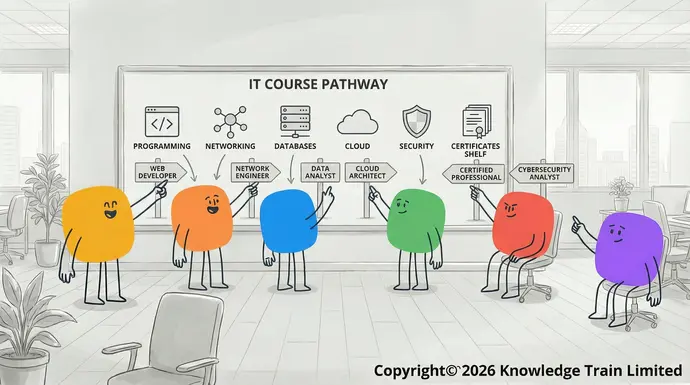
- Data science & artificial intelligence:Networking: Learn techniques for analysing data and developing smart algorithms. Understand how devices connect, communicate and operate within a network environment.
- IT project management:Databases: Gain experience in managing technical Study data storage, management and retrieval using systems like SQL.projectsCybersecurity and teams using frameworks like :Agile Develop skills to protect systems from threats, covering and risk managementScrum and ethical hacking..Software development:
Types of IT courses Apply methods for designing, coding and maintaining applications.
IT coursesCloud computing: are available in a wide range of formats to suit different goals and learning preferences. Common types include: Explore hosting and resources delivered over the internet.
- Certification courses:Data science & artificial intelligence: Short-term courses leading to industry Learn techniques for analysing data and developing smart algorithms.certificationsIT project management: such as CompTIA (A+, Network+), Cisco (CCNA), and Microsoft qualifications. Gain experience in managing technical
- Diplomas and degrees:projects Longer and teams using frameworks like programmesAgile like Diploma, Bachelor of Information Technology, or Masters in Information Technology, typically from universities or polytechnics. and
- Online coursesScrum:. Flexible self-paced study on platforms like Coursera, Udemy or edX, often including micro-credential options.Types of IT courses
- Offline/face-to-face courses:IT courses Classroom-based instruction at colleges and universities with personalised support and labs. are available in a wide range of formats to suit different goals and learning preferences. Common types include:
Key IT course providers and platformsCertification courses:
| Provider Short-term courses leading to industry | Typecertifications | Strengths such as CompTIA (A+, Network+), Cisco (CCNA), and Microsoft qualifications. |
|---|---|---|
| Coursera | Online (degree, short courses) | University partnerships, certificates, flexible study |
- Create and maintain applications and systems.Online (degree, micro-courses)
- Cybersecurity analyst:University-backed, academic credit options Protect data and systems from cyber threats.Universities
- Cloud solutions architect:Offline/online (degree, diploma) Design modern cloud-based IT infrastructures.Accredited qualifications, student support, campus facilities
- Data scientist:CompTIA/Cisco Extract insights from data using advanced analytical tools.Certification (online/offline)
Industry Industry-recognised certificates for networking, support, securitycertificationsCareer outcomes and IT jobs such as CompTIA A+, CCNA and cloud credentials are highly valued and often linked to improved salary prospects. Technical skills learned in Completing an IT course opens up diverse career paths in the technology sector. Typical job roles include:IT coursesIT support specialist:
Entry requirements vary by course level. Introductory courses usually require basic computer skills, while degrees may require A-levels or equivalent. Certification courses generally have no prerequisites. such as CompTIA A+, CCNA and cloud credentials are highly valued and often linked to improved salary prospects. Technical skills learned in
What subjects are studied in Information Technology?IT courses
Common subjects include programming, networking, databases, are increasingly required in fields like finance, healthcare, education and more. For further details see UK government digital skills guidance and university career services.cybersecurity, cloud computing, software development, and data science.
Which IT course is best for beginners?Certifications and further development
Courses in basic computer literacy, CompTIA IT Fundamentals, or introductory programming are suitable for beginners. Online platforms and colleges provide flexible entry-level options.Certifications demonstrate expertise in key IT disciplines. Leading certificates include:
Are online IT courses recognised by employers?CompTIA A+, Network+, Security+;
Many online Cisco CCNA, CCNP;IT coursesMicrosoft Certified Fundamentals, Solutions Associate;, especially those offering certificates from recognised providers (Coursera, edX, CompTIA, Cisco), are valued by employers. Accredited courses and AWS Certified Cloud Practitioner;certificationsCertified Information Systems Security Professional (CISSP). are particularly well-regarded.Many learners progress to degree
What careers can I pursue after completing an IT course?programmes
Typical roles include IT support, network administration, cybersecurity analyst, software developer, and data scientist. Advanced positions may require additional experience or qualifications. after initial certificates, undertaking a Bachelor of Information Technology or a Masters in Information Technology to further their careers.