Plan to maintain the qualification through continuing professional development or recertification where required.Key takeaways
Introduction to Senge’s system thinking modelThese qualifications are awarded by accrediting bodies or professional associations following successful assessments.
Overview of system thinkingLeading change management qualifications
Definition and significanceQualification Provider
System thinking is a holistic approach to understanding how various parts of an organisation interrelate. It focuses on recognising patterns and interdependencies rather than isolated events.Credential
This approach is crucial in today’s organisational contexts because it allows leaders to foresee long-term consequences and make informed decisions. By considering the broader picture, organisations can address complex problems more effectively and sustainably.Features
Historical backgroundCost (indicative)
Systems thinking emerged from General Systems Theory developed by Ludwig von Bertalanffy in the 1940s and cybernetics by Norbert Wiener. These foundations shaped modern systems thinking approaches in organisations.Prerequisites
Pioneers in management theory recognised that understanding these interactions is essential for fostering innovation and resilience. As a result, system thinking became integral to modern management practices.Recertification
Introduction to Peter SengeAPMG International
About Peter SengeAPMG Change Management
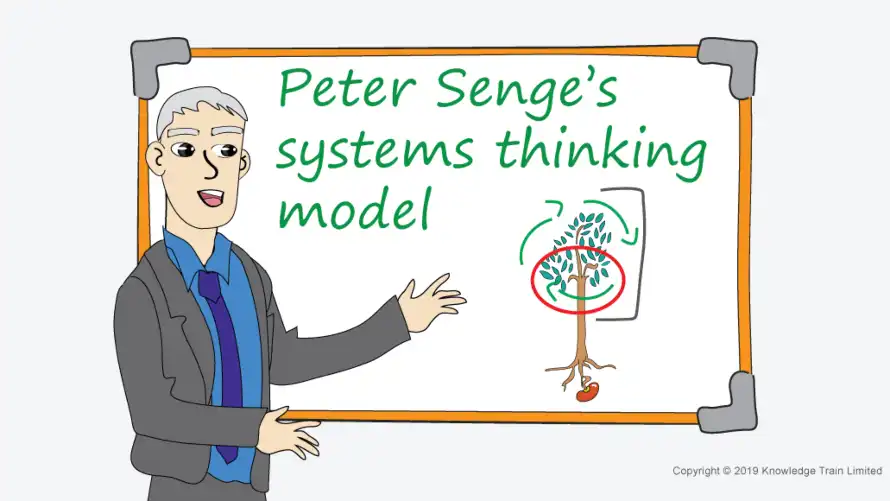
Peter Senge Foundation/Practitioner is a renowned scholar and author in the field of management. He is a senior lecturer at MIT, and his work has revolutionised how organisations approach learning and change. Senge’s research emphasises the importance of creating learning organisations that continuously adapt and grow.Based on CMI Body of Knowledge, exam focused
Senge’s system thinking approach is now a leading £1,300–£2,000change management modelNone for Foundation; Practitioner requires Foundation passProscibusiness change managersProsci Certified Change Practitioner in many different organisations.ADKAR methodology, focus on practical application, 3-day programme, assessment
The fifth discipline£2,800–£3,300
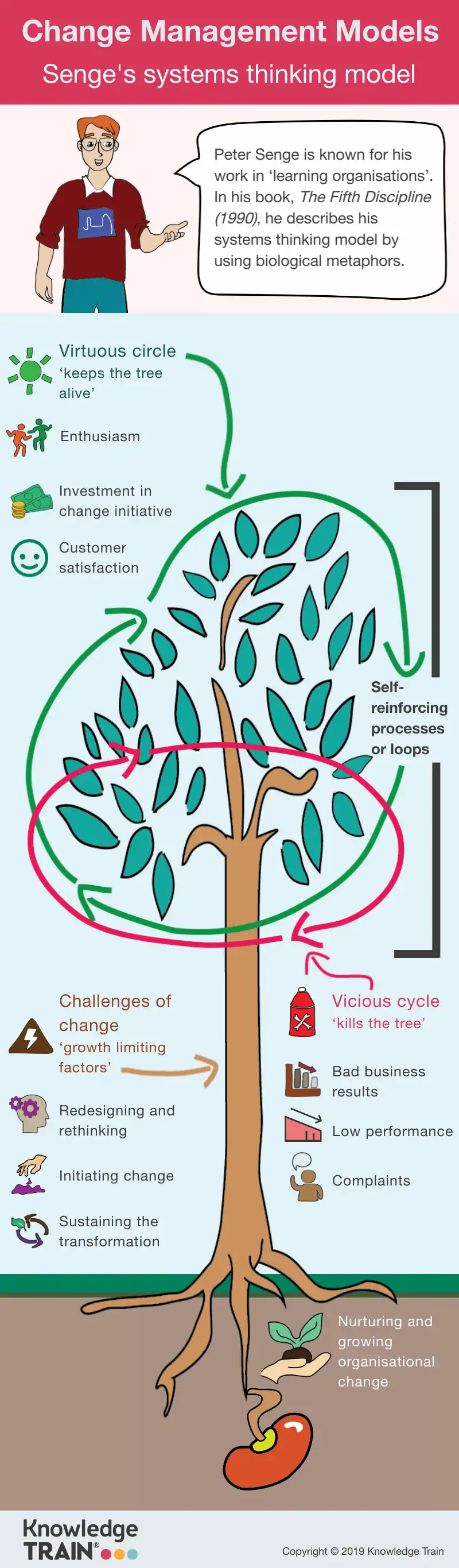
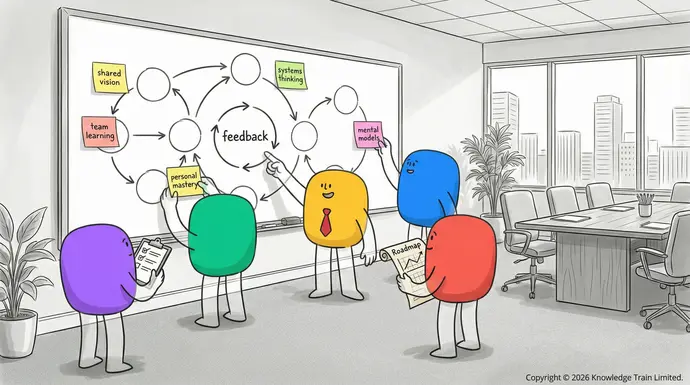
In his seminal book, “The fifth discipline,” Senge outlines five key disciplines necessary for building a learning organisation. These include personal mastery, mental models, shared vision, team learning, and systems thinking. His work highlights how these disciplines can transform organisational culture, enhancing efficiency and strategic thinking.None, suitable for all professionals
Core principles of Senge’s modelOngoing professional development recommended but not required
| Key benefitProsci | |
| Personal masteryProsci is recognised globally for its proprietary | Enhances individual contributionADKAR methodology |
| Mental models. Its Change Practitioner qualification is accessible to professionals from any background, delivered via accredited organisations both online and in-person. | Promotes open-mindednessAssociation of Change Management Professionals (ACMP) |
| Shared visionThe Association of Change Management Professionals offers the Certified Change Management Professional (CCMP) qualification. It is aligned with the ACMP Standard for Change Management and requires relevant training and work experience. Candidates must pass an exam to qualify. | Unifies and motivates teamsChange Management Institute (CMI) |
| Team learningCMI offers qualifications recognising capability at Foundation, Specialist, and Master levels. Entrants must demonstrate experience in real-world | Facilitates collective innovationorganisational change |
| Systems thinking and maintain ongoing professional development. | Addresses root causes of problemsHow to get change management qualification |
Practical implicationsChoose a qualification provider
In practice, these interconnected disciplines translate into more effective leadership, strategic planning, and (e.g., APMG International, Prosci, ACMP, or CMI) and select the qualification that matches your career goals.change managementCheck eligibility requirements. For example, a shared vision aligns organisational efforts, while team learning accelerates problem-solving. Systems thinking ensures that decisions consider long-term impacts. By applying these principles, organisations can improve efficiency and innovation., such as prior experience, or prerequisite qualifications.
The key takeaway from Senge’s “The Fifth Discipline” is that these principles are not standalone solutions. They must be applied collectively to realise their full potential. Embracing this model leads to psychological benefits such as reduced stress and enhanced collaboration, creating a thriving organisational culture.Complete required training