How to become a business change manager

Key takeaways
Business change managers play a vital role in moving an organisation from the current state to a better future state.
- A dedicated business change manager improves the odds of delivery by tailoring best practice to organisational culture.
- Change manager responsibilities include risk mitigation, resistance management, readiness checks, and embedding new working practices.
- Progress comes faster with real management experience and domain knowledge of the business and affected function.
- Key competencies are communication, influencing, coaching, strategic judgement, project discipline, and self-management.
- Aim to gain experience in the change cycle and develop your skills through training and development.
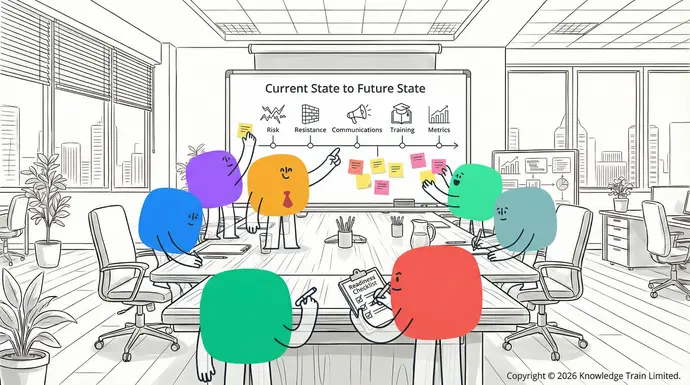
What is a business change manager?
In an organisation, a business change manager’s job is to:
- Determine the benefits of a business vision;
- Assess progress towards a business goal;
- Achieve measured improvements in the business operations.
In general, a business change manager is a mediator between a change programme and the organisation’s operations. Business change managers also are part of the leadership team. They play a key role in supporting projects for business change.
Why organisations use business change managers
Change managers play a significant role in the success of business change initiatives as they direct the desired outcomes down the right path. They do this using best practice approaches to change and customising them to the organisation’s culture.
Better performance from staff, improved ways of working and higher sales targets are some of the outcomes we can see.
Acording to Prosci, change management programmes rated ‘good’ or ‘excellent’ had an above-80% success rate. Those rated ‘poor’ or ‘fair’ achieve less than 50%[1].
What does a business change manager do?
A change manager manages the change portfolio. Some of their responsibilities are:
- Making sure the benefits are achievable
- Establishing and implementing mechanisms to measure and deliver benefits
- Preparing affected business areas for transition to new ways of working
- Identifying, analysing and preparing risk mitigation tactics
- Identifying and managing anticipated resistance
- Integrating change management activities into a project plan
- Evaluating and ensuring user readiness
They perform change management by:
- Completing change management assessments
- Optimising the timing of the release of project deliverables into business operations
- Liaising with the programme manager to ensure operational benefits
- Communicating with people and senior leaders about the business vision
- Defining and tracking the benefits and outcomes required from the programme
- Managing the activities effectively that’s associated with the wanted benefits
- Leading the transition, ensuring that changes are integrated into the business
- Measuring the benefits after the work is complete
- Defining and measuring success metrics and monitoring change progress
- Supporting organisational design and definition of roles and responsibilities
- Creating communications plan, sponsor roadmap, coaching plan, training plan, resistance management plan
And other people involved are:
- Stakeholders
- Senior leaders, managers and supervisors
- HR Personnel
- Project leaders and teams
- Other specialists related with the change plans [2]
Starting a change manager career
Experience
Firstly, you probably need to have at least on-the-job experience in a management role in a corporate environment. The reason for this is because it helps you understand the complexity of individuals, teams, and senior leaders’ issues. You will need to know how to mediate between these different people and their departments’ needs to achieve the change you are assigned to.
If you are in an entry level or junior position, you can check if your organisation offers change agent roles. These roles will help you comprehend and take part of the change process and eventually gain experience in the change cycle.
Domain knowledge
In addition to that, industry knowledge is important. You are expected to at least know the products and services your company sells and reflect that in your change plan. A fashion house will be different from a car selling company, for example. The internal and external structure of both is completely different and should be taken into consideration.
This applies also to profession. If your background/study area is Human Resources Management, and you are assigned to initiate change in the Information Technology department, you must familiarise yourself in IT before making any further steps.
Qualifications
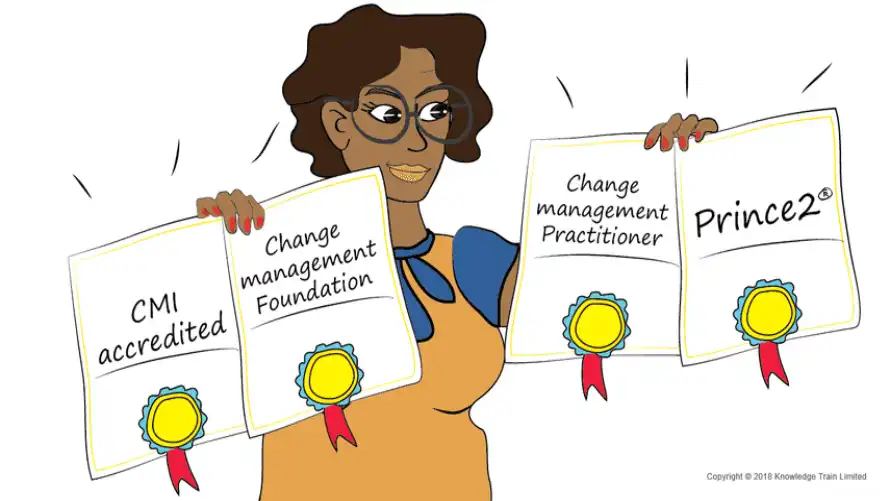
If you haven’t studied change management before, change management qualifications like these APMG Change Management courses can help boost your credentials, learn the frameworks and models, and develop the skills required to implement change management. You will learn:
- Different change management models to implement change smoothly. Typical models include: ADKAR, Lewin’s model, Senge’s system thinking, the Satir model, the Kübler-Ross change curve, and Kotter’s 8-step change model.
- How to motivate people into adjusting to organisational change
- How to minimise the risks of managing change.
You will stumble across change management in other branches of management like project management and programme management as change plays an imperative role there.
Competencies
A range of change management skills are required to facilitate the wanted change and function effectively as a change manager. Such skills include:
Strong communication
It is essential for a change manager to be able to communicate clearly and effectively in all writing, speaking, listening and reading activities. They must be able to deliver their change message to all stakeholders involved.
Influencing others
A big part of change is the ability to influence others, as resistance plays a big factor in the change curve. When you know the team members of your change project well, it will help you negotiate and convince them with the original reason for change and thus gain their trust.
Coaching
You can’t assume that everybody in the company will understand your change mission. Hence, meetings like awareness sessions, in-house training and one-to-one mentoring will be needed to deliver your message.
Strategic thinking and judgment
It is not recommended to jump into conclusions and rush into decisions while you are a change manager. You must be able to think ahead and weigh the consequences of your actions.
Project management
Putting on a project manager’s hat while working on your change initiative will help strengthen your case and identify the problem while proposing a solution.
Self-management
Along with your ability to manage your team, you will have to manage yourself as well. What we mean by this is being able to take initiative, organise your time/workload and take accountability for your actions. In addition to these, you must also be able to control your emotions and be tolerant and confident.
Summary
As we mentioned before, change isn’t easy. It takes a lot of momentum, resilience and persistence. Being a business change manager means you will need to sell the change to the individuals around you, your stakeholders, your team members, the project and the whole organisation, and eventually yourself.
References
[1] The Change Management Institute (CMI) (2014). The Effective Change Manager’s Handbook. Australia: Vivid Publishing.
[2] Prosci. Change Management Job Description. Available: https://www.prosci.com/resources/articles/change-management-job-description. Last accessed 04 Sep 2026.