Kübler-Ross change curve for successful transitions

Key takeawaysSlovakia
Use the Kübler-Ross change curve to match leadership support to how the team is feeling during a transition.Slovenia
- The change curve maps common emotional stages, helping leaders predict reactions during organisational change.Spain
- Expect early shock, denial, anger, and fear, and reduce disruption with clear, timely communication.Sweden
- Treat exploration and bargaining as engagement and involve characters (team members) in shaping practical plans.Other countries
- During depression and confusion, provide extra guidance, training, and emotional support to protect morale and quality.Home
- Monitor progress with check-ins and milestones, then reinforce wins to embed acceptance and integration.Project Management
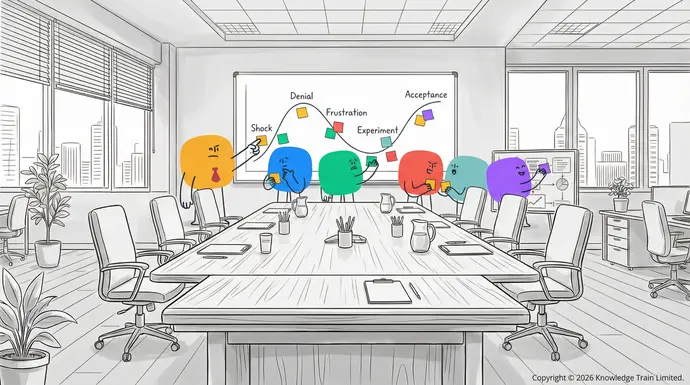
Change curve introduction
The Kübler-RossContents change curveIntroduction is a powerful model that helps to understand and manage the emotional responses individuals and organisations experience during transitions.
Inspired by Elisabeth Kübler-Ross’s work on terminal illness patients, the change curve has been adapted to depict the stages of personal and organisational change. By mapping emotional responses, it provides a framework for predicting reactions and offering necessary support.What’s in the PRINCE2 methodology?
Definition of the change curve
The When to use the PRINCE2 methodology? Kübler-Ross change curve illustrates the psychological phases individuals experience when faced with change. Initially derived from the study of grief, this model has been adapted to depict the transition stages within organisational contexts.Why is the PRINCE2 methodology helpful?
In organisational contexts, it typically progresses through shock and denialSummary,
MethodologyPeople first react to change with shock and denial. They might ignore the changes or deny how these affect their work. This natural defensive response gives people time to process what is happening.
Stage 2. Anger and fearA ‘methodology’ is a structured system of practices and rules used by experts in a specific field. For project management, it’s a blueprint used by teams to start, plan, execute, and conclude projects, ensuring a systematic and successful
When reality becomes clear, people often feel angry and fearful. They worry about their future and may resist changes actively. This reaction can strain team relationships and affect work quality. Leaders need to address worries openly through clear communication.project delivery
Stage 3. Exploration and bargaining.
Stage 5. Acceptance and integration
Benefits of understanding the change curve
See all datesKübler-Ross’s change curve offers significant advantages to both leaders and teams. It provides a framework for navigating transitions effectively, ensuring that organisational change is managed smoothly. Recognising the emotional stages individuals experience allows for strategic interventions that can mitigate resistance and enhance acceptance.
Improved change management
Grasping the change curve enables leaders to anticipate emotional reactions and plan appropriate responses. By knowing which stage their team members are in, leaders can tailor their communication and support strategies. This anticipation reduces disruptions and resistance, making the change more manageable. Furthermore, it facilitates a proactive approach to addressing concerns, ensuring that transitions are smoother and less stressful.Self-paced
Enhanced team moralePRINCE2 Practitioner (with Foundation) self-paced online
Effectively navigating Kübler-Ross’s change curve can significantly boost team morale£1,399 +vat and productivity. By providing support that aligns with each stage, leaders can foster a sense of security and trust.
This approach helps in reducing anxiety and stress, as individuals feel understood and supported. When teams see that their leaders are attuned to their emotional journeys, it enhances engagement and commitment, ultimately leading to a more motivated and cohesive workforce.
Conclusion is a requirement if a project is to be a PRINCE2 project. The principles act as immutable laws that cannot be removed from a project.
In summary, the The 7 principles within the methodology are described below.Kübler-Ross change curveEnsure continued business justification is an essential A project is only successful if it realizes the expected benefits in return for its investment of money, time, and resources. Therefore, it is imperative that all investment decisions are based upon where the project is on course to achieve these objectives. If it isn’t, then it should be closed.change management modelLearn from experience for managing transitions within organisations. By understanding its stages, leaders can anticipate emotional reactions and provide targeted support. This approach reduces stress and increases resilience among team members, fostering a more adaptable and cohesive work environment.The experience of previous projects should be used to guide the practices on the current, and later projects.
The benefits of utilising the change curve extend beyond improved change management. It enhances team morale, boosts productivity, and helps align organisational goals with personal growth. Effective communication, support, and progress monitoring are key strategies in navigating the curve.Define roles, responsibilities, and relationships
Ultimately, embracing the change curve empowers leaders to guide their teams through transitions with confidence and empathy. By recognising and addressing the psychological journey of change, organisations can achieve smoother transitions and sustained success.Everyone involved in the
FAQsproject management team
What is the change curve? must be clear what they are accountable and responsible for.
The Manage by stageschange curveA project is broken down into 2 more management stages which form ‘stop/continue’ decision points. Any decision to continue necessitates the commitment of money and resources to the next stage. is a model that outlines the emotional stages individuals experience during transitions, inspired by Kübler-Ross’s work with terminal illness patients.Manage by exception
How can understanding the change curve benefit my team?Authority to take decisions is granted by a higher authority to a lower authority which is an efficient use of senior managers’ time. The higher authority can be kept informed of progress via regular reports, but at the same time, the lower management level can manage with the delegated boundaries. If these boundaries are forecast to be exceeded, this exception is escalated to the higher level for a decision.
Knowledge of the change curve helps leaders anticipate reactions, tailor support, and improve team dynamics, leading to reduced stress and enhanced productivity.Focus on products
What are some common challenges faced during the change curve stages?Focusing on delivering on time and within budget cannot be done without first understanding what is to be delivered. All planning starts by focusing on products to understand what the plan should deliver.
Challenges include denial, anger, and confusion. Address these by providing clear communication and support to facilitate smoother transitions.Tailor to suit the project
How long does it typically take to move through the change curve?Every project is different, therefore the methodology must be applied differently and sensibly in all situations.
The duration varies based on individual and organisational factors. Teams and individuals may progress through stages at different rates, and it’s normal for people to move through stages at different speeds or occasionally return to previous stages as circumstances change.People
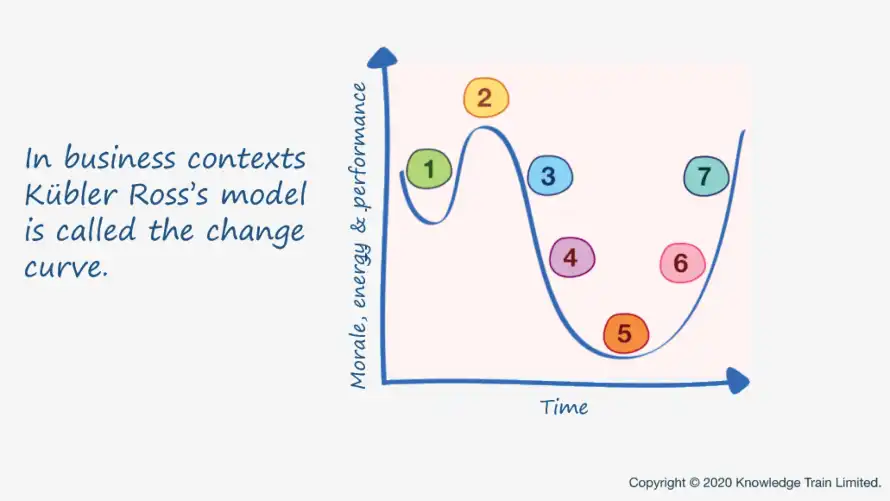
InfographicProjects involve
This infographic shows the Kubler Ross change curve model.people
