Kübler-Ross change curve for successful transitions

Key takeaways
Use the Kübler-Ross change curve to match leadership support to how the team is feeling during a transition.
- The change curve maps common emotional stages, helping leaders predict reactions during organisational change.
- Expect early shock, denial, anger, and fear, and reduce disruption with clear, timely communication.
- Treat exploration and bargaining as engagement and involve characters (team members) in shaping practical plans.
- During depression and confusion, provide extra guidance, training, and emotional support to protect morale and quality.
- Monitor progress with check-ins and milestones, then reinforce wins to embed acceptance and integration.
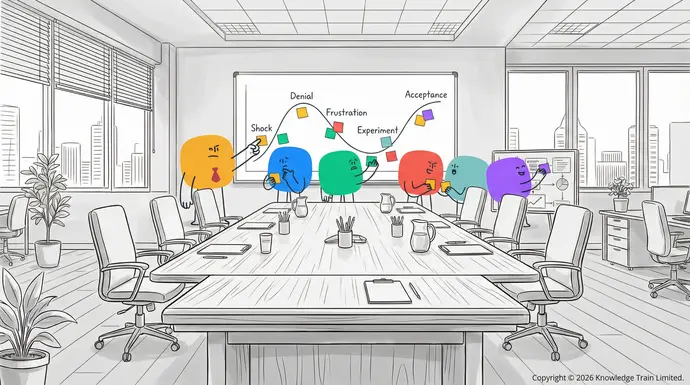
Change curve introduction
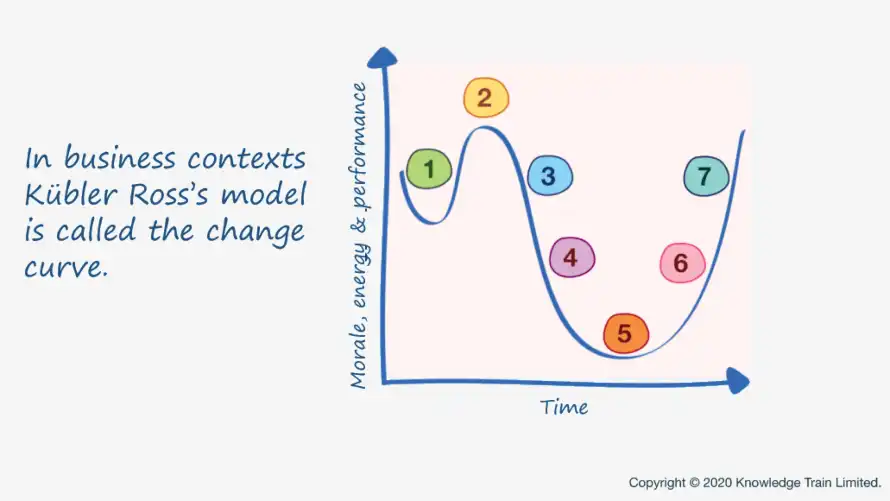
The Kübler-Ross change curve is a powerful model that helps to understand and manage the emotional responses individuals and organisations experience during transitions.
Inspired by Elisabeth Kübler-Ross’s work on terminal illness patients, the change curve has been adapted to depict the stages of personal and organisational change. By mapping emotional responses, it provides a framework for predicting reactions and offering necessary support.
Definition of the change curve
The Kübler-Ross change curve illustrates the psychological phases individuals experience when faced with change. Initially derived from the study of grief, this model has been adapted to depict the transition stages within organisational contexts.
In organisational contexts, it typically progresses through shock and denial, anger and fear, depression and confusion, and ultimately acceptance and integration.
By understanding these stages, leaders can anticipate challenges and prepare strategies to effectively support their teams.
Importance of understanding the change curve
For business change managers, grasping Kübler-Ross’s change curve’s nuances is crucial for effective change management. It equips them to anticipate emotional hurdles and offer timely support, thereby reducing stress and enhancing resilience. By aligning leadership strategies with this model, organisations can facilitate smoother transitions, ensuring both individual well-being and collective productivity.
Stages of the change curve
The change curve shows how people move through emotional stages during organisational change. Understanding these five stages helps leaders guide their teams effectively.
Stage 1. Shock and denial
People first react to change with shock and denial. They might ignore the changes or deny how these affect their work. This natural defensive response gives people time to process what is happening.
Stage 2. Anger and fear
When reality becomes clear, people often feel angry and fearful. They worry about their future and may resist changes actively. This reaction can strain team relationships and affect work quality. Leaders need to address worries openly through clear communication.
Stage 3. Exploration and bargaining
People start exploring what the change means. They suggest different approaches or try to negotiate aspects of the change. Although this might look like resistance, it shows people are beginning to engage with the changes. This stage offers chances to involve team members in planning.
Stage 4. Depression and confusion
As people understand what change truly means, they might lose motivation and confidence. Work quality and team spirit often decrease as everyone adjusts to new ways. Leaders should offer extra support and clear guidance during this difficult time.
Stage 5. Acceptance and integration
Finally, people begin to accept and work well with the changes. They notice new opportunities and benefits, leading to better engagement and fresh ideas. This shows successful movement through the change curve.
Leaders who understand these stages can support their teams properly, helping create successful organisational change.
Benefits of understanding the change curve
Understanding Kübler-Ross’s change curve offers significant advantages to both leaders and teams. It provides a framework for navigating transitions effectively, ensuring that organisational change is managed smoothly. Recognising the emotional stages individuals experience allows for strategic interventions that can mitigate resistance and enhance acceptance.
Improved change management
Grasping the change curve enables leaders to anticipate emotional reactions and plan appropriate responses. By knowing which stage their team members are in, leaders can tailor their communication and support strategies. This anticipation reduces disruptions and resistance, making the change more manageable. Furthermore, it facilitates a proactive approach to addressing concerns, ensuring that transitions are smoother and less stressful.
Enhanced team morale
Effectively navigating Kübler-Ross’s change curve can significantly boost team morale and productivity. By providing support that aligns with each stage, leaders can foster a sense of security and trust.
This approach helps in reducing anxiety and stress, as individuals feel understood and supported. When teams see that their leaders are attuned to their emotional journeys, it enhances engagement and commitment, ultimately leading to a more motivated and cohesive workforce.
Strategies for guiding teams through the change curve
Successfully guiding a team through the change curve requires thoughtful strategies. These strategies should address communication, support, and progress monitoring. By implementing these approaches, leaders can facilitate smoother transitions and foster a positive environment.
Communication strategies
Effective communication is crucial at every stage of the change curve. Leaders must tailor their messages to the team’s current emotional state.
During the initial stages of shock and denial, it is important to provide clear, concise information to alleviate uncertainty. As the team progresses through anger and bargaining, open forums for discussion can help address concerns and reduce frustration. In the later stages, such as acceptance and integration, reinforcing positive outcomes and recognising achievements can boost morale.
Consistent and empathetic communication helps in maintaining trust and engagement throughout the process.
Support and training
Providing ongoing support and training is essential to help team members adapt to change. Training programmes can equip individuals with the skills needed for new roles or processes, reducing anxiety and promoting confidence.
Additionally, offering emotional support through coaching and counselling services can address personal challenges faced during transitions. Leaders should encourage a culture of learning and adaptability, where team members feel supported in acquiring new competencies and embracing change.
Monitoring progress
Regularly monitoring progress allows leaders to assess how well the team is adapting to change and to identify any areas that require additional support.
Setting measurable milestones and goals can provide structure and motivation. Leaders should conduct periodic check-ins to gather feedback and adjust strategies as needed. This responsiveness ensures that the team remains aligned with organisational objectives while addressing any concerns promptly.
By focusing on progress and adapting strategies accordingly, organisations can maintain momentum and ensure successful change implementation.
Learning to implement the change curve
The Kübler-Ross change curve is just one of many change management tools available to leaders of change initiatives. To help understand how and when to apply the different change tools requires careful judgement. This can often be facilitated by taking a change management course, where students can develop effective change management skills as well as gain a change management qualification.
To learn more about becoming a change manager, read How to become a change manager.
Conclusion
In summary, the Kübler-Ross change curve is an essential change management model for managing transitions within organisations. By understanding its stages, leaders can anticipate emotional reactions and provide targeted support. This approach reduces stress and increases resilience among team members, fostering a more adaptable and cohesive work environment.
The benefits of utilising the change curve extend beyond improved change management. It enhances team morale, boosts productivity, and helps align organisational goals with personal growth. Effective communication, support, and progress monitoring are key strategies in navigating the curve.
Ultimately, embracing the change curve empowers leaders to guide their teams through transitions with confidence and empathy. By recognising and addressing the psychological journey of change, organisations can achieve smoother transitions and sustained success.
FAQs
What is the change curve?
The change curve is a model that outlines the emotional stages individuals experience during transitions, inspired by Kübler-Ross’s work with terminal illness patients.
How can understanding the change curve benefit my team?
Knowledge of the change curve helps leaders anticipate reactions, tailor support, and improve team dynamics, leading to reduced stress and enhanced productivity.
What are some common challenges faced during the change curve stages?
Challenges include denial, anger, and confusion. Address these by providing clear communication and support to facilitate smoother transitions.
How long does it typically take to move through the change curve?
The duration varies based on individual and organisational factors. Teams and individuals may progress through stages at different rates, and it’s normal for people to move through stages at different speeds or occasionally return to previous stages as circumstances change.
Infographic
This infographic shows the Kubler Ross change curve model.
