You want to become a business analyst?For business organisations, justification for a project usually takes a commercial form i.e. evaluating how much money could be made from the investment. For example, investing money in developing a new software app to bring first to market, might be deemed to bring certain monetary benefits (in terms of sales) which exceeds the costs of investment.

Key takeawaysBusiness cases can be used by many different levels of management within an organisation. Not only are they used to justify the investment in an individual project, but also they are typically used by a
Breaking into business analysis is easier with a clear plan and honest skills assessment.portfolio management
- Research the business analyst role by reading widely and speaking to working business analysts. office to help it decide which projects will contribute to the organisation’s strategic goals. That way, they can filter out the bad ideas for projects, and only fund projects which will contribute to strategic goals.
- Audit your current strengths and fill gaps through training, especially in analysis, communication, and stakeholder skills.A business case is also often used by a project sponsor or project executive to help it decide if they should invest in a specific project.
- Gain a recognised business analysis qualification to learn common tools and techniques and strengthen your CV.In all cases, the business case must be written and approved prior to any major commitment of resources.
- Search for roles internally first and ensure you prepare for interview.What form does a business case take?
- Once hired, keep developing through daily learning, open-minded delivery, and practical strategies that produce results.Business cases can take many forms – digital or analogue. The tools you use to create one are also many and varied. Common business tools such as Microsoft Office might be used. Rather than being a document or slide deck however, it could equally be in the form of an email.

Why become a business analyst?
Business analysis is an exciting career path that offers challenging, rewarding work as well as the opportunity for career growth. £1,699 +vatBusiness analysts often among senior staff are treated to a unique, ‘birds eye view’ perspective of the organisation.See all dates
Working as a business analyst can make you feel you are an integral part of an organisations , planning, development, and growth.
If you currently work in a role unrelated to Self-pacedbusiness analysisBetter Business Cases Practitioner (with Foundation) self-paced online, there are many ways in which your skills and knowledge might make you an ideal candidate for a business analyst role.
You might want a career change, a higher salary or you simply might have an interest in £1,199 +vatbusiness analysis . In any case, you might have a few questions you want answers for:
- What is a business analyst role?
- Do I have the right skills?Self-paced
- Can I change career to become a business analyst?Better Business Cases Foundation self-paced online
- Can I become a business analyst without experience?
- Do I need a £699 +vatbusiness analyst certificationLet’s now look at this example business case. to help get a business analyst job?Executive summary
To keep you at ease, here are 5 steps you can take to help you become a business analyst.This sample business case contains an executive summary. This section briefly describes the selected option and the key benefits it will bring.
Understanding the business analyst roleReasons
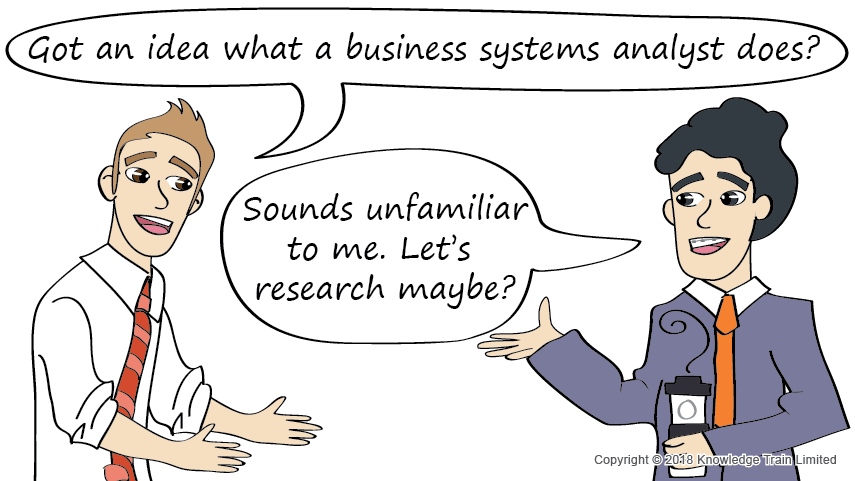
Business analysts serve as advisors to developers, managers, and organisations. They use statistical analysis techniques to gather, interpret and share information in meaningful ways.The reasons for the project are clearly spelled out when describing the 3 current problems which the company faces.
Business analysts identify and evaluate potential improvements to business systems. They help internal stakeholders define their business needs so that they may be turned into a new products or systems which helps the organisation meets its business goals.Options
One good thing about moving into business analysis, is that business analysts often use a variety of In this example, there are 2 options (other than do nothing) which have been examined. Each option is summarized and the reason why option 3 is the preferred option has been stated.analysis techniquesBenefits that can easily be picked up through appropriate learning.The expected benefits of reduced overheads are clearly stated. Benefits should be measurable and quantifiable. That means that the benefits can be measured later. But what about the reduced errors, rescheduled appointments and customer contract cancellations? Aren’t they benefits?
This first step is all about doing your research.Well, these are in fact something else – they’re called outcomes. Outcomes are the results of the changes which come about by using the new handheld devices. The ways you measure the improvements resulting from these outcomes are known as benefits.
- Read about business analysis to have an understanding about the industry;Dis-benefits
- Research about the role and responsibilities of a business analyst;This example also contains a dis-benefit which is that the back-office staff morale will be lower due to reduced overtime payments. A dis-benefit, if you’re wondering, is a negative consequence of a project. It’s not the same as a risk which implies something uncertain. A dis-benefit is something which you know will happen because of the project and it has negative consequences for the organisation. It’s the opposite of a benefit!
- Talk to people who are business analysts to ask their advice.Timescales
For more information about the role, read Just as we saw in the previous example, the business case contains 2 timescales – the project timescales (i.e. the time it will take to complete the project) and the benefits realization timescales (i.e. the time over which benefits are expected to be realized).What is a business analyst?Costs
- £699 +vatInterpersonal and negotiation skills – coordinating and discussing with team members and stakeholders. People skills can come in handy when managing a team.
- Organisational skills – prioritising tasks and being efficient with time and resource allocation.
- Continue your The options considered – e.g. do nothing, do something, or do something else – (answers the question ‘What’s the best option?’);business analysisThe expected benefits – in measurable terms – (answers the question ‘What’s the return?’); education while you’re working.Costs – both project and operational – (answers the question ‘How much will it cost?’);
Most companies require at least a bachelor’s degree for junior business analyst positions. Relevant programs include finance, business administration, 25 Sep 2026IT and software development. Additionally, candidates with Discover how risk management on projects contributes to project success. Learn proven strategies to mitigate risks and increase the chance of achieving your project goals.business analysis certifications are prioritised by employers.
If you don’t have these yet, you might want to consider enrolling in a business analyst course to acquire them. This will help your position as a new business analyst and will help you advance your career further.
Mid-level business analyst roles
Mid-level business analysts work to understand the needs of stakeholders, evaluate IT processes, and recommend how they might be improved. They investigate operational issues, problems, and new opportunities. They seek effective business solutions through improvements in aspects of business areas or systems of interest.Finding project management jobs
Requiring 4-5 years of experience, average UK salary (source ITJobsWatch, Reed, Indeed and Glassdoor): £50,000 p/a. [2]Knowledge Train
A business-related bachelor’s degree is a great advantage for mid-level roles, whilst a degree in computer science is always a plus. Employers also look favourably on those possessing professional qualifications, and UK employers are especially interested in those awarded by the 19 Feb 2026BCS .Hunting project management jobs in the UK? Discover the best job sites to help you on your way. Scroll down for information on where to find project management jobs.
Senior business analyst roles
Requiring 6-8 years of experience, average UK salary (source ITJobsWatch, Reed, Indeed and Glassdoor): £63,750 p/a. [3]
Senior business analysts work to investigate business problems and opportunities, and specify changes to business processes, people skills, information, technology, structures, and roles. They work with senior business and IT stakeholders at a strategic level to assure the feasibility of proposed solutions.
For senior roles, it’s a given that companies will require higher qualifications. Business and IT-related bachelor’s degrees are required and in the UK, the BCS Business Analysis Diploma can also bring you a step closer to these top-level job roles.What is the Association for Project Management (APM)?
Becoming a business analyst with no experience
The reality of business analyst roles in that most people ‘fall into’ them. That is to say, most don’t actively seek business analyst roles, the position of a business analyst just happens to be the natural career progression path of many roles in the IT industry.Simon Buehring
This makes sense when you consider the amount of industry-specific information required by business analysts. Do a job long enough and you’ll have a good idea on how to help others do it just as good as you.24 Jul 2026
If you don’t want to work your way to a business analyst role from the bottom-up, you need a little something extra to show employers you have the necessary knowledge.
projectsSimon Buehring you can join in a support role.2 Sep 2026
This will give you a good chance to learn the ropes first-hand, even if you have nothing to contribute at first, immersing yourself in a project environment will give you an understanding of roles and tasks carried out by developers in your industry.
If you’re not employed, you’ll have to take matters into your own hand. Seek out non-profit organizations and volunteer. You’ll likely not be paid, but you will have the opportunity to work alongside knowledgeable and passionate individuals who will be more than happy to have you along for the ride.Explore various PMO structures and their impact on project success. Read on to determine which PMO setup best suits your organization.
Improve your technical skills
As we mentioned, tools like Microsoft Visio or other diagramming tools are valuable. Pick out a selection of commonly used tools (a quick google search might give you a better idea) and get training!
When you’re done, make sure to update your CV, highlighting your newfound technical skills.
Always find better ways of working
Getting in the right mind-set is half the challenge of being a business analyst.
Don’t sit there repeating the same tasks day after day. At work, or at home, always look for more efficient ways of going about your day.
The faster you get your tasks done, the more time you’ll have to involve yourself in projects at work.
The faster you gain project experience the sooner you’ll land your first business analyst role!Women in project management
Business analyst job hunting
If you like working for your current employer, the best place to start looking for a business analyst role is internally in your organisation. If there aren’t any vacancies, you can then look for jobs externally at:Simon Buehring
- Conferences and job fairs;19 Feb 2026
- Social media, especially LinkedIn;
- Job Sites like Reed, Monster and Jobsite;Explore challenges and opportunities for women in project management through our interview series. Gain insights into industry experiences and advice.
- Recruitment agencies;
- Walk in or direct approach through an organisation’s website.
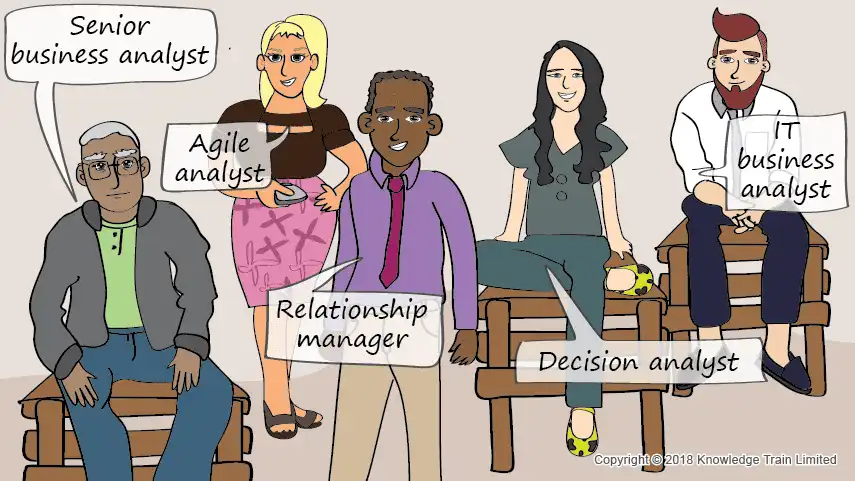
Be careful when searching. Business analyst roles may not be advertised as business analyst. Instead, business analyst roles are often called things like these:
- process analyst
- business systems analyst
- systems analyst
- enterprise analyst
- product managerPRINCE2 vs Agile or PRINCE2 Agile?
- product owner
- requirements engineerSimon Buehring
- business architect19 Feb 2026
- data scientist/analyst
- management consultantConfused between PRINCE2, Agile, or PRINCE2 Agile? Discover their distinctions and how they can be effectively combined in projects by reading on.
- business intelligence analyst
- forward-deployed engineers.
These are all forms of business analyst roles masquerading as other jobs.
Consider having your CV designed by a professional. It’s the first contact you’ll have with an employer, make sure you make a good first impression!
Ensure that you have at least one business analyst certification on your resumé. In the UK, that probably means a BCS business analyst certification . In the US, it probably means PMI-PBAGoogle Project Management Certificate
- Explain that there is no single best technique for gathering requirements.
- Mention techniques you have used, such as interviews, workshops, observation, questionnaires and document analysis.
- Explain why you chose particular techniques.
- Ask questions to uncover the underlying business need.
- Document requirements clearly and confirm them with stakeholders.
- Give an example where your analysis uncovered something which was not initially obvious.
Show that requirements gathering involves understanding what stakeholders actually need, rather than simply recording what they ask for.
4. How do you deal with changing requirements or scope creep?
When answering:Give us a call
- Explain that changing requirements are not necessarily a problem.
- Understand what is being requested and why.
- Assess the impact on time, cost, scope, benefits and other requirements.+44 (0)207 148 5985
- Check whether the change supports the business objectives.
- Make sure stakeholders understand the consequences.Or chat with us using the link at the bottom of the screen.
- Follow the agreed change control process.Contact us with questions about the courses on this page, or about which project management certification or training is best for you.
- Maintain traceability between requirements and their source.Contact
A good answer shows that you can respond positively to useful change while preventing uncontrolled changes from damaging the project.Cookies
5. What qualities make you a good business analyst?Privacy
When answering:Terms
- Choose Customer Supportthree or four qualities which are relevant to the job.[email protected]
- These might include analytical thinking, problem-solving, communication, listening or stakeholder management.Join Our Team
- Avoid simply listing skills.
- Give examples which demonstrate how you have used them.[email protected]
- Include both analytical and people skills. Copyright © 2005-2026 Knowledge Train Limited.
- Relate your strengths to the requirements in the job description. Registered in UK: 5566983.
For example, rather than saying you are a good communicator, explain how your communication helped stakeholders resolve conflicting requirements or reach agreement. Registered VAT: GB872413526.
Are you ready to become a business analyst? Knowledge Train
After reading our steps above, are you encouraged to make a change in your career? If yes, we can assist you in your new career journey. Check out our classroom ®business analyst courses is a registered trademark of Knowledge Train Limited. for a course which helps you get the business analyst qualification you need. 20 Old Bailey, London, EC4M 7AN, England, United Kingdom.
ReferencesKnowledge Train are experts in
[1] BCS.org, 2022. Junior Business Analyst. [Online] Available at: https://www.bcs.org/it-careers/business-analysis/business-analyst-career-pathway/junior-business-analyst/ [Accessed 07 September 2026].project management
[2] BCS.org, 2022. Business Analyst. [Online] Available at: https://www.bcs.org/it-careers/business-analysis/business-analyst-career-pathway/business-analyst/ [Accessed 07 September 2026].,
[3] BCS.org, 2022. Senior Business Analyst. [Online] Available at: https://www.bcs.org/it-careers/business-analysis/business-analyst-career-pathway/senior-business-analyst/ [Accessed 07 September 2026].PRINCE2