Unlock your creative and organisational potential with mind maps

image

Introduction to mind maps

Mind maps business analysis technique

Definition and purpose of mind maps

A mind mapSelf-paced is a visual tool designed to organise and structure information in a non-linear manner. It begins with a central concept, typically represented as a word or phrase, from which related ideas branch out. These branches can contain subtopics and further details, creating a clear and hierarchical representation of information. Mind maps are valuable for visualising complex ideas, fostering creativity and supporting memory retention, though effectiveness varies by individual learning style. They are widely used across various fields, including education, business, and creative writing, to streamline thought processes and improve clarity.Change Management Foundation self-paced online

Historical background

While similar visual mapping techniques existed earlier, British author and educational consultant £799 +vatTony BuzanAbout the speaker developed and popularised modern mind mapping in the 1970s, specifically introducing the term ‘mind map’ in 1974. Buzan advocated for mind maps to unlock the potential of the human brain, drawing inspiration from the way the brain naturally processes information. Over time, mind mapping has evolved significantly, integrating technology and digital tools to cater to modern needs. Today, mind maps are a staple in both personal and professional settings, offering a dynamic way to organise thoughts and ideas in a visually engaging format. This evolution underscores their enduring relevance and adaptability in an ever-changing world.Luz Blanca Flores is a change leadership coach and consultant who works with individuals and teams in manufacturing, health care, and education. She owns a consultancy focused on project and change management. Luz is a certified Lean Six Sigma Master Black Belt and Project Management Professional. She believes in practical action, compassion, and making change a positive experience.

The science behind mind mappingRelated courses

Cognitive benefitsIf you want to learn more about leading change, our Change Management Foundation and Practitioner courses are a helpful next step.

Mind maps are a powerful tool for enhancing The Foundation course introduces you to the basics of managing and supporting change. The Practitioner course builds on this knowledge, focusing on how to apply change management in real situations.memory retentionBoth courses suit people who want to support colleagues and teams during change. You will learn practical frameworks and techniques you can use at work. The Practitioner course is designed for those who want to lead change projects and develop their skills further. and cognitive processing. They can support visual learning and association, potentially making it easier to remember and retrieve information for many individuals. By structuring information visually, mind maps help to establish connections between concepts, facilitating a deeper understanding of the material. This process engages multiple cognitive functions, promoting a holistic approach to learning. Some studies suggest that using mind maps may improve recall by enabling individuals to visualise the relationships between ideas. Furthermore, mind maps encourage active engagement with the material, which is crucial for effective learning and comprehension. This visual representation of ideas supports the brain’s ability to synthesise and integrate information, ultimately leading to enhanced cognitive performance.Change Management Foundation

Psychological impactChange Management Practitioner

The use of mind maps also offers significant Bespoke in-house trainingpsychological benefitsTranscript. They provide a structured yet flexible framework that can help reduce stress, particularly when dealing with complex or overwhelming information. By breaking down large tasks into smaller, manageable parts, mind maps can alleviate feelings of anxiety and enhance focus. This method of organisation fosters a sense of control and clarity, allowing individuals to approach tasks with confidence. Additionally, mind maps stimulate creativity by encouraging the exploration of multiple ideas and perspectives. This creative freedom can lead to innovative solutions and insights, making mind mapping a valuable tool in both personal and professional contexts. By visually organising thoughts and ideas, mind maps not only improve cognitive function but also support psychological well-being, offering a comprehensive approach to managing information and enhancing productivity.Here’s the full transcript of the webinar.

Creating a mind map00:10:07 Luz Blanca Flores 

Tools and techniques: Confirmation, great. Thank you.

Creating a mind map begins with choosing the right tools and techniques to suit your needs. 00:10:13 Luz Blanca Flores Traditional: So, a lot of these are things we do know about change, and it’s great. And again, sometimes we know it until it happens in real time, and we’re trying to get our work done. Or trying to get someone to do something differently, or even working on ourselves on our own personal projects. We don’t always give ourselves the space to be uncomfortable with the shift, even if it’s a great shift, even if it’s a great shift. The other way that I like to look at change is another model. So, the 7 dynamics are really helpful in the initial places and just that general context, but there’s also a process that we follow, we tend to follow as human beings in navigating any change, and it’s akin to the grief process. This is a model that was created by Kubler-Ross, many moons ago. And we do find that often folks will follow this process.  James in the chat is saying that those initial 7 dynamics change are relevant, right. And they happen when we implement change. Yes, having positive communication can help, and we don’t get to avoid it, right? What we want to do, and I love that you’re saying, like, being very proactive, right? If we know this is how folks will operate, how do we proactively support their transition through the process instead of fighting it? Right, and that’s what makes this human side of change so powerful. It makes it so powerful because we are not fighting against the current. We’re not fighting against human nature; we’re allowing for that to flow and using it as part of our transition and not making it a bad thing. methods involve using pen and paper to draw out your map, which can be highly effective for those who prefer a tactile approach. This method encourages a hands-on interaction with ideas, allowing for spontaneous changes and additions.00:12:03 Luz Blanca Flores 

For those who prefer digital solutions, several software options are available that offer flexibility and convenience. Digital tools such as : So, with Kubler Ross, this change model sometimes you may see this change model as a linear or even just a curve for that flows. I like this model that shows that they’re intertwined and that we can go back and forth between them. But often what we’ll see is these stages of change. We can start off, and I often use the example of going to the supermarket. When I go to the supermarket, often when I walk in, and it could be after a busy day, I want to grab something. Very often, they change where things are in the supermarket. I don’t know if it’s like that in your part of the world, but in my part of the world they often change where things are in the supermarket; they will change the aisles, they will change the locations on the racks, they will move things around, and even for the smallest change. I will have a reaction and it’s very common. This change model is very common that we initially start with denial, I can’t believe they’ve done this again. It’s just really happening, is this happening again? Like, I can’t believe they’re really doing this. I once did a workshop with one of our local supermarket companies and they apologise.MindMeister00:13:16 Luz Blanca Flores , : The man who was there he apologised, he said, I’m so sorry. We just have, it’s part of our process, is what we do. So, they are acknowledging that it does make an impact and they’re doing it for very, very valid reasons, right? They’re doing it to increase sales to create more dynamic interaction, and more presence for us in the supermarket. I get it, and it can be frustrating. So, in the denial stage, I can’t believe this is happening, there’s a bit of a shock again. Then sometimes anger, right and all of these can happen in different frequencies, different volumes, right? I may have anger that may be little because, OK, it’s just a supermarket. It’s just my shopping, or it could be like or frustration that has built over time, where it becomes bigger, or it’s on top of a day when I just don’t have the bandwidth to handle one more thing that anger stage can be at different levels. But there is a bit of anger or frustration about the fact that this is happening. I’ve got to deal with this, and I have to address it right. And so allowing again for this to flow from there, move into bargaining, OK, where else can I find this item? Does it make sense where it might be, or do I have to ask for some help to find it? How do I do that?XMind00:14:29 Luz Blanca Flores , and : There could be some depression or sadness around, like the fact that I’m wasting time or using time in a way that I hadn’t planned, and allowing for that to flow, and then finally coming into acceptance. Often, you’ll see bargaining and depression switched but again, this is not meant to be a linear process. We bounce between the stages, if we are dealing with a much larger change, whether it is a transition from a job or a relationship or a financial hardship, this process can take longer. And we will bounce between those I know in some of my stages, I went through depression and bargaining for really long time before I moved into acceptance. And again, being aware of the fact that I am in the process, being aware of the fact that others may be in the process, can help with naming those stages. Understanding what they might need to be able to move forward, giving that energy and attention to be a safe space for yourself or others, is a really powerful way to navigate that. And really have conversations that are much more meaningful. Yes. So, Amber’s asking is the Kubler same as the old-fashioned grief model? It is based on the grief model, yes. And in any change, there is a grief, there is a transition of a loss of something, even if it’s a great transition. I’ve had folks who get married, and they have this wonderful, you know, new romance. And this new life that they’re creating, but they are also letting go of their old life. So, there is a loss in that, and it is based on that old-fashioned group model. Kubler-Ross did the grief model as well. Yes, it is based on that, and that’s why I show two different models. I show the dynamics of change and this change model so that you have different perspectives of what might be going on in some different language for sure. And then I think it’s James, yeah. James mentioned that they use the change curve to support and hold people, focus some workshops that’s a good way to communicate for sure.Miro00:16:39 Luz Blanca Flores  allow users to create complex maps with ease, offering features like templates, collaboration options, and the ability to integrate multimedia elements.: And so, this model is also something that can be very, very helpful in being aware of and recognising that even if I’m in, let’s say, I’m in the bargaining or the depression stage, it’s still progress. I’m no longer in denial or anger, for example, I’m not at the beginning stages of the process. I am moving along, and even though it may be putting a negative feeling to feel anger or to feel like I need to bargain or adjust. It is also progress along the path, and that can offer a space for us to be kinder to ourselves and to others, in that we are moving forward. That is part of this work is to have that acknowledgement of again our own humanity, and so yes so, thank you for the questions and conversation. So, what are some of the pitfalls that you fall into when you’re trying to manage change? What are some of the things that these models, whether it’s the 7 dynamics of change? Or the change model, the Kubler-Ross change model, that might be helpful in shifting your approach to navigating change. I would love to see some thoughts in the chat.

Regardless of the tool chosen, the fundamental technique remains consistent. Start with a 00:18:15 Luz Blanca Flores core theme: We’ve got 24 online, so we’d love to see some more thoughts as you’re engaging in this consideration around what does change mean to you? How does it help to know that their models that exist? And how are these models helpful? To delay as much as possible, Carla, can you say a little bit more about what that means? Delay as much as possible and then dig it first until I finish. I’m not sure what delays you’re talking about, yeah. Ah, thank you, Carla. Yes, try not to accept it. So, understanding that’s part of our initial reaction to change sometimes, even for again, for a good change there is that hesitation. And so, being able to recognise that’s our initial reaction and naming it, naming it is it, you know, is it surprise? Is it that shock? Is it anger, like what are those things? And if we can identify what those are for ourselves. Again, it helps us move through a process because if we just stay in shock, if we just stay in anger, if we just right, we miss out on allowing ourselves to go fully through the process, even if it’s for a silly change like the grocery store changing, where my stuff is. Yes, Sarah, thank you for that. Pitfall is making assumptions about how different stakeholders will react to change. Yes. So being able to prepare but not predict, love that Sarah, like that’s exactly what we want to be able to do, is have an awareness. These are all tools, like none of this has to be right, no one is going to follow an exact prescribed process. Even that change process, right? That had swirls in it. None of it is prescriptive, and that is part of what makes us great leaders. Is that not only are we prepared with models, methodologies, approaches, strategy, we are all so prepared to be present to what is and not just reactive, we can respond. And so, if someone does have a response or reaction to something that we say, how do we be? How are we present to that enough to be effective in addressing it? Yes, yes, Megan’s mentioning a pitfall trying to avoid change rather than accepting and embracing it, and focusing on the negatives rather than the potential opportunities the change may bring. Yes, and we’re going to get into a little bit more of a diagnostic model that will help with that as well, awesome. at the centre. This central concept serves as the anchor for your map. From this point, branch out into subtopics that relate directly to the central theme. Each branch can further divide into smaller themes, allowing for a detailed exploration of ideas. The flexibility of this approach means there are no limits to the depth of your mind map.00:21:15 Luz Blanca Flores 

Step-by-step guide: And then that’s mentioning, not assuming that everyone’s at the same stage at the same time. That is super powerful that we will have folks who are all different stages and being again being present to what is knowing that we have this information as a guide to the questions and curiosity we have, it’s going to be huge, excellent, excellent. So, as we move from understanding change to actually leading change, we’re already pointing to many of the areas that will be helpful. And one of these, there’s a quote that I love from soccer season. This is a one of the guiding principles I use when I think about change right. “The secret change is to focus all of our energy, not in fighting the old, but in building the new”. And not fighting the old means, allowing ourselves to let go and process whatever emotions and feelings we have about the changes, and then move into our vision for the future, and we can guide our folks to do that. So, one of the things that I like to focus on as we think about focusing on the future. Focus is an old-time management model. Franklin Covey is an organisation that used many, many models over the years around how to prioritise our attention and our actions. And the way that they framed it is something that I find super useful is that we have what’s called a whirlwind. It’s the thing that keeps you busy. Has anyone had the experience of having a super busy day, and at the end of the day, you know, you were moving, you were not stagnant. You were not just sitting on the couch doing nothing, but you were active, but at the end of the day, you felt like nothing got accomplished, then nothing was done, that’s living in the wrong one.

Creating a mind map follows a straightforward process, which can be broken down into a few key steps:00:23:10 Luz Blanca Flores 

  1. Identify the central theme: That is where you’re doing things that are important and urgent and things that you have to do, but not necessarily moving the needle. You’re not progressing in the direction you want fully. You may be keeping things at bay, you may be maintaining the status quo, but that’s the whirlwind. It’s just going to suck up all of your time if we let it. And then there are goals, these are things that are important or longer-term strategic initiatives that we may have that we would like to see progress, and what we want to do is be able to find a way to marry the two. We cannot avoid the whirlwind; the whirlwind is regular life. We all have things we must do, we have to eat, we have to sleep, we have to respond to messages, and emails and calls, and attention that’s needed from our family members and our friends and our life and our coworkers, right? We can’t avoid the whirlwind. And our goal is to make sure that we carve out time for those things that are super important to us. And those are those goals aren’t activities that are really important. So, how do we do that? Well, one of the studies that is super important and helpful in thinking about how we make sure that all of the things that matter happen is to consider the number of goals or initiatives that we are working on that are strategic, that do require time, attention, energy, and focus. And there is something to be said for the number of goals we have. And again, these are not just everyday things; these are strategic initiatives that take attention and focus to happen. They could be things like implementing a new software that doesn’t happen overnight, right? If you’re implementing something that’s going to change behaviours and change actions, that requires different set of energy and attention. You mentioned project management, many of us are project managers. It could be something personal.: Begin by determining the primary concept or theme you wish to explore. This could be a project, a topic for an essay, or any idea you want to expand upon.00:25:06 Luz Blanca Flores 
  2. Create initial branches: Whether it’s a new workout routine or a new health regimen, those things are not going to just magically appear in our lives without the proper planning, and attention, and constant reinforcement until it becomes regular life. And so, in addition to the whirlwind, the number of goals matters, if we have two to three goals, we have at least a 67% chance of achieving them right if we have two to three goals. The goals that are get achieved could be two out of the three or two out of the two or three. So, we have 67 to 100% chance of achieving those goals. If we add just one more we go to four, we get at most half. So, going from 67% as the least to 50% as the most that we could achieve in goals. So from 4 to 10 goals we might get one to two, and if we’ve got anything more than 10, we get now nothing. This is one of those ideas that if everything is a priority, nothing’s a priority, and anytime you get more than 10, honestly, if you get anything more than probably 4. You’re in a situation where, if that everything’s important and so nothing is. So, the goal is to identify those key two or three goals that we would like to see implemented and folks mentioned sustainable implementation, right, sustainable improvements, things that we can integrate into our normal workflows, our normal daily lives once we’ve implemented those. Two to three things, what happens? They become part of the world, and then we have space for the next two to three.: Identify three to five subtopics related to your central theme. These will form the starting branches of your mind map. Each subtopic should represent a significant aspect of the central theme.00:26:49 Luz Blanca Flores 
  3. Develop sub-branches: And so that’s part of what we want to be able to do to really see that progress and we elevate by completing things we don’t elevate by having 20 things on our plate that are important that never get addressed because we are trying to balance that along with the whirlwind, we elevate by consistently delivering on two to three things that are important. Take time and effort to integrate into our lives, into our workflows, into our daily activities. They become part of the whirlwind, and then we can move forward. So, when we think about this, how do we choose like? How do we choose what those two to three things are that we want to spend our time on? Well, I have a methodology; there are lots of methodologies out there on prioritisation, this is only one of them. I appreciate it because I like to think about impact as my priority. There are others that folks can use; use what works for you. If you have an organisation that uses a different style, use that. You get to choose how you prioritise, I like 2 by 2 matrices, I do and I like the idea of being able to bucket things. And so, what I’ve done with some of my teams is we’ve listed out all of our activities, all of our priorities, and actually gave them scores. We gave them scores on the amount of effort that it took to do them. You can quantify it in general, which makes sense, we did ratings, we’ve done hours of effort, we’ve played with lots of different things. You decide what works for you, and then impact is along the X axis along that bottom row there. So, increasing impact, increasing effort and in that we have the ability to start identifying what are those things that fit into the different categories and how much of my effort and my daily time I am spending in those.: For each initial branch, add further sub-branches to explore related ideas in greater detail. This step allows you to organise information hierarchically, making complex information more manageable.00:28:44 Luz Blanca Flores 
  4. Incorporate keywords and visuals: And so, I invite you to consider that, I invite you to list out and think about what are some of those things that you have on your list? Where do they fit in these categories? And how much time are you spending in each of those buckets? So, as you think about that, let me explain the buckets a little bit more. If we talk about the top left, the kind of mustardy colour yellowish colour, low impact and high effort, these are things that tend to be more bureaucratic in nature, lots of paperwork, like extra steps that take a lot of time and effort, but may not actually help us move things forward. Our goal there is to avoid those as much as possible, and if you can’t avoid them because sometimes there are compliance requirements, it’s a you know, hurdle that we must, must meet, do our best to minimise the amount of time they take. These could actually become some of your strategic projects. I’ve done that many times where you say, OK, this thing is taking us way too long to do, and we have to do it. How do we make sure that it’s as efficient as possible so that we are getting the goal met, but we are not utilising critical resources to maintain that? How do we do that? And so that’s a question we can ask, if anyone can think of examples of things in their lives that are low impact? They’re not getting the value they want out of it, but they take a lot of effort. They don’t have any examples of that in their own work or personal lives.: Use concise keywords to label each branch and sub-branch. Where possible, include images, symbols, or colour coding to enhance memory and understanding.00:30:35 Luz Blanca Flores 
  5. Review and revise: See some folks typing.: Once the mind map is complete, review it to ensure all relevant ideas are included and logically arranged. Adjust as necessary to improve clarity and coherence.00:30:46 Luz Blanca Flores 

By following these steps, you can create a comprehensive and visually engaging mind map that effectively organises and communicates your ideas.: So, while you’re typing, one example was I would put a lot of effort into creating presentations and dialogues for my management team, and inevitably they would change it. They would make changes, and then I’d have to put effort in again to make sure that it met all the criteria and so instead of putting all of my effort in upfront. I would draft my notes and make you know, make sure that I had the documents outlined enough where they showed effort that I put some thought into it, but I did not make them, you know, pretty and organised, and do all the things that made it up. You know, the final presentation and so instead I was able to give them th

Applications of mind maps

e draft, let them give me the feedback before it was perfected right, and that saves a lot of time. So, my effort was a lot less because I still was able to get the thing done, but not spend all of my time doing it. James mentions tax returns, yes, so fire safety inspections, right? So other admin types of things that are required, right? We want to make sure we meet those criteria and at the same time not put too much effort in. Yes, yes, Carl, the same thing, right, says sign for the new content. Leave time to revise for sureight, instead of trying to put all of my effort in make it perfect and then have to redo a bunch of it because it’s meant to be a conversation. So, where are those places we can do that right? So that’s a great place. Another area, thank you for the examples, those are great examples everyone, and so then the other area in the low impact, and low effort. So, these are things like social media, it doesn’t take much effort to look at a picture and put a like heart some type of a reaEducational usection. However, doesn’t make as much of an impact either, right? There are things that we can do on a regular basis that will eat a lot of time. I don’t know if folks have a lot of screen time, I know that it’s something that I’ve worked on for many, many moons, and it because it’s an ongoing epidemic, right? The amount of time folks are spending on their phones. On low impact, low effort activities that give them a bit of a boost but don’t really make things much better as they could.

Mind maps are a valuable tool in 00:33:19 Luz Blanca Flores educational settings: And so what are those things that are easy to achieve yet don’t have as much impact? We wouldn’t want to look at those two. Because that’s another area where we can make huge strides. If we really are intentional about how we’re spending our time, does anyone think of other low impact, low effort types of things that could take time? They’re easy to achieve. So, I don’t discount them, I think that part of why social media is such a draw, at least for some folks. I know for me it’s I don’t live next to most of my family members, and so having a chance to see pictures or activities or things is a low impact, but it’s a low effort. And it maintains the relationships so that when I do see them in person, I do have something to talk about. So it doesn’t mean I’m going to eliminate it, but I won’t be spending hours on my phone trying to keep up with everybody, I will use it strategically. So that’s another area to think about is where are we spending our time? And what impact is it having? We can reevaluate, you know, are those places where I want to spend my time? Then we have high impact items, so high impact, low effort are things that we consider quick wins. One of my favourite example of that is if I end up in an email chain that is more than 3 or 4 responses, I will pick up the phone or set up a meeting for us all to get together to talk about it. Because something is lost in translation on a message, and we could spend, I’ve had folks spend days writing emails back and forth and it gets more heated copy, and reply all. I don’t know if you guys have had that experience where you’ve had email messages that go on for far too long or chats in, you know, any of the Slack, Teams, etc where you’re like, oh, we are not making progress here. Let’s get together, let’s figure this out, and often a conversation could be a quick win., where they enhance both learning and note-taking. By visually organising information, students can better understand and remember complex topics. The process of creating hand-drawn mind maps encourages active engagement, allowing students to personalise their learning. This method is particularly effective for brainstorming, revising, and summarising information, making it an essential strategy for effective study habits.00:35:29 Luz Blanca Flores 

Professional and personal use: To get folks to understand what they’re saying or what’s happening, and it can have a big impact because now instead of us swirling in this e-mail chain, we’re moving our project forward, we’re moving our initiative forward, we’re having that conversation. I’ve also had that happen in text with relationships where it’s like, wait a minute, we’re not yelling, what happened? let’s talk. So sometimes we lose things in the things that make things quicker, whether it’s chatting or texting or other forms of connection, and picking up the phone and having that conversation can make all the difference. So that’s something that could be high impact, but it’s low effort. I have often been surprised at how big a difference a quick 15-minutes conversation can have in my relationships with folks where we think that it should take longer, and it doesn’t have to, it doesn’t have to, but just even putting that even the low effort in of doing that is a big deal. And then we have high impact, high effort, these are the strategic projects when we talk about those two to three projects, you want to have on your list, these are the area. High impact, high effort, often it takes a lot more attention and effort to make them happen and the impacts are going to be huge, and they’re usually not immediate impacts. And it’s harder for us to see them to have the vision to understand how they’re important. You’ll see this with health like a lot of health types of projects and initiatives. You’ll see that with strategic initiatives in your workplace, I know now folks are mentioning IT projects or technical projects and technical programmes. They will have usually very high impact, but that takes effort to put them into place. And so, thinking about what are those areas of attention that we would like to have, those are the two to three. And again, if I list out all of the things that are important to me on my list, I will have more. I will have more than enough in each of these, and that’s where this quote is. There will always be more good ideas than there’s capacity to execute right now.

In the professional realm, mind maps are instrumental in 00:37:47 Luz Blanca Flores creative writing: We can do everything, I truly believe we can do everything, we just can’t do everything all at once. And the way to be a leader in change is to prioritise is to make sure that what we’re doing is something that creates a sustainable solution that folks adopt and embrace to the best of their ability. They’re not always going to embrace it, excited. Most people don’t like change, right? However, that they can embrace it enough for it to be sustainable. And once we’ve done that, it becomes part of our whirlwind and so really being very conscious about the decisions we are making, where our attention lies, and where our focus is, and what are we getting in terms of impact of that. And sometimes that means shifting, sometimes that means taking that look at things, and you know what? I thought this was going to be a high impact project, but it is becoming way more effort than I thought and maybe we need to reprioritise for a time when it will have more of an impact and be less effort, or when that effort makes sense for the impact involved. For folks in like the project management space, 70% of our projects never come to completion and a good portion of them should not come to completion. If we’ve done our work well, when we understand the return on investment, we understand the goals that we have; some projects are meant to fail. Some projects should be stopped, and often we get so wrapped up in the fact that we thought it was important and we thought it was good that we lose sight of the fact that it’s supposed to have a certain impact. And so, how do we make sure that we do that? We keep checking in. And so, I would recommend right thinking about where are we spending our time. Where do these fit? and with my teams have also had like we do a quarterly review where these fit. they still meet those criteria. Do they still have the impacts, or the effort that we thought? How many did we complete and get off of our plate? Where are we in this work? Because then we can really see progress, because often folks forget where we came from and only see where we need to go when we live in this gap of where we want to be and where we are, instead of living in the gain of that growth, if anyone has an interest in that kind of methodology. There’s a book called The Gap in the game that I highly recommend as a leader in thinking about how are we communicating our work. How are we communicating the and creating momentum and morale for maintaining especially, those high impact, high effort projects that don’t happen overnight? How do we maintain that enthusiasm? Is focusing in on the gains and focusing on the momentum that we’re building. and content creation. Writers utilise mind maps to structure their ideas, develop characters, and plot narratives. By visualising thoughts and connections, they can organise content more coherently and creatively. This approach aids in overcoming writer’s block and encourages innovative storytelling.00:40:44 Luz Blanca Flores 

In : And so with that I can want focus in the high impact areas. So, how do we minimise the low impacts? They don’t go away. The low impact areas are often part of our whirlwind; they are the whirlwind. And so, what we want to do is focus our attention on those two to three big projects, on those high impact items, and acknowledge that we can’t get rid of the wrong one. So, what happens when you do that? Like, what are some of the things? Has anyone had experience of doing that? Does anyone have any thoughts about how this approach can be helpful? You can write them in the chat.project management00:41:53 Luz Blanca Flores , mind maps provide a clear overview of tasks and objectives. They allow teams to break down : You see, some folks are typing. Awesome.projects00:42:10 Luz Blanca Flores  into smaller, manageable components, aiding in efficient planning and execution. By mapping out project timelines, resources, and responsibilities, teams can ensure that all aspects of a project are covered, enhancing collaboration and productivity.: So, as we identify what those key initiatives are now, we have to get into, OK, how do I actually the change right. Part of leadership is prioritisation, part of the leadership is holding the vision, holding that future of what we could create. And that is a huge part of leadership. We forget sometimes that’s part of our job is to hold that vision, understand why it’s important, remind people on a regular basis about why it’s important. Yeah, so, learning from other projects and similar to value the risk of the current project, great. So that’s also part of that thinking through. Does this make sense, and where does it fit in this prioritisation great? Thank you for that, Carla. How do we have the ability to diagnose the reactions? This is one of my favourite models for creating change, it’s called managing complex change, and with this, it is a nice matrix and let’s talk through what the components are and how we make change? So you’ll see that there are 5 categories across the row. Vision, skills, incentives, resources, and an action plan. If all 5 exist, we have change. If anyone is missing, we get something else, we get something else that is not the change we want. And this is a great way to not only diagnose, but be proactive in our work as a change agents and leaders. And also to be kinder to ourselves and others, and let’s talk about why. So, the first piece is what are these elements? Well, the vision is what is it we’re doing here? Like, what is the project, what is the initiative, what this is where those two to three goals. I would take this and list out what each of these items are in order to make it happen. And we have lots of other tools, we’ve got change management, project management tools, and templates, and Gantt charts. All the things, all of them feed into this.

For personal organisation, mind maps offer a flexible way to plan goals and manage time. They help individuals organise their daily tasks, set priorities, and track progress. This visual method of organisation can reduce stress by providing a clear structure for managing personal and professional responsibilities. Mind maps can also be used for decision-making, enabling individuals to weigh options and outcomes visually.00:44:39 Luz Blanca Flores 

Overall, mind maps serve as a versatile tool across various fields, accommodating the diverse needs of individuals and teams. Whether for educational, professional, or personal purposes, mind maps offer a structured yet flexible method to organise thoughts and achieve clarity and efficiency.: But if we don’t have the again as leaders, we don’t get to think just as managers checking boxes, making sure things happen as leaders, our job is to hold the vision and see that we are on track with where we’re going in the direction of that vision. And so that first step there, that vision is so important. If we don’t have vision, folks are going to be confused. You see that first row there where vision is missing, we get confusion, and you’ll see this happen over and over and over again. Does anyone have any examples? Feel free to write in the chat of any of these items missing, and how that exposes a gap that we need to close in order to really get some more progress in our work. So, if the vision isn’t clear and that vision is so it takes time often to be really clear about that vision. So, what does it look like? What does it feel like? What are the metrics that drive that? What are the metrics look like when you’re in that new space? How do our days, you know, our daily activities change if we’re working on a technical project? What does that shift in the day-to-day? Of the people who are working in that role, or those roles, or interacting with that process, what does that look like? And it doesn’t mean we have to have a perfect vision. However, we do need to make sure that we have a vision at all. And that we refine the vision as we gain more information. It’s very important because if we don’t have a vision, we don’t have any direction at all, and when folks are confused, they make things up, they will fill in the gap. People don’t like to stay confused, I don’t know if you’ve ever experienced that yourself. If that we fill in the gaps, if we’re not clear about the vision of an initiative, a business idea, a venture, a relationship, we lose track and we will make stuff up, we’ll make stuff up, and that doesn’t help anyone.

Tips for effective mind mapping00:46:51 Luz Blanca Flores 

00:48:53 Luz Blanca Flores 

To enhance the clarity of your mind map, focus on using concise : What is this we’re working on, and then we get into the details, and if we don’t remember why we’re here, we don’t remember why it’s important. It’s so easy to get caught up in the details and use that as an excuse not to move. And if we understand that vision and why it’s so much more important and keep that top of mind, then we can actually get through things a little bit easier. We have more incentive to make things work. If we’re super clear about the vision. And if we have confusion that becomes insidious and toxic to the work that we’re trying to do, and people get disengaged, and that’s not what we want. We want to keep people engaged and why it’s important, and if we need to shift priorities, we do, we do. But if it’s identified as something that is important enough for us to attach resources, time, focus, attention, then we need to make sure that’s communicated very clearly on a regular basis. Next one is skill, so, skills are the abilities that we have to be able to do the work in the new environment. So, we hold the vision, and often we have this vision of what it is, and then the way we are today does not support that vision; things have to change. Things need to be adapted, adapted in order to meet this new expectation, and I’ve worked with city governments. Often, we’ve had transitions to new IT systems, but folks were used to paper where they were used to the old system that had certain windows and certain methodologies that they understood, but they didn’t have the skills to work in this new environment. These are the folks that they were working with didn’t have the skills, they didn’t know how to do it and if we don’t have skills, we create anxiety. So, if you have a reaction to your work that is anxious, nervous, unsettled, then we may want to look at skills. If we look at skills, it’s a different approach. OK, so where is the gap in skills? Is the gap in skills that we need to train someone? In the way to do it, they totally have the capability of doing this, and we can train them or provide resources or tools, right? Like, what are the ways that we can get them to uplevel their skills? Or even shift their perspective about the skills they already have to be able to do this. I know, as my children were growing up. I often would relate their anxiety to something that they didn’t realise they had already done. So for example, if they were trying a new task or they were in a subject that was challenging for them in school, I would relate it to my son’s video games and he was never, you know, I don’t know if you guys play video games or have experience with games that often, the first time you play, you’re not great at it like. You’re learning all of the moments, you’re learning the storyline, you’re understanding where the buttons are, and which one does what. No one just jumps in as great at the first time they’re playing anything or doing anything, and so you don’t have the skills yet.keywords00:52:11 Luz Blanca Flores  that capture the essence of each idea. This approach makes the map easier to read and understand. Organise your branches logically, ensuring each level of the map builds on the previous one. Colour coding different branches can further aid in distinguishing between various themes and topics, making the overall structure more intuitive. Utilising consistent symbols or images can also enhance visual appeal and support memory retention.: We have past experiences of how we learned how we grew our skills, and that’s what I would do with my children as they were growing up, is point them back to, hey, I get that this is new for you, and you have this nervousness about it. And look at this entire body of evidence of how you have the ability to adapt and grow and learn, and we can do it again, you can do it again. And that may be part of the conversation to have with your teams, your staff, yourself about that anxiety. If anxiety comes in, what skills do we need? What do we need to nourish and grow, and maybe even adapt, and skills that we already have to be able to handle this new environment that we’re creating based on the vision that we have? Next is incentives, and incentives does not mean money all the time. Sometimes it’s money, I’m not going to lie, that’s of great incentive for many, many folks and it is not the only incentive, right. What are some of the incentives that folks have for doing this? Is it a better work-life balance? Is it a more efficient process? What is the incentive for what level of the organisation? I know that mentioned like the vision, needs to be at all levels. The incentives needs to be at all levels, worked on initiative projects, that when we implemented them it meant people were going to be out of work. What incentive do they have to help us? Absolutely none. If anything, it created more of an opportunity for resistance. Which is the that what comes up when we don’t have incentives, how do we make sure that folks understand what’s in it for them? We have that what’s in it for me acronym.  Why is it better for them to do this than not? What is the motivation that they have that incentive to make it happen? How is that helpful? And how do we make it real for them, right? And understanding that when resistance shows up? We need to do a better job of communicating the incentives and the motivation that we want to have. Like, what does that look like for them?

Avoiding common mistakes00:54:25 Luz Blanca Flores 

One common mistake in mind mapping is overcrowding the map with too much information, which can lead to confusion. To avoid this, maintain a clear hierarchy and limit the number of branches to prevent clutter. Another pitfall is neglecting to review and revise the map. Regularly updating your mind map ensures it remains relevant and useful. Additionally, ensure that all connections between branches are logical and coherent. This practice will help in maintaining the integrity of the map and achieving your intended objectives. By being mindful of these potential issues, you can create effective and meaningful mind maps that serve their intended purpose.: And sometimes it is, someone’s going to be out of a job, and they’re building skills for their next job or that they’re going to have an opportunity to do something in a different environment or a different department. What is it that we are creating here as incentives? Why is this so much better for our clients, our customers, ourselves, our lives, our health. Because it’s very easy to just think short-sighted, what’s right in front of my nose versus a bigger picture, there are lots of studies that talk about seatbelts, for example, right. Like there’s a lot of resistance folks had to putting seat belts on because they’re uncomfortable. They’re not you know, it doesn’t feel good, but what’s the incentive to do that? Well, the incentive is you can actually save your life or the life of someone you love because they had their seat belt on in case of an accident. But that’s not like right away, right? What’s the incentive? And sometimes folks put in negative incentives here in the States. We have lots of seatbelt laws, and people will pay money and fines if they don’t have seat belts on. So that’s another way that they’ve created an incentive to do something short-term that has a much more strategic value because it doesn’t happen every time. Thank goodness, knock on wood, we don’t get into accidents every time we get into a car, and it’s really important to have seatbelts. So, what is the incentive for folks? How do we make sure that they have an awareness of that incentive? So that they can actually continue to work through that resistance that comes up.

Future of mind mapping00:55:55 Luz Blanca Flores 

Technological advancements: Another way I like to think about resistance as well is it’s like the Canary in the coal mine, right. It’s a good signal that we’re missing something and that we need to close that gap in order to really move ourselves forward. And if there isn’t a clear incentive about what’s in it for each participant in the project, each key stakeholder, then we need to maybe reevaluate why we’re doing this. Open to thoughts and questions as you think about them in the chat. Next is resources, if we don’t have the right resources to create frustration, right, and resources could be time, money, effort, tools that we need in order to be able to successfully implement this change. And if we don’t have that, we get lots of frustration, because if folks have the vision of what we want to create, they have the skills, they have incentives, they know why we’re doing this. We have an action plan, so we know what to do, but if we don’t have the resources to get it done, it creates a lot of frustration and pushback that we get from folks. Because they if they don’t have time and attention to put towards things, it’s not going to happen. It’s just not and so what resources do we need to set aside, do we need to make sure that we have allocated to making sure that everything else comes together. So, folks are frustrated I would check in, What resources are missing? And then lastly, action plan, what are the steps we’re going to take those of you who are project managers and deliverers, or systems you know how important an action plan is, and if we don’t have an action plan. If we don’t have a clear step-by-step way of getting to where we want to be, we have false starts, we have again, people are guessing, people are guessing about what’s next to do, when to do it, how to get it done. And so if we don’t have those pieces, we can be in a lot of trouble.

The future of mind mapping is poised for transformation through 00:58:07 Luz Blanca Flores technological advancements: Would love your thoughts and reflections on this model. It blew me away, I love this model,  I use it all the time, and it is not perfect. A friend of mine likes to say all models are wrong, some are more wrong than others. So I love this model, but it is not the only way to address things, it is not going to be comprehensive and complete in all scenarios. However, it is a great place to start right, using these models, any of the models that I’m sharing any of the models you use on a regular basis. This is why people keep coming up with new models, because they’re never going to be complete and perfect. Yet having a model gives you a chance to step away, detach from the initial reaction emotionally, and give yourself a chance to be leader.. With the integration of artificial intelligence, mind mapping tools can offer personalised suggestions, enhancing idea generation and organisation. Virtual reality may also play a role, providing immersive 3D environments for an enriched mapping experience. Cloud-based platforms are likely to improve collaborative capabilities, allowing real-time updates and teamwork across global locations. As these technologies evolve, mind mapping tools will become more intuitive and adaptable, further embedding themselves in educational, professional, and personal contexts. This evolution promises to make mind mapping even more accessible and effective.00:58:57 Luz Blanca Flores 

FAQs: OK. Yeah, thank you.

What is a mind map and how does it work?00:59:00 Luz Blanca Flores 

A mind map is a visual tool that organises ideas around a central theme. It uses branches to explore related subtopics and concepts.: For those chatting, so what does it take to be a leader? What does it take to be mindful of the human side of change is to acknowledge that feelings and reactions, and frustrations will come up; they will always come up. We are human beings, we are creatures of habit, and we don’t like to be thrown off our game and what’s comfortable. Some of us initiate that and we still have the emotions; these tools will help us make sure that we don’t fall into the pitfall of seeing someone’s confusion as an attack, someone’s resistance, as their lack of engagement. No, it is a normal response to a gap, it’s a normal response and a reasonable response, and we take that seriously, and if we are actually taking that person’s perspective and seriously, it is amazing the adoption rates that you can get. I used to have an employee who was just a curmudgeon; he could not say a more positive thing about anything, and he was my greatest ally because he spoke up. I loved it when he said something because I knew that he was going to be the one to point out the confusion, the anxiety, the resistance, the frustration. Like I knew there was going to be a person who was going to tell me the real story instead of saying. Ohh yeah, yeah, this is going to be great, and then they, you know, move on and they do whatever they want anyway. And so I appreciate those folks, the folks who will speak up, the folks who will tell me things are wrong or they don’t feel right, because that gives me a chance to go back and look at what we’re missing. And so, the question, you know what happens when more than one is missing? Yes, you can also think have a situation where folks are anxious and confused, absolutely. So anxious and confused, could be vision and skills right? So I would look back to the model James and ask where does this fit? What are some of the things that I’m missing? And identifying the feeling helps us get started, right, and sometimes we can be confused. I might see resistance as anxiety, I might see frustration as confusion. And so again, this model is not meant to be perfect, it is meant to be a starting point.

What are the benefits of using mind maps in education?01:01:28 Luz Blanca Flores 

Mind maps enhance learning by visually organising information, improving comprehension and memory retention.: And so maybe I misinterpret resistance, and it’s actually frustration. So ask more questions, get into this model. I’ve actually shared this model with folks and say, OK, what do you feel like, do you feel like we have a clear vision? What is it that would help you feel more comfortable with this change? And then we can talk about what is missing? What is it that we need to fill in the gaps on? And what would be helpful? And then try it out, and then see if it changes, and if it doesn’t change, what else is missing? It is meant to be like a conversation starter, right. And what do we want to do to try a solution? Again, with human nature, there are some things that are pretty consistent, right? We do need to eat, we do need to sleep. You know, those are some basic things that functions that we have, right, like we need those things and the rest is kind of interpretation. And we’re not going to always be perfect in identifying and solving each one. And if we’re willing to try together, we get more buy-in. We have folks who see us as human beings, we see them as human beings, and we’re willing to work together toward a common goal and a solution that is adapted. So yeah, thanks James for the question, right. We could definitely have situations, and as mentioned earlier, we could have situations where someone is confused, while someone else is frustrated, and someone else is anxious. And all depending on where they are in the process, where they are in their skill sets, where they are in the amount of change they’re being affected by. And how they process that for themselves? I would also invite you to consider how you are feeling about some changes and where do you need that clarity? Because it all starts with the leader, if as a leader, I don’t have these set, I’m not going to effectively create change. So what do I need to build, and then how do I continue to refine that based on the feedback I’m getting from folks in the different levels of this?

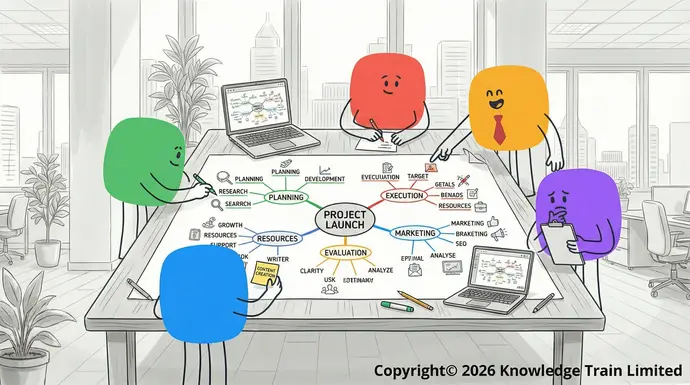
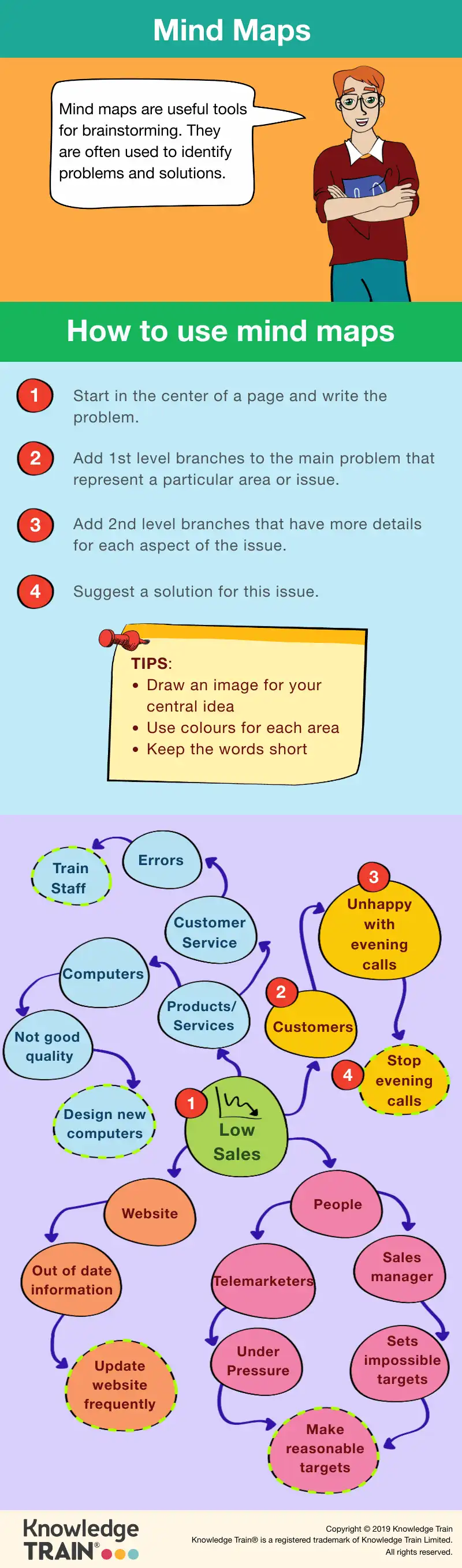
Mind maps business analysis technique infographic.