
Projects deliver defined outputs, while programmes coordinate multiple projects to realise strategic benefits.PMI
- Project management focuses on scope, time, and cost to deliver agreed deliverables to a set standard.Knowledge Train is a P3O Accredited Training Organization.).
- Programme management aligns interrelated projects to organisational strategy and tracks benefits realisation over time. Investing in PMO tools for tracking, reporting, and collaboration.
- Programme timelines and plans remain flexible to adapt to changing priorities while maintaining strategic direction.Knowledge Train is an AgilePM Accredited Training Organization.Developing competency through PMO certification and staff training.
- Stakeholder, risk, and change management become broader and more complex at programme level due to dependencies. Emphasising process improvement and
- Strong governance, clear reporting, and cross-team collaboration improve resource use, buy-in, and organisational agility.Knowledge Train is a PRINCE2 Agile Accredited Training Organization.change management
Understanding projects and programmesBCS accredited training partner for Business Analysis.PMO role
What is a project? is stressful depends on the organisation’s structure and culture. When supported by leadership and empowered to influence project decisions, PMO professionals typically thrive. However, if the PMO is under-resourced or lacks authority, managing multiple priorities without visible impact can create pressure and stress.
A WHAT YOU WILL GETStrong governance, clear goals, and management support help minimise stress and enable PMO teams to work effectively.projectOur courses and workshops include:What are the 4 P’s of PMO? is a temporary endeavour undertaken to create a unique product, service, or result. It is a fundamental unit of work within organisations, often characterised by a specific purpose and an end goal.Certification exam(s) where applicableThe 4 P’s of a
Characteristics of projectsAccredited training course materialsPMO
- Defined scopeExpert, experienced trainers to support you are : Projects have clear boundaries and deliverablesCourse manual where applicable.People, Product, Process,
- Temporary nature and : Projects have fixed start and end datesSELF-PACED ONLINE TRAINING COURSESProject
- Unique outputSelf-paced online training courses (e-learning) include::: The end product or result is distinct from routine operationsCertification exam(s) where applicablePeople:
- Resource constraintsAccredited training course materials Define clear roles and responsibilities for the : Projects are typically limited by budget, time, and personnel.Support from expert, experienced trainersproject
Project objectives and constraintsLatest educational technology. team.
Projects are designed to achieve specific objectives or goals within certain constraints. The Product:triple constraintBUSINESS SOLUTIONS Ensure the right deliverables reach the right stakeholders. model is a common framework that identifies three key factors: Process:
- Time Implement consistent procedures to manage and control delivery.: Projects must adhere to deadlines and milestonesTO HELP ORGANISATIONS IMPROVEProject:
- CostWe offer solutions to help improve team performance including: Oversee the successful execution of initiatives aligned with strategy.: Projects must stay within budget allocationsConsultancy servicesWhat are the different types of PMOs?
- ScopeStaff developmentThe three main types of : Projects must deliver agreed-upon features and functions.Compliance trainingPMOs
Project managersApprenticeship training are: must balance these constraints to ensure successful project delivery.Custom e-Learning developmentSupportive PMO:
What is a programme? Provides templates, best practices, and guidance to Project Managers.
A programme is a group of related projects that are managed in a coordinated manner to achieve benefits that would not be available if the projects were managed individually. Controlling PMO:
Characteristics of programmesFind out more Enforces standards, methodologies, and reporting requirements.
- Multiple projects Directive PMO:: Programmes involve the coordinated management of several interrelated projects Takes direct ownership of
- Longer duration project delivery: Programmes typically last several years or may be ongoing and management.
- Strategic focus Each type varies in authority and responsibility, depending on organisational needs and project complexity.: Programmes are aligned with the organisation’s goalsCONTACT USWhat does a PMO do?
- Evolving nature A : Programmes adapt to changing business needs. PMO
Programme objectives and strategic alignment establishes and maintains project management standards across the organisation. It supports
Programmes focus on realising Project Managersstrategic benefits , ensures project governance, and aligns initiatives with business goals. The PMO often oversees project portfolios to prioritise strategic investments and optimise resource use. for the organisation. They are concerned with creating value and supporting business objectives. Key aspects of programmes include:NameWhat does PMO stand for?
- Value creation PMO: Delivering outcomes that contribute to the organisation’s strategic goals stands for
- Change managementEmailProject Management Office: Facilitating organisational transformations and initiatives . It is an organisational function responsible for standardising governance processes, sharing methodologies,
- Stakeholder engagement tools: Managing complex relationships across multiple projectsPhone, and
- Risk mitigation techniques: Addressing broader and long-term risks. , and improving overall project success.
Programme managers are responsible for ensuring that individual projects within the programme contribute to the overall strategic objectives. They maintain flexibility to adapt to changing business environments while maximising benefits realisation.How can we help?A PMO may vary in size—from a single individual to an enterprise-wide team—but its purpose remains the same: to improve project performance and ensure alignment with
In conclusion, understanding the distinctions between projects and programmes is critical for effective management and organisational success. By recognising the differences in scope, objectives, and management approaches, organisations can better allocate resources, manage stakeholders, and navigate the complexities of the modern business landscape.business strategy
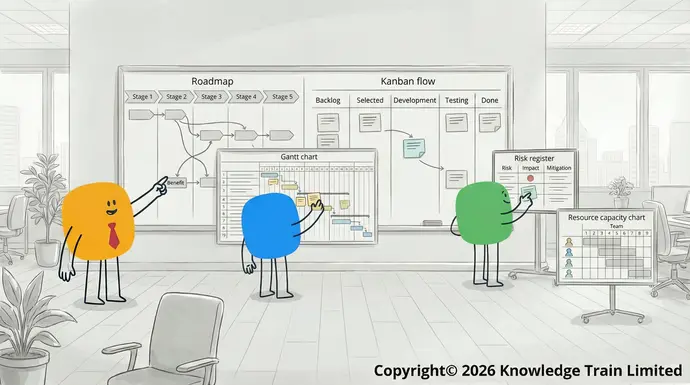
Key differences between project and programme management.
It is of crucial importance for the representatives of organisational leadership to have a good awareness of key difference between project and programme management, which will be further elaborated by focusing on five areas.What is the difference between a PMO and a Project Manager?Submit
Scope and focusThe difference between a
Project managementPMO
Project management is defined by the creation of and a OUR VALUESspecific deliverablesProject ManagerOur 6 core values are everything we do. They include: within a defined scope and set of constraints. The emphasis is placed on achieving measurable objectives, completing tasks efficiently, and producing tangible results. lies in scope and responsibility. A Project Manager delivers specific
projects, managing budgets, timelines, and teams. The PMO, however, provides governance, guidance, and support to multiple projects, ensuring consistency and strategic alignment across the organisation.
What is the purpose of a PMO?
The primary purpose of a PMO is to introduce structure, consistency, and strategic alignment to project management practices. By standardising processes and methodologies, a PMO helps organisations improve project success rates and realise greater value from project investments.
For further reading
For official standards and frameworks, visit
PMI.org
for comprehensive PMO and project management guidance.Subscribe to our exclusive offers and promotions
Subscribe now
{"@context":"https://schema.org","@graph":[{"@type":"WebPage","name":"What is a Project Management Office (PMO)? Roles, Types & Benefits","url":"https://www.knowledgetrain.co.uk/project-management/pmo","description":"Discover what a PMO is, its roles, types and benefits. Learn about PMO functions, standards and how PMOs support project success, with real-world examples.","significantLink":"https://en.wikipedia.org/wiki/Project_management_office","mainEntity":[{"@type":"Article","headline":"What is a Project Management Office (PMO)? Roles, Types & Benefits","about":[{"@type":"DefinedTerm","name":"Project Management Office (PMO)","sameAs":["https://en.wikipedia.org/wiki/Project_management_office","https://www.google.com/search?&kgmid=/m/01k6sk","https://www.wikidata.org/wiki/Q7302704"]},{"@type":"DefinedTerm","name":"Project Manager","sameAs":["https://en.wikipedia.org/wiki/Project_manager","https://www.google.com/search?&kgmid=/m/02y_w9","https://www.wikidata.org/wiki/Q7243378"]},{"@type":"DefinedTerm","name":"Project Portfolio","sameAs":["https://en.wikipedia.org/wiki/Project_portfolio_management","https://www.google.com/search?&kgmid=/m/0l1218y","https://www.wikidata.org/wiki/Q7226149"]},{"@type":"DefinedTerm","name":"Governance","sameAs":["https://en.wikipedia.org/wiki/Governance","https://www.google.com/search?&kgmid=/m/02vs1j","https://www.wikidata.org/wiki/Q1234823"]},{"@type":"DefinedTerm","name":"Supportive PMO","sameAs":["https://en.wikipedia.org/wiki/Project_management_office","https://www.google.com/search?&kgmid=/g/12hs3rl7x","https://www.wikidata.org/wiki/Q7302704"]},{"@type":"DefinedTerm","name":"Controlling PMO","sameAs":["https://en.wikipedia.org/wiki/Project_management_office","https://www.google.com/search?&kgmid=/g/1234testcontrol","https://www.wikidata.org/wiki/Q7302704"]},{"@type":"DefinedTerm","name":"Directive PMO","sameAs":["https://en.wikipedia.org/wiki/Project_management_office","https://www.google.com/search?&kgmid=/g/1234testdirect","https://www.wikidata.org/wiki/Q7302704"]},{"@type":"DefinedTerm","name":"Project Methodology","sameAs":["https://en.wikipedia.org/wiki/Project_management","https://www.google.com/search?&kgmid=/m/06c1s","https://www.wikidata.org/wiki/Q167067"]},{"@type":"DefinedTerm","name":"Stakeholders","sameAs":["https://en.wikipedia.org/wiki/Stakeholder_(corporate)","https://www.google.com/search?&kgmid=/m/025kcl","https://www.wikidata.org/wiki/Q745782"]},{"@type":"DefinedTerm","name":"PMI (Project Management Institute)","sameAs":["https://en.wikipedia.org/wiki/Project_Management_Institute","https://www.google.com/search?&kgmid=/m/04gjjn","https://www.wikidata.org/wiki/Q662929"]},{"@type":"DefinedTerm","name":"Portfolio Management","sameAs":["https://en.wikipedia.org/wiki/Project_portfolio_management","https://www.google.com/search?&kgmid=/m/0l1218y","https://www.wikidata.org/wiki/Q7226149"]},{"@type":"DefinedTerm","name":"Program Management","sameAs":["https://en.wikipedia.org/wiki/Program_management","https://www.google.com/search?&kgmid=/m/0405ykd","https://www.wikidata.org/wiki/Q7243378"]},{"@type":"DefinedTerm","name":"Best Practices","sameAs":["https://en.wikipedia.org/wiki/Best_practice","https://www.google.com/search?&kgmid=/m/01k6kd","https://www.wikidata.org/wiki/Q5369514"]},{"@type":"DefinedTerm","name":"PMO Tools","sameAs":["https://en.wikipedia.org/wiki/List_of_project_management_software","https://www.google.com/search?&kgmid=/g/11g_zdl9y8","https://www.wikidata.org/wiki/Q2142039"]},{"@type":"DefinedTerm","name":"Resource Management","sameAs":["https://en.wikipedia.org/wiki/Resource_management","https://www.google.com/search?&kgmid=/m/020lg1","https://www.wikidata.org/wiki/Q133134"]},{"@type":"DefinedTerm","name":"Standards","sameAs":["https://en.wikipedia.org/wiki/Standardization","https://www.google.com/search?&kgmid=/m/012n6","https://www.wikidata.org/wiki/Q229098"]},{"@type":"DefinedTerm","name":"Process Improvement","sameAs":["https://en.wikipedia.org/wiki/Process_improvement","https://www.google.com/search?&kgmid=/m/0c4fl6","https://www.wikidata.org/wiki/Q6193052"]},{"@type":"DefinedTerm","name":"Project Lifecycle","sameAs":["https://en.wikipedia.org/wiki/Project_life_cycle","https://www.google.com/search?&kgmid=/m/068n_j","https://www.wikidata.org/wiki/Q7243474"]},{"@type":"DefinedTerm","name":"PMO Certification","sameAs":["https://www.pmi.org/certifications","https://www.google.com/search?&kgmid=/g/11f63n5_7f","https://www.wikidata.org/wiki/Q662929"]},{"@type":"DefinedTerm","name":"Change Management","sameAs":["https://en.wikipedia.org/wiki/Change_management","https://www.google.com/search?&kgmid=/m/01jps2","https://www.wikidata.org/wiki/Q609056"]}],"mentions":[{"@type":"DefinedTerm","name":"Organizational Structure","sameAs":["https://en.wikipedia.org/wiki/Organizational_structure","https://www.google.com/search?&kgmid=/m/09gyp","https://www.wikidata.org/wiki/Q853035"]},{"@type":"DefinedTerm","name":"Project Management","sameAs":["https://en.wikipedia.org/wiki/Project_management","https://www.google.com/search?&kgmid=/m/06c1s","https://www.wikidata.org/wiki/Q167067"]}]},{"@type":"FAQPage","mainEntity":[{"@type":"Question","name":"Can a PMO be one person?","acceptedAnswer":{"@type":"Answer","text":"p>Yes, a Project Management Office (PMO) can consist of just one person. In smaller organisations or teams, a single PMO professional may handle essential functions such as tracking project performance, standardising documentation, and supporting Project Managers.
>
p>Although capacity is limited, even a one-person PMO can significantly improve project consistency and governance by establishing clear standards and frameworks.
>"}},{"@type":"Question","name":"How does a PMO add value?","acceptedAnswer":{"@type":"Answer","text":"
p>A PMO adds value by improving project success rates, optimising resource allocation, and ensuring projects align with organisational objectives. It also enhances communication across teams, enforces compliance with methodologies, and provides transparency on project performance through dashboards and reporting.>p>Ultimately, a well-functioning PMO ensures that project investments deliver measurable business benefits.
>"}},{"@type":"Question","name":"Is PMO a stressful job?","acceptedAnswer":{"@type":"Answer","text":"
p>Whether a PMO role is stressful depends on the organisation’s structure and culture. When supported by leadership and empowered to influence project decisions, PMO professionals typically thrive. However, if the PMO is under-resourced or lacks authority, managing multiple priorities without visible impact can create pressure and stress.
>p>Strong governance, clear goals, and management support help minimise stress and enable PMO teams to work effectively.>"}},{"@type":"Question","name":"What are the 4 P’s of PMO?","acceptedAnswer":{"@type":"Answer","text":"
p>The 4 P’s of a PMO are
strong>People, Product, Process,
> and
strong>Project>:>ul>
li>
strong>People:
> Define clear roles and responsibilities for the project team.>li>
strong>Product:
> Ensure the right deliverables reach the right stakeholders.
>
li>strong>Process:> Implement consistent procedures to manage and control delivery.
>
li>
strong>Project:> Oversee the successful execution of initiatives aligned with strategy.>>"}},{"@type":"Question","name":"What are the different types of PMOs?","acceptedAnswer":{"@type":"Answer","text":"p>The three main types of PMOs are:
>
ul>
Roles and responsibilities>"}},{"@type":"Question","name":"What is the difference between a PMO and a Project Manager?","acceptedAnswer":{"@type":"Answer","text":"
>"}},{"@type":"Question","name":"What is the purpose of a PMO?","acceptedAnswer":{"@type":"Answer","text":" collaboration for optimal results. <
p>The primary purpose of a PMO is to introduce structure, consistency, and strategic alignment to project management practices. By standardising processes and methodologies, a PMO helps organisations improve project success rates and realise greater value from project investments.Project manager
- : Software to help manage multiple projects and programmes.If you want to be a construction project manager for example, you will need to know the unique risks involved in construction projects (such as safety hazards, bad weather and legal issues), how to budget a project (the cost of hiring builders, subcontractors and equipment) and much more.
- Benefits realisation trackingTake any industry, tack on ‘project manager’ to the end, and you’ll have a rough list of roles you might find yourself working in – IT project manager, construction project manager, engineering project manager. You get the idea. : Tracking and measuring the outcomes of a programme.If you don’t have
- Dependency mappingrelevant industry experience : Mapping the relationships between different projects and initiatives., don’t worry You can still find project management roles that don’t require any special
- Stakeholder analysis matricesproject management trainingProject management vs product management: Identifying and prioritising key stakeholders.. These roles will generally be low risk/low visibility, meaning you’ll be managing a tiny team and the only resources you have at your disposal will be the skills your team brings to the table. It’s not much but working up from the bottom will guarantee that by the time you’re managing complex projects, you’ll be an expert in your field.
- Programme roadmapsEnhance your skills with our expert-led coursesKnowledge Train: Long-term planning and strategy documents. 19 Feb 2026
- Resource capacity planning : Optimising the allocation of resources across different programmes. Get insights on how project management and product management differ, and how these two skills impact each other. Understanding their importance in the business landscape is fundamental for achieving success. Read this article to learn about the key differences and similarities.
Tools like Jira Align and Planview are commonly used in programme management. Self-paced
Agile and DevOps in programme managementAPM PFQ blended online
Agile and £749 +vat DevOps are methodologies that can also be applied to programme management to promote flexibility and collaboration.
- Scaled Agile Framework (SAFe) : A framework for applying Self-pacedPRINCE2 Agile costAgile practicesPRINCE2 Agile Practitioner (with Foundation) self-paced online at the programme level. Simon Buehring
- Kanban boards£1,399 +vat28 Apr 2026: A visual tool for tracking the flow of work and identifying bottlenecks.
- Continuous Integration/Continuous Delivery (CI/CD) Understand the costs of PRINCE2 Agile courses and what to expect beyond the course fee. Read on to plan your budget effectively.: An approach to automating the software delivery process.
- Feature-driven developmentSelf-paced : A process for developing software features that align with business value.AgilePM Practitioner (with Foundation) self-paced online
- Programme increment planning : Coordinating multiple Agile teams within a programme.£1,299 +vat
These tools and methodologies empower project and programme managers to thrive in complex and dynamic environments, ensuring successful outcomes.Are project managers in demand?
Benefits of effective programme managementYes and no. More and more organizations have realized the potential of skilled project managers and the market for skilled industry experts is growing rapidly.
Effective programme management can provide significant benefits to organisations. Here are four benefits that can contribute to the overall success of a business:On the other hand, there’s less demand for junior project managers. Businesses are more likely to promote an existing employee to the role of WBS – Work Breakdown Structure
Improved strategic alignmentproject manager
When programmes are well-managed, it can help ensure that projects and initiatives are aligned with .Knowledge Trainorganisational goalsThat means if you’re just starting out, you might have to 19 Feb 2026. This can lead to improved focus on long-term objectives, better prioritisation of projects and resources, and a greater likelihood of achieving desired outcomes.volunteer your skills
Programme managers take a holistic view to ensure that individual projects are contributing towards common strategic targets. to a charitable organisation. They won’t pay you, but they’ll be grateful for the help and even better, you’ll be able to work under experienced project management professionals who are dedicated and passionate about their roles.If you want to ensure that your project is managed successfully, then you need to be sure to use the Work Breakdown Structure. Read this guide to learn more about this valuable tool and how you can use it.
Better resource managementHow long are project management courses?
Programme managementThe length of can also help project management courses optimise the use of resources depends on what level of certification you’re aiming for. Most courses will only take a few days or a week at most (including a final exam). Depending on the qualification, you might also have the option of taking a project management course online. If that’s the case, you can take as much (or as little) time as you like to complete it. across multiple projects. This can include personnel, budget, and equipment. When managed effectively, resources are used more efficiently and effectively across the board.Some of the more advanced courses require a peer-review, or examination by an external board. In these cases, the process can take weeks or months. But that’s only for the most advanced courses. Very few hold these certifications and they’re not 100% necessary, they’re more suited to very experienced project managers.
Programme management also helps to reduce the potential for conflicts between projects for resources and better aligns capacity planning and utilisation.How much is a project management course?
Enhanced stakeholder engagementThe cost of a project management course varies depending on how advanced the course is, the duration of the course and the course format.
Effective programme management also allows for enhanced Online project management coursesPRINCE2 Agile resourcesstakeholder relationships are generally cheaper, but you won’t have a certified instructor to assist you in learning. . This is because stakeholders see a consistent approach to communications across all Beginner and intermediate courses generally cost the same. Depending on which certification you choose (e.g.Simon Buehringprojects PRINCE 219 Feb 2026.) you may have the option of doing a combined course which will cover both beginner and intermediate topics simultaneously for a reduced price.
Programme management helps to keep all stakeholders informed of the benefits they can expect to see from the delivery of the projects that make up a programme. This increased visibility of expected benefits can lead to increased stakeholder buy-in and support.At For this article we have curated the best resources about PRINCE2 Agile, including those from Keith Richards, the author of PRINCE2 Agile, and an agile thought-leader in the UK.
Increased organisational agilityKnowledge Train
By taking an effective programme management approach, an organisation can also become more agile. In other words, they can be able to , we always offer competitive prices. Our course costs include both the course and exam (some training providers charge extra to sit the exam). If you’d like to know more about out course prices, take a look at our project management courses page. respond more quickly to changesHow long does it take to get a project management certification? and adapt more effectively.While individual courses only take a week or so, they don’t automatically qualify you as a project manager. Most certifications are broken into multiple levels. For example, an official
Programme management also helps with enabling quicker decision-making, as an organisation can gain valuable insights from taking a programme view to achieve its strategy.PRINCE2 certification
In conclusion, effective programme management can lead to a range of benefits for organisations. These include improved strategic alignment, better resource management, enhanced stakeholder engagement, and increased organisational agility. requires you complete both the Foundation and Practitioner exams.
