
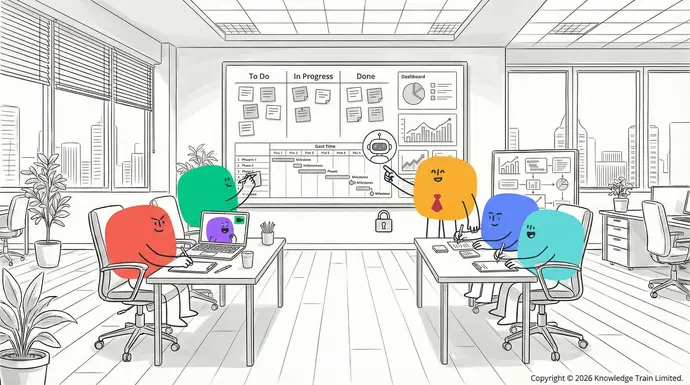
- Scrum framework
- Simon Buehring
- 19 Feb 2026
- Explore the 6 essential principles of the Scrum framework that guide successful projects. Scroll down for an in-depth look.
- Using Scrum with Agile
- Simon Buehring19 Feb 2026
Customer Support
[email protected]
Functional
Functional
Always active
- The technical storage or access is strictly necessary for the legitimate purpose of enabling the use of a specific service explicitly requested by the subscriber or user, or for the sole purpose of carrying out the transmission of a communication over an electronic communications network.
- Preferences
Preferences
The technical storage or access is necessary for the legitimate purpose of storing preferences that are not requested by the subscriber or user.
- Manage Consent
Functional
Always active The technical storage or access is strictly necessary for the legitimate purpose of enabling the use of a specific service explicitly requested by the subscriber or user, or for the sole purpose of carrying out the transmission of a communication over an electronic communications network.
- Preferences
- The technical storage or access is strictly necessary for the legitimate purpose of enabling the use of a specific service explicitly requested by the subscriber or user, or for the sole purpose of carrying out the transmission of a communication over an electronic communications network.
- Preferences
Preferences
Preferences
- The technical storage or access is necessary for the legitimate purpose of storing preferences that are not requested by the subscriber or user.
- The technical storage or access is necessary for the legitimate purpose of storing preferences that are not requested by the subscriber or user. Statistics
- Statistics
- The technical storage or access that is used exclusively for statistical purposes.
The technical storage or access that is used exclusively for anonymous statistical purposes. Without a subpoena, voluntary compliance on the part of your Internet Service Provider, or additional records from a third party, information stored or retrieved for this purpose alone cannot usually be used to identify you.
- Marketing
- Marketing
The technical storage or access is required to create user profiles to send advertising, or to track the user on a website or across several websites for similar marketing purposes.
Manage optionsManage servicesManage {vendor_count} vendorsRead more about these purposes
- Accept
- Deny
- View preferences
- Save preferences
- View preferences
{title}
- {title}
- {title}
- Manage consent
Manage consent
Read more about these purposes is at the core of successful
Scalability and flexibility
As your team and Knowledge Train is a Change Management Accredited Training Organization.projects grow, your project management needs may change. Look for tools that can scale with your organisation, such as:Knowledge Train is an MSP Accredited Training Organization.
- Can handle increasing users and projects
- Flexible pricing models that can grow with your teamKnowledge Train is a PRINCE2 Accredited Training Organization.
- Customisable workflows and project templates
- Support for multiple departments or clientsKnowledge Train is an AgilePM Accredited Training Organization.
- Advanced features that can be unlocked as needed.
A scalable solution will save you from the headache of migrating to a new system down the line.Knowledge Train is a PRINCE2 Agile Accredited Training Organization.
Security and data privacy
Protecting sensitive project information is essential. Evaluate the security features of potential tools, such as:
-
- Communicate the benefits of the new system clearly and early
- Be transparent and honest about potential concerns
- Involve team members in the decision-making process.+44 (0)207 148 5985
- Verify data integrity after migration.
- Overwhelmed users
- Implement the software in phasesSearch
- Prioritise essential features first
- Provide easily accessible support resources.
Measuring success and ROI
To measure the success of your new project management software, consider the following metrics:
- User adoption rate : Track the percentage of team members actively using the softwareUnited Kingdom
- Time savingsAustria: Measure the reduction in time spent on administrative tasksBelgium
- Project completion ratesBulgaria: Compare the rate of on-time project delivery before and after implementationCroatia
to make better-informed decisions and spend more time on the strategic aspects of project management.
Enhanced automation capabilities
Automation is already a key feature of many project management tools, but in the future, we can expect to see even more powerful and flexible automation capabilities. Some possibilities include:
- Workflow automation : Multi-step workflows can be automated, minimising manual tasks and errors.
- Intelligent notifications : Systems will learn from user behaviour to send timely and relevant alerts and reminders.
- Automated reporting : Scheduled reports can be generated and distributed automatically.
- Smart integrationsCopied!: Integrations between different tools in the project ecosystem will be more automated, ensuring seamless data flow.Key takeaways
Automation will free up time from administrative tasks, enabling teams to focus on high-value activities.Agile combines a mindset with practical routines that help teams deliver value in changing conditions.
Improved data analytics and reportingAgile prioritises working software, collaboration, and adapting plans based on frequent feedback.
Project management tools are already becoming more Iterative, incremental delivery reduces risk by surfacing issues and learning earlier.data-drivenScrum uses timeboxed sprints and clear roles to create a predictable cadence for delivery and review., and in the future, we can expect to see even more powerful data analytics and reporting capabilities. Some potential features include:Kanban improves flow by visualising work and limiting work in progress to expose bottlenecks.
- Real-time dashboardsHealthy Agile adoption relies on clear roles, shared quality standards, and sustainable pace.: Interactive, customisable dashboards could provide users with real-time insights into project status, team performance, and other key metrics.Measure outcomes and flow with metrics like lead time and defect rate, then refine through retrospectives.
- Predictive analytics : Advanced data analytics could use historical and real-time project data to make predictions and offer recommendations.
- Sentiment analysis : Project management software could analyse team communication to gauge project morale and identify potential issues.Contents
- Cross-project analytics : Organisations could use project management software to analyse performance across multiple projects and use this information to inform strategy and resource allocation.
In conclusion, the future of project management software is likely to be characterised by increased integration with AI and ML, more robust automation features, and enhanced data analytics and reporting capabilities. As technology continues to advance, project management software will become even more powerful and flexible, allowing teams and organisations to work more efficiently and effectively.Contents
Increased focus on remote work features
With a rise in distributed teams and remote work, project management software is now expected to help teams connect and collaborate virtually. Solutions that don’t support Definition of Agileremote or Agile methodology at a glancehybrid Summary of the Agile Manifesto and Its valueswork will become obsolete as remote work becomes more of a norm:Agile principles
- Virtual workspaces : Video conferencing features that integrate with digital whiteboards for online brainstorming and meetings.
- Asynchronous communicationHistorical origins and evolution of Agile: Improvements to asynchronous communication features like leaving voice or video notes and contextual comments.
- Time zone managementBenefits of Agile: Better tools for understanding and scheduling across various time zones.
- Virtual team buildingAgile vs waterfall model: Gamification features and team building activities in virtual environments.
The changing work environment and the move to distributed work will continue to be a driving force behind some of the key features and priorities for project management software. Agile frameworks and practicesProject managers that stay informed on these trends will be better positioned to expect what’s next and prepare their teams to take advantage of new functionality and technology.Agile project management
Case studies and success stories
Learning from real-world examples of successful project management software implementations can offer valuable insights and inspiration. This section showcases case studies from different scales of businesses and industries, detailing the challenges they faced, the solutions they implemented, and the results they achieved.Key concepts: Iterative and incremental delivery
Small business implementation
Case Study: Green Leaf LandscapingTeam collaboration and cross-functional teams
Green Leaf Landscaping is a small landscaping business with 15 employees. The company faced challenges with managing multiple projects simultaneously and often missed deadlines and struggled to allocate resources efficiently.
ChallengeContinuous improvement practices
Manual methods of tracking projects led to miscommunication and inefficient resource allocation.
SolutionFurther Resources
Adopted TrelloFAQs due to its visual approach and user-friendly interface.Definition of Agile
Implementation processAgile
- WaterfallSet up client-specific boards within Asana for each project, making it easy for her clients to access and stay updated on their project’s progress.
- Utilised the timeline view to manage and visualise multiple project deadlines, helping her to avoid scheduling conflicts and meet client expectations. model. In 2001, seventeen thought leaders signed
- Integrated Asana with her time-tracking and invoicing tools to streamline administrative tasks.the Agile Manifesto
Results, formalising Agile values and sparking the formation of the Agile Alliance. Since then, Agile has evolved beyond software development into
- Reduced the time spent on project administration by 50%, allowing her to focus more on design work.project management
- Improved client satisfaction due to transparent and accessible progress tracking., product development, and operations.
- Increased her capacity to handle more concurrent projects by 25% without sacrificing quality.Benefits of Agile
- Streamlined the invoicing process, reducing payment delays and improving cash flow.Flexibility:
Key takeaway Respond rapidly to changing customer needs and market conditions.
For freelancers, the selection of a project management tool that can effectively integrate project management with client communication and reporting is crucial to improving operational efficiency and professionalism in client interactions.Continuous improvement:
Digital marketing agency Regular retrospectives help teams adapt and improve their processes.
Case Study: Pulse DigitalCustomer satisfaction:
Pulse Digital is a rapidly expanding digital marketing agency with a team of 25 staff members. The company was seeking a way to streamline its workflow for managing various client projects and to enhance team collaboration. Frequent delivery ensures customer requirements are met early and often.
ChallengeTransparency:
Managing a high volume of campaigns for different clients across multiple marketing platforms, while ensuring quality and consistency for all client work.
Is it worth paying for premium features in project management tools?
Premium features are worth the investment if they meet your team’s specific needs and can lead to significant productivity gains. Evaluate the cost against the potential return on investment before upgrading.
Can I use multiple project management tools together?
You can use more than one project management software at the same time. Many project managers use different tools for specific purposes. It is possible but might cause data silos and should be managed effectively.{"@context":"https://schema.org","@type":"WebPage","name":"What is Agile? Agile Methodology, Principles, and Frameworks","url":"https://www.knowledgetrain.co.uk/agile","description":"Discover Agile methodology, the Agile Manifesto, values, principles, Scrum, Kanban, and how Agile drives iterative delivery and collaboration.","significantLink":"https://en.wikipedia.org/wiki/Agile_software_development","mainEntity":[{"@type":"Article","headline":"What is Agile?","about":[{"@type":"DefinedTerm","name":"Agile methodology","sameAs":["https://en.wikipedia.org/wiki/Agile_software_development","https://www.google.com/search?&kgmid=/m/01k8wb","https://www.wikidata.org/wiki/Q1277613"]},{"@type":"DefinedTerm","name":"Agile Manifesto","sameAs":["https://en.wikipedia.org/wiki/Manifesto_for_Agile_Software_Development","https://www.google.com/search?&kgmid=/m/027zdd4","https://www.wikidata.org/wiki/Q3120275"]}],"mentions":[{"@type":"DefinedTerm","name":"Scrum framework","sameAs":["https://en.wikipedia.org/wiki/Scrum_(software_development)","https://www.google.com/search?&kgmid=/m/047k9xw","https://www.wikidata.org/wiki/Q1124925"]},{"@type":"DefinedTerm","name":"Kanban","sameAs":["https://en.wikipedia.org/wiki/Kanban_(development)","https://www.google.com/search?&kgmid=/m/0b7l77","https://www.wikidata.org/wiki/Q636122"]},{"@type":"DefinedTerm","name":"Waterfall model","sameAs":["https://en.wikipedia.org/wiki/Waterfall_model","https://www.google.com/search?&kgmid=/m/02bzfnh","https://www.wikidata.org/wiki/Q2069046"]},{"@type":"DefinedTerm","name":"Iterative development","sameAs":["https://en.wikipedia.org/wiki/Iterative_and_incremental_development","https://www.google.com/search?&kgmid=/m/02qjzq","https://www.wikidata.org/wiki/Q1050264"]},{"@type":"DefinedTerm","name":"Software development","sameAs":["https://en.wikipedia.org/wiki/Software_development","https://www.google.com/search?&kgmid=/m/06rjc","https://www.wikidata.org/wiki/Q186102"]},{"@type":"DefinedTerm","name":"Continuous improvement","sameAs":["https://en.wikipedia.org/wiki/Continuous_improvement_process","https://www.google.com/search?&kgmid=/m/011cwn","https://www.wikidata.org/wiki/Q1198130"]},{"@type":"DefinedTerm","name":"Sprint","sameAs":["https://en.wikipedia.org/wiki/Scrum_(software_development)#Sprint","https://www.google.com/search?&kgmid=","https://www.wikidata.org/wiki/Q19863485"]},{"@type":"DefinedTerm","name":"Product backlog","sameAs":["https://en.wikipedia.org/wiki/Scrum_(software_development)#Product_Backlog","https://www.google.com/search?&kgmid=","https://www.wikidata.org/wiki/Q5145536"]},{"@type":"DefinedTerm","name":"Agile Alliance","sameAs":["https://en.wikipedia.org/wiki/Agile_Alliance","https://www.google.com/search?&kgmid=/m/0k9l9s5","https://www.wikidata.org/wiki/Q4693301"]},{"@type":"DefinedTerm","name":"User stories","sameAs":["https://en.wikipedia.org/wiki/User_story","https://www.google.com/search?&kgmid=/m/0b16pv","https://www.wikidata.org/wiki/Q2597018"]},{"@type":"DefinedTerm","name":"Stakeholders","sameAs":["https://en.wikipedia.org/wiki/Stakeholder_(corporate)","https://www.google.com/search?&kgmid=/m/0hwlh","https://www.wikidata.org/wiki/Q854181"]},{"@type":"DefinedTerm","name":"Team collaboration","sameAs":["https://en.wikipedia.org/wiki/Collaboration","https://www.google.com/search?&kgmid=/m/018w8","https://www.wikidata.org/wiki/Q175019"]},{"@type":"DefinedTerm","name":"Cross-functional teams","sameAs":["https://en.wikipedia.org/wiki/Cross-functional_team","https://www.google.com/search?&kgmid=/m/026lq1v","https://www.wikidata.org/wiki/Q11541726"]},{"@type":"DefinedTerm","name":"Incremental delivery","sameAs":["https://en.wikipedia.org/wiki/Incremental_build_model","https://www.google.com/search?&kgmid=/m/07xm0f2","https://www.wikidata.org/wiki/Q2035692"]},{"@type":"DefinedTerm","name":"Project management","sameAs":["https://en.wikipedia.org/wiki/Project_management","https://www.google.com/search?&kgmid=/m/0dffw","https://www.wikidata.org/wiki/Q167270"]},{"@type":"DefinedTerm","name":"Customer feedback","sameAs":["https://en.wikipedia.org/wiki/Customer_feedback","https://www.google.com/search?&kgmid=","https://www.wikidata.org/wiki/Q5172861"]}]},{"@type":"FAQPage","mainEntity":[{"@type":"Question","name":"What is Agile methodology?","acceptedAnswer":{"@type":"Answer","text":"Agile methodology is a set of practices and values that promote adaptive planning, evolutionary development, early delivery, and continual improvement. Agile methods empower teams to respond quickly to change and collaborate closely with stakeholders."}},{"@type":"Question","name":"What are the 12 principles of Agile?","acceptedAnswer":{"@type":"Answer","text":"The 12 Agile principles include prioritising customer satisfaction through early and continual delivery, welcoming changing requirements, delivering working software frequently, fostering daily collaboration, supporting motivated teams, preferring face-to-face communication, using working software as the main progress measure, maintaining a sustainable pace, focusing on technical excellence, maximising simplicity, enabling self-organising teams, and reflecting regularly for process improvement."}},{"@type":"Question","name":"What is the difference between Agile and Waterfall?","acceptedAnswer":{"@type":"Answer","text":"Agile is iterative, adaptable, and focuses on incremental delivery with frequent stakeholder feedback. Waterfall is linear, sequential, and requires upfront planning, often only allowing changes late in the project cycle."}},{"@type":"Question","name":"What are Scrum and Kanban frameworks?","acceptedAnswer":{"@type":"Answer","text":"Scrum is an Agile framework that organises work into fixed-length sprints and uses roles like Product Owner and Scrum Master. Kanban is a visual method for managing workflow, limiting work in progress, and focusing on incremental improvements."}},{"@type":"Question","name":"How does Agile improve team collaboration?","acceptedAnswer":{"@type":"Answer","text":"Agile improves collaboration through daily communication, cross-functional team structures, and regular stakeholder engagement, ensuring all members align towards shared goals."}}]}]}
How long does it take to implement new project management software?
The time it takes to implement new project management software usually ranges from 2-8 weeks, depending on the complexity of the chosen tool and the size of your organisation.Related articles
What are the benefits of using AI-powered project management tools?
AI-powered project management software often includes features like automation of routine tasks, predictive analytics, and data-driven insights. They can also provide intelligent recommendations for optimal resource allocation and risk management .
How often should I reassess my project management software needs?
It’s a good practice to reassess your needs when introducing a new team member and/or when launching a new project. Otherwise, once per year would be a good review frequency.