image

What is an IT course?

An IT course introduces learners to the fundamentals of Information Technology, covering core areas such as AI, programming, networking, cybersecurity and software development. These courses help you gain essential technical skills for IT careers in today’s digital economy.
What is an IT course?

IT course overview

An Information Technology (IT) course provides structured learning in the principles, technologies and practices that power computers and digital networks. Delivered by universities, colleges and online platforms, IT courses prepare you for key roles such as IT support, network administration, software development and cybersecurity. Sources from universities and accredited online providers offer in-depth knowledge and skills for the dynamic technology sector.

Core subjects in an IT course

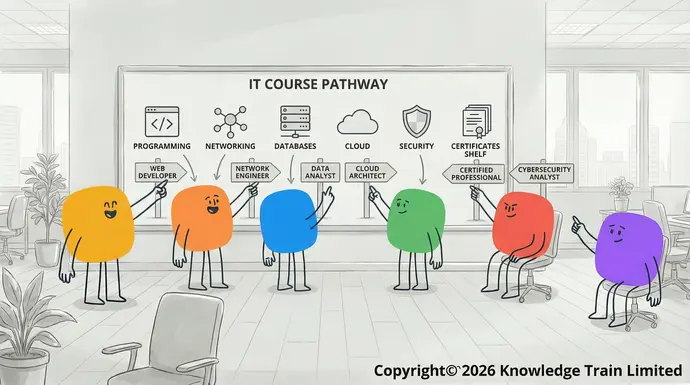
Most IT courses incorporate a combination of theoretical foundations and hands-on practical skills. Core areas typically covered include:

  • Programming: Learn to write software using programming languages such as Python, Java or C++.
  • Networking: Understand how devices connect, communicate and operate within a network environment.
  • Databases: Study data storage, management and retrieval using systems like SQL.
  • Cybersecurity: Develop skills to protect systems from threats, covering risk management and ethical hacking.
  • Software development: Apply methods for designing, coding and maintaining applications.
  • Cloud computing: Explore hosting and resources delivered over the internet.
  • Data science & artificial intelligence: Learn techniques for analysing data and developing smart algorithms.
  • IT project management: Gain experience in managing technical projects and teams using frameworks like Agile and Scrum.

Types of IT courses

IT courses are available in a wide range of formats to suit different goals and learning preferences. Common types include:

  • Certification courses: Short-term courses leading to industry certifications such as CompTIA (A+, Network+), Cisco (CCNA), and Microsoft qualifications.
  • Diplomas and degrees: Longer programmes like Diploma, Bachelor of Information Technology, or Masters in Information Technology, typically from universities or polytechnics.
  • Online courses: Flexible self-paced study on platforms like Coursera, Udemy or edX, often including micro-credential options.
  • Offline/face-to-face courses: Classroom-based instruction at colleges and universities with personalised support and labs.

Key IT course providers and platforms

Provider Type Strengths
Coursera Online (degree, short courses) University partnerships, certificates, flexible study
Udemy Online (short courses) Wide range of practical topics, self-paced
edX Online (degree, micro-courses) University-backed, academic credit options
Universities Offline/online (degree, diploma) Accredited qualifications, student support, campus facilities
CompTIA/Cisco Certification (online/offline) Industry-recognised certificates for networking, support, security

Career outcomes and IT jobs

Completing an IT course opens up diverse career paths in the technology sector. Typical job roles include:

  • IT support specialist: Diagnose and resolve users’ technical issues.
  • Network administrator: Plan, deploy and maintain computer networks.
  • Software developer: Create and maintain applications and systems.
  • Cybersecurity analyst: Protect data and systems from cyber threats.
  • Cloud solutions architect: Design modern cloud-based IT infrastructures.
  • Data scientist: Extract insights from data using advanced analytical tools.

Industry certifications such as CompTIA A+, CCNA and cloud credentials are highly valued and often linked to improved salary prospects. Technical skills learned in IT courses are increasingly required in fields like finance, healthcare, education and more. For further details see UK government digital skills guidance and university career services.

Certifications and further development

Certifications demonstrate expertise in key IT disciplines. Leading certificates include:

  • CompTIA A+, Network+, Security+;
  • Cisco CCNA, CCNP;
  • Microsoft Certified Fundamentals, Solutions Associate;
  • AWS Certified Cloud Practitioner;
  • Certified Information Systems Security Professional (CISSP).

Many learners progress to degree programmes after initial certificates, undertaking a Bachelor of Information Technology or a Masters in Information Technology to further their careers.

FAQs

What qualifications do you need for an IT course?

Entry requirements vary by course level. Introductory courses usually require basic computer skills, while degrees may require A-levels or equivalent. Certification courses generally have no prerequisites.

What subjects are studied in Information Technology?

Common subjects include programming, networking, databases, cybersecurity, cloud computing, software development, and data science.

Which IT course is best for beginners?

Courses in basic computer literacy, CompTIA IT Fundamentals, or introductory programming are suitable for beginners. Online platforms and colleges provide flexible entry-level options.

Are online IT courses recognised by employers?

Many online IT courses, especially those offering certificates from recognised providers (Coursera, edX, CompTIA, Cisco), are valued by employers. Accredited courses and certifications are particularly well-regarded.

What careers can I pursue after completing an IT course?

Typical roles include IT support, network administration, cybersecurity analyst, software developer, and data scientist. Advanced positions may require additional experience or qualifications.

IT courses and career development

IT courses are in high demand for those wanting to build IT skills and gain IT certifications. Information technology courses, including beginner IT courses and advanced IT courses, cater to learners at every level. You can find affordable IT courses, IT courses online, and flexible IT workshops to suit your needs. Computer courses, IT degree programmes, and technology classes are available from institutes of technology and universities.

Key IT training topics and certifications

IT training includes topics like cloud computing, databases, software development, cybersecurity, and project management. Popular software courses cover essentials such as Java, Python, Microsoft Excel, and web development. Certified IT courses help improve employability, offering credentials like Cisco certifications, CompTIA, CCNA, and Certified Information Systems Security Professional. These certifications align with industry standards and provide career progression.

IT course listings, offerings, and education

Students can choose IT course listings, IT course offerings, and IT programme options tailored to specific IT skills. IT education supports IT learning at all stages, from IT support and digital skills to DevOps, risk management, and security awareness. Completing a certificate in IT or diploma provides recognised qualifications and professional development. IT classes and technology training help you gain knowledge in computer networks, ethical hacking, and Agile software development.

Flexible IT online courses and learning support

IT online courses offer interactive and self-paced learning for adults and professionals. There are IT skills courses, short courses, and courses in IT that focus on technical, business, and creative fields. Online learning platforms provide support, resources, and tutor feedback. IT course fees vary, but many offer flexible payment options or free courses. IT professionals can study part-time or full-time to earn certifications and meet career goals.

Finding the best IT courses for your ambitions

Whether you’re looking for the best IT courses, trending technology courses, or IT career training, there are course types to match every ambition. Accredited IT courses support success in IT jobs, IT systems management, and technology fields. These courses are essential for anyone wanting to advance in information technology, improve digital skills, and achieve professional recognition.

IT courses

IT courses often cover a wide range of topics including computer programming, database management, cloud computing, Agile software development, Information Technology, and computer security, providing students with a comprehensive education in the field.

IT courses encompass a wide range of topics including Cisco certifications, computer programming, cloud computing, Agile software development, and computer security, providing essential skills for modern technology environments.

IT courses offer comprehensive training in various technological fields, equipping students with essential skills.
These courses cover a wide range of topics, including programming, cybersecurity, and data management.
Successful completion often leads to valuable certifications, enhancing career prospects in the tech industry.

What are IT courses and why are they important?

IT courses, also known as information technology courses, give learners the technical and digital knowledge needed for success in modern careers. These courses include programming, networking, cyber security, and data management, helping students become confident professionals. Whether you take an IT course certification online or attend traditional IT classes, you gain skills that employers value highly.

Today’s workplaces depend on technology, and IT course offerings are designed to bridge the gap between basic computer knowledge and advanced computing. With so many IT courses curriculum choices available, learners can study topics like web development, cloud computing, and cybersecurity according to their interests.

Education and vocational studies in IT

Education in vocational studies supports learners aiming to build technical careers. Through IT courses and related programmes, vocational education provides hands-on experience that matches employer expectations. For example, an IT course degree often combines theoretical concepts with practical training, helping students adapt to technology in the workplace.

Many vocational institutions now provide IT courses that link with certifications such as CompTIA or Cisco. These globally recognised qualifications make IT courses certification pathways appealing to those seeking long-term careers in information technology.

Online courses and flexibility

Online IT courses have become the most flexible way to learn new skills. Students can join information technology courses from anywhere, allowing them to balance study, work, and personal life. These online IT classes give learners access to instructors worldwide, making it easier to pursue specialised IT course offerings without location limits.

Benefits of learning IT online

Learning online provides accessibility and freedom. Most IT courses now include interactive assignments, real-time discussions, and guided projects. Whether pursuing a beginner or advanced IT course, online delivery makes education more inclusive for everyone.

How can IT courses improve your career?

Enrolling in IT courses is one of the best ways to improve employability. These courses help learners build solid foundations for careers in programming, web development, and cyber security. An information technology course also teaches problem-solving and analytical thinking—skills that are highly valued in technical industries.

Cyber security and data protection

Cyber security is central to most IT course certifications. Understanding how to protect information systems against attacks ensures business continuity. Professionals completing a cyber security IT course gain skills in encryption, risk analysis, and digital forensics, which are crucial for modern organisations.

Every IT course certification that includes security modules gives learners the opportunity to apply knowledge through simulated labs, helping them respond to real threats with confidence.

Programming and coding fundamentals

Programming is the foundation of software development, and IT courses that include coding modules teach learners how to think logically and creatively. Languages such as Python, C++, and JavaScript are covered in IT course offerings that prepare students for development roles. Learners taking an IT class in coding often progress to advanced modules in web programming and data analysis.

By studying IT courses focused on programming, learners build transferrable skills, enabling them to create solutions across multiple industries.

Web programming and online development

Web programming IT courses train learners to design websites and manage online systems. These IT courses focus on HTML, CSS, and modern frameworks like React, which employers increasingly demand. Completing a web programming IT course can lead to positions such as front-end developer or website manager.

Networking and system administration

Networking modules are included in many IT courses to prepare learners for roles in system management. A strong IT course certification in networking explains routing, server setup, and IP configuration. Students taking such IT courses often move into infrastructure, support, or cloud computing roles.

Applying IT course knowledge in practice

Practical projects reinforce learning. Most IT course offerings include assessments where students create small networks or troubleshoot real systems, developing problem-solving ability and teamwork.

Programming specialisations and diplomas

For learners seeking deeper expertise, IT course diplomas offer advanced training in programming, AI, or cybersecurity. Each IT course builds upon the last, ensuring steady skill progression. Graduates with these qualifications gain a competitive edge in global IT industries.

Emerging technologies in IT education

Modern IT courses incorporate topics like artificial intelligence, blockchain, and machine learning. These innovative IT course certifications prepare learners for emerging roles, keeping their knowledge relevant as the tech landscape evolves.

Keeping IT skills current

Continuous learning is essential. By enrolling in updated IT courses, professionals ensure that they stay current with market demands. Certifications are frequently revised to reflect changes in technology and global standards.

Choosing the right IT course for your goals

Finding the right IT course depends on your ambitions. For beginners, introductory IT courses cover essential computing concepts. For professionals, IT course certifications provide deeper technical understanding in specialist areas like programming or cybersecurity.

Information technology courses for beginners

Introductory IT courses teach the fundamentals of computer systems and online safety. These IT classes prepare learners for more advanced information technology courses that include web development or network management.

Professional IT course certifications

Recognised IT course certifications from vendors like Microsoft or Cisco prove technical competence. Completing such IT courses enhances career mobility and demonstrates professional commitment. Employers often favour candidates who have taken structured IT courses curriculum with verifiable results.

Structured IT course learning pathways

Most institutions design IT course pathways with increasing complexity. Students start with an IT course degree foundation, then move on to specialist IT course certifications to strengthen their expertise.

Building digital confidence through IT courses

Learning through IT courses boosts confidence in digital tasks, helping individuals stay adaptable in the workplace. Regular practice with programming and IT course applications builds familiarity and self-assurance.

Collaborative and social learning

Modern IT courses encourage collaboration through forums and online discussions. Students taking information technology courses work together on projects, simulating real-world teamwork common in IT environments.

Health, wellbeing, and work balance

Effective IT courses promote wellbeing alongside productivity. Instructors teach learners to manage screen time, posture, and concentration. This holistic approach ensures that technical progress does not compromise health.

Applying IT skills in social care and public services

Digital transformation in social care and health sectors creates demand for trained professionals. IT courses focusing on these areas train individuals to manage patient data, support record systems, and secure information.

Examples of IT course applications in society

  • Applying IT course skills in hospital systems
  • Using IT courses curriculum to improve data accuracy
  • Enhancing communication with digital tools learned in IT courses

Conclusion

IT courses are a cornerstone of digital literacy and professional development. Whether studying information technology courses for career advancement or personal interest, each IT course strengthens skills in coding, cyber security, and networking. With online and vocational IT courses available, learners can pursue education that fits their schedule and goals. Choosing the right IT course certification can open doors to rewarding opportunities in the ever-evolving world of technology.