What is PRINCE2?®Common challenges and solutions Guide: A comparison

Key takeaways The project management triangle is a fundamental concept that helps
PRINCE2 and the PMBOK Guide now overlap more than ever, but they still serve different needs.Knowledge Trainproject managers
- The PMBOK Guide 7th edition shifts from detailed processes to principles and performance domains that guide behaviour.19 Feb 2026visualise and optimise the key constraints of any project. By balancing scope, time, and cost, project teams can deliver successful outcomes that meet stakeholder expectations.
- PRINCE2 remains strongest on governance, with clear processes that state who decides what, and when. Understanding the project management triangle
- Both approaches emphasise value, through PMBOK’s focus on delivering value and PRINCE2’s business case and benefits realisation.If you want your business to lead with purpose and change, our comprehensive guide will explain how sustainable project management can incorporate eco-friendly projects to make a difference.The three constraints explained
- Tailoring is central in both, but PRINCE2 embeds it throughout the method while PMBOK separates it into its own section. The project management triangle is made up of three main constraints:
- PRINCE2 provides richer role definitions, which can improve accountability and decision quality across the project team. scope

Introduction quality
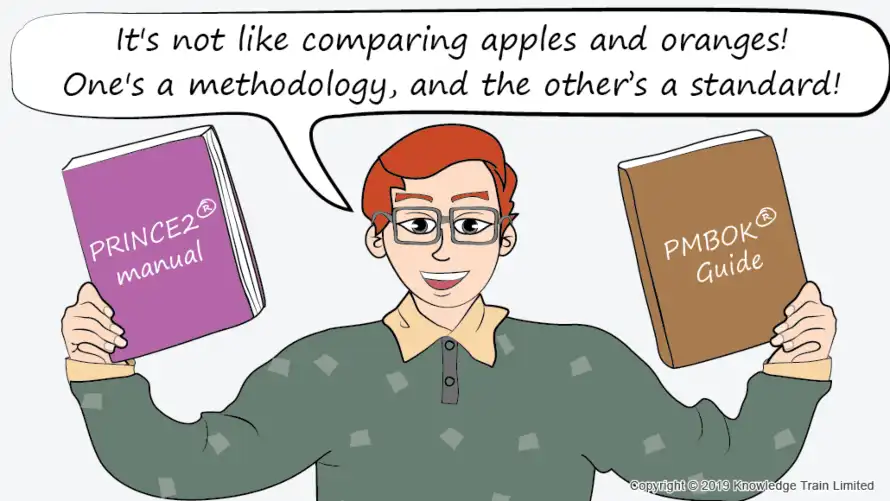
The article will focus on the strengths and weaknesses of both PRINCE2 and the PMBOK Guide. This article was originally published in 2017, but was updated in October 2023 to reflect changes in The Rise of AI: How AI is Revolutionising Project Management of the project outcomes. If the three constraints are well-balanced, the project is more likely to achieve high-quality results. On the other hand, if there is an imbalance in any of the constraints, the quality of the project may be compromised. For example:PRINCE2 7 A tight deadline may lead to a rushed project, resulting in lower quality outputs.thSevcan YasaA limited budget may result in a project being understaffed or under-resourced, which may also affect quality.4 May 2026 Successful project management involves finding the right balance and making trade-offs between the three constraints while maintaining the desired level of quality. By understanding the impact of these constraints on each other, project managers can make informed decisions to lead the PMBOKDiscover how artificial intelligence is reshaping project management. Watch our webinar recording of Mashhood Ahmed to gain innovative insights and practical applications.project® to a successful outcome. 7 Benefits of using the project management triangleth Utilising the project management triangle provides some distinct benefits to the project team and stakeholders. These are as follows. edition Easier change management [2]. The triangle model helps to
The article is to help the reader judge which is appropriate for their own needs whether they work as a project manager, project sponsor, or work in a make changes easierproject management office . This is because if a change arises, the project managers can easily evaluate how this change will affect the scope, time and cost, decide, as such it helps to quickly evaluate a change request, understand the ripple effects, and make an informed decision on change. (Which project management qualification?Priority clarificationPMOVisualising the three constraints helps to ).clarify prioritiesSimon Buehring
Project management today is an ever-growing profession. According to the American-based . This will make it possible for the team to quickly identify important elements in the project, direct resources to important tasks and make trade-offs as required based on the project goals.20 Mar 2026Project Management InstituteImproved client communication (PMI)The triangle is a helpful Choosing the right project management qualification can be crucial. Learn about the options and which suits your career goals best.®communication tool between 2017 and 2027, over 20 million new to both communicate with and educate clients. The project managers can use the triangle to show the project’s constraints to the clients, visualise how changes would affect them, and set realistic expectations regarding project deliverables. project management rolesRisk reduction Utilising the triangle will help in
managing risks
. This is possible because this will help the team to predict potential problems earlier in the process, have a contingency plan, and balance the risks in all three constraints.The use of the project management triangle allows for managers
to make decisions in a balanced manner. As such, it becomes possible to deal with complex projects with great ease.
Enhance your skills with our expert-led courses Instructor-ledIntroduction to Project Management course £499 +vat See all dates
the project scope.Monitor for scope creep: Regularly review project requirements to ensure they align with the defined scope.Prioritisation
: Use a prioritisation method, such as
MoSCoW, to determine which features are essential, desirable, optional, or not required.Time management approaches
When managing project time, you can try these tips:
Critical path
: Identify the tasks that must be completed on time for the project to stay on schedule.
Resource leveling
: Optimise the use of resources to avoid overloading or underutilisation.
Timeboxing
- : Set a fixed time period for specific tasks or project phases.
- Agile sprints
- : Break the project into short, focused work cycles with specific goals.
- Cost control methods
- When managing project cost, you can try these tips:
| Implement time-boxing techniques to improve focus and productivity.Consider parallel processing of tasks where possible.Negotiate for deadline extensions when necessary. | Budget limitations |
|---|---|
| Limited budgets | can restrict resources, impacting the project’s scope and quality. |
| Solutions | Conduct thorough cost estimation during the planning phase. |
| Implement earned value management (EVM) to track project cost performance. | Explore cost-effective alternatives for resources. |
| Prioritise budget allocation for critical project components. | Balancing constraints may sometimes lead to |
| quality issues | in deliverables. |
| Solutions | Establish and communicate clear quality standards at the beginning of the project. |
| Implement regular quality checks throughout the project lifecycle. | Involve stakeholders in continuous feedback loops. |
| Allocate resources for testing and quality assurance processes. | With preparation of ways to address these hurdles, you will be one step closer to coping with the strain on the project management triangle. Keep in mind that this is where some creative strategising can help you maintain control of all these factors. It’s good to frequently ask “how are things going” and be willing to switch things around to keep them in balance. |
Review the project plan on a regular basis. This will help you to stay on track and make changes as necessary.
Adjust the plan when necessary. If you find that you are off track, you can always make adjustments to get back on track.Decisions based on information to revise project plans.Team collaboration and accountabilityProject managers can also foster collaboration and teamwork among team members by holding them accountable for their part of the work. When team members know that they will be held accountable for their work, they are more likely to collaborate with others to complete the project successfully. There are several best practices for collaborating and holding team members accountable, including the following:Assign clear roles and responsibilities to each team member. This will help everyone to understand what they need to do and be held accountable for their part of the project.Encourage team members to collaborate with each other. This can be done by setting up regular team meetings and encouraging team members to communicate with each other.Track team members’ progress and hold them accountable for their work. This can be done by regularly reviewing each team member’s progress and providing feedback.
Recognise and reward efforts that support successful constraint management.
Continuous improvement
Adopt a culture of
continuous improvement when working with the project triangle.Review the project after completion to determine lessons learnedEvaluate what worked and didn’t work for finding the balance between the constraintsPromote team members to share ideas for process improvements GuideStay updated on emerging project management methodologies and tools. .Incorporating these best practices can help project managers to learn the project management triangle. However, success will depend on dedication, flexibility, and the ability to learn from both successes and failures.
PeopleApplying the project management triangle
People are at the heart of all projects. The success of a project depends greatly on the strength of the relationships between the To help us see how we can do this, it’s worth looking at some examples of best practice in real-world situations. We will take three case studies below and see how things were managed in each of them. peopleLarge-scale IT project involved. The chapter from the manual covering people discusses concepts such as leadership, team dynamics, and team building.A global corporation launched a The technical storage or access is necessary for the legitimate purpose of storing preferences that are not requested by the subscriber or user.
worldwide ERP implementation
. The Project Manager in this case struggled to ensure the best balance between the different project triangle dimensions.Key measures include prioritised the most important core functionalities to manage scope, implemented a phased rollout to manage time and cost constraints, and utilised change management processes to assess and evaluate new requirements.
The technical storage or access is required to create user profiles to send advertising, or to track the user on a website or across several websites for similar marketing purposes. Manage optionsManage servicesManage {vendor_count} vendorsRead more about these purposes Accept
Deny
View preferences Save preferences View preferences{title}
{title}
| {title} | Manage consentManage consent |
|---|---|
project management principles . They both emphasize how important it is to understand the expected return on investment in a project. This is through the discussion of value in the PMBOK ® Guide and the discussion of the business case and benefits realization in PRINCE2.
Tailoring to the project context
Both books also discuss the need for tailoring of the project management approach . In the previous editions of the PRINCE2 manual tailoring always formed its own chapter but that has now been removed. Discussions of tailoring are now embedded within each process or practice chapter. In the What is PMP Certification? | How to Get Project Management Professional CertifiedPMBOK ®Knowledge Train