
Key takeaways
Strong project delivery comes from clear lifecycle control, the right framework, and disciplined communication.
- Courses and certifications build leadership, communication, and analytical skills that improve career prospects and delivery outcomes.
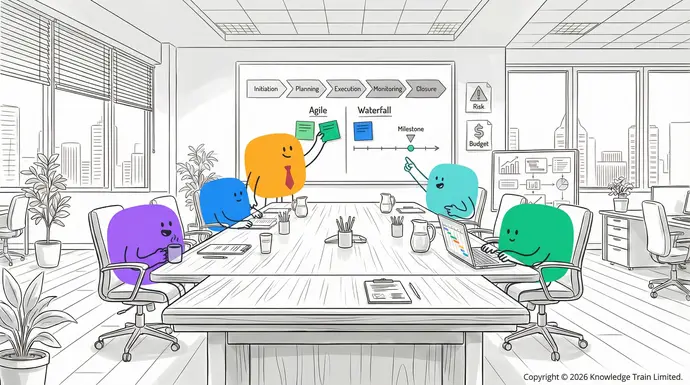
What is project management?
Project management is the application of knowledge, skills, tools, and techniques to project activities to meet project requirements (source: Project Management Institute ). It is structured around five core phases: Initiating, Planning, Executing, Monitoring and Controlling, and Closing Request a quote.
Project management is a structured approach that guides a team or organisation in planning and controlling activities to achieve defined objectives and deliverables within agreed constraints of scope, schedule, cost and quality. A [email protected]project is a temporary endeavour with a specific goal, differing from routine operations. Project management ensures successful delivery through systematic processes and best practices. +44 (0)207 148 5985
Project life cycle phasesCourses
The PROJECT MANAGEMENTproject life cyclePRINCE2 generally comprises five standard process groups:®
- InitiatingFoundation : Defining the project at a broad level, setting Learn the fundamentals of the PRINCE2 method.business casePractitioner , and identifying stakeholders.Includes Foundation & Practitioner combined option.
- PlanningAssociation for Project Management (APM): Establishing the scope, objectives, detailed schedule, risk management plan, budget, deliverables, and resource allocation.Project Fundamentals Qualification (PFQ)
- ExecutingStart your APM project management career.: Coordinating people and resources, as well as meeting established milestones and deliverables.Project Management Qualification (PMQ)
- Monitoring and controllingAdvance your APM project management expertise.: Tracking, reviewing, and regulating progress and performance, managing changes, and ensuring project stays on schedule and within scope.Project Risk Single Certificate Level 1
- ClosingEnhance your project risk management skills.: Finalising all activities, handing over deliverables to the user/customer, releasing resources, and capturing AgilePMlessons learned®. – Agile Project Management
Project management methodologies & frameworksFoundation
Multiple methodologies and models structure how Learn the key principles of Agile Project Management.projectsPractitioner are managed:Includes Foundation & Practitioner combined option.
- Agile methodologyPRINCE2: ®Agile Agile is an iterative, flexible approach emphasising collaboration, adaptability and rapid delivery; commonly used in software development and rapidly changing environments. Popular Agile frameworks such as Foundation ScrumLearn the fundamentals of the PRINCE2 Agile method. are used by teams to deliver the products specified by the customer.Practitioner
- Waterfall modelIncludes Foundation & Practitioner combined option.: A sequential, linear process suited for projects with clear, fixed requirements, such as construction and manufacturing.AI Project Governance Framework (AIPGF)
- Lean project managementFoundation : Minimises waste and maximises value; ideal for manufacturing, service improvement, and efficiency-focused projects.Learn the fundamentals of the governance framework.
- Project Management Body of Knowledge (PMBOK)Practitioner : A set of standard terminology and guidelines from the Includes Foundation & Practitioner combined option.Project Management InstituteBetter Business Cases that covers all ™project management processesFoundation .Learn the fundamentals of Better Business cases.
- PRINCE2Practitioner : A highly structured methodology focussed on business justification, clear organisation and divided into manageable stages; widely adopted by UK public sector and internationally.Includes Foundation & Practitioner combined option.
Project roles and responsibilitiesP3O
Projects rely on well-defined roles and accountability:®
- Project managerFoundation : Oversees planning, execution, monitoring, control and closing; manages risks, stakeholders, schedule, and budget.Learn the fundamentals of the P3O project management office.
- StakeholdersPractitioner : Individuals or groups affected by the project or who can impact its outcome, such as clients, suppliers, and team members.Includes Foundation & Practitioner combined option.
- Project teamWorkshops: Specialists responsible for delivering project tasks and deliverables.Introduction to Project Management
- Project sponsor1-day workshop to learn the basics of project management.: Provides financial resources and strategic guidance.Project Management Essentials
- Project board/steering committee2-day workshop to learn how to manage projects without getting certified.: High-level governance and decision making.Writing Business Cases
Effective stakeholder management and clear team communication are essential for project success. The project manager must align interests, resolve conflicts, and support collaborative team dynamics.Half-day workshop to learn to write robust business cases.
Essential project management skillsAI in Project Management
The Learn how to use AI tools in everyday project work.skills required by project managersARTIFICIAL INTELLIGENCE (AI) are varied.BCS AI
| SkillFoundation | DescriptionLearn the fundamentals of artificial intellegence. |
|---|---|
| LeadershipAI Project Governance Framework (AIPGF) | Inspiring and guiding teams towards common goals.Foundation |
| CommunicationLearn the fundamentals of the governance framework. | Conveying information clearly among stakeholders and team members.Practitioner |
| Risk managementIncludes Foundation & Practitioner combined option. | Identifying, analysing, and mitigating risks.Workshops |
| SchedulingAI in Project Management | Planning timelines and managing deadlines using tools like Gantt charts and CPM.Learn how to use AI tools in everyday project work. |
| BudgetingAGILE | Estimating, allocating, and controlling project finances.AgilePM |
| Scope management® | Defining and controlling what is included and excluded in the project. – Agile Project Management |
| Resource allocationFoundation | |
Learn the fundamentals of the PRINCE2 Agile method.Project management tools & techniques
- Project management softwarePractitioner : (e.g., Microsoft Project, Asana, Trello) aids collaboration, scheduling, task assignment, budgeting, and document management.Includes Foundation & Practitioner combined option.
- Gantt chartScrum: Visual timeline for planning and tracking progress.Scrum Essentials
- Work Breakdown Structure (WBS)Self-paced training course to learn the essentials of Scrum.: Divides project into manageable sections.Scrum Master
- Critical Path Method (CPM)Choose Scrum Alliance or Scrum.org Scrum Master training courses.: Identifies sequence of crucial tasks that determine project duration.Scrum Product Owner
- Project portfolio managementChoose Scrum Alliance or Scrum.org Product Owner training courses.: Prioritising, balancing, and overseeing multiple AgileBAprojects® aligning with organisational strategy. – Agile Business Analysis
Comparing project, programme, product managementFoundation
- Project managementLearn the fundamentals of Agile Business Analysis.: Focuses on delivering a unique, timebound outcome.Practitioner
- Programme management4-day course including Foundation.: Oversees a group of related projects aligned to strategic objectives.Lean Six Sigma
- Product managementYellow Belt : Manages the lifecycle, strategy and development of a product.Self-paced training course to gain LSS Yellow Belt.
- Operations managementPMI: Manages ongoing processes for continuous delivery of products or services.®
Best practicesPMI-ACP
- PMBOKSelf-paced course to prepare you for the exam (exam not included). (KanbanProject Management Body of KnowledgeEstimating for Agile Foundation): Comprehensive global standard for project management processes.Agile Learning Library (ALL)™
- PRINCE2BUSINESS ANALYSIS: Process-based methodology emphasising control and organisation.BCS Business Analysis
- Best practicesBusiness Analysis Foundation : Align with global standards, stakeholder engagement, clear documentation, regular reviews, and continuous improvement.Learn the fundamentals of business analysis.
Refer to the Modelling Business Processes Project Management InstituteGain practitioner certificate in modelling business processes. and Business Analysis Practices other authoritative sourcesGain practitioner certificate in business analysis practices. for further study.Requirements Engineering
. They coordinate tasks, manage the project team, oversee scheduling and budgeting, handle risks, and communicate with stakeholders to ensure successful delivery.
What is the difference between Agile and waterfall in project management?
Agile is an iterative approach that emphasises flexibility, frequent feedback and continuous improvement, best for evolving projects. Waterfall is a linear, sequential model suited to projects with well-defined requirements.
How do I become a project manager?
Start by gaining experience in team-based roles, develop relevant skills, and pursue such as