
What is project management?
Project management is the application of knowledge, skills, tools, and techniques to project activities to meet project requirements (source: Project Management Institute ). It is structured around five core phases: Initiating, Planning, Executing, Monitoring and Controlling,
project is a temporary endeavour with a specific goal, differing from routine operations. Project management ensures successful delivery through systematic processes and best practices.
Project life cycle phases
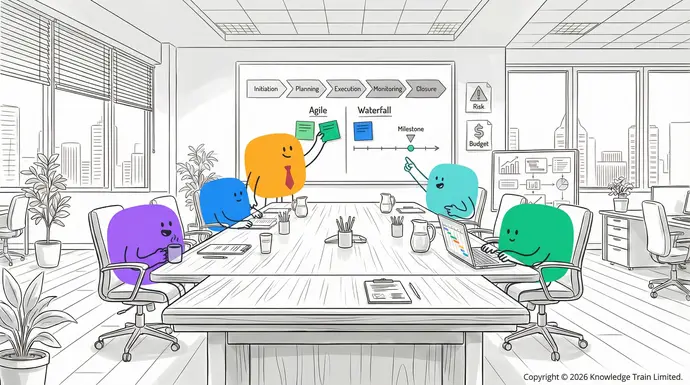
The project life cycle generally comprises five standard process groups:
- Initiating : Defining the project at a broad level, setting business case , and identifying stakeholders.
- Planning : Establishing the scope, objectives, detailed schedule, risk management plan, budget, deliverables, and resource allocation.
- Executing : Coordinating people and resources, as well as meeting established milestones and deliverables.
- Monitoring and controlling : Tracking, reviewing, and regulating progress and performance, managing changes, and ensuring project stays on schedule and within scope.
- Closing : Finalising all activities, handing over deliverables to the user/customer, releasing resources, and capturing lessons learned .
Project management methodologies & frameworks
Multiple methodologies and models structure how projects are managed:
- Agile methodology : Agile is an iterative, flexible approach emphasising collaboration, adaptability and rapid delivery; commonly used in software development and rapidly changing environments. Popular Agile frameworks such as Scrum are used by teams to deliver the products specified by the customer.
- Waterfall model : A sequential, linear process suited for projects with clear, fixed requirements, such as construction and manufacturing.
- Lean project management : Minimises waste and maximises value; ideal for manufacturing, service improvement, and efficiency-focused projects.
- Project Management Body of Knowledge (PMBOK) : A set of standard terminology and guidelines from the Project Management Institute that covers all project management processes .
- PRINCE2 : A highly structured methodology focussed on business justification, clear organisation and divided into manageable stages; widely adopted by UK public sector and internationally.
- Includes Foundation & Practitioner combined option.Project portfolio management: Prioritising, balancing, and overseeing multiple P3Oprojects® aligning with organisational strategy.Foundation
Comparing project, programme, product managementLearn the fundamentals of the P3O project management office.
- Project managementPractitioner : Focuses on delivering a unique, timebound outcome.Includes Foundation & Practitioner combined option.
- Programme managementWorkshops1-day workshop to learn the basics of project management.
- Product managementProject Management Essentials : Manages the lifecycle, strategy and development of a product.2-day workshop to learn how to manage projects without getting certified.
- Operations managementWriting Business Cases : Manages ongoing processes for continuous delivery of products or services.Half-day workshop to learn to write robust business cases.
Best practicesAI in Project Management
- PMBOKLearn how to use AI tools in everyday project work. (ARTIFICIAL INTELLIGENCE (AI)Project Management Body of KnowledgeBCS AI
- Learn the fundamentals of the PRINCE2 Agile method.PRINCE2 certificationsPractitioner and Includes Foundation & Practitioner combined option.
Best project management softwareSelf-paced training course to gain LSS Yellow Belt.
- Software tools support scheduling, resource allocation, collaboration, documentation, PMIrisk management®
Business Analysis International Diploma How do I become a project manager?
AgileBAproject management certifications® such as – Agile Business AnalysisPRINCE2Foundation training , Learn the fundamentals of Agile Business Analysis.