
What is project management?Summary
Project management is the application of knowledge, skills, tools, and techniques to project activities to meet project requirements (source: Business case FAQsProject Management InstituteIntroduction). It is structured around five core phases: This article explains how to write a business case. It includes 2 business case examples and a free business case template for you to Initiating, Planning, Executing, Monitoring and Controlling,download and .ClosingYou’re probably reading this article because you want to know how to write a business case. Perhaps your organisation is embarking on a major project to develop a new product. Or, perhaps you’re thinking of moving house so your family can enjoy a better life. In either case, you write a .business case
Project management to ensure the investment is worthwhile. is a structured approach that guides a team or organisation in planning and controlling activities to achieve defined objectives and deliverables within agreed constraints of scope, schedule, cost and quality. A In this article we’ll give you 2 business case examples, provide you with a simple business case template for you to use, and explain how to write a business case.projectEnhance your skills with our expert-led courses is a temporary endeavour with a specific goal, differing from routine operations. Project management ensures successful delivery through systematic processes and best practices.
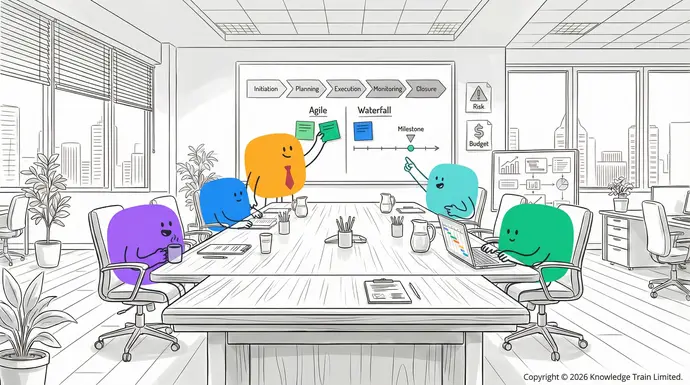
Project life cycle phases
The project life cycleInstructor-led generally comprises five standard process groups:Better Business Cases Practitioner (with Foundation) course
- Initiating : Defining the project at a broad level, setting £2,400 +vatbusiness case , and identifying stakeholders.See all dates
- Planning : Establishing the scope, objectives, detailed schedule, risk management plan, budget, deliverables, and resource allocation.
- Executing : Coordinating people and resources, as well as meeting established milestones and deliverables.Self-paced
- Monitoring and controllingBetter Business Cases Practitioner (with Foundation) self-paced online: Tracking, reviewing, and regulating progress and performance, managing changes, and ensuring project stays on schedule and within scope.
- Closing£1,199 +vat: Finalising all activities, handing over deliverables to the user/customer, releasing resources, and capturing lessons learned .
Project management methodologies & frameworksSelf-paced
Multiple methodologies and models structure how Better Business Cases Foundation self-paced onlineprojects are managed:£699 +vat
- Agile methodologyWhat is a business case?: A business case is the justification for some activity (e.g. a project) undertaken by your organisation. It weighs up the timescales, costs and risks of doing the activity against the benefits to be gained. Think of it as weighing up the pros and cons and then taking a sensible decision.AgileA business case forms an essential component of the curriculum of the is an iterative, flexible approach emphasising collaboration, adaptability and rapid delivery; commonly used in software development and rapidly changing environments. Popular Agile frameworks such as best project management coursesScrum. are used by teams to deliver the products specified by the customer.Personal business case
- Waterfall modelYou may also use a business case to justify an investment you make in your personal life. For example, when you’re thinking of moving home to another area. You and your spouse will need to understand the costs of moving, the timescales and risks involved, and weigh these up against the benefits to be gained e.g. saving time traveling to your office, or your children able to go to a better school.: A sequential, linear process suited for projects with clear, fixed requirements, such as construction and manufacturing.Why have a business case?
- Lean project managementProjects should not just start on a whim or because of vanity – although a lot of money has been wasted over the years on such : Minimises waste and maximises value; ideal for manufacturing, service improvement, and efficiency-focused projects.projects
- Project Management Body of Knowledge (PMBOK).: A set of standard terminology and guidelines from the For business organisations, justification for a project usually takes a commercial form i.e. evaluating how much money could be made from the investment. For example, investing money in developing a new software app to bring first to market, might be deemed to bring certain monetary benefits (in terms of sales) which exceeds the costs of investment.Project Management InstituteFor government organisations, justification is probably not a commercial one, but could be based upon giving value for money to achieve certain benefits. For example, a public health campaign extolling the benefits of flu-vaccinations for elderly people, might be judged as giving greater value for money than having no campaign, and instead relying on treating patients in hospital once they have contracted the virus. that covers all With so many competing claims being made on scarce funds, organisations need the assurance that the decision they are taking is the right one. After all, there will not be enough funds to pay for all the ideas for projects which are floating around the organisation.project management processesWho uses a business case?.Business cases can be used by many different levels of management within an organisation. Not only are they used to justify the investment in an individual project, but also they are typically used by a
- PRINCE2portfolio management: A highly structured methodology focussed on business justification, clear organisation and divided into manageable stages; widely adopted by UK public sector and internationally. office to help it decide which projects will contribute to the organisation’s strategic goals. That way, they can filter out the bad ideas for projects, and only fund projects which will contribute to strategic goals.
Project roles and responsibilitiesA business case is also often used by a project sponsor or project executive to help it decide if they should invest in a specific project.
Projects rely on well-defined roles and accountability:In all cases, the business case must be written and approved prior to any major commitment of resources.
- Project managerWhat form does a business case take?: Oversees planning, execution, monitoring, control and closing; manages risks, stakeholders, schedule, and budget.Business cases can take many forms – digital or analogue. The tools you use to create one are also many and varied. Common business tools such as Microsoft Office might be used. Rather than being a document or slide deck however, it could equally be in the form of an email.
- StakeholdersEqually, a business case could be written by hand on a whiteboard or flipchart, or on the back of a cigarette packet!: Individuals or groups affected by the project or who can impact its outcome, such as clients, suppliers, and team members.What you should always remember is that a business case does not have to be a huge long document. In fact, it should be as short as possible, and only include the most important information. That way it cuts out the noise and provides decision-makers with just the right information to enable them to take sensible decisions.
- Project teamFor those of you interested in : Specialists responsible for delivering project tasks and deliverables.project management
- Project sponsor, the project management methodology known as : Provides financial resources and strategic guidance.PRINCE2
- Project board/steering committee focuses its decision-making on a project on having a viable business case.: High-level governance and decision making.Business case examples
Effective stakeholder management and clear team communication are essential for project success. The project manager must align interests, resolve conflicts, and support collaborative team dynamics.We will now give you 2 business case examples. The first example is one which you might find useful for taking decisions in your personal life. The 2nd business case example is more business focused project.
Essential project management skillsBusiness case example 1: Moving home
The Suppose you and your spouse are considering moving to a new home. You will need to weigh up the pros and cons of moving. This is done using a business case. You might not call it that, but that’s what it is. Let’s look at an example.skills required by project managersReason are varied.As you can see from the example, the first thing to be clear about in a business case is the reason for doing the project or activity. In this example, the couple has answered the question
| SkillWhy? | Description In fact, there are two problems here – the local school and John’s long commute. |
|---|---|
| LeadershipOptions considered | Inspiring and guiding teams towards common goals.A business case should weigh up the competing options which have been considered. After all, there is usually more than one option. Perhaps an alternative option would have been for John to change his job to one nearer their current house. However, this wouldn’t solve the issue with the school. |
| CommunicationBenefits | Conveying information clearly among stakeholders and team members.The benefits of a project or activity are the positive things you’re going to get back in return for your investment of time and money. In this case, the kids will get a better education, and John will save time each day. |
| Risk managementTimescales | Identifying, analysing, and mitigating risks.It’s also important to understand how long the investment of resources will take. This is so that the organisation (or family in this case) knows when the resources will be freed up to work on other |
| Schedulingprojects | Planning timelines and managing deadlines using tools like Gantt charts and CPM. or activities. |
| BudgetingThere are usually 2 timescales to consider. First, the timescale of the project or activity – in this case 3 months to find a new house and move there. Second, the time over which the benefits shall be realized. In this case it’s 5 years until the kids leave school. | Estimating, allocating, and controlling project finances.Costs |
| Scope managementThe costs of doing the project or activity is the next important bit of information. On this project, the costs of moving to a new house will be £5,000. These are the project costs. | Defining and controlling what is included and excluded in the project.However, the couple will spend an additional £2,000/year for every year over which the business case is calculated. For a project in an organisation, this is usually referred to as the operational costs of maintaining and operating the projects outputs e.g. an IT system. At this point, the couple knows the total costs over the timescales when the benefits shall be realized. |
| Resource allocationRisks | Assigning people, equipment and budget where needed.For any activity or project, it’s also important to understand the major risks involved. Risks are the uncertain things which may or may not happen during the period of the investment. There is only one risk identified here, which is the risk that the couple might lose touch with friends who live close to them right now. |
| Problem solvingInvestment appraisal | Overcoming obstacles and finding effective solutions.The next section is where the costs and timescales and risks are weighed up. For this project, it’s a simple decision for the couple to decide if it’s worth spending money over the next 5 years to give their kids better schooling and to save John 2 hours a day commuting. |
| NegotiationFor an organisation to decide if an investment is worthwhile, however, there are several different ways in which it can decide about the investment. | Reaching agreement among parties to resolve issues.Often in organisations there are rules defined to help business analysts or |
| Critical thinkingproject managers | Evaluating situations and implications for decision making. write what’s called an investment appraisal. In the next example, we’ll look at one example known as net benefits. |
Project management tools & techniquesBusiness case example 2: Handheld device project
- Project management softwareImagine a heating repair services company that uses a paper-based set of forms filled in by an engineer during site visits. The spare parts required to fix the heater are recorded on a form which is given to staff to process back in the office. They then order the parts, and schedule a follow-up visit for the engineer to fix the heater.: (e.g., Microsoft Project, Asana, Trello) aids collaboration, scheduling, task assignment, budgeting, and document management.Enhance your skills with our expert-led courses
- Gantt chart : Visual timeline for planning and tracking progress.
- Work Breakdown Structure (WBS): Divides project into manageable sections.
- Critical Path Method (CPM): Identifies sequence of crucial tasks that determine project duration.
- Project portfolio management: Prioritising, balancing, and overseeing multiple projects aligning with organisational strategy.
Comparing project, programme, product managementInstructor-led
- Project managementBetter Business Cases Practitioner (with Foundation) course: Focuses on delivering a unique, timebound outcome.
- Programme management£2,400 +vat: Oversees a group of related projects aligned to strategic objectives.
- Product managementSee all dates: Manages the lifecycle, strategy and development of a product.
- Operations management : Manages ongoing processes for continuous delivery of products or services.
Best practicesSelf-paced
- PMBOKBetter Business Cases Practitioner (with Foundation) self-paced online ( Project Management Body of Knowledge£1,199 +vat): Comprehensive global standard for project management processes.
- PRINCE2 : Process-based methodology emphasising control and organisation.
- Best practicesSelf-paced: Align with global standards, stakeholder engagement, clear documentation, regular reviews, and continuous improvement.Better Business Cases Foundation self-paced online
Refer to the Project Management Institute£699 +vat and Let’s now look at this example business case.other authoritative sourcesExecutive summary for further study.This sample business case contains an executive summary. This section briefly describes the selected option and the key benefits it will bring.
Project management certificationsReasons
Professional The reasons for the project are clearly spelled out when describing the 3 current problems which the company faces.certificationsOptions validate project management knowledge and competence:In this example, there are 2 options (other than do nothing) which have been examined. Each option is summarized and the reason why option 3 is the preferred option has been stated.
- PMPBenefits (Project Management Professional), The expected benefits of reduced overheads are clearly stated. Benefits should be measurable and quantifiable. That means that the benefits can be measured later. But what about the reduced errors, rescheduled appointments and customer contract cancellations? Aren’t they benefits?CAPMWell, these are in fact something else – they’re called outcomes. Outcomes are the results of the changes which come about by using the new handheld devices. The ways you measure the improvements resulting from these outcomes are known as benefits. (Certified Associate in Project Management) from Dis-benefitsPMIThis example also contains a dis-benefit which is that the back-office staff morale will be lower due to reduced overtime payments. A dis-benefit, if you’re wondering, is a negative consequence of a project. It’s not the same as a risk which implies something uncertain. A dis-benefit is something which you know will happen because of the project and it has negative consequences for the organisation. It’s the opposite of a benefit!
- FoundationTimescales and Just as we saw in the previous example, the business case contains 2 timescales – the project timescales (i.e. the time it will take to complete the project) and the benefits realization timescales (i.e. the time over which benefits are expected to be realized).PractitionerCosts level Again, there are 2 costs – project costs and the ongoing operational costs over the benefits realization timescale. When the decision is taken whether to invest in this project, the total costs (i.e. project costs and ongoing operational costs) are weighed against the expected benefits over the same time period.PRINCE2 certificationsRisks and One major risk has been identified in this example, but on your project, there could be many risks.PRINCE2 Agile certificationsInvestment appraisal.The final section is the investment appraisal. The investment technique used in this example is called net benefits. As you can see from the table, the project and operational costs are recorded for each year of the investment.
- FoundationThe project lasts 1 year which is why the project costs are zero after year 1. Of course, the benefits won’t be realized until the solution is in place and the company starts to use the handheld devices. and The net benefits are simply the total benefits minus the total costs. This shows that the company will start to get a return on its investment sometime towards the end of year 2. This knowledge is vital if the decision-makers are to take a sensible decision about whether to invest in the project.PractitionerBusiness case template level This simple AgilePM certificationsbusiness case template from APMG is free to download.
Certifications are valued globally and support career advancement.Summary
Project management career pathA business case is the most important document on any project. That’s because it justifies the investment.
Career progressionIt helps an organisation be clear about why a project is needed, and what the results of the investment will be. This is crucial because no organisation has unlimited funds to spend on an unlimited number of projects. Therefore, a business case gives confidence to senior managers when deciding to invest in one project rather than another. often starts with project coordinator or assistant roles, advancing to project manager, senior project manager, programme manager, and portfolio manager positions. Skilled practitioners are in high demand in industries such as However, as you have seen in this article, a business case is something which you can find useful when taking major decisions in your own personal life. Remember – a business case doesn’t need to be a lengthy document. It could easily be a few notes scribbled on the back of something or even sent in an email.ITWhatever form your business case takes, remember one thing – it will help you or your organisation take sensible decisions about committing time and resources to a project or activity., construction, engineering, healthcare, and finance.Remember, if you want to learn more about developing a business case, and learn many of the techniques useful for assessing business problems, consider attending a classroom
Best project management softwarebusiness analyst course
- Software tools support scheduling, resource allocation, collaboration, documentation, .risk managementEnhance your skills with our expert-led courses, and reporting – common options include Microsoft Project, Jira, Trello, Asana, Smartsheet, and Monday.com.
FAQs
What are the five stages of project management?
The five standard stages are Initiating, Planning, Executing, Monitoring and Controlling, and Closing. Each phase plays a vital role in ensuring project objectives are met efficiently.Instructor-led
What does a project manager do?Better Business Cases Practitioner (with Foundation) course
A project manager£2,400 +vat is responsible for planning, executing, and closing projectsSee all dates. They coordinate tasks, manage the project team, oversee scheduling and budgeting, handle risks, and communicate with stakeholders to ensure successful delivery.
What is the difference between Agile and waterfall in project management?
Agile is an iterative approach that emphasises flexibility, frequent feedback and continuous improvement, best for evolving projects. Self-pacedWaterfallBetter Business Cases Practitioner (with Foundation) self-paced online is a linear, sequential model suited to projects with well-defined requirements.
How do I become a project manager?£1,199 +vat
Start by gaining experience in team-based roles, develop relevant skills, and pursue project management certifications such as PRINCE2Self-paced, Better Business Cases Foundation self-paced onlineAgilePM or CAPM. Practical experience and networking are valuable for career advancement.£699 +vat
What are effective project management tools?Business case FAQs
Popular tools include Who approves a business case?project management softwareUsually on a project, the project sponsor (the person or people who are committing the funds) will approve a business case. Before approving it, they need to have confidence that the problems have been addressed and the right solution has been selected, that the benefits are achievable and realistic, when the investment will pay off, and how big will the return on investment be. (Microsoft Project, Asana), Gantt charts, What makes a good business case?WBSAs you have seen in this article, there’s several important bits of information which goes into a business case. Don’t spend unnecessary time though adding information which isn’t required. Your project sponsor will have to read your business case before they approve it, and you don’t want to make their job any harder than it already is!, and CPM – all of which assist in planning, scheduling, allocating resources, and communication.There are several things you can use to check whether your business case is adequate or not. Here’s a checklist of 13 questions to ask yourself before you submit your business case to your sponsor for approval: