
Rose James is a keynote speaker and leadership strategist who focuses on influence without authority, engagement, and burnout. She has extensive experience in portfolio leadership, transformation, and enterprise change. That experience gives her insight into how governance, culture, and stakeholder behaviour affect delivery teams.: The end product or result is distinct from routine operations
She works with leaders and project professionals who must move people and decisions forward in complex organisations. Her approach blends neuroscience, leadership psychology, and practical tools that can be applied quickly. She focuses on helping people strengthen their presence, communicate with clarity, and manage pressure more effectively.Resource constraints
Rose speaks regularly at conferences, professional associations, and corporate leadership forums. She is known for clear structure, grounded examples, and sessions that prompt lasting shifts in how people think about work and performance.: Projects are typically limited by budget, time, and personnel.
TranscriptWhat is a programme?
Here’s the full transcript of the webinar.A programme is a group of related projects that are managed in a coordinated manner to achieve benefits that would not be available if the projects were managed individually.
00:00:02 Sevcan Valiyeva Characteristics of programmes: Hello, everyone. Welcome to today’s webinar. We have Rose with us today. Rose, thank you so much for joining. It’s only for a few minutes while people enter. Feel free to write your name and your location in the chat.Multiple projects
00:00:29 Sevcan Valiyeva : Programmes involve the coordinated management of several interrelated projects: Hi, Catherine.Longer duration
00:00:33 Rose James : Programmes typically last several years or may be ongoing: Hi, Catherine.Strategic focus
00:00:35 Sevcan Valiyeva : Programmes are aligned with the organisation’s goals: Hi, Lauren. Hi Paula, Hi Lisa. This is exciting.Evolving nature
00:00:57 Sevcan Valiyeva : Programmes adapt to changing business needs.: Hi James.Programme objectives and strategic alignment
00:01:04 Sevcan Valiyeva Programmes focus on realising : Okay, so just to give a bit of a background, I am Sevcan, I’m the market executive for Knowledge Train. We are in partnership with agileKRC today. We have Rose, as I just mentioned. Rose, thank you so much for joining. I really appreciate it. It does seem like a very exciting topic, one that is applicable to everyone, to be honest. The webinar will be recorded. You will receive an e-mail most probably next week. You would also receive the presentation slides. If you do have any questions, pop them down in the chat and Rose will go over them right at the end. So Rose, over to you.strategic benefits
00:01:40 Rose James for the organisation. They are concerned with creating value and supporting business objectives. Key aspects of programmes include:: Thank you. Hello, everyone. I’ll say good afternoon, everyone. Good morning. For me, I am very excited to be here. You should be seeing my screen, so let’s get started.Value creation
00:01:55 Rose James : Delivering outcomes that contribute to the organisation’s strategic goals: Before we do, do this with me. Silent your phones. Turn off your e-mail notifications. During this hour, resist the urge to multitask. Give yourself permission to be fully here, because burnout cannot be beat if we are only half present. I’m going to give you a moment.Change management
00:02:28 Rose James : Facilitating organisational transformations and initiatives: Great.Stakeholder engagement
00:02:31 Rose James : Managing complex relationships across multiple projects: Let’s ground ourselves in what we’ll take away from today’s discussion. First, we’ll break down the stages of burnout, what it looks like, how it creeps in, and why it’s especially relevant in project management. From there, we’ll move into strategies you can actually use, practical tools to both build wellness and resilience into how you lead and work. My goal today is not to add more to your plate, far from it. My goal is to shift how you approach what’s already on your plate.Risk mitigation
00:03:14 Rose James : Addressing broader and long-term risks.: Before we talk solutions, we need to talk truth. For many of us, the way we are working is not working. Imagine this for a moment. You are knee-deep into a critical report for an important meeting when chat notifications starts pinging one after the other. an urgent e-mail lands in your inbox demanding your immediate attention. Just as you are trying to focus, you remember the lineup of back-to-back meetings on your calendar for the rest of the day. If that sounds familiar, drop a note in the chat or a thumbs up to just tell me, yes, I understand or this resonates, you’re speaking to me.Programme managers are responsible for ensuring that individual projects within the programme contribute to the overall strategic objectives. They maintain flexibility to adapt to changing business environments while maximising benefits realisation.
00:04:10 Rose James In conclusion, understanding the distinctions between projects and programmes is critical for effective management and organisational success. By recognising the differences in scope, objectives, and management approaches, organisations can better allocate resources, manage stakeholders, and navigate the complexities of the modern business landscape.: Yeah. But the truth is it doesn’t stop there. After work, there are appointments, there are errands, there’s school pickups, there’s after-school activities for the kids or for yourself. Life does not pause when your workday ends. And we are often told to do more with less.Key differences between project and programme management
00:04:36 Rose James It is of crucial importance for the representatives of organisational leadership to have a good awareness of key difference between project and programme management, which will be further elaborated by focusing on five areas.: So we keep squeezing productivity into every available moment, answering emails while we are in meetings, multitasking through fatigue, taking work home and checking on work after we leave the office, and ignoring the signs our bodies are sending.Scope and focus
00:05:02 Rose James Project management: I like my presentation to be very interactive, so if I am speaking truth to power for you, please drop a note in the chat or just signal me with an emoji. It is no surprise then that 44% of employees report feeling stressed throughout the day. Globally, a significant portion of workforce reports experiencing high levels of stress on a daily basis. Until we see numbers like this, it is easy to assume we are the problem.Project management is defined by the creation of
00:05:39 Rose James specific deliverables: We think we are not strong enough. We think we are not organised enough. We think we are not doing enough. But let me be clear. This is not a personal failure. It is a systemic pressure cooker. One that demands awareness, boundaries, and change. within a defined scope and set of constraints. The emphasis is placed on achieving measurable objectives, completing tasks efficiently, and producing tangible results.
00:06:07 Rose James Project managers: Before we can shift out of burnout, we have to understand what it actually is, because it rarely starts with flames. More often, it starts with the slow, invisible erosion of chronic exposure to stress. are focused on delivering according to predetermined quality standards while optimising resource use.
00:06:31 Rose James Programme management: The World Health Organization recognises burnout as the result of chronic workplace stress that has not been successfully managed. According to the National Library of Medicine, burnout is a work-related stress syndrome. Psychology today takes it even further that it is a state of chronic stress that leads to exhaustion, detachment, and a sense of ineffectiveness.Programme management, on the other hand, has a wider perspective and is oriented towards
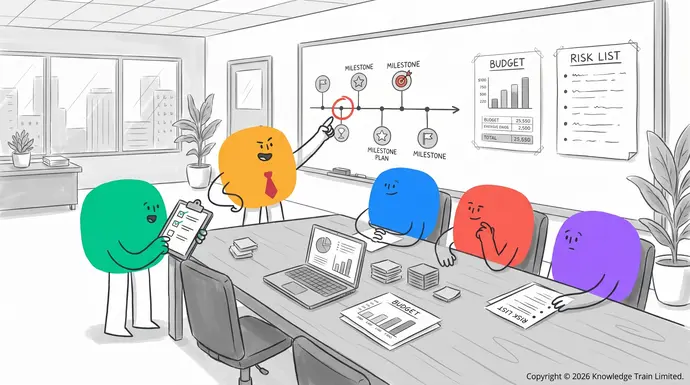
00:07:06 Rose James long-term value: So let me pause here, because this means that it is not a personal failure. It is a predictable response to prolonged exposure with too few recovery points. Here is the hard truth. Burnout does not just drain your energy. It chips away at your purpose, at your confidence, and at your joy. creation. Aspects such as aligning multiple projects with organisational strategy, maximising benefits across interrelated initiatives, and adapting to changing business needs are central to programme management.
00:07:42 Rose James Programme managers focus on the overall outcomes and results that align with strategic objectives.: So let me ask you, where are you in this matchstick progression? Are you lit up with momentum? or quietly smoldering, almost out. Some of us are holding it together with caffeine and composure, but inside, we are halfway burnt.Time frame and duration
00:08:15 Rose James Projects: Stress is triggered by what we call stressors, and these can either be internal or external. Internal stressors include our thoughts, our beliefs, and even psychological factors like negative self-talk, perfectionism, or chronic illness. These are the stressors we often have the most influence over.Projects are
00:08:45 Rose James time-bound activities: And then there are the external stressors, things like major life events, heavy workload, or family conflict. These tend to be outside of our control. While we cannot always control external circumstances, we can focus on managing our internal stressors. The beliefs we hold, the way we talk to ourselves, and how we respond to pressure. That’s where real transformation begins.. They typically have fixed start and end dates and a defined project lifecycle. Milestones and deadlines are established to track progress, and projects are often closed once the deliverables are completed.
00:09:30 Rose James Project managers are primarily concerned with adhering to the schedule and delivering on time.: Now that we’ve seen the most common sources of stress, both internal and external, let’s take a moment and look at where that stress can take us if left unmanaged. Burnout is not something that happens overnight. It is a progression.Programmes
00:09:54 Rose James Programmes: What you are looking at here is the five stages of burnout, starting with stage one, the honeymoon phase, where we are enthusiastic, motivated, and optimistic. But if we don’t manage it well, step 2 starts to creep in, which is the onset of stress, where you might begin to feel stagnant, or mentally cluttered. Then comes step three, where stress becomes chronic. Frustration bails. You might notice sleep disturbances, irritability, or even physical fatigue becoming more common. By stage four, we’ve hit full burnout. Energy is low, apathy sets in, and it becomes difficult to stay engaged with the work we once loved. Habitual burnout is stage five, which is the most concerning. This is when burnout becomes embedded in our daily lives. It starts affecting our health, our relationships, and how we show up in the world., in contrast, can span
00:11:17 Rose James longer timeframes: The yellow and red arrows here show how both physical and emotional exhaustion build as we move across these stages. Recognising where you are is the first step towards reclaiming your energy and choosing a different direction.. They often have more fluid timelines that can adapt to shifts in strategy and priorities. Evaluation and adjustment are ongoing processes, and programmes may continue for as long as they are delivering benefits.
00:11:43 Rose James Programme managers have a long-term perspective and balance short-term project requirements with future opportunities.: So ask yourself, honestly, what stage are you actually operating in today? Not where you want to be, where you are today.Stakeholder management
00:11:58 Rose James Project level: I have a poll here, so we’re going to launch it right now. And take a moment, assess, reflect, and make your selection.Project stakeholder management is a
00:12:16 Rose James targeted approach: Can we launch the poll? that focuses on individuals or groups directly impacted by the project. This includes managing expectations within the project’s scope and ensuring communication of project-specific information.
00:12:17 Sevcan Valiyeva Project managers build and maintain relationships critical to the project’s immediate success.: Yep, everyone can see. Yeah.Programme level
00:12:39 Rose James Programme stakeholder management is a : All right. So I can see, okay, people are still.broader approach
00:12:54 Rose James that involves engaging a wider range of stakeholders across multiple projects within a programme. Balancing the conflicting interests and priorities of these stakeholders and fostering long-term relationships beyond the lifecycle of individual projects is a key aspect of programme stakeholder management.: All right. I see a high spread between stage 3. Seems people are still. They’re still voting.Programme managers navigate complex stakeholder networks to maintain support for the programme.
00:13:15 Rose James Risk management: Most of you are sitting in stage two and stage three. What we have here is very meaningful.Project risks
00:13:26 Rose James Project risk management: Okay, we can end the poll. And this is more common. We see a lot of people in stage four and stage five as well. The interesting thing is that this is more common than most people admit. Most professionals operate in the middle of this curve and call it normal. centres on
00:13:52 Rose James specific risks: But where you are matters because each stage carries a different cause. And that cost can be grave. Let me show you what actually is happening as you move through these stages. and opportunities associated with a project. This includes identifying risks within the project’s scope, developing risk response strategies for known risks, and continuously monitoring and controlling risk impacts on project objectives.
00:14:16 Rose James Project managers aim to minimise uncertainty and potential threats to project outcomes.: What you choose is not a fixed point. It is a position on a curve. So if you were a stage two, that doesn’t mean that that’s where you live forever. It is a position at a point in time. Remember, burnout does not show up overnight. It shows up as a gradual loss of engagement.Programme risks
00:14:42 Rose James Programme risk management takes a : As you can see on this curve, this is what happens as you move from a point of enthusiasm to burnout. The drop is not just your energy. It is focus, patience, clarity, capacity. Most people only name it at the end when they get to that burnout or habitual burnout stage.broader perspective
00:15:10 Rose James and considers the interconnected risks across multiple projects. This involves managing strategic risks that can impact organisational goals and adapting to emerging risks and opportunities that arise during the programme’s lifecycle.: In one word, put it in the chat for me. How is that stage showing up in your work or in your world right now?Programme managers have a holistic view of risk and consider its implications on the entire programme.
00:15:35 Rose James Change management: I see uncertainty. Kathleen says juggling A lot. Yeah, I know. Disengaged, exhausted. Felici says nonchalant. Oh, yeah. Katherine says frustrated. James says despair. Unsupported. Yes, Katherine. Lisa, frustrated and overloaded. Yes, I hear you.Projects
00:16:16 Rose James Change management within projects is often focused on : This is what that drop in engagement feels like in real life. And that is what most people normalise and keep operating inside of it.minimising disruptions
00:16:31 Rose James and changes to the project’s scope and plan. The goal is to maintain stability and adhere to the defined project constraints and objectives.: Burnout. doesn’t live inside one person. It spills into everything we touch, our projects, our themes, and our personal lives. When we are burned out, project outcomes suffer, deadlines slip, quality drops, and risk climbs. Teams lose trust, collaboration fractures, and morale sinks. And at the center of it all, our health, our energy, and our passions wear thin.Project managers often implement strict change control procedures to prevent scope creep and stay on track.
00:17:15 Rose James Programmes: Recognising burnout extends beyond ourselves. It transcends to protecting the work, the people, and the purposes we serve. So now that we understand how burnout spirals and how deeply it impacts our work, our teams, our families, and our well-being, the question becomes, what can we do about it?Change management within programmes, on the other hand, is more
00:17:46 Rose James adaptive and flexible: Up until now, we have focused on the personal journey, how we build resilience, how we protect our energy and respond to stress. But let’s be honest, no amount of meditation can offset a workplace that breeds exhaustion.. Programmes embrace change as an opportunity for improvement and benefit maximisation. Programme managers may encourage adaptive responses to shifting priorities, realign
00:18:10 Rose James projects: This is what it can feel like when the system around you works against your well-being. When the culture celebrates overwork, when it discourages boundaries or punishes vulnerability. to capitalise on new opportunities, and continuously optimise the programme’s outcomes.
00:18:30 Rose James Programme managers leverage change to drive value creation across the programme.: I’m looking at the chat and Catherine says, last time I was burned out, I was telling my manager for six months before that, that I was showing signs and I needed support. I was ignored. Catherine, my heart goes out to you, but you are speaking to exactly what I’m talking about right now.Understanding these core differences allows organisations to take full advantage of both project and programme management.
00:18:54 Rose James Enhance your skills with our expert-led courses: So let’s talk about what you can actually do, when the culture itself is fueling burnout. Start by influencing what you can. Track the chaos, document shifting priorities, scope creep, or the pressure to do more with less.
00:19:17 Rose James : Catherine, you are right. By letting your leader know, things are piling up for me. I’m starting to get burned out. Document those. Raise those awareness. Keep it factual. It gives you leverage later.
00:19:33 Rose James Self-paced: Ask better questions. Not why are we doing this, but how are we protecting our team’s sustainability? That kind of question reframes the narrative.APM PFQ blended online
00:19:48 Rose James : Suggest one thing, not a lot, just one change that we can make. Maybe a no-meeting morning. Clearer decision paths. Defined team expectations. Just suggest one that the team can use and maybe implement.£749 +vat
00:20:12 Rose James : Make trade-offs visible. When everything feels urgent, the real issue is usually unclear priorities. So make trade-offs explicit. Everything cannot be a priority. Let’s ask, what matters most here? And once trade-offs are visible, the pressure to do everything starts to ease. That’s how culture starts to shift from the edges in and the status quo cracks.
00:20:54 Rose James Self-paced: And for those external to your control, protect your space. Burnout tends to isolate. But often, the people next to you may be feeling it too. Just look at this chat. So many of us are going through burnout. It is helpful to find people who may be going through the same thing. Talk to them. Talk about burnout. Break the silence. It is so powerful.PRINCE2 Agile Practitioner (with Foundation) self-paced online
est teams burn out. You would set them up to thrive. Now it’s your turn. Lead yourself like someone whose well-being matters because it does.Working in unison, project and programme managers create synergy that elevates the organisation’s overall performance.
00:30:53 Rose James Tools and methodologies: We’ve talked about the importance of shifting both how we think and how we act. You’ve already heard a couple of shifts, like recognising that rest is not a reward, or closing your laptop at 5 PM.Project and programme management often require specialised tools and methodologies to succeed. This section highlights some of the most prominent tools and techniques used in both fields, including approaches like
00:31:10 Rose James Agile: Now let’s expand the lens. I’m dropping a few more mindset shifts and behavior shifts on the screen. Take a look. And drop in the chat, which one hits home for you? and
00:31:26 Rose James DevOps: Nod or smile, come off camera and smile. Just let me know which of these you are taking with you right now..
00:31:43 Rose James Project management tools and techniques: I love that you guys are chatting in the screen, chatting live as I’m looking on the screen. And what’s powerful about that is because so many of us are carrying the same invisible weight and reaching for the same kind of shifts. And they help us know that you are not alone in this. And this is powerful.Project managers have a wide array of
00:32:10 Rose James tools and techniques
commonly used for project management.
00:36:26 Rose James Programme management tools and techniques: Today, we unpacked the reality that burnout is not some distant threat. It is a present risk and one we can prevent when we lead ourselves as intentionally as we lead our projects. It starts with awareness, recognising the early warning signs before they escalate. Then it takes action. Mindset shifts, behavioral shifts, together they protect our well-being in sustainable ways. And over time, it is the small, consistent actions that matter most, the ones that don’t always look dramatic, but builds real, lasting resilience and recovery.Programme managers use a different set of tools that allow them to oversee multiple projects and align them with the strategic goals. Some of the techniques include:
00:37:20 Rose James Portfolio management software: The path forward does not require a radical overhaul. It’s found in the steady intentional choices that add up over time. And the moment to start making those choices is now.: Software to help manage multiple projects and programmes.
00:37:39 Rose James Benefits realisation tracking: Before we move into Q&A, I want to leave you with this. If burnout is showing up in your world, this is something to address with structure, not more effort.: Tracking and measuring the outcomes of a programme.
00:37:53 Rose James Dependency mapping: After this session, I am opening up a number of small burnout strategy conversations for leaders and project professionals who want to identify where pressure is turning into depletion, clarify what needs to shift in the work system, or build a practical path back to sustainable performance.: Mapping the relationships between different projects and initiatives.
00:38:18 Rose James Stakeholder analysis matrices: You can book directly using the code on the screen. We will work through your situation and get clear on what needs to shift.: Identifying and prioritising key stakeholders.
By taking an effective programme management approach, an organisation can also become more agile. In other words, they can be able to
00:43:03 Rose James respond more quickly to changes: What did, what did, what, Paula, what are you saying yes with an exclamation point to? Tell me. and adapt more effectively.
00:43:14 Rose James Programme management also helps with enabling quicker decision-making, as an organisation can gain valuable insights from taking a programme view to achieve its strategy.: What is your yes to?In conclusion, effective programme management can lead to a range of benefits for organisations. These include improved strategic alignment, better resource management, enhanced stakeholder engagement, and increased organisational agility.
00:43:27 Rose James Enhance your skills with our expert-led courses
: I see a cheeky question, so I’m curious, what is a cheeky question? Let me read it.
00:44:36 Rose James : No need to answer. Among the 56% who aren’t burned out, how many are managing themselves well and how many are just slacking off, do you reckon?
00:44:46 Rose James Self-paced: James, I like that question.PRINCE2 Agile Practitioner (with Foundation) self-paced online
00:44:48 Rose James : So here’s my take on it. As I do this presentation, and most times I do it longer, I do 2 polls. I do a poll at the beginning. Who thinks they’re burned out off? Where do you think you are?And most people may come in at one level.£1,399 +vat
00:45:06 Rose James : And then after going through the presentation and learning more about the signs of burnout, what it feels like, what it looks like, how it impacts you, I do the poll again, and then the numbers change.
00:45:22 Rose James : So most times, so what that indicates for me is that most people don’t know that they are burned down or don’t recognise that they’re burned down. So yes, might have that 44% that are in reality, they’re burned out, but the 56% either they don’t know that they’re burned out, they don’t recognise the signs, they don’t recognise that what’s happening is actually down a path to burnout.Self-paced
00:45:53 Rose James AgilePM Practitioner (with Foundation) self-paced online: So great question. Not A cheeky one. It’s a great question, James.
00:46:00 Rose James £1,299 +vat: Any tips on handling unrealistic expectations from leadership?Challenges in programme management
00:46:05 Rose James In the world of : Paula, there is not a time that I have given this talk or had a coaching session where someone doesn’t bring that up. I was wondering, wow, you guys, no one’s asking that question, so I’m glad you did.programme management
00:46:16 Rose James , there are a variety of challenges that programme managers face. It is important to understand the most common challenges to have the best chance at overcoming them. Here are the top four challenges to be aware of.: So here’s the rub. And it ties back to that point I made about making trade-offs visible, talking about priorities. Unrealistic expectation is a number one reason that causes burnout, most of the people that I work with. So how do you talk about unrealistic expectation with the leader is laying the facts out. What I’ve seen is that they may not know, this leader may not know that what they’re presenting you or what they’re putting on your shoulder is unrealistic expectation.Balancing multiple projects and priorities
00:46:55 Rose James In any given programme, it is important to : So making those very clear has been helpful. I have task A, task B, task C, and D that you’ve given me and they all have the same deadline. Which of these is the most, is the highest a priority to help manage our time and energy well? And most of the people I coached, when they present that back, it’s like they said, I think the biggest one that came for me was the eyes was like, whoa, I didn’t realise that I gave you that much to do.keep track of and prioritise
00:47:31 Rose James multiple : Okay, so let’s reprioritise. And that helps to set really clear expectation with that leader. I can only do one thing at a time. Not saying, I’m not going to do all of it, but I can only do one at a time. Help me understand which is the highest of priorities for you. We’ll focus on that and then we’ll sequence the rest in order.projects
00:47:58 Rose James . This means that resources must be allocated appropriately across projects, different project timelines and milestones must be managed, and project objectives need to be met.: Is that helpful? Paula?Managing complexity and uncertainty
00:48:11 Rose James Programme: Do any of you work for NHS? Okay, so that’s a private question. All right. managers often have to manage a variety of different,
00:48:18 Rose James complex projects: What else comes to mind for you?. These can include projects with interdependencies and business environments that are constantly changing. As a result, there are risks involved with each project that must be mitigated.
00:48:26 Rose James Ensuring effective communication across projects: How are you dealing with stress in your world? How are you dealing?To ensure that all stakeholders are on the
00:48:34 Rose James
00:56:01 Rose James Managing Successful Programmes: Thank you, Rob.), PgMP (Programme Management Professional), and Scaled Agile Framework (SAFe).
00:56:02 Rose James How does programme management support organisational strategy?: Thank you, Paula.Programme management supports organisational strategy by aligning multiple projects with strategic objectives, ensuring efficient resource allocation, and driving long-term value creation.
00:56:02 Rose James Infographic: Thank you, Martin.Subscribe to our exclusive offers and promotions
00:56:04 Rose James : Thank you, Hassan.Subscribe now
00:56:05 Rose James : Thanks, James.
00:56:08 Rose James {"@context":"https://schema.org","@type":"ImageObject","contentUrl":"https://www.knowledgetrain.co.uk/training-courses/project-management-versus-programme-management-infographic-v1.0.webp ","description":"Project management versus programme management infographic","license":"https://www.knowledgetrain.co.uk/license","acquireLicensePage":"https://www.knowledgetrain.co.uk/license","creditText":"Knowledge Train","uploadDate":"2024-10-21T09:00:36.000Z","copyrightNotice":"© 2024 Knowledge Train Limited. All rights reserved.","creator":{"@type":"Organization","name":"Knowledge Train","url":"https://www.knowledgetrain.co.uk"}}: You guys have been just a great audience. I love, love, love the engagement. I love the conversation. I love the sharing.
00:56:20 Sevcan Valiyeva {"@context":"https://schema.org","@type":"ImageObject","contentUrl":"https://www.knowledgetrain.co.uk/training-courses/project-management-versus-programme-management.webp","description":"Project management vs programme management","license":"https://www.knowledgetrain.co.uk/license","acquireLicensePage":"https://www.knowledgetrain.co.uk/license","creditText":"Knowledge Train","uploadDate":"2024-10-21T09:00:36.000Z","copyrightNotice":"© 2024 Knowledge Train Limited. All rights reserved.","creator":{"@type":"Organization","name":"Knowledge Train","url":"https://www.knowledgetrain.co.uk"}}: Very big thanks to Rose as well. She woke up at 6am for this webinar. I really appreciate it, Rose. Yeah, absolutely.
00:56:31 Rose James Related articles: Absolutely. I love this.
00:56:36 Sevcan Valiyeva : So if anyone’s having any more comments or questions, I’m going to end the webinar. Thank you, everyone, once again, and hope to see you in our next webinar.
00:56:47 Sevcan Valiyeva : Thank you, Rose.
00:56:48 Rose James : Thank you.
00:56:49 Rose James : Have a great day.
00:56:50 Sevcan Valiyeva : Thank you.
00:56:51 Rose James : Bye-bye.
00:56:52 Sevcan Valiyeva Mastering High-Performance Teams: Strategies for Success – Nick Fewings: Bye.