Sustainable project managementCookies

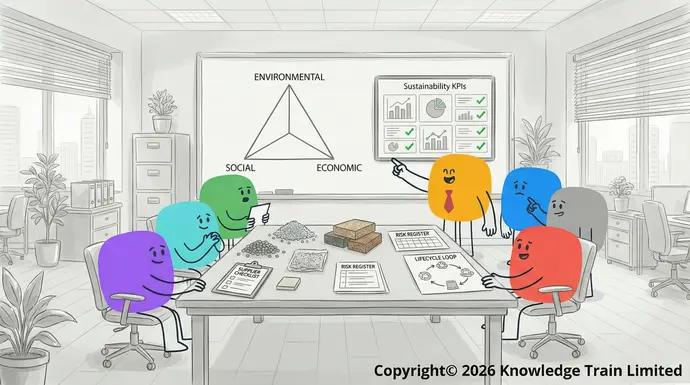
The three pillars of sustainable project management
Sustainable project management is built upon three key pillars: environmental, social, and economic sustainability. These pillars work together to create a holistic approach to project management that benefits people, planet, and profit.The technical storage or access is strictly necessary for the legitimate purpose of enabling the use of a specific service explicitly requested by the subscriber or user, or for the sole purpose of carrying out the transmission of a communication over an electronic communications network.
1. Environmental sustainability
Environmental sustainability is the first pillar of sustainable project management, which focuses on reducing negative impacts on the environment. This includes:
- Reducing carbon footprint : ProjectsPreferences should aim to minimise their greenhouse gas emissions throughout their lifecycle, which can be achieved with energy-efficient technologies, optimising transportation and logistics, and implementing renewable energy sources.
- Resource conservation : Efficient use of natural resources is crucial, and project managers should consider using recycled or sustainable materials, implementing water conservation measures, and designing products for longevity and reusability.
Project managers can utilise sustainability reporting frameworks to ensure consistency and comparability in sustainability reporting, align project-level sustainability efforts with organisational goals, and communicate sustainability performance and initiatives to stakeholders.
With the use of these tools and techniques, project managers can better incorporate sustainability practices into their projects. They also can gain valuable insight to support decision-making and to effectively communicate with stakeholders on sustainability activities.The technical storage or access is necessary for the legitimate purpose of storing preferences that are not requested by the subscriber or user.
Challenges and solutions in sustainable project management
The process of adopting and implementing sustainability within project management can be an obstacle at times. With creativity and an eagerness to focus on sustainable value over time, solutions can be devised.
Balancing competing priorities
Balancing different aspects of the triple bottom line is a significant challenge in the sustainable project management method. Social, economic, and environmental priorities may conflict, and project managers often find themselves in a bind.Statistics
Solution : Develop a decision-making matrix that considers a variety of sustainability factors. The matrix will help you visually evaluate your choices and how they contribute to the project’s sustainability goals.
Overcoming resistance to change
Project teams and stakeholders may be used to using conventional Statisticsproject management methods . Sustainable approaches are often met with criticism because of the shift in established processes and possible financial implications.
Solution : Design and implement a solid change management strategy . A persuasive communication plan, training sessions, and even small demonstration projects will help you to highlight the benefits of sustainable processes and assure people about the success of the transition to sustainability.
Resistance can be significantly diminished by slowly implementing various components of the sustainable approach, as well as sharing specific instances when these components provide benefits to a project.
Measuring intangible benefitsThe technical storage or access that is used exclusively for statistical purposes.
Many sustainability initiatives produce intangible benefits that are difficult to measure in traditional financial terms. This can make it challenging to communicate the value of sustainability investments to stakeholders and justify their inclusion in projects.
SolutionThe technical storage or access that is used exclusively for anonymous statistical purposes. Without a subpoena, voluntary compliance on the part of your Internet Service Provider, or additional records from a third party, information stored or retrieved for this purpose alone cannot usually be used to identify you.: Leverage integrated reporting techniques that combine financial and non-financial metrics. Establish a set of KPIs that reflect both tangible and intangible aspects of sustainability benefits. For example, employee satisfaction and retention rates, brand reputation and customer loyalty metrics, and ecosystem services valuation.
These metrics provide a more holistic view of a project’s overall value creation.
Addressing supply chain sustainability
Achieving sustainability throughout the supply chain can be challenging, particularly when working with multiple suppliers across different geographical locations.Marketing
Solution: Develop and implement a sustainable procurement strategy that incorporates supplier sustainability assessments and audits, collaborative improvement programmes with key suppliers, and the use of blockchain technology for greater supply chain transparency.
Working closely with suppliers and utilising technology can enhance visibility and control over supply chain sustainability.Marketing
Challenges such as measuring intangible benefits and addressing supply chain sustainability are just a few examples of the issues that sustainable project managers face. With innovative solutions and a commitment to holistic and responsible practices, it is possible to overcome these challenges and deliver successful sustainable project outcomes.
Project
Eco-friendly office complex in London
Description
A large construction company was responsible for the development of a multi-story office complex. The project team prioritised sustainability and incorporated various environmentally friendly features, including:
- Energy-efficient design, using passive solar heating and natural ventilation
- Rainwater harvesting system for non-potable water use
- Use of recycled and locally sourced materials.
Outcome
The project received BREEAM ‘Outstanding’ certification and achieved a 40% reduction in energy consumption compared to similar buildings. The sustainable design resulted in lower operating costs and higher tenant satisfaction, which translated into higher occupancy rates and rental premiums.
IT sector example
Project
Data centre cooling optimisation
Description
A global technology company undertook a project to optimise the energy efficiency of its data centres. The project involved:
- Installing advanced cooling systems with AI-driven temperature control
- Implementing server virtualisation to reduce hardware requirements
- Utilising renewable energy sources for power supply.
Outcome
The project resulted in a 30% reduction in energy consumption at the company’s data centres and a 50,000-tonne annual decrease in carbon emissions. The cost savings from reduced energy use led to a return on investment within two years.
Non-profit organisation example
Project
Sustainable community development in rural Africa
Description
A non-profit organisation launched a project to enhance the quality of life in a rural African community. The project included:
- Installation of solar-powered water pumps for clean water access
- Implementation of agroforestry techniques to increase food security
- Training in sustainable farming practices.
Outcome
The project improved the quality of life for 5,000 people in the community. Access to clean water reduced waterborne diseases by 60%, and sustainable farming practices increased crop yields by 40%. The project was replicated in neighbouring communities.
The above case studies show that sustainable project management can have significant positive impacts across different industries. By considering environmental, social, and economic factors, organisations can achieve remarkable results that go beyond traditional project success metrics.
These examples can serve as inspiration for project managers who want to incorporate sustainable practices into their own projects.
The future of sustainable project management
The field of sustainable project management is likely to experience significant changes in the future.
Emerging trends
Some of the key trends to look out for include:
- The integration of Artificial Intelligence (AI) and other technologies for optimising resource allocation and predicting environmental impacts
- The adoption of circular economy principles as a standard approach to project design and implementation
- The use of blockchain and other emerging technologies to improve supply chain transparency and traceability
- The increased use of biomimicry as a source of inspiration for developing innovative, nature-based solutions to project challenges.
Potential impacts on project management profession
These trends are expected to have various implications for the project management profession, including:
- Skill development: Project managers will need to develop new skills in sustainability assessment and management
- Certification programmes: Specialised sustainability certifications for project managers may become more common
- Performance metrics: The traditional project success criteria will be expanded to include sustainability metrics
- Stakeholder engagement: There will be a greater emphasis on collaboration with a broader range of stakeholders, including environmental and social experts.
As the practice of sustainable project management continues to evolve, professionals who embrace these changes and adapt to new requirements will be well-positioned to deliver high-impact, future-ready projects. The integration of sustainability principles into project management will become a core competency, rather than an optional consideration.
Conclusion
Sustainable project management is a relatively new approach that expands on traditional project management methods by incorporating the 3 pillars of sustainability. In this article, we have explored what these 3 pillars are, how they can be implemented throughout the 5 stages of a project, and the different tools and techniques used for sustainable project management. We have also discussed common problems encountered with this approach and how to solve them, as well as some successful real-world examples of sustainable project management in a variety of industries.
In the future, new tools and approaches are likely to emerge, incorporating technologies such as artificial intelligence, machine learning and blockchain, and approaches like data analytics, circular economy, and net positive impact. As these trends continue to develop, the role of sustainability within the profession of project management will only increase.
Project managers have the power to be the change agents for sustainability in their organisation. The steps they can take to drive this change include building knowledge and understanding of the sustainability principles and approaches and how they can be incorporated into the project management methods used within their organisation. They can also identify opportunities to apply sustainable practices in the projects they are working on and work with stakeholders to drive sustainable outcomes. Staying up to date on new trends and developments in the field is another important way for project managers to ensure they are leading in sustainable project management practices.
As we step into the future of sustainable project management, let’s make every effort to apply these principles and approaches in our daily work and build a more sustainable future for all through every project we work on.
FAQs
What is the difference between traditional and sustainable project management?
Sustainable project management focuses on incorporating environmental, social, and economic factors throughout the project lifecycle, while traditional project management emphasises time, cost, and scope constraints.
How can I incorporate sustainability into my existing project management framework?
Incorporate sustainability goals into the project charter, conduct a sustainability-focused stakeholder analysis, and integrate sustainability metrics into monitoring and control processes.
What are some common sustainability metrics used in project management?
Common metrics include carbon footprint, waste reduction, energy efficiency, water usage, social impact scores, and sustainable procurement percentages.
How does sustainable project management contribute to a company’s overall CSR strategy?
It aligns project outcomes with the organisation’s broader sustainability goals, improving environmental and social performance while supporting long-term economic viability.
What skills do project managers need to develop for sustainable project management?
Project managers should develop skills in sustainability assessment, stakeholder engagement, life cycle thinking, and balancing competing priorities.
How can sustainable project management help reduce project risks?
Sustainable practices help manage long-term environmental and social risks, reducing potential reputational, regulatory, and operational risks.
What are some industry-specific challenges in implementing sustainable project management?
Challenges vary but may include regulatory compliance, technology limitations, and supply chain complexity.
How can small businesses benefit from sustainable project management practices?
Small businesses can gain a competitive edge, reduce operational costs, and enhance their reputation by implementing sustainable project management practices.
Infographic
