Diversity and inclusion in project teams

Key takeaways
Diversity brings different perspectives, and inclusion turns those differences into better decisions and results.
- Diversity is recognising difference, while inclusion is actively valuing and using those differences in day to day work.
- Equality legislation reduced discrimination in hiring, but real progress needs shared ownership and a willingness to let go of power.
- Diverse, inclusive teams help close talent gaps, improve innovation, and strengthen trust with customers and colleagues.
- Project managers must set clear performance expectations and make space for quieter voices to be heard.
- Inclusion improves when the team agrees a shared purpose and regularly checks behaviour against it.
Introduction
What is diversity and inclusion?
You’ve likely heard these two words together before in talks, workshops or even on the news. It may be obvious to you that diversity means people from different backgrounds, and inclusion means including people to be part of something. But have you thought of it as a concept in the context of teams, project management and organisational culture?
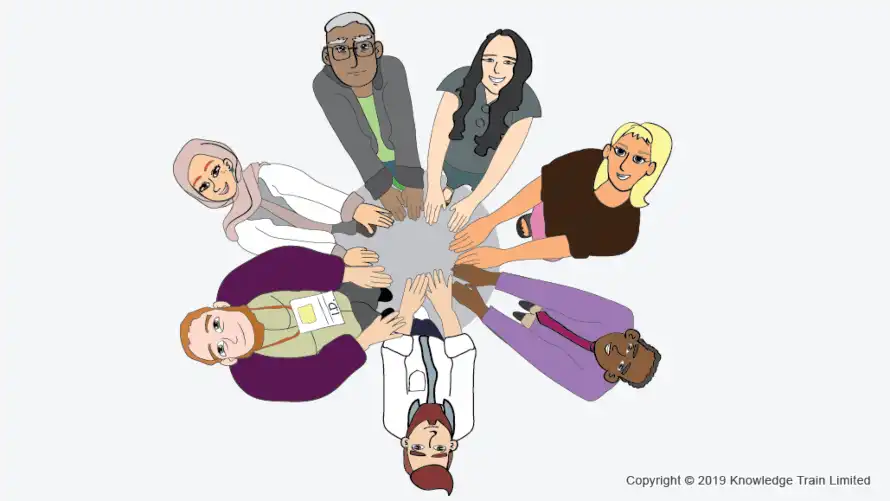
Diversity is about recognising difference and acknowledging the benefit of having a range of perspectives in decision-making. Inclusion is where difference is seen as a benefit, and where perspectives and differences are shared, leading to better decisions[1].
Differences mentioned here are the human characteristics of race, religion and belief, gender and sexual orientation, gender reassignment, age, disability, marriage and civil partnership, pregnancy and maternity, and social status. Perspectives are influenced by these differences in addition to personal experience, values and principles, and professional expertise.
If these human differences and perspectives are all included onto your colour palette in equal amounts, you will be able to create an image that will resonate to a wider spectrum of people, relatable products or services, and eventually success.
Quick history of diversity and inclusion
In the beginning of the 20th century, British Suffragettes fought for equal rights and the right to vote. As a result of their success, laws were changed to improve female standing in society and women were able to enter the workforce in previously male-dominated fields, such as teaching.
From 1970 up to 1995, several acts were legislated by parliament to make discrimination in employment illegal on grounds of religion or belief, race, sexual orientation and age. These acts were all unified into one piece of legislation called the Equality Act in 2010.
This helped to prevent discrimination during the recruitment process, but also opened discussion in management schools, professional associations and large corporations about how best to include equality, diversity and inclusion in policies and teamwork.
This is ongoing and never-ending work. On a global scale, there have been tremendous efforts in closing the gender wage gap, requesting that companies release statistics about their workforce, and making organisations aware of the richness of diverse team members.
However, more can be done. HR and Leadership Consultant, Shakil Butt, says: “Inclusion is supposedly the step up from just diversity. It is a step in the right direction but still falls short in having a noticeable impact. Real change requires much more. Diversity and inclusion need to go beyond having a dedicated lead or a diversity and inclusion initiative with a defined start and end point. What is needed is a change in mindset and ownership across the various levels of organisations, with a real willingness to let go of power. Real inclusion becomes possible if diversity and inclusion become a consideration in every aspect of the employee life cycle.”
The importance of diversity & inclusion today
Other than the feeling that it is the “right thing to do” we can’t deny that in this age of globalisation, multi-culturalism and agility of technology, a diverse team of people is needed to help organisations survive and grow.
Embracing diversity and inclusion will help your organisation:
- bridge the talent gap
- increase brand trust
- promote creativity and innovation
- be viewed as an employer of choice
- gain higher market share and a competitive edge
- utilise and learn the unique insights of others
- establish an environment of unity, respect and tolerance
- create a safe space for fresh new ideas and dialogues
- break negative stereotypes and encourage social mobility
- boost productivity and confidence
- build strong relationships with all team members and customers
- deliver outcomes and earn profits.
Some success stories
Qantas, an Australian airline company, posted a record loss of 2.8 billion Australian dollars in 2013. There were terrible predictions of its fate, but CEO Alan Joyce was able to force a transformation that lifted Qantas off its feet.
By creating a diverse environment and a very inclusive culture, it generated a better strategy, better risk management, better debates and better outcomes. In 2017, Qantas delivered a record profit of 850 million Australian dollars, increased its operating margin to 12 percent, won the “World’s Safest Airline” award, and ranked as Australia’s most trusted big business and most attractive employer[1].
Estée Lauder Companies UK & Ireland encouraged its millennial employees to contribute to the business’s aims, as part of its ethos of “leading from every chair” and its GenNEXT initiative. It resulted in their products becoming the country’s top-selling[2].
Other big names have also successfully implemented diversity and inclusion, such as Ford Motor Company, CISCO, EY, AIG, L’Oréal, Deutsche Bank and Johnson & Johnson.
Infusing diversity & inclusion on project teams
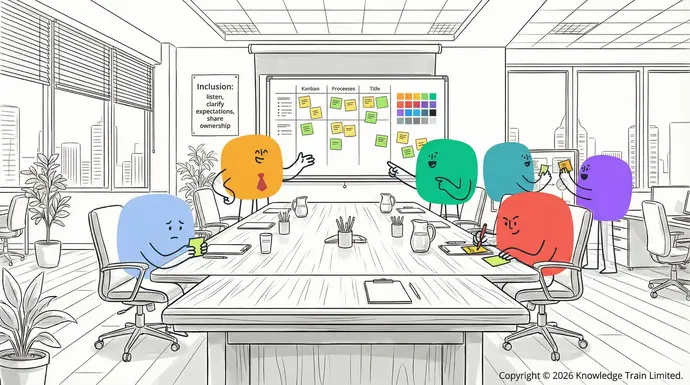
On a project, the project manager is responsible for achieving the expected benefits and desired outcomes. Project teams then do the work to achieve those outcomes. Therefore, it is essential for project managers to be equipped with excellent people management and communication skills to understand the teams’ needs.
Chair of APM’s Women in Project Management SIG, Teri Okoro, says that the key to increasing inclusion and diverse talent on projects is acknowledging skills shortages. When escalated, leaders will need to reflect on their capabilities and how this can be channelled to enable change and agree on a vision. When the skills gap is closed, the intellect people bring, along with their myriad of soft skills, diverse experiences and behaviours, will contribute to overcoming challenges and achieving project success. So, creating the right context from the start for diverse talent to thrive can be one of many options[3].
Diversity and inclusion expert, Roianne Nedd, suggests that becoming an inclusive project manager can help put the team on the right track. She says an inclusive leader must do 3 things:
- Explicitly articulate what excellent performance looks like for everyone. Too many people are unclear about what success looks like from their manager’s viewpoint
- Listen to the quietest person in the room. If you want an innovative team, you must listen everyone, not just the loudest
- Become a proactive advocate for under-represented groups rather than a passive ally.
Garry Turner, founder of The Listening Organisation, says “ask each team member why they think inclusion and diversity is important. From here, create a joint story and purpose for the team around inclusion and diversity and its importance to them. This story can then then be used as a form of value to be checked in on as the project progresses, as well as being used to ensure the project team remains inclusive.
Mostafa Al Hadla, Manager at Brompton Cross Construction, shares his company’s approach: “We look at diversity as a critical success factor rather than a luxurious practice or HR trend. Having an international client base requires us to have a diverse workforce who can communicate with our customers. Construction projects involve teams, so inclusion is vital for teamwork. We also consider skills and personality when delegating work, to increase equal opportunities amongst the team.”
Conclusion
Successful project teams should be cognitively and demographically diverse. When everyone feels included, engaged, valued and their opinions matter, they will perform to their full potential, no matter who they are.
Since diversity and inclusion is not taught on typical project management courses so, if you are a project or programme manager, think about diversity and inclusion when you plan your projects. Explain the benefits of inclusion and diversity to key decision makers, enforce it when recruiting for talent and create a culture of strong communication and exchange of ideas. In today’s competitive economy, I don’t see the reason for your executives to refuse.
Bios
Shakil Butt is a HR and leadership consultant, founder of HR Hero for Hire, writer and international speaker. You can connect with Shakil on Linkedin.
Roianne Nedd is a diversity and inclusion expert at RoCaro, and a life coach and author. She is dedicated to helping organisations embrace the principles of diversity and inclusion, focussing on intersectional feminism, unconscious bias, and inclusive leadership. You can connect with Roianne on Linkedin.
Garry Turner is a chartered member of CIPD and founder of The Listening Organisation. He focuses on helping organisations review, renew and design highly effective work cultures that breed inclusive, democratic leadership and which embed learning ‘as normal’, driving exceptional performance through highly engaged, passionate people. You can find Garry on Twitter.
Mostafa Al Hadla has a Master’s degree in Strategic Project Management from Heriot Watt University and is a Business Planning & Excellence Manager at Brompton Cross Construction in London.
References
[1] CIPD. (2018). Diversity and inclusion in the workplace. Available: https://www.cipd.co.uk/knowledge/fundamentals/relations/diversity/factsheet. Last accessed 30 Oct 2018.
[2] Juliet Bourke and Bernadette Dillon. (2018). The diversity and inclusion revolution: Eight powerful truths. Available: https://www2.deloitte.com/insights/us/en/deloitte-review/issue-22/diversity-and-inclusion-at-work-eight-powerful-truths.html. Last accessed 31 Oct 2018
[3] Katharine Earley. (2017). The business benefits of promoting diversity and inclusion. Available: https://www.telegraph.co.uk/connect/better-business/business-sustainability/business-benefits-diversity-inclusion/. Last accessed 31 Oct 2018
[4] Teri Okoro. (2016). Diverse Talent: Enhancing Gender Participation in Project Management. Procedia – Social and Behavioral Sciences. 226 (Unknown), 170-175.