11 essential project management techniques

Key takeaways
Strong delivery comes from choosing and combining techniques that fit your project’s uncertainty, scale, and stakeholders.
- Use a Work Breakdown Structure to define scope clearly and create reliable estimates and ownership.
- Use Gantt charts and network diagrams to visualise sequencing, dependencies, and progress.
- Apply CPM and PERT to identify critical work, quantify schedule risk, and test scenarios.
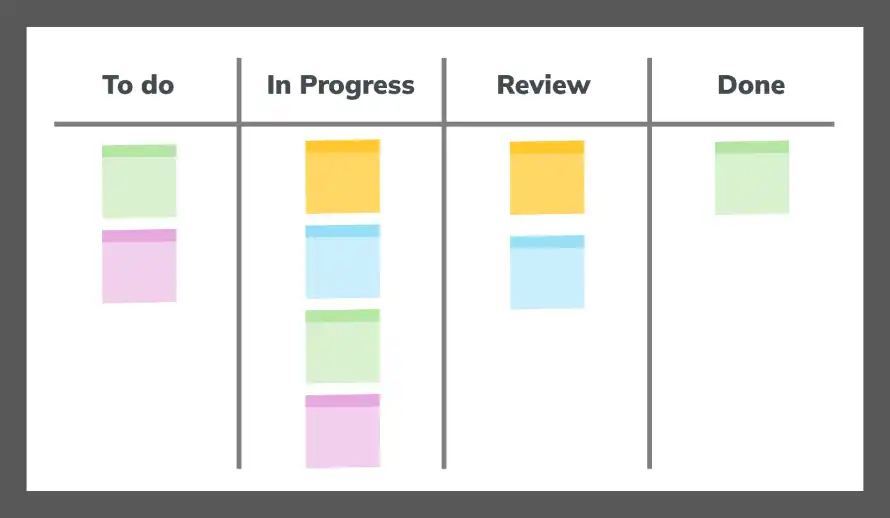
- Use Kanban to manage flow, limit work in progress, and surface blockers early.
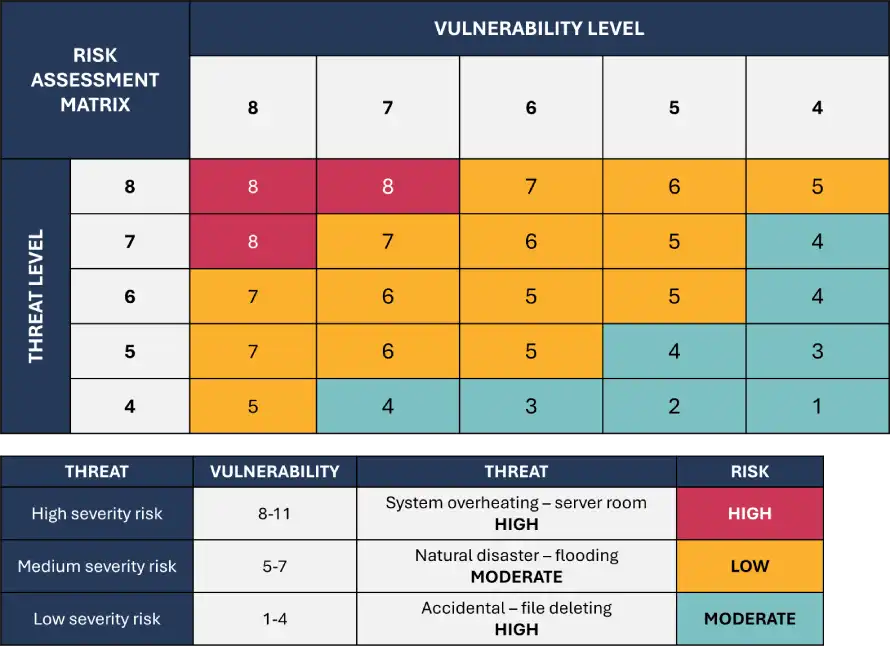
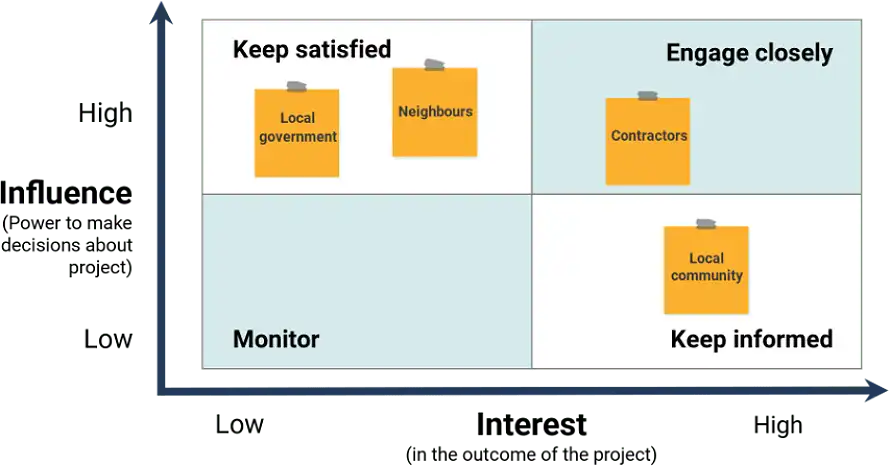
- Prioritise uncertainty with a risk matrix and stakeholder mapping to guide action and communication.
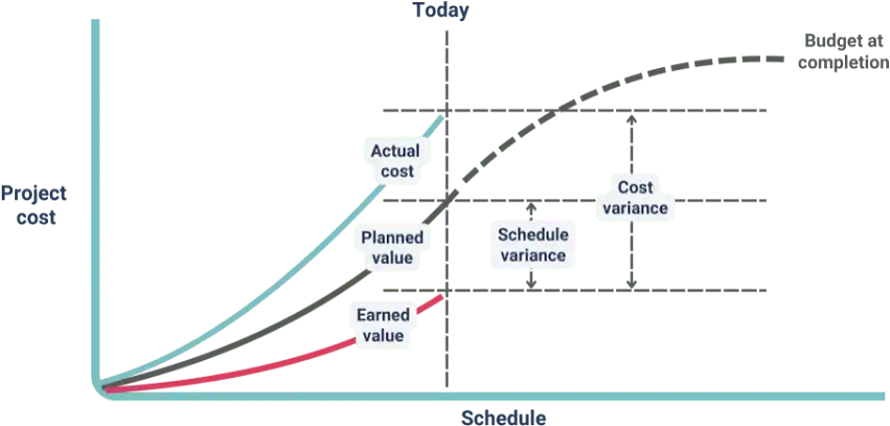
- Track delivery health with EVM and cost-benefit analysis to support timely, evidence-based decisions.
Introduction to project management techniquesStart your APM project management career.
Project management techniques have become an essential aspect of modern businesses, allowing organisations to achieve their objectives, meet deadlines, and deliver value to their stakeholders. These techniques refer to the tools and methodologies that project managers and teams use to plan, execute, and control projects efficiently. Project Management Qualification (PMQ) Project management techniquesAdvance your APM project management expertise. have been in existence for centuries, and they have evolved to meet the changing needs of businesses and the latest technological developments.Project Risk Single Certificate Level 1
The history of project management techniques dates to ancient times when large-scale projects such as the construction of the pyramids and the Great Wall of China were undertaken. However, modern project management started to emerge in the mid-20th century with the development of techniques such as the Gantt chart and the Critical Path Method (CPM). As businesses became more complex and globalised, new methodologies emerged to address the diverse project needs of different industries.Enhance your project risk management skills.
Today, there are many project management techniques that project managers can use to achieve success. In this article, we will discuss 11 essential project management techniques that every AgilePMproject manager® should know. Each technique has its benefits and is suitable for different types of projects and organisational cultures. Project managers need to understand the various project management techniques available and choose the ones that best fit their projects and organisational cultures. They should also be adaptable to change as – Agile Project ManagementprojectFoundation needs and circumstances evolve.Learn the key principles of Agile Project Management.
Project planning and visualisationPractitioner
Work Breakdown Structure (WBS)Includes Foundation & Practitioner combined option.
The PRINCE2Work Breakdown Structure® (WBS) is a project management technique that involves breaking down a project into smaller, more manageable components. It is a hierarchical decomposition of the total scope of work and provides a visual representation of all the tasks required to complete a project. Agile
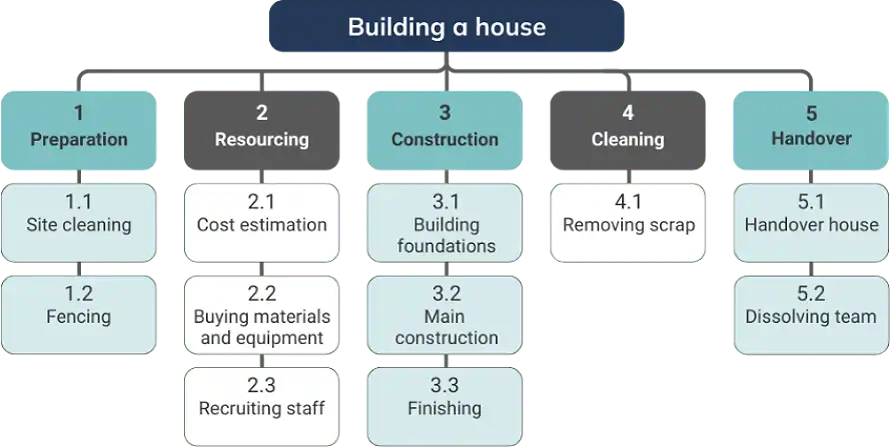
The essence of a WBS is to break down the final deliverable into smaller, more manageable components called work packages. It starts with the final deliverable at the top and is subdivided in a tree structure, where each level of detail represents an increasingly granular level of the project components. These components are typically organised into phases, deliverables, and work packages. By definition, WBS becomes more detailed as you go deeper into the tree. In Foundation project managementLearn the fundamentals of the PRINCE2 Agile method., WBS is used to:Practitioner
- Define and organise the total scope of a projectIncludes Foundation & Practitioner combined option.
- Ensure all the work required is included, and nothing outside the scope is addedAI Project Governance Framework (AIPGF)
- Create a foundation for estimating costs, duration, and resourcesFoundation
- Assign responsibilities to team membersLearn the fundamentals of the governance framework.
- Develop a Practitioner project scheduleIncludes Foundation & Practitioner combined option. and budget.Better Business Cases
Developing a ™WBSFoundation typically requires input from the project team and stakeholders to ensure it is comprehensive and accurate. A WBS is usually presented as a tree diagram or outline, with each level representing an increased level of detail and each item on the same level representing a similar type of work. Note that the term ‘tree’ is used by many software systems and it is not necessarily drawn as a tree.Learn the fundamentals of Better Business cases.
A WBS becomes the foundation for other Practitioner project management processesIncludes Foundation & Practitioner combined option., including risk assessment, task assignments, and progress tracking. It helps the project team to provide a common structure for the whole project, and other details and activities are based on the work breakdown structure.P3O
Gantt charts®
Gantt chartsFoundation are one of the most widely used and recognised project management techniques. They provide a visual timeline for the project and can display the relationships and dependencies between different tasks or activities. Gantt charts have a long history, with their use dating back to the early 1900s when they were popularised by Henry Gantt, a mechanical engineer and management consultant. In recent years, Gantt charts have transitioned from physical, hand-drawn charts to digital project management tools.Learn the fundamentals of the P3O project management office.
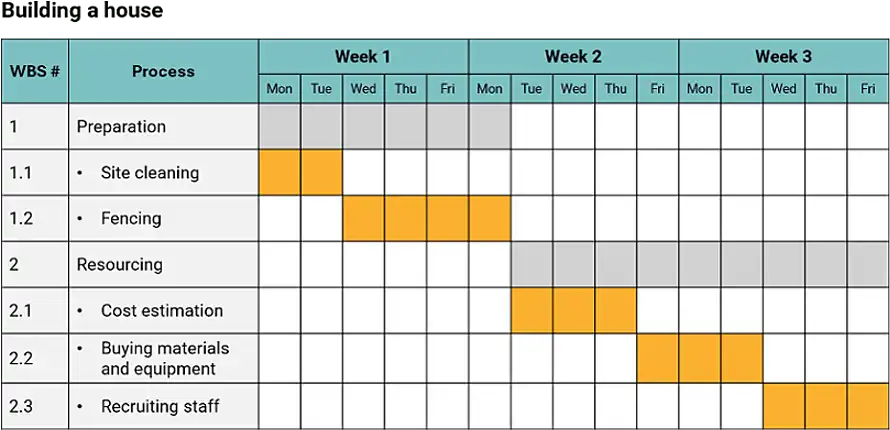
A Gantt chart typically consists of a horizontal bar chart with the project tasks listed on the vertical axis on the left side and the time periods spread across the top. The project tasks are then represented by horizontal bars spanning the time periods in which they are scheduled to be performed. The length of the bar indicates the duration of each task. This format allows Practitioner project managersIncludes Foundation & Practitioner combined option. and team members to:Workshops
- Clearly visualise the project timeline and the duration of each taskIntroduction to Project Management
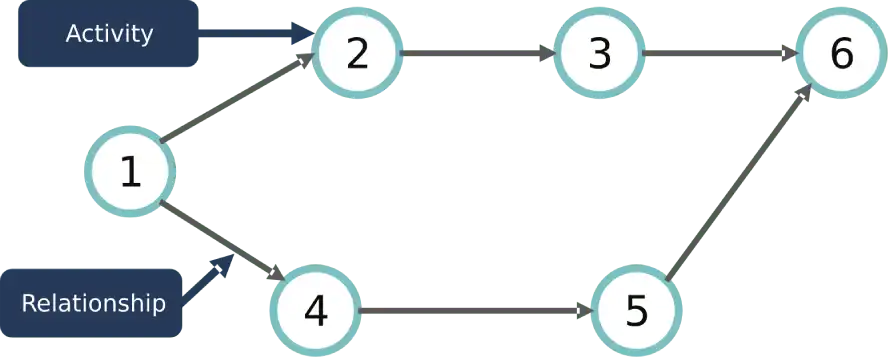
Scheduling and time managementYellow Belt
Critical Path Method (CPM)Self-paced training course to gain LSS Yellow Belt.
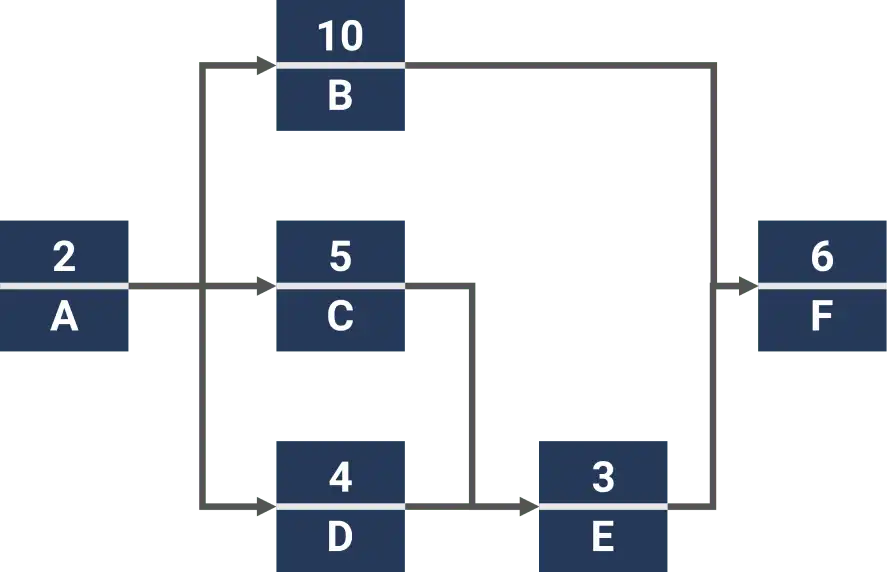
ls can also integrate with other techniques like Gantt charts and resource levelling.Foundation training
While CPM is well-suited for projects with well-defined tasks and dependencies, it may be less effective for projects with high levels of uncertainty or frequent changes. In such cases, it’s often used in conjunction with other techniques, such as PERT or Learn the fundamentals of Agile Business Analysis.Agile methodologiesPractitioner , for a more adaptive approach.4-day course including Foundation.
PERT (Program Evaluation and Review Technique)PMI
PERT® is a project management technique that can be used for PMI-PBA projectsSelf-paced course to prepare you for the exam (exam not included). with uncertain or variable task durations. Developed in the 1950s for the U.S. Navy’s Polaris missile program, PERT allows project managers to incorporate probabilistic time estimates into their project schedules.Business Analysis Learning Library (BALL)™
PERT requires the creation of a network diagram of all project tasks, along with three time estimates for each task:CHANGE MANAGEMENT
- Optimistic time (O): The shortest time the task could possibly take.APMG Change Management
- Most likely time (M): The best estimate of how long the task will take, based on available information.Foundation
- Pessimistic time (P): The longest time the task could possibly take, considering all potential issues.Learn the fundamentals of enterprise change management.
The expected time (E) for each task is then calculated as E = (O + 4M + P) / 6.Practitioner
Key takeawaysIncludes Foundation & Practitioner combined option.
- Provides more realistic project timelines by accounting for uncertaintiesPROGRAMME MANAGEMENT
- Identifies critical paths and potential schedule risksMSP
- Helps in better resource allocation and ®risk managementFoundation
- Allows probabilistic analysis of project completion times.Learn the fundamentals of programme management.
Quick tipsPractitioner
- Involve experts in estimating task durations to get accurate timeframesIncludes Foundation & Practitioner combined option.
- Update estimates regularly as new information becomes availableINFORMATION TECHNOLOGY (IT)
- Use PERT in conjunction with CPM for a comprehensive schedule analysisITIL
- Leverage software tools for PERT calculations and visualisations.®
Common pitfallsFoundation
- Overreliance on extreme (optimistic or pessimistic) estimatesLearn the fundamentals of ITIL service management.
- Neglecting task dependenciesStrategist DPI
- Failing to update analysis as the project progresses3-day ITIL Strategist: Direct, Plan & Improve (DPI) course.
- Misinterpreting results as definitive rather than probabilistic.Specialist: DSV
PERT can be time-consuming to apply to large projects, and it may not be necessary for every project. It is most useful when used judiciously, in combination with other techniques, and applied to the most critical or highly uncertain aspects of a project.3-day ITIL Specialist: Drive Stakeholder Value (DSV) course.
Kanban boards
Kanban Boards are a visual project management tool that originated in Toyota’s lean manufacturing system and have since become popular in various industries, particularly in software development and Agile project management