
Introduction to project management techniques7. Working softwarecost
Project management techniques have become an essential aspect of modern businesses, allowing organisations to achieve their objectives, meet deadlines, and deliver value to their stakeholders. These techniques refer to the tools and methodologies that project managers and teams use to plan, execute, and control projects efficiently. in Project management techniques8. Stable work environmentsproject management have been in existence for centuries, and they have evolved to meet the changing needs of businesses and the latest technological developments. . It highlights the interconnected nature of these three aspects in delivering a successful project.
The history of project management techniques dates to ancient times when large-scale projects such as the construction of the pyramids and the Great Wall of China were undertaken. However, modern project management started to emerge in the mid-20th century with the development of techniques such as the Gantt chart and the Critical Path Method (CPM). As businesses became more complex and globalised, new methodologies emerged to address the diverse project needs of different industries.9. Quality assuranceThe triangle model is a crucial tool for project managers to understand and balance the competing demands of a
Today, there are many project management techniques that project managers can use to achieve success. In this article, we will discuss 11 essential project management techniques that every projectproject manager10. Simplicity. The scope refers to the project’s requirements, objectives, and deliverables. Time refers to the schedule and deadlines. Cost encompasses the budget and resources. The challenge is to optimise all three to meet project goals. should know. Each technique has its benefits and is suitable for different types of projects and organisational cultures. Project managers need to understand the various project management techniques available and choose the ones that best fit their projects and organisational cultures. They should also be adaptable to change as Each corner of the triangle is dependent on the other two. A change in one element typically results in a change in at least one other. By understanding and managing these constraints, project teams can make informed decisions and adjustments to ensure project success.project11. Self-organizing teamsThe project management triangle is a fundamental concept that helps needs and circumstances evolve. project managers
Project planning and visualisation12. Reflection and adjustmentvisualise and optimise the key constraints of any project. By balancing scope, time, and cost, project teams can deliver successful outcomes that meet stakeholder expectations.
Work Breakdown Structure (WBS) Understanding the project management triangle
The Why agile principles matterThe three constraints explainedWork Breakdown Structure The project management triangle is made up of three main constraints: (WBS) is a project management technique that involves breaking down a project into smaller, more manageable components. It is a hierarchical decomposition of the total scope of work and provides a visual representation of all the tasks required to complete a project.Infographicscope
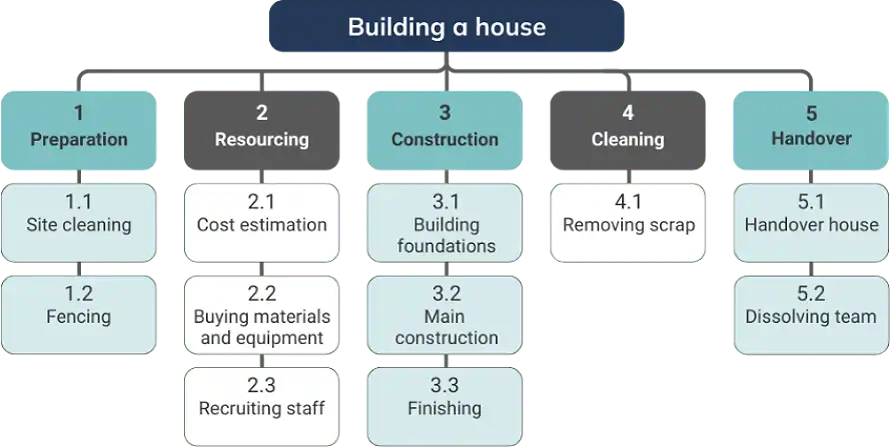
The essence of a WBS is to break down the final deliverable into smaller, more manageable components called work packages. It starts with the final deliverable at the top and is subdivided in a tree structure, where each level of detail represents an increasingly granular level of the project components. These components are typically organised into phases, deliverables, and work packages. By definition, WBS becomes more detailed as you go deeper into the tree. In Introduction, project managementAgiletime, WBS is used to: is based on 4 key values and 12 key principles. While the agile values provide project managers and developers with a very general overview of what it means to be ‘agile,’ and help guide the agile process, the 12 agile principles give examples of how agile should be implemented. and
- Define and organise the total scope of a projectThe 12 agile principles underpin every successful agile project and can inspire even non-agile teams. They form a core part of any cost
- Ensure all the work required is included, and nothing outside the scope is addedagile project management course. Let’s have a detailed look at each of these.
- Create a foundation for estimating costs, duration, and resources.Scope
- Assign responsibilities to team members1. Early and continuous delivery of valuable software: Scope refers to the boundaries, objectives and deliverables of a project. It includes the goals and requirements of the project, as well as the specific features, functionalities and quality standards.
- Develop a When developing a product, speed and precision is key. Should development take too long, there is an increasing risk that the final product will no longer satisfy rapidly changing market demands and consumer needs.Timeproject scheduleTraditional methods may often develop a product in a vacuum, following a strict development plan with no deviation which results in delivering a final product that is already obsolete.: The time constraint of a project refers to its duration and schedule. It involves factors such as the project start and end dates, milestones and deadlines, as well as the sequencing and dependencies of tasks. and budget. Our highest priority is to satisfy the customer through early and continuous delivery of valuable software.Cost
Developing a : The cost constraint relates to the financial and resource aspects of a project. This includes the budget allocated to the project as well as the human resources and labour costs, and equipment and material expenses.WBS Relationship between constraints typically requires input from the project team and stakeholders to ensure it is comprehensive and accurate. A WBS is usually presented as a tree diagram or outline, with each level representing an increased level of detail and each item on the same level representing a similar type of work. Note that the term ‘tree’ is used by many software systems and it is not necessarily drawn as a tree. The three constraints of scope, time and cost are interconnected and can impact each other. Changes to one constraint will likely influence the other constraints. For example, an increase in scope will often require additional time and resources, whereas a reduction in time may increase costs or decrease scope. Similarly, a reduction in budget may affect the project scope or timeline.
A WBS becomes the foundation for other AgileProject managersproject management processes aims to deliver a functioning product in the very first development iteration. It will be a long way from being finished; but it just has to give the customer enough of an idea so that developers can receive valuable feedback. In doing so, agile projects can tailor the product as it is being developed to deliver something that satisfies customers’ needs. must carefully balance these constraints throughout the project lifecycle., including risk assessment, task assignments, and progress tracking. It helps the project team to provide a common structure for the whole project, and other details and activities are based on the work breakdown structure.Agile takes large tasks and breaks them up into smaller, more manageable chunks. The interactive nature of agile not only improves project development but also service delivery.Impact on project quality
Gantt chartsEnhance your skills with our expert-led coursesThe balance of scope, time and cost also has an impact on the
Gantt charts quality are one of the most widely used and recognised project management techniques. They provide a visual timeline for the project and can display the relationships and dependencies between different tasks or activities. Gantt charts have a long history, with their use dating back to the early 1900s when they were popularised by Henry Gantt, a mechanical engineer and management consultant. In recent years, Gantt charts have transitioned from physical, hand-drawn charts to digital project management tools. of the project outcomes. If the three constraints are well-balanced, the project is more likely to achieve high-quality results. On the other hand, if there is an imbalance in any of the constraints, the quality of the project may be compromised. For example:
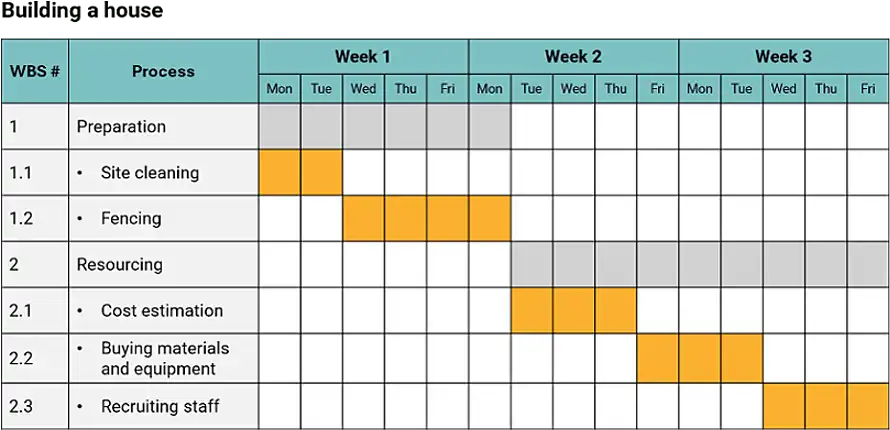
A Gantt chart typically consists of a horizontal bar chart with the project tasks listed on the vertical axis on the left side and the time periods spread across the top. The project tasks are then represented by horizontal bars spanning the time periods in which they are scheduled to be performed. The length of the bar indicates the duration of each task. This format allows A tight deadline may lead to a rushed project, resulting in lower quality outputs.project managersInstructor-ledA limited budget may result in a project being understaffed or under-resourced, which may also affect quality. and team members to:AgilePM Practitioner (with Foundation) courseA project with an overambitious scope can strain resources and time, leading to poor results.
- Clearly visualise the project timeline and the duration of each task Successful project management involves finding the right balance and making trade-offs between the three constraints while maintaining the desired level of quality. By understanding the impact of these constraints on each other, project managers can make informed decisions to lead the
- Identify dependencies and relationships between tasks£1,699 +vatproject
- Track progress against the planned schedule to a successful outcome.
- Allocate resources to tasksSee all datesBenefits of using the project management triangle
- Communicate the project timelines to stakeholders. Utilising the project management triangle provides some distinct benefits to the project team and stakeholders. These are as follows.
Some modern Gantt chart software provides additional features such as colour-coding of tasks, milestone markers, and linking of dependent tasks. Some tools also allow for resource allocation and workload management directly from the Gantt view. Easier change management
Gantt charts are most useful when you want to provide an overview of the entire project. However, for large and complex projects, they may become cluttered and difficult to read. Despite this, Gantt charts remain a popular tool for project managers because of their intuitive design and ability to communicate complex scheduling information quickly and clearly. The triangle model helps to
Project network diagramsSelf-pacedmake changes easier
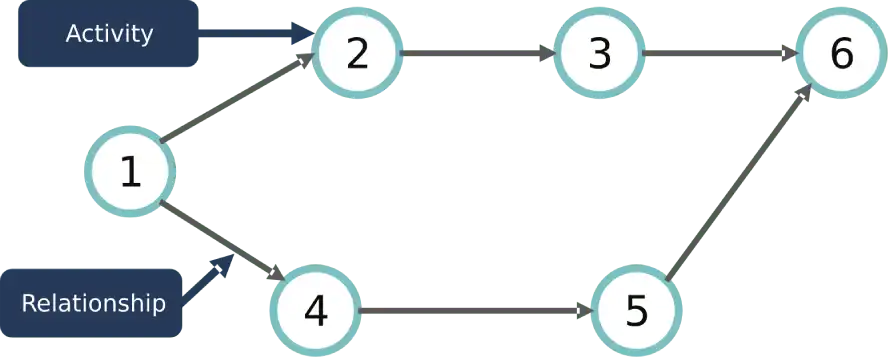
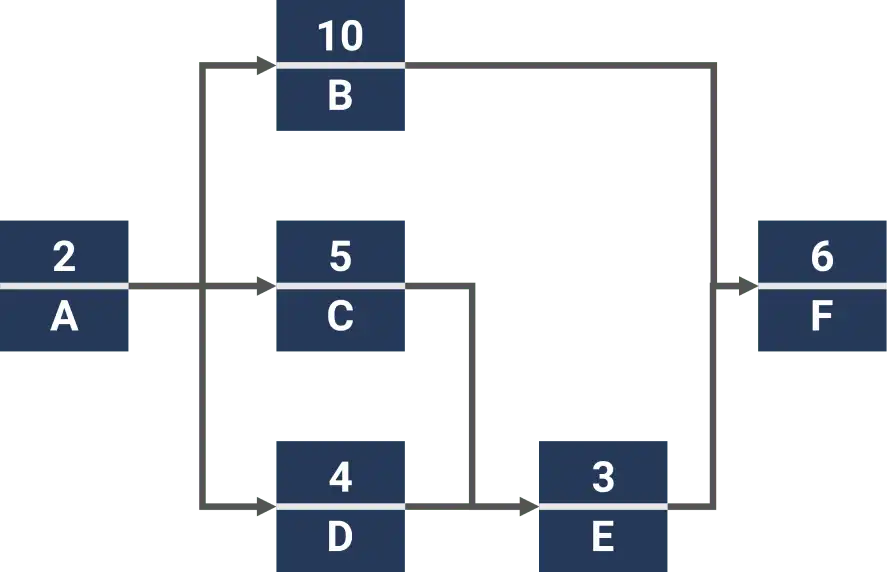
Project Network DiagramsAgilePM Practitioner (with Foundation) self-paced online. This is because if a change arises, the project managers can easily evaluate how this change will affect the scope, time and cost, decide, as such it helps to quickly evaluate a change request, understand the ripple effects, and make an informed decision on change., as the name implies, are graphical representations of a project’s tasks and their relationships, showing how the project activities are sequenced and interrelated. These diagrams provide a visual depiction of the project flow and are commonly used in project management methodologies that include Critical Path Method (CPM) and Program Evaluation and Review Technique (PERT). Priority clarification
Network diagrams typically use nodes to represent tasks or activities and arrows to indicate dependencies between these tasks. They allow for a clear visualisation of task sequences and can help project managers identify potential bottlenecks or critical paths in the £1,299 +vatVisualising the three constraints helps to
- Failing to update the diagram as project scope or timelines change.
- Neglecting to consider resource constraints when analysing the network.Most businesses don’t like risk, but what is even less desirable is wasting time and resources developing a product that’s no longer relevant by the time it’s finally completed. By welcoming change and actively seeking to make improvements through consumer feedback, businesses can gain a competitive edge – their products will satisfy the immediate needs of consumers and their products will be guaranteed to provide business value.
By learning project network diagrams, managers can enhance their ability to plan, schedule, and control complex projects effectively.People change, times change, markets change. Trying to fight it is pointless. Traditional project management usually sees change as a problem to be solved, but agile embraces change and uses it to the customer’s advantage.
Scheduling and time managementIdentifying a flexible constraint up-front allows for better risk management and issue resolution.Excessive meddling by management rarely benefits project development. Managers have to trust their development teams to get the work done without constant micro-management. Given the correct
Critical Path Method (CPM)Prioritise features and requirementsagile training
The It is important to carefully evaluate the importance of each project deliverable. This will help you focus on what is essential to project success. Create a comprehensive list of features and requirements, then:, tools and resources, developers should otherwise be given total autonomy to complete tasks in whichever way they see fit.Critical Path MethodRank or score each based on value and importance Build projects around motivated individuals. Give them the environment and support they need, and trust them to get the job done. (CPM) is a fundamental project management technique used to determine the longest sequence of dependent tasks that must be completed for a project to be finished on time. This sequence of tasks is known as the critical path. The CPM was first developed in the late 1950s and has since been widely adopted for Clearly define “must-have” vs. “nice-to-have” features project schedulingLeverage prioritisation to inform trade-off decisions. and control in various industries.This prioritisation process allows for objective trade-off discussions if needed.
CPM involves the following key steps:Develop a risk management planToo often, business owners forget that their employees are professionals who take pride in their work (this is especially true in any creative role). If you build your
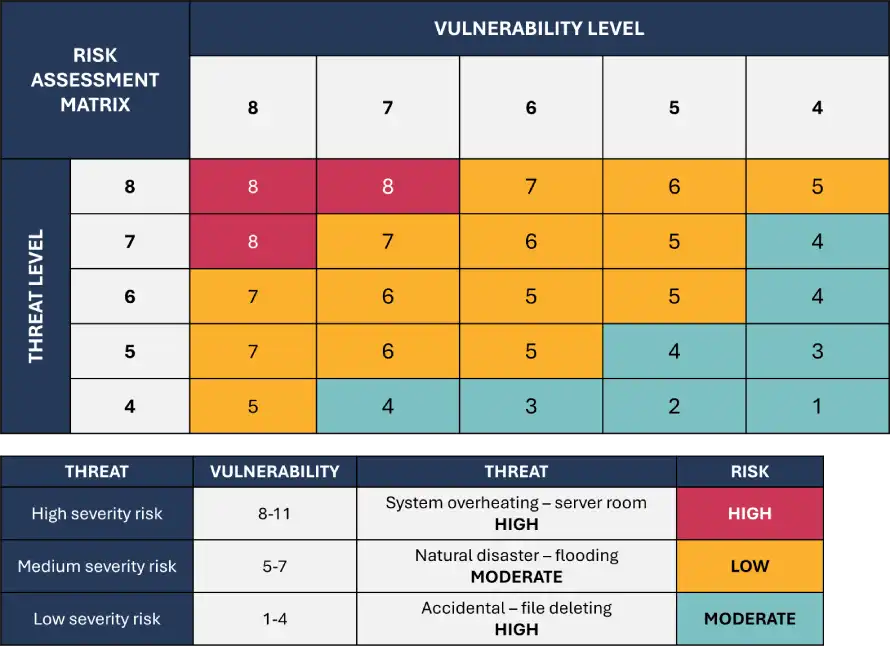
- Identifying all project tasksProactively identifying and managing risks will help avoid imbalances in the triangle. A projects
- Determining task dependenciesrisk management around people who aren’t motivated to succeed, they
- Estimating task durations plan
Quality assurance practices
When managing project quality, you can try these tips:Quality standards: Define specific, measurable quality criteria for the project deliverables.
Continuous testing
: Implement regular quality checks throughout the project lifecycle.
- Peer review
- : Leverage the expertise of team members to identify and address quality issues.
- Customer feedback
: Regularly collect and incorporate stakeholder feedback on project deliverables.
- Through the implementation of these methods, project managers can successfully navigate and mitigate trade-offs between the competing constraints of scope, time, cost, and quality. However, it is important to note that constraint management is an iterative process that necessitates continuous monitoring and adjustment in response to changing project dynamics.
- Tools for managing the project management triangle
- Software can help you keep track of the project management triangle and ensure your project management is top-notch. Here are some of the best project management software to consider:
- Project management software options
Monday.com
- : A flexible platform suitable for multiple project types and management styles. With Visual boards for easy task tracking and prioritisation, it’s one of the best software for project management, and it also has customisable workflows for specific project requirements.
- ClickUp
- : A feature-rich tool with robust Agile project support and time tracking and resource management features. ClickUp also provides multiple view options (list, board, Gantt, calendar) to cater to different preferences and project needs.
- Teamwork
: A client-focused platform designed for team collaboration. It has a budget and expense tracking features, as well as risk management and issue tracking tools for comprehensive project management.
Key features to look for in project management tools
When choosing a project management tool, consider these vital features and capabilities:Constraint tracking
: The ability to track and manage scope, time and cost constraints concurrently
- Recognise all potential stakeholders, those who may affect or be affected by the project.Resource allocationNo team acts perfectly but a mature, informed and responsible team can improve itself by taking both pro-active and reactive measures to improve development.
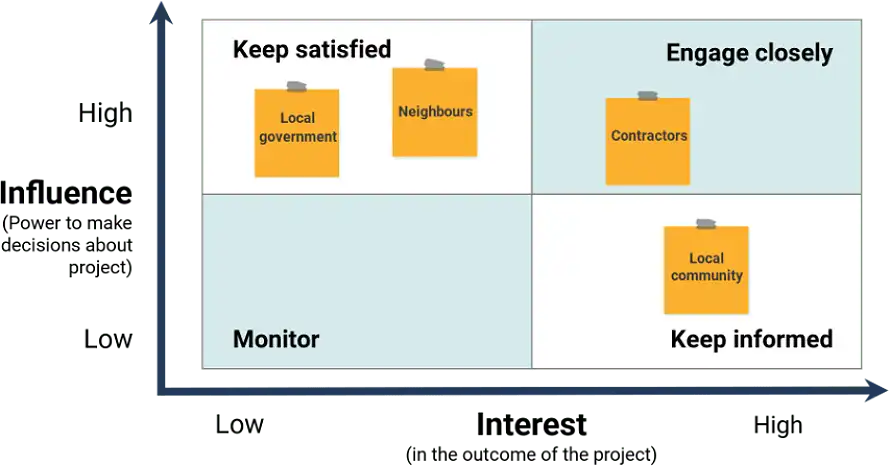
- Help prioritise stakeholders based on their influence and interest in the project.: Features and tools to optimise team and resource utilisationEnhance your skills with our expert-led courses
- Facilitate communication planning with stakeholders.Reporting and analytics
- Aid in : Real-time project status and insights through intuitive dashboards and analytics risk managementCollaboration features and informed decision making.: Shared workspaces, integrated communication tools and file-sharing capabilities for effective teamworkInstructor-led
Quick tipsIntegration capabilitieAgilePM Practitioner (with Foundation) course
- Use a power/interest grid to plot stakeholders.s: Compatibility with other software and tools used within your organisation
- Update the stakeholder map regularly as the project evolves.Customisation options£1,699 +vat
- Identify both positive and negative stakeholders.: Flexibility to adapt the software to your project management methodologies and processes
- Customise communication plans for different stakeholder groups.Mobile accessibilitySee all dates
- Engage team members in the mapping process for a broader view.: Mobile applications or responsive interfaces for on-the-go project management.
Common pitfallsWith the right tool and these essential features, project managers will be in a much better position to maintain the constraints of the project management triangle. Software solutions can enhance project visibility, foster better communication and support data-driven decisions throughout the project lifecycle.
- Missing less apparent stakeholders.Enhance your skills with our expert-led courses
- Not reassessing stakeholder positions over time. Self-paced
- Ignoring low-power stakeholders. AgilePM Practitioner (with Foundation) self-paced online
- Overlooking the need for individual engagement strategies.
- Assuming stakeholders’ interests do not change.Instructor-led£1,299 +vat
Project success can be achieved by carefully identifying and communicating with key project stakeholders. The concept of a stakeholder map can be explained as the graphical representation of project stakeholders. The process to be performed for conducting a stakeholder mapping analysis is very crucial for the project success. When starting with a new project, the first phase in stakeholder mapping analysis is to conduct a stakeholder identification process. The stakeholder identification process in a project involves categorising the identified stakeholders based on their impact on the project and their level of influence in the project.Introduction to Project Management course
Financial and resource managementTime constraints
Earned Value Management (EVM)Projects often face
Earned Value Managementtight deadlines{"@context":"https://schema.org","@type":"ImageObject","contentUrl":"https://www.knowledgetrain.co.uk/training-courses/res/images/agile/12-agile-principles-infographic.webp","description":"12 agile principles infographic","license":"https://www.knowledgetrain.co.uk/license","acquireLicensePage":"https://www.knowledgetrain.co.uk/license","creditText":"Knowledge Train","uploadDate":"2023-05-18T05:26:24.000Z","copyrightNotice":"© 2023 Knowledge Train Limited. All rights reserved.","creator":{"@type":"Organization","name":"Knowledge Train","url":"https://www.knowledgetrain.co.uk"}} (EVM) is a project management technique that uses scope, schedule, and cost data to assess a project’s progress and performance. It integrates scope, schedule, and cost measures to provide a comprehensive view of the project’s health. EVM compares the planned work with the actual completed work and the actual costs incurred, offering insights into both the status and future projections of the project., which can put pressure on the team and the quality of work.
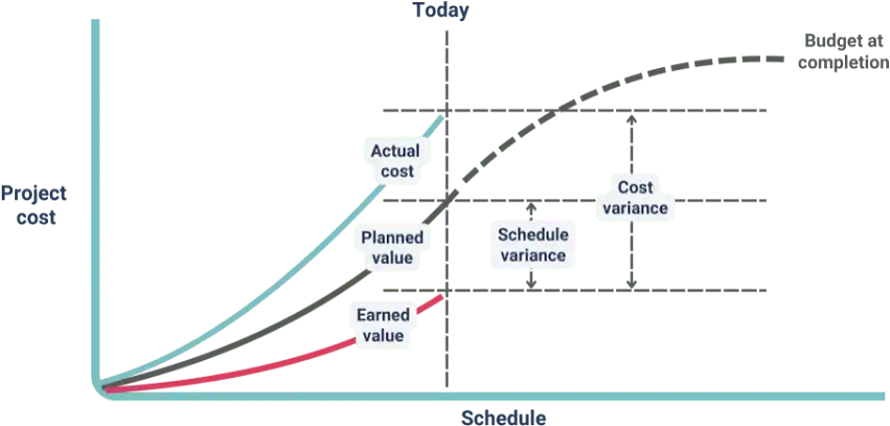
The key components of EVM are:SolutionsRelated articles
- Planned Value (PV): The budgeted cost of work scheduled to be doneUse critical path analysis to identify and focus on essential tasks.
- Earned Value (EV): The budgeted cost of work performedImplement time-boxing techniques to improve focus and productivity.
- Actual Cost (AC): The actual cost incurred for work performed.Consider parallel processing of tasks where possible.
EVM is used to compute the following metrics:Negotiate for deadline extensions when necessary.
- Schedule Variance (SV) = EV – PVBudget limitations
- Cost Variance (CV) = EV – ACLimited budgets
- Schedule Performance Index (SPI) = EV / PV can restrict resources, impacting the project’s scope and quality.
- Cost Performance Index (CPI) = EV / ACSolutions
Key takeawaysConduct thorough cost estimation during the planning phase.
- Offers early warning signs for potential project performance issuesImplement earned value management (EVM) to track project cost performance.
- Allows for accurate prediction of project costs and completion datesExplore cost-effective alternatives for resources.
- Facilitates data-driven decision making.Prioritise budget allocation for critical project components.
Quick tipsBalancing constraints may sometimes lead to
- Set a clear project baseline before implementing EVMquality issuesBenefits of Agile methodologies
- Utilise in deliverables. project management softwareSolutionsSimon Buehring to automate EVM calculationsEstablish and communicate clear quality standards at the beginning of the project.23 Feb 2026
- Regularly review and analyse EVM metricsImplement regular quality checks throughout the project lifecycle.
- Effectively communicate EVM results to stakeholders.Involve stakeholders in continuous feedback loops.Discover the benefits of Agile methodologies and how they streamline project management. Scroll down for a detailed overview.
Common pitfallsAllocate resources for testing and quality assurance processes.
- Using EVM in a rigid way without understanding the context and qualitative issuesWith preparation of ways to address these hurdles, you will be one step closer to coping with the strain on the project management triangle. Keep in mind that this is where some creative strategising can help you maintain control of all these factors. It’s good to frequently ask “how are things going” and be willing to switch things around to keep them in balance.
- Using EVM without adequate training or knowledgeBest practices for implementing the project management triangle
- Not revising the baseline for significant changesBest practices for implementing the project management triangle include the following:
- Not acting based on the EVM information.Stakeholder communication
Cost-benefit analysis One of the most important aspects of effectively implementing the project management triangle is
Cost-Benefit Analysiscommunicating (CBA) is a financial evaluation technique that assesses the expected costs and benefits of a project or decision. It aims to determine whether the project is economically viable and justifiable. with stakeholders. Project managers should communicate regularly with stakeholders to keep them informed and manage their expectations. It can also help to keep stakeholders engaged and on board with the project. There are several best practices for communicating with stakeholders, including the following:Agile vs waterfall project management
Five steps to perform a CBA:Schedule regular meetings with stakeholders to discuss the project.
- Identify all the costs and benefits associated with the projectProvide stakeholders with a visual representation of the triangle. This can help them to understand the trade-offs that are being made.Simon Buehring
- Monetise the costs and benefits in monetary termsUse plain language when communicating with stakeholders. Avoid jargon and technical terms that may be confusing.23 Feb 2026
- Compare the present value of costs and benefits using metrics such as net present value (NPV) or benefit-cost ratio (BCR)Encourage stakeholders to ask questions and share their concerns.
- Analyse the sensitivity of the results to changes in assumptions or inputsRegular monitoring and adjustmentsCompare Agile and waterfall methodologies to see why many industries prefer Agile. Discover the benefits by reading more.
- Decide based on the CBA results and other criteria.Another important aspect of the project management triangle is
Key takeawaysmonitoring and adjusting
- CBA provides a clear and transparent financial justification for a . Project managers need to keep a close eye on the project and make adjustments as needed to keep it on track. There are several best practices for monitoring and adjusting, including the following: projectUse a tracking system to monitor the project. This will help you to keep track of progress and adjust as needed.
- It helps prioritise projects with the highest return on investment (ROI)Review the project plan on a regular basis. This will help you to stay on track and make changes as necessary.
- It supports objective and rational decision-making.Adjust the plan when necessary. If you find that you are off track, you can always make adjustments to get back on track.
Quick tipsDecisions based on information to revise project plans.Agile digital marketing
- Identify and include all relevant costs and benefits, both tangible and intangibleTeam collaboration and accountability
- Use realistic and consistent assumptions and data sourcesProject managers can also foster collaboration and teamwork among team members by holding them accountable for their part of the work. When team members know that they will be held accountable for their work, they are more likely to collaborate with others to complete the project successfully. There are several best practices for collaborating and holding team members accountable, including the following:Simon Buehring
- Involve subject matter experts in the analysis processAssign clear roles and responsibilities to each team member. This will help everyone to understand what they need to do and be held accountable for their part of the project.14 Feb 2025
- Review and update the CBA regularly to reflect changes in the project or environment.Encourage team members to collaborate with each other. This can be done by setting up regular team meetings and encouraging team members to communicate with each other.
Common pitfallsTrack team members’ progress and hold them accountable for their work. This can be done by regularly reviewing each team member’s progress and providing feedback.Marketers can apply Agile techniques to digital campaigns. Learn how these methods streamline workflows and improve results. Read on.
- Overlooking or underestimating hidden or long-term costs or benefitsRecognise and reward efforts that support successful constraint management.
- Overestimating the benefits or underestimating the costsContinuous improvement
- Not considering alternative options or the status quoAdopt a culture of
- Not accounting for risks and uncertainties.continuous improvement
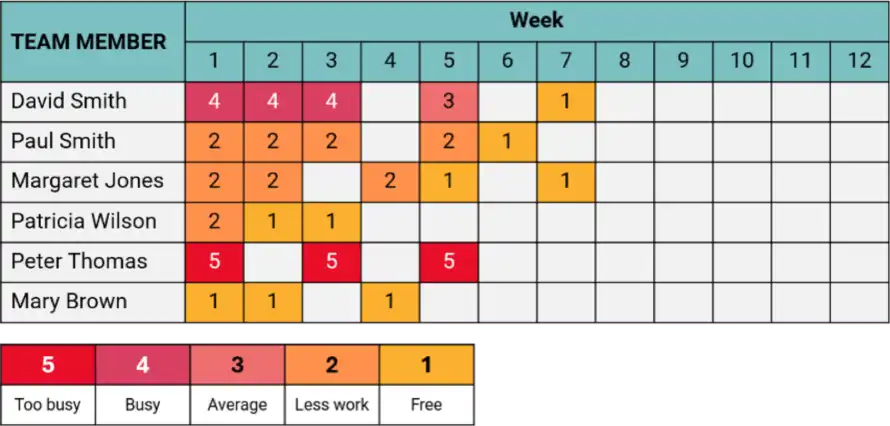
Resource levelling when working with the project triangle.
Resource levelling is a technique for managing project resources to achieve optimal resource utilisation. It involves adjusting the allocation of resources to tasks so that resource demand does not exceed the available supply. By smoothing out the use of resources, resource levelling can reduce overallocation and idle time.Review the project after completion to determine lessons learned
Key takeawaysEvaluate what worked and didn’t work for finding the balance between the constraints
- Resource levelling can lead to better resource utilisation and increased productivity.Promote team members to share ideas for process improvementsScrum framework
- It can help avoid burnout and reduce project risks.Stay updated on emerging project management methodologies and tools.
- It can help project managers create more realistic Incorporating these best practices can help project managers to learn the project management triangle. However, success will depend on dedication, flexibility, and the ability to learn from both successes and failures.Simon BuehringschedulesApplying the project management triangle19 Feb 2026.To help us see how we can do this, it’s worth looking at some examples of best practice in real-world situations. We will take three case studies below and see how things were managed in each of them.
Quick tipsLarge-scale IT projectExplore the 6 essential principles of the Scrum framework that guide successful projects. Scroll down for an in-depth look.
- Identify resource constraints early in the project planning process.A global corporation launched a
- Use worldwide ERP implementation project management software. The Project Manager in this case struggled to ensure the best balance between the different project triangle dimensions. that includes resource levelling capabilities.Key measures include prioritised the most important core functionalities to manage scope, implemented a phased rollout to manage time and cost constraints, and utilised change management processes to assess and evaluate new requirements.
- Prioritise critical path activities when levelling resources.Result
- Communicate any resource changes to team members and stakeholders.: The project delivered under budget, with minimal impact on time, and fulfilled all essential business requirements.
Common pitfallsConstruction project
- Over-optimising resources at the expense of meeting project deadlines.A commercial Scrum: A visual guide
- Forgetting to account for the skill sets of individual resources when reallocating them.skyscraper building construction
- Failing to update the resource levelling as the project progresses. project faced unexpected geological conditions which created a major risk to the project triangle.Simon Buehring
- Overlooking the impact of resource levelling on project costs.Key measures include reallocated budget from non-essential features to resolve foundation issues, accelerated other construction phases to make up for initial delays, and negotiated with stakeholders to adjust project scope without compromising quality.19 Feb 2026
ConclusionResult
Project managers: The building was completed safely, with a minor delay and a slight increase in the budget.New to Scrum? Our visual guide explains the methodology clearly. Download the accompanying poster to share with your team. can add the project management techniques described in this article to their project management toolkits. The larger the toolkit, the better equipped they are to handle the challenges their projects throw at them. Product development initiative
Project managers who effectively implement these techniques can improve their A tech startup wanted to launch a project plans new software product, resource scheduling, time and cost management, risks and stakeholders’ management and project performance. in a highly competitive market, but it struggled to strike the right balance between innovation and the pressure to get the product to market in time.
Informed decisions and right use of these techniques can help project managers deliver better project outcomes. Key measures include employed an
FAQs£999 +vat
What are the most essential project management techniques?
Some of the most important and effective ones include Gantt charts, See all dates Work Breakdown StructureConclusion , CPM, Kanban boards and Risk Analysis.The project management triangle is a simple yet powerful tool for understanding and managing project constraints such as
How do Gantt charts help in project management?scope
Gantt charts are versatile project management tools. A Gantt chart could help in many ways: from getting you started on your tasks and giving you deadlines to plotting out your timeline and tracking your progress, all the way to giving you an eagle eye on task dependencies and seeing bottlenecks., Agile transformation: What should ‘good’ look like (and what to be wary of)?
What is the Work Breakdown Structure (WBS), and why is it important?time
A Work Breakdown Structure or a WBS is a project management technique that decomposes a project into smaller pieces for easier management. A , and Sevcan Yasa
