Knowledge Train is an AIPGF Accredited Training Organization.

OUR VALUESOur 6 core values are everything we do. They include:
Integrity
DiversityFairnessQualityInnovationSocial responsibility
SOCIAL RESPONSIBILITY
Some of the charities we have helped over the years:
AgileNetwork diagrams typically use nodes to represent tasks or activities and arrows to indicate dependencies between these tasks. They allow for a clear visualisation of task sequences and can help project managers identify potential bottlenecks or critical paths in the project scheduleFoundation .Learn the fundamentals of the PRINCE2 Agile method.
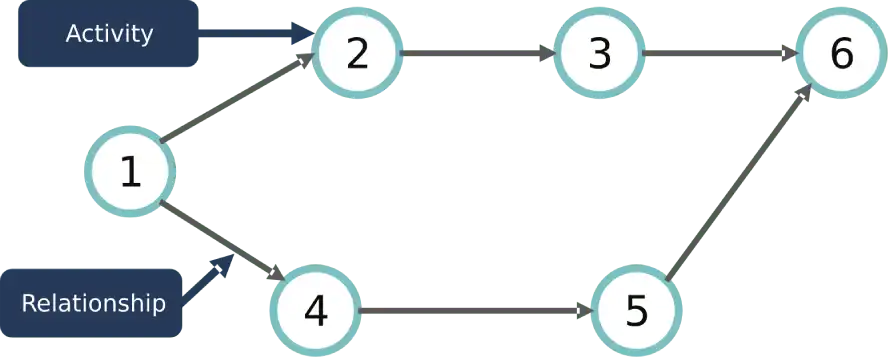
Key takeawaysPractitioner
- Visual representation of task dependenciesIncludes Foundation & Practitioner combined option.United Kingdom
- Identify critical path and potential schedule risksScrumAustria
- Facilitate resource allocation and schedule optimisation.Scrum Essentials Belgium
Quick tipsSelf-paced training course to learn the essentials of Scrum.Bulgaria
- Begin with a clear list of all project tasks and their dependencies.Scrum Master Croatia
- Use software tools for easy creation and updating of network diagrams.Choose Scrum Alliance or Scrum.org Scrum Master training courses.Cyprus
- Regularly review and update the diagram as the project progresses.Scrum Product Owner Czech Republic
- Utilise color-coding to highlight critical paths or high-risk activities.Choose Scrum Alliance or Scrum.org Product Owner training courses.Denmark
Common pitfallsAgileBAEstonia
- Overlooking important task dependencies.®Finland
- Creating overly complex diagrams that are difficult to understand. – Agile Business AnalysisFrance
- Failing to update the diagram as project scope or timelines change.Foundation Germany
- Neglecting to consider resource constraints when analysing the network.Learn the fundamentals of Agile Business Analysis.Greece
By learning project network diagrams, managers can enhance their ability to plan, schedule, and control complex projects effectively.Practitioner Ireland
Scheduling and time management All 4 courses bundled into this Diploma certification package.
Critical Path Method (CPM)Uncovering the benefits of PESTLE analysis for informed decision-makingAgileBA
The ®Critical Path MethodSimon Buehring – Agile Business Analysis (CPM) is a fundamental project management technique used to determine the longest sequence of dependent tasks that must be completed for a project to be finished on time. This sequence of tasks is known as the critical path. The CPM was first developed in the late 1950s and has since been widely adopted for 19 Feb 2026Foundation training project scheduling Learn the fundamentals of Agile Business Analysis. and control in various industries. Practitioner
CPM involves the following key steps: 4-day course including Foundation.
- Identifying all project tasks PMI
- Determining task dependencies ®
- Estimating task durations PMI-PBA
- Calculating the earliest and latest start and finish times for each task Self-paced course to prepare you for the exam (exam not included).
- Identifying the critical path and the float time for non-critical tasks. Business Analysis Learning Library (BALL)™
The critical path represents the sequence of tasks that directly affects the project’s overall duration. Any delay in a critical path task will result in a delay in the project completion date, unless the delay is addressed through corrective action. CHANGE MANAGEMENT
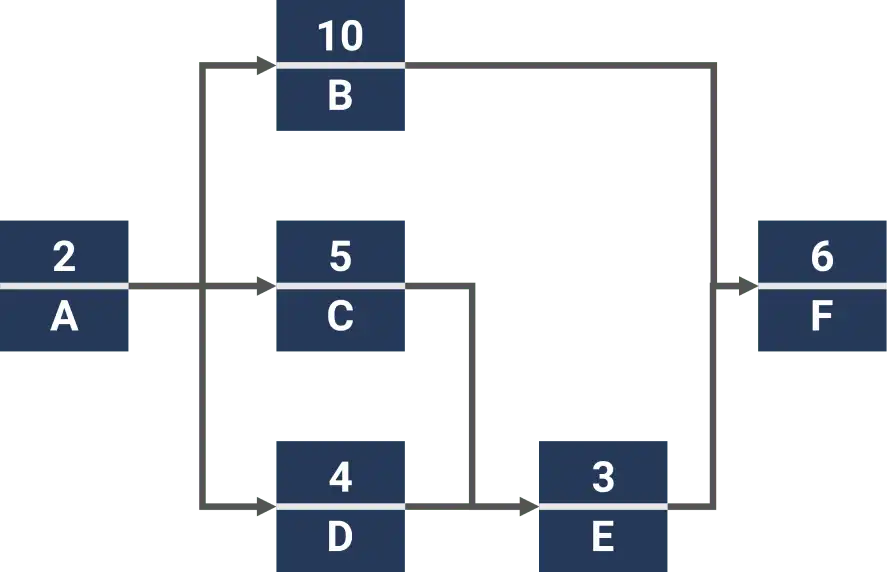
CPM offers several benefits: APMG Change Management
- Provides a visual overview of project schedules Foundation
- Highlights tasks that have the most significant impact on project duration Learn the fundamentals of enterprise change management.
- Helps optimise resource allocation Practitioner
- Enables “what-if” scenario analysis. Includes Foundation & Practitioner combined option.
®
- Select your preferred training course below:
- AGILE BUSINESS ANALYSIS COURSES
- Select your preferred training course below:
BCS BUSINESS ANALYSIS COURSESSelect your preferred training course below:
AGILE BUSINESS ANALYSIS COURSESSelect your preferred training course below:
- CHANGE MANAGEMENT QUALIFICATIONS
- Select your preferred qualification.
- APMG CHANGE MANAGEMENT COURSESSelect your preferred training course below:
PROGRAMME MANAGEMENT QUALIFICATIONS
- Select your preferred qualification.
- MSP COURSES
- Select your preferred training course below:
PMI COURSES
- Select your preferred training course below:
- PMI COURSES
- Select your preferred training course below:
PRINCE2 COURSES
SCRUM COURSES
Select your preferred training course below:
LEAN SIX SIGMA COURSES
- Select your preferred training course below:
- BUSINESS ANALYST COURSES
Select your self-paced training course topic.
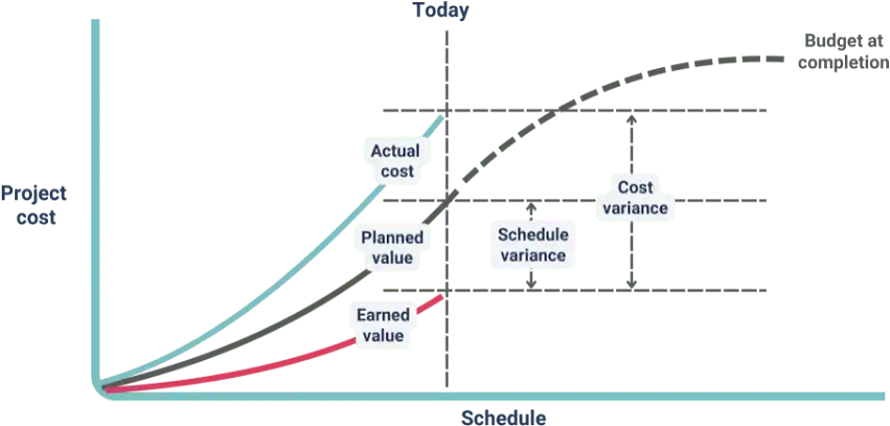
- Cost Variance (CV) = EV – ACBCS BUSINESS ANALYST COURSESOrganise information
- Schedule Performance Index (SPI) = EV / PVSelect your preferred training course below:: Structure the data under the relevant categories in the template.
- Cost Performance Index (CPI) = EV / ACEvaluate Impact
Key takeawaysCHANGE MANAGEMENT COURSES: Assess how each factor might present opportunities or threats.
- Offers early warning signs for potential project performance issuesSelect your self-paced training course topic.Review and update
- Allows for accurate prediction of project costs and completion dates : Regularly revisit the template to incorporate new developments.
- Facilitates data-driven decision making.APMG CHANGE MANAGEMENT COURSESBy following these steps, you can ensure your PESTLE analysis remains relevant and actionable. This structured approach not only aids strategic planning but also reduces uncertainty, fostering a stable environment for decision-making. In turn, this can enhance workplace morale by clarifying organisational priorities and aligning them with external realities.
Quick tipsSelect your preferred training course below:Real-world examples of PESTLE analysis
- Set a clear project baseline before implementing EVM Case study 1: Industry application
- Utilise PROGRAMME MANAGEMENT COURSESIn the automotive industry, PESTLE analysis has been instrumental in shaping strategic decisions. For instance, the shift towards electric vehicles (EVs) is influenced by several PESTLE factors. Governments worldwide are implementing stricter emissions regulations and offering subsidies to promote EV adoption. These political and environmental factors create opportunities for car manufacturers to innovate. Organisations that proactively adapt to these changes by investing in R&D and expanding their EV offerings can gain a competitive edge, aligning with both consumer demands and regulatory pressures.project management softwareSelect your self-paced training course topic.Case study 2: Country analysis to automate EVM calculations PESTLE analysis is also valuable for assessing national economic conditions, as demonstrated in the case of India. The country presents diverse market opportunities and challenges, with varying economic conditions across different regions and sectors. However, challenges such as complex legal regulations and environmental concerns persist. By applying PESTLE, businesses can navigate India’s dynamic market landscape. Understanding these factors helps organisations tailor their strategies to leverage economic opportunities while addressing social and legal challenges, ultimately facilitating successful market entry and expansion. This approach reduces strategic uncertainty, leading to enhanced organisational confidence and stability.
- Regularly review and analyse EVM metricsMSP COURSESConclusion
- Effectively communicate EVM results to stakeholders.Select your preferred training course below:PESTLE analysis is a crucial tool in strategic planning and decision-making. It provides a comprehensive view of external factors influencing an organisation, enabling businesses to identify opportunities and mitigate threats. By integrating PESTLE with other analytical tools, organisations can develop informed strategies that align with both internal strengths and external realities. This approach not only enhances operational effectiveness but also reduces strategic uncertainty. In workplace settings, the use of PESTLE instils confidence and clarity, contributing to stress reduction and improved decision-making. Ultimately, PESTLE analysis supports sustainable growth and competitive advantage in a complex business environment.
Common pitfalls FAQs
- Using EVM in a rigid way without understanding the context and qualitative issuesIT QUALIFICATIONSWhat is the difference between PEST and PESTLE analysis?
- Using EVM without adequate training or knowledgeSelect your preferred qualification.PEST analysis stands for Political, Economic, Social, and Technological factors. PESTLE expands this framework by including Legal and Environmental factors. This expansion provides a more comprehensive view of external influences on a business.
- Not revising the baseline for significant changes How frequently should organisations conduct PESTLE analysis?
- Not acting based on the EVM information.ITIL COURSESOrganisations should review their PESTLE analysis quarterly to monitor changes in external factors and adjust strategies accordingly.
Cost-benefit analysisSelect your preferred training course below:Can PESTLE analysis be used for small businesses?
Cost-Benefit Analysis Yes, PESTLE analysis is valuable for small businesses. It helps them understand the external environment, identify opportunities, and mitigate risks. This knowledge is crucial for strategic planning and competitive positioning. (CBA) is a financial evaluation technique that assesses the expected costs and benefits of a project or decision. It aims to determine whether the project is economically viable and justifiable.IT QUALIFICATIONSWhat are the limitations of PESTLE analysis?
Five steps to perform a CBA:Select your preferred qualification.PESTLE analysis can be subjective, relying on the accuracy of available data and the analyst’s interpretation. It may not capture rapid changes, and its broad scope can make it challenging to focus on specific business needs.
- Identify all the costs and benefits associated with the project How does PESTLE analysis contribute to risk management?
- Monetise the costs and benefits in monetary termsITIL COURSESPESTLE analysis contributes to
- Compare the present value of costs and benefits using metrics such as net present value (NPV) or benefit-cost ratio (BCR)Select your preferred training course below:risk management
- Analyse the sensitivity of the results to changes in assumptions or inputs by identifying external threats and opportunities. It informs strategic decisions and helps businesses prepare for potential challenges, reducing uncertainty and enhancing organisational resilience.
- Decide based on the CBA results and other criteria.LEARNING LIBRARIESInfographic
Key takeawaysSelect your preferred training course topic.Subscribe to our exclusive offers and promotions
- CBA provides a clear and transparent financial justification for a projectAI QUALIFICATIONS & WORKSHOPSSubscribe now
- It helps prioritise projects with the highest return on investment (ROI)Select your preferred qualification or workshop.
- It supports objective and rational decision-making.
Quick tipsAIPGF COURSES{"@context":"https://schema.org","@type":"ImageObject","contentUrl":"https://www.knowledgetrain.co.uk/training-courses/pestle-business-analysis-technique-890x501.webp","description":"PESTLE business analysis technique","license":"https://www.knowledgetrain.co.uk/license","acquireLicensePage":"https://www.knowledgetrain.co.uk/license","creditText":"Knowledge Train","uploadDate":"2023-05-16T08:00:33.000Z","copyrightNotice":"© 2023 Knowledge Train Limited. All rights reserved.","creator":{"@type":"Organization","name":"Knowledge Train","url":"https://www.knowledgetrain.co.uk"}}
- Identify and include all relevant costs and benefits, both tangible and intangibleSelect your preferred training course below:
- BCS AI COURSES
- Select your preferred training course below:
- AIPGF COURSES
- Select your preferred training course below:
- AI WORKSHOPS
Select your preferred workshop below:
Knowledge Train is a PRINCE2 Accredited Training Organization.
- Knowledge Train is an AgilePM Accredited Training Organization.
- Knowledge Train is a PRINCE2 Agile Accredited Training Organization.
Knowledge Train is a Better Business Cases Accredited Training Organization.
- Knowledge Train is a P3O Accredited Training Organization. Knowledge Train is an AgilePM Accredited Training Organization.
- Knowledge Train is a PRINCE2 Agile Accredited Training Organization.
- Knowledge Train is an Agile BA Accredited Training Organization.
- BCS accredited training partner for Business Analysis.
Knowledge Train is an Agile BA Accredited Training Organization.
Knowledge Train is a Change Management Accredited Training Organization.
Knowledge Train is an MSP Accredited Training Organization.
Knowledge Train is a PRINCE2 Accredited Training Organization.
Knowledge Train is an AIPGF Accredited Training Organization.
Knowledge Train is an AIPGF Accredited Training Organization.
BCS accredited training partner for Business Analysis.
WHAT YOU WILL GET
Our courses and workshops include:Certification exam(s) where applicableAccredited training course materials
Expert, experienced trainers to support youUnlock your creative and organisational potential with mind maps
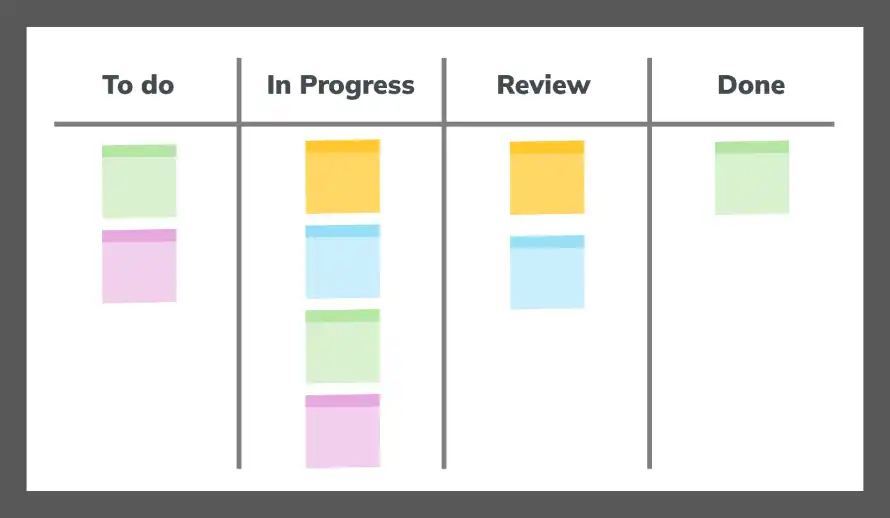
Kanban boards are visual tools that can help you and your team to visualise and manage tasks and workflows. Kanban boards will help your team collaborate, limit work-in-progress, and manage processes more efficiently, they also help you to see the bottlenecks easily. Kanban boards are a more popular tool for recurring processes and Course manual where applicable. Agile project management Simon Buehring.SELF-PACED ONLINE TRAINING COURSES19 Feb 2026
What is the Critical Path Method (CPM), and how does it help in scheduling?Self-paced online training courses (e-learning) include:
The Critical Path Method or CPM is a project scheduling technique that analyses your project in terms of tasks’ sequence and duration. CPM will help you to identify the longest chain of dependent tasks in your project, the so-called critical path, which would then help you in your decision-making: it will allow you to see what your project’s minimal duration is and what tasks can be delayed or rescheduled without affecting the project in general. The CPM is very useful in resource planning and allocation, as well as ensuring you have a solid deadline.Explore the potential of mind maps to enhance your creativity and organisational skills. Scroll down to learn practical tips and techniques that you can start using today.Certification exam(s) where applicable
What is Scrum, and how does it fit into Agile project management? Accredited training course materials
Scrum Support from expert, experienced trainers is an Agile project management framework that organises the work into short iterative cycles (sprints). Scrum relies on defined roles (Product Owner, Development Team and Latest educational technology.Scrum Master ), events (sprint planning, daily stand-ups) and tools (sprint backlog). Scrum helps teams to plan and manage their work, adapt to changing requirements, and deliver value quickly. BUSINESS SOLUTIONS
How does Agile project management differ from traditional methods?
Agile is an iterative and incremental approach to product development that values flexibility, collaboration, and customer satisfaction over following a rigid plan. Agile teams embrace change even late in the project, and they focus on delivering working solutions regularly rather than following a fixed set of requirements. Agile is all about continuous improvement and responding to feedback, and there are different ways (frameworks) to do it.TO HELP ORGANISATIONS IMPROVEWhich certification is best for business analysis?
InfographicWe offer solutions to help improve team performance including:
