11 essential project management techniques®

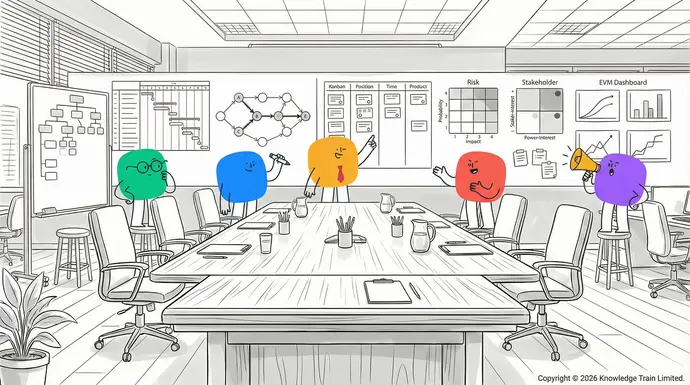
Key takeawaysBusiness Analysis International Diploma
Strong delivery comes from choosing and combining techniques that fit your project’s uncertainty, scale, and stakeholders.All 4 courses bundled into this Diploma certification package.
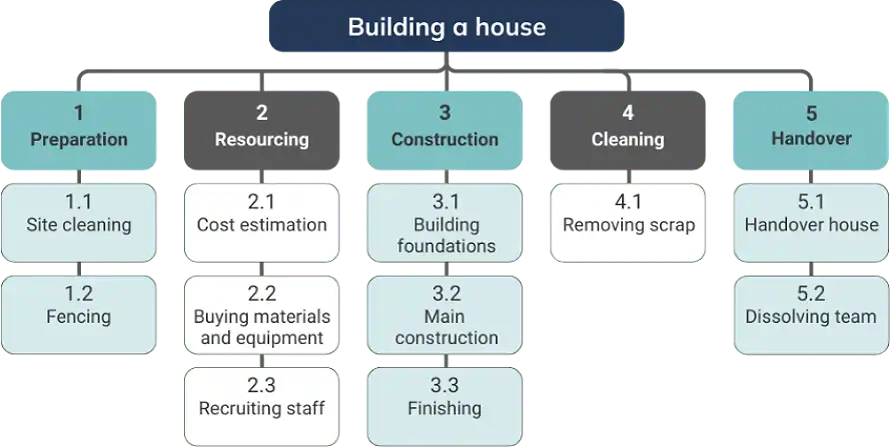
- Use a Work Breakdown Structure to define scope clearly and create reliable estimates and ownership.AgileBA
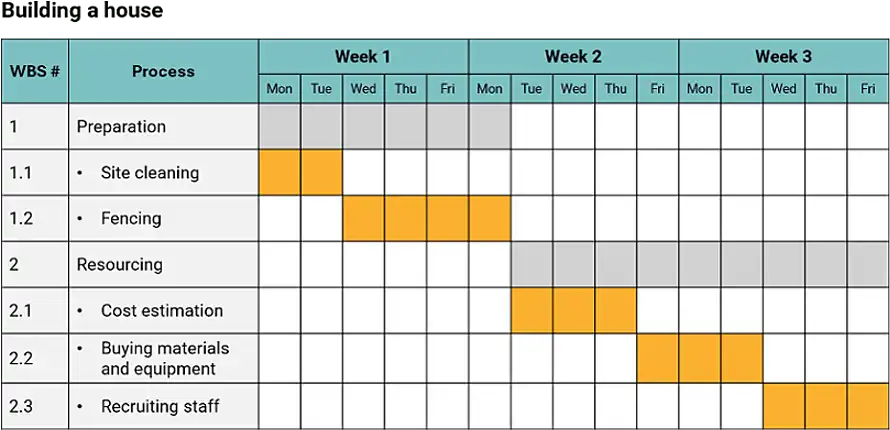
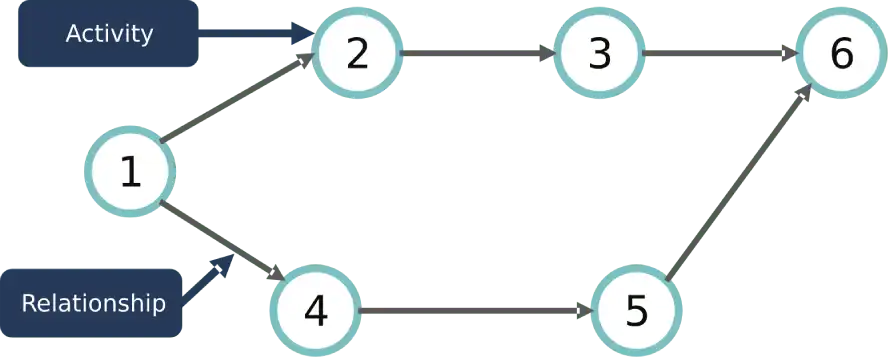
- Use Gantt charts and network diagrams to visualise sequencing, dependencies, and progress.®
- Apply CPM and PERT to identify critical work, quantify schedule risk, and test scenarios. – Agile Business Analysis
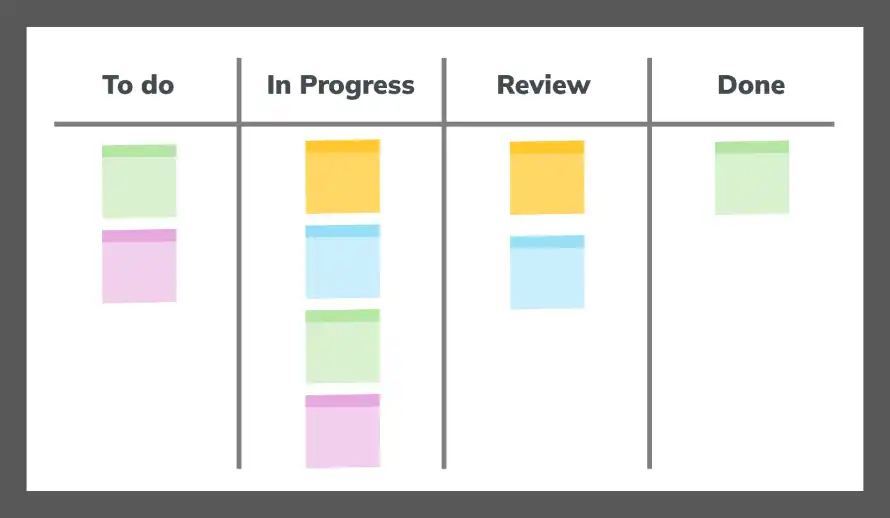
- Use Kanban to manage flow, limit work in progress, and surface blockers early.Foundation training
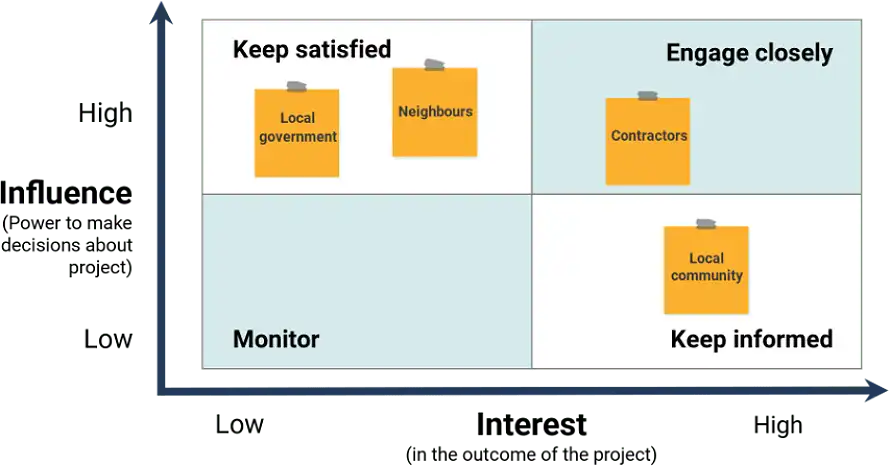
- Prioritise uncertainty with a risk matrix and stakeholder mapping to guide action and communication.Learn the fundamentals of Agile Business Analysis.
- Track delivery health with EVM and cost-benefit analysis to support timely, evidence-based decisions.Practitioner
AGILE BUSINESS ANALYSIS COURSES
- Overlooking important task dependencies.Select your preferred training course below:
- Creating overly complex diagrams that are difficult to understand.
- BUSINESS ANALYSIS QUALIFICATIONS
- Neglecting to consider resource constraints when analysing the network.Select your preferred qualification.
By learning project network diagrams, managers can enhance their ability to plan, schedule, and control complex projects effectively.
Scheduling and time managementSelect your preferred training course below:
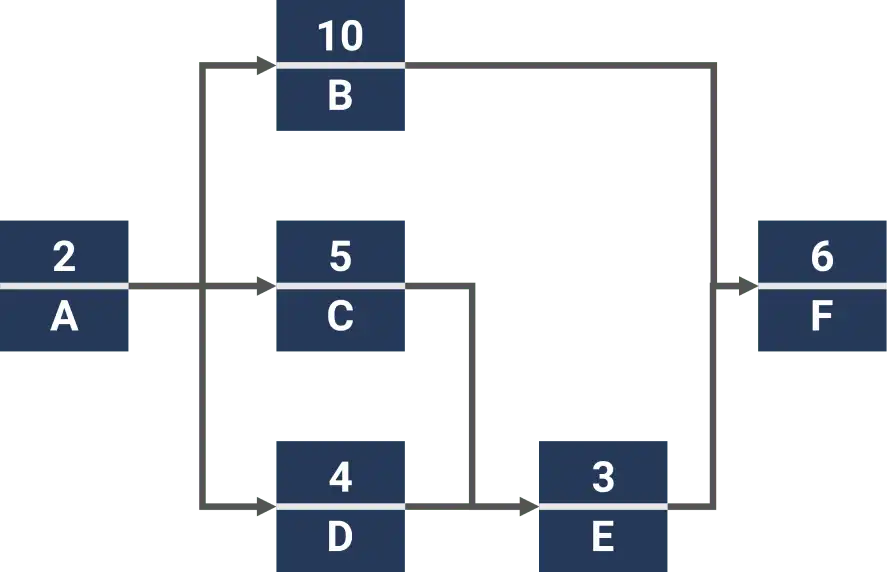
Critical Path Method (CPM)
The PRINCE2 COURSES Critical Path MethodSelect your preferred training course below: (CPM) is a fundamental project management technique used to determine the longest sequence of dependent tasks that must be completed for a project to be finished on time. This sequence of tasks is known as the critical path. The CPM was first developed in the late 1950s and has since been widely adopted for project schedulingAPM COURSES and control in various industries. Select your preferred training course below:
CPM involves the following key steps:
- Identifying all project tasks AGILE PROJECT MANAGEMENT COURSES
- Determining task dependencies Select your preferred training course below:
- Estimating task durations
- Calculating the earliest and latest start and finish times for each task PRINCE2 AGILE COURSES
- Select your preferred training course below:
BUSINESS CASE COURSES
- Select your preferred training course below:
- AGILE COURSES
- Select your self-paced training course topic.
AGILE PROJECT MANAGEMENT COURSES
Select your preferred training course below: PRINCE2 AGILE COURSES
Select your preferred training course below:
SCRUM COURSESSelect your preferred training course below:
LEAN SIX SIGMA COURSES
- Select your preferred training course below:
- BUSINESS ANALYST COURSES
Select your self-paced training course topic.
- BCS BUSINESS ANALYST COURSES
- Select your preferred training course below:
- CHANGE MANAGEMENT COURSES
- Select your self-paced training course topic.
- APMG CHANGE MANAGEMENT COURSES
- Select your preferred training course below:
- PROGRAMME MANAGEMENT COURSES
Select your self-paced training course topic.
- MSP COURSES
- Select your preferred training course below:
IT QUALIFICATIONS
Select your preferred qualification.
ITIL COURSESSelect your preferred training course below: IT QUALIFICATIONS
Select your preferred qualification.
- ITIL COURSES
- Select your preferred training course below:
LEARNING LIBRARIES
- Select your preferred training course topic.
- AI QUALIFICATIONS & WORKSHOPS
- Select your preferred qualification or workshop.
AIPGF COURSESSelect your preferred training course below:
BCS AI COURSES
Select your preferred training course below:
Risk Management MatrixAIPGF COURSES, also referred to as a Probability and Impact Matrix, is a graphical representation used in project management to prioritise and manage risks. It allows project managers and teams to evaluate potential risks based on their likelihood of occurrence and potential impact on the project. Select your preferred training course below:
The matrix typically displays a grid with probability on one axis and impact on the other. Risks are plotted on this grid, enabling quick visual identification of high-priority risks that require immediate attention and action.
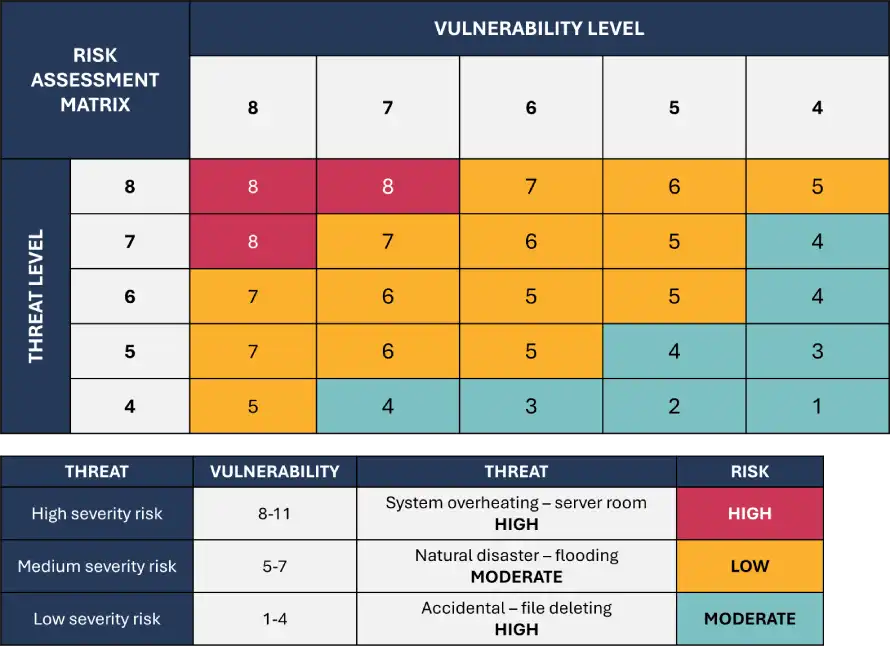
Essential elements in a Risk Management Matrix: AI WORKSHOPS
- Probability: The chance of a risk happening (typically rated as low, medium, high) Select your preferred workshop below:
- Impact: The severity of the outcome if the risk occurs (usually ranked from minor to major)
- Risk score: A value obtained by multiplying the probability and impact assessments. Knowledge Train is a PRINCE2 Accredited Training Organization.
Advantages of employing a Risk Management Matrix:
- Facilitates a clear, visual summary of potential project risks. Knowledge Train is an AgilePM Accredited Training Organization.
- Assists in prioritising risk responses.
- Improves risk communication with stakeholders. Knowledge Train is a PRINCE2 Agile Accredited Training Organization.
- Aids in making more informed decisions.
FAQsCoursesCroatia
What are the most essential project management techniques?PROJECT MANAGEMENTCyprus
Some of the most important and effective ones include Gantt charts, PRINCE2Czech RepublicWork Breakdown Structure®Denmark, CPM, Kanban boards and Risk Analysis.Foundation Estonia
How do Gantt charts help in project management?Learn the fundamentals of the PRINCE2 method.Finland
Gantt charts are versatile project management tools. A Gantt chart could help in many ways: from getting you started on your tasks and giving you deadlines to plotting out your timeline and tracking your progress, all the way to giving you an eagle eye on task dependencies and seeing bottlenecks.Practitioner France
What is the Work Breakdown Structure (WBS), and why is it important?Includes Foundation & Practitioner combined option.Germany
A Work Breakdown Structure or a WBS is a project management technique that decomposes a project into smaller pieces for easier management. A Association for Project Management (APM)GreeceWBSProject Fundamentals Qualification (PFQ) Ireland is critical for task organisation, time and cost estimation and more it allows you to build a clear scope for your project and help you to not get overwhelmed and not forget anything important.ItalyStart your APM project management career.
How can Kanban boards improve project workflow?LatviaProject Management Qualification (PMQ)
Kanban boards are visual tools that can help you and your team to visualise and manage tasks and workflows. Kanban boards will help your team collaborate, limit work-in-progress, and manage processes more efficiently, they also help you to see the bottlenecks easily. Kanban boards are a more popular tool for recurring processes and LithuaniaAdvance your APM project management expertise.Agile project managementLuxemburgProject Risk Single Certificate Level 1 .MaltaEnhance your project risk management skills.
What is the Critical Path Method (CPM), and how does it help in scheduling?NetherlandsAgilePM
The Critical Path Method or CPM is a project scheduling technique that analyses your project in terms of tasks’ sequence and duration. CPM will help you to identify the longest chain of dependent tasks in your project, the so-called critical path, which would then help you in your decision-making: it will allow you to see what your project’s minimal duration is and what tasks can be delayed or rescheduled without affecting the project in general. The CPM is very useful in resource planning and allocation, as well as ensuring you have a solid deadline.Poland®
What is Scrum, and how does it fit into Agile project management?Portugal – Agile Project Management
ScrumFoundation Romania is an Agile project management framework that organises the work into short iterative cycles (sprints). Scrum relies on defined roles (Product Owner, Development Team and Learn the key principles of Agile Project Management.SlovakiaScrum MasterPractitioner Slovenia), events (sprint planning, daily stand-ups) and tools (sprint backlog). Scrum helps teams to plan and manage their work, adapt to changing requirements, and deliver value quickly.Includes Foundation & Practitioner combined option.Spain
How does Agile project management differ from traditional methods?PRINCE2Sweden
Agile®Other countries is an iterative and incremental approach to product development that values flexibility, collaboration, and customer satisfaction over following a rigid plan. Agile teams embrace change even late in the project, and they focus on delivering working solutions regularly rather than following a fixed set of requirements. Agile is all about continuous improvement and responding to feedback, and there are different ways (frameworks) to do it. AgileHome
InfographicFoundation
