

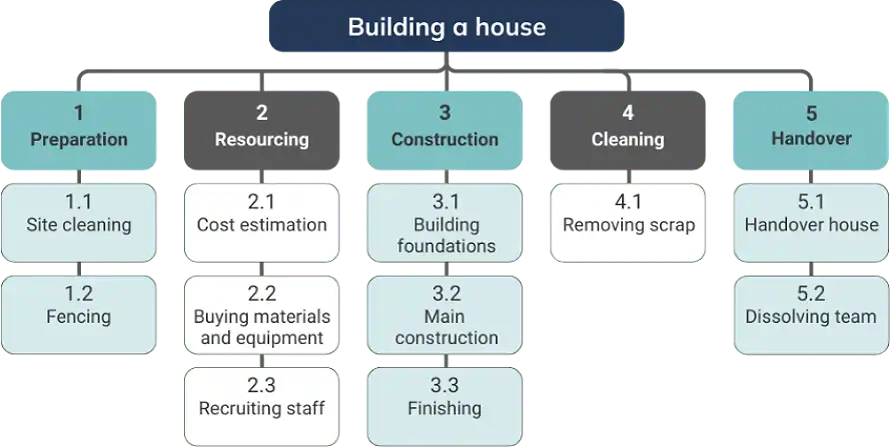
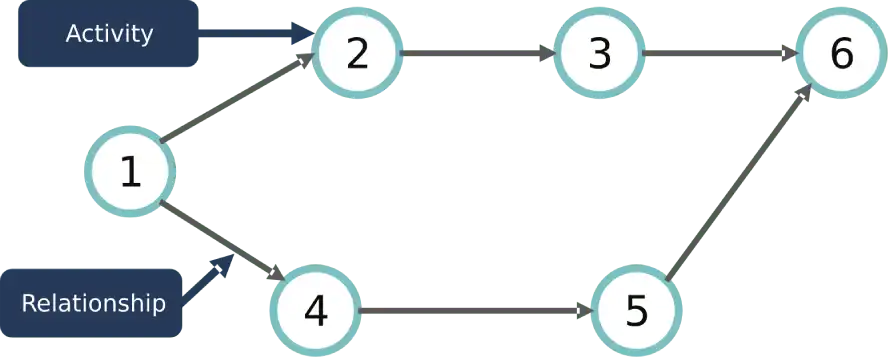
- Overlooking important task dependencies.
- Creating overly complex diagrams that are difficult to understand.+44 (0)207 148 5985LEARNING LIBRARIESAXELOS Peoplecert accredited training organisation for ITIL (IT Infrastructure Library).
- Failing to update the diagram as project scope or timelines change. Select your preferred training course topic.
- Neglecting to consider resource constraints when analysing the network.[email protected] Knowledge Train is an AIPGF Accredited Training Organization.
By learning project network diagrams, managers can enhance their ability to plan, schedule, and control complex projects effectively. AI QUALIFICATIONS & WORKSHOPS
Scheduling and time managementBulgariaKnowledge Train is a P3O Accredited Training Organization.We offer solutions to help improve team performance including:
Critical Path Method (CPM)Croatia Consultancy services
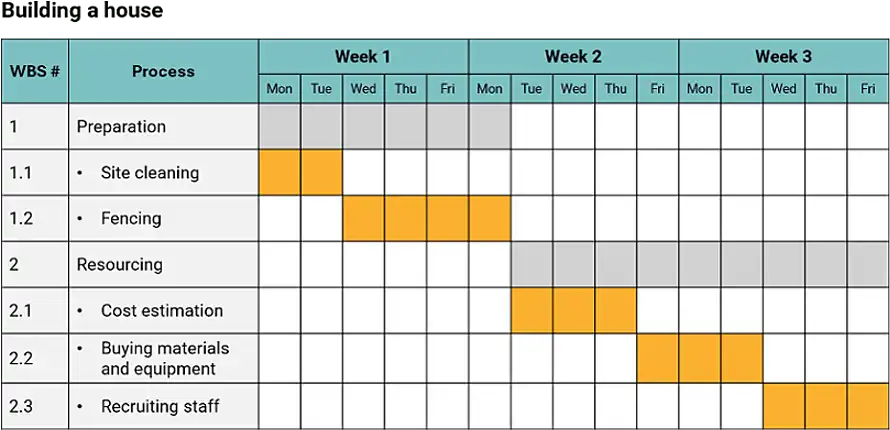
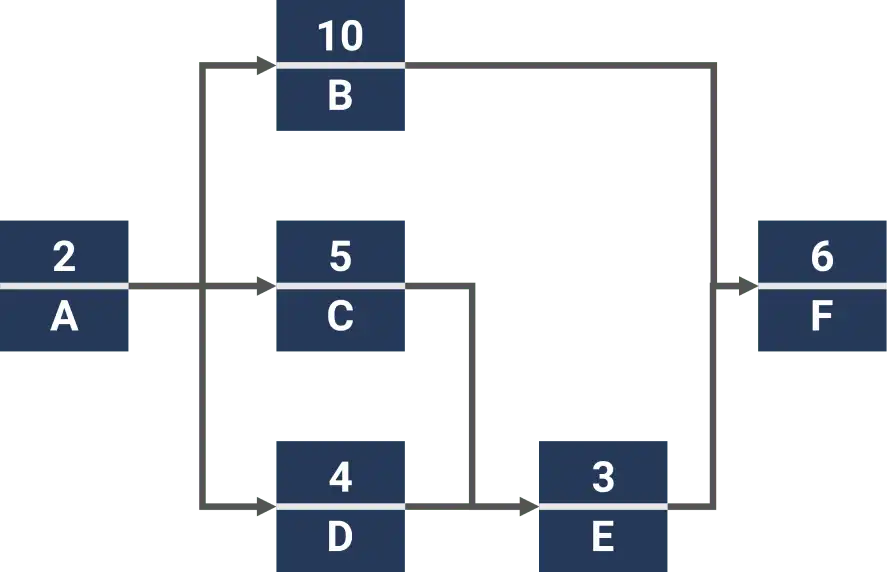
The Knowledge Train is an AgilePM Accredited Training Organization.CyprusStaff developmentCritical Path Method Czech RepublicCompliance training (CPM) is a fundamental project management technique used to determine the longest sequence of dependent tasks that must be completed for a project to be finished on time. This sequence of tasks is known as the critical path. The CPM was first developed in the late 1950s and has since been widely adopted for Knowledge Train is a PRINCE2 Agile Accredited Training Organization.DenmarkApprenticeship trainingproject scheduling EstoniaCustom e-Learning development and control in various industries.Knowledge Train is an Agile BA Accredited Training Organization.Finland
CPM involves the following key steps: France
- Identifying all project tasksBCS accredited training partner for Business Analysis.GermanyFind out more
- Determining task dependencies Greece
- Estimating task durationsKnowledge Train is an Agile BA Accredited Training Organization.Ireland
- Calculating the earliest and latest start and finish times for each task Italy
- Identifying the critical path and the float time for non-critical tasks.Knowledge Train is a Change Management Accredited Training Organization.Latvia
The critical path represents the sequence of tasks that directly affects the project’s overall duration. Any delay in a critical path task will result in a delay in the project completion date, unless the delay is addressed through corrective action. Lithuania
CPM offers several benefits:Knowledge Train is an MSP Accredited Training Organization.LuxemburgCONTACT US
- Provides a visual overview of project schedules Malta
- Highlights tasks that have the most significant impact on project durationKnowledge Train is a PRINCE2 Accredited Training Organization.Netherlands
- Helps optimise resource allocationPoland
- Enables “what-if” scenario analysis.PortugalKnowledge Train is an AgilePM Accredited Training Organization.
ls can also integrate with other techniques like Gantt charts and resource levelling.SlovakiaKnowledge Train is a PRINCE2 Agile Accredited Training Organization.Name
While CPM is well-suited for projects with well-defined tasks and dependencies, it may be less effective for projects with high levels of uncertainty or frequent changes. In such cases, it’s often used in conjunction with other techniques, such as PERT or Slovenia Agile methodologiesSpainKnowledge Train is a Better Business Cases Accredited Training Organization. , for a more adaptive approach.Sweden Email
PERT (Program Evaluation and Review Technique)Other countriesKnowledge Train is an AgilePM Accredited Training Organization.
PERTHome is a project management technique that can be used for Change managementKnowledge Train is a PRINCE2 Agile Accredited Training Organization.Phoneprojects with uncertain or variable task durations. Developed in the 1950s for the U.S. Navy’s Polaris missile program, PERT allows project managers to incorporate probabilistic time estimates into their project schedules. Knowledge Train is a Lean Six Sigma Accredited Training Organization.
PERT requires the creation of a network diagram of all project tasks, along with three time estimates for each task:Change management: models, steps, and best practices How can we help?
- Optimistic time (O): The shortest time the task could possibly take. BCS accredited training partner for Business Analysis.
- Most likely time (M): The best estimate of how long the task will take, based on available information.Knowledge Train
- Pessimistic time (P): The longest time the task could possibly take, considering all potential issues.23 Apr 2026Knowledge Train is a Change Management Accredited Training Organization.Submit
The expected time (E) for each task is then calculated as E = (O + 4M + P) / 6.
Key takeaways Knowledge Train is an MSP Accredited Training Organization.
- Provides more realistic project timelines by accounting for uncertainties OUR VALUES
- Identifies critical paths and potential schedule risks AXELOS Peoplecert accredited training organisation for ITIL (IT Infrastructure Library).Our 6 core values are everything we do. They include:
- Helps in better resource allocation and Integrityrisk management AXELOS Peoplecert accredited training organisation for ITIL (IT Infrastructure Library).Diversity
- Allows probabilistic analysis of project completion times. Fairness
Quick tips Knowledge Train is an AIPGF Accredited Training Organization.Quality
- Involve experts in estimating task durations to get accurate timeframes Innovation
- Update estimates regularly as new information becomes available Knowledge Train is an AIPGF Accredited Training Organization.Social responsibility
- Use PERT in conjunction with CPM for a comprehensive schedule analysis
- Leverage software tools for PERT calculations and visualisations. BCS accredited training partner for Business Analysis.SOCIAL RESPONSIBILITY
Common pitfalls Some of the charities we have helped over the years:
- Overreliance on extreme (optimistic or pessimistic) estimates WHAT YOU WILL GET
- Neglecting task dependencies Our courses and workshops include:
- Failing to update analysis as the project progresses Certification exam(s) where applicable
- Misinterpreting results as definitive rather than probabilistic. Accredited training course materials
PERT can be time-consuming to apply to large projects, and it may not be necessary for every project. It is most useful when used judiciously, in combination with other techniques, and applied to the most critical or highly uncertain aspects of a project. Expert, experienced trainers to support you
Kanban boards Course manual where applicable.
Kanban Boards AWARDS are a visual project management tool that originated in Toyota’s lean manufacturing system and have since become popular in various industries, particularly in software development and SELF-PACED ONLINE TRAINING COURSESWe don’t go seeking awards, but here are two of the awards we have received for our training.Agile project Copied!Self-paced online training courses (e-learning) include: managementKey takeawaysCertification exam(s) where applicable .Effective change management blends clear planning with sustained support for adoption.Accredited training course materials Request a quote
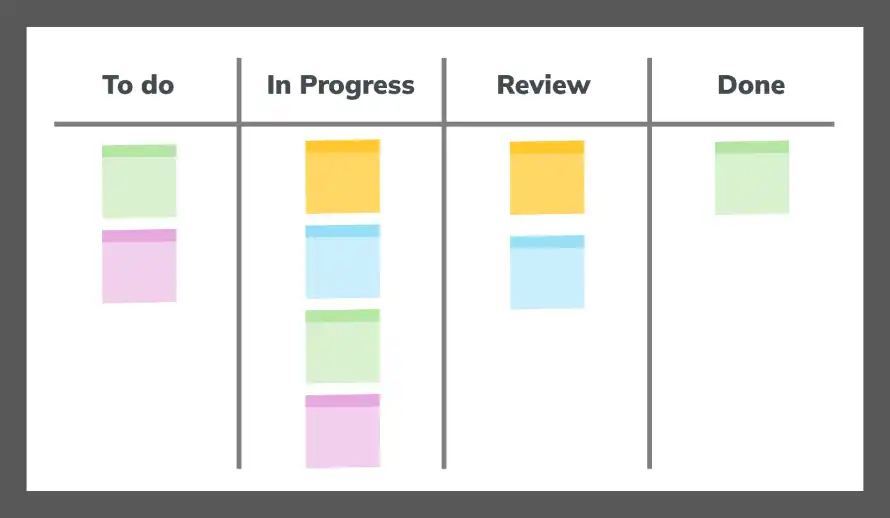
A Kanban board is a visual tool that helps teams manage their work using Kanban methodology. The board is divided into columns that represent the stages of a workflow, for example, “To Do”, “In Progress”, and “Done”. Cards or sticky notes are placed on the board to represent the work items or tasks, and they are moved from one column to another as the work progresses. This way, the team can:Use structured frameworks such as Kotter, Lewin, or ADKAR to sequence activities and maintain momentum.Support from expert, experienced trainers
- Visualise workflow: The status of all tasks is visible at a glance.Visible leadership sponsorship and consistent communication reduce uncertainty and resistance.Latest educational technology.
- Limit work in progress: Limits are set on the number of tasks in each column to avoid overloading the team.Engage stakeholders early, using influence and impact mapping to target effort where it matters most.
- Manage flow: Blockers are quickly identified and resolved.Integrate change work with project delivery so training, readiness, risks, and benefits stay aligned.BUSINESS SOLUTIONS
- Continuous improvement: The team optimises the workflow over time.Measure adoption with KPIs and feedback, then reinforce new behaviours through governance, coaching, and policy. +44 (0)207 148 5985
Benefits of using Kanban boards include:
- Improved transparency and communication TO HELP ORGANISATIONS IMPROVE[email protected]
- Increased focus and productivity We offer solutions to help improve team performance including:
- Flexibility to adapt to changing prioritiesContentsConsultancy services
- Reduced waste of time and resources. Staff development
Kanban boards can be physical or digital. A physical board can be as simple as a whiteboard and some sticky notes. A digital board is a virtual representation of the physical board that can be accessed and updated by the team members using Compliance training project management softwareApprenticeship trainingContents . Digital boards offer more features, such as automatic updates, task details, and integration with other tools.Custom e-Learning development
Implementing Kanban boards is easy, but it requires the team to be committed to updating the board regularly and following the work-in-progress limits. What is change management?
Risk and stakeholder management United Kingdom
Risk management matrixFind out moreImportance of change management
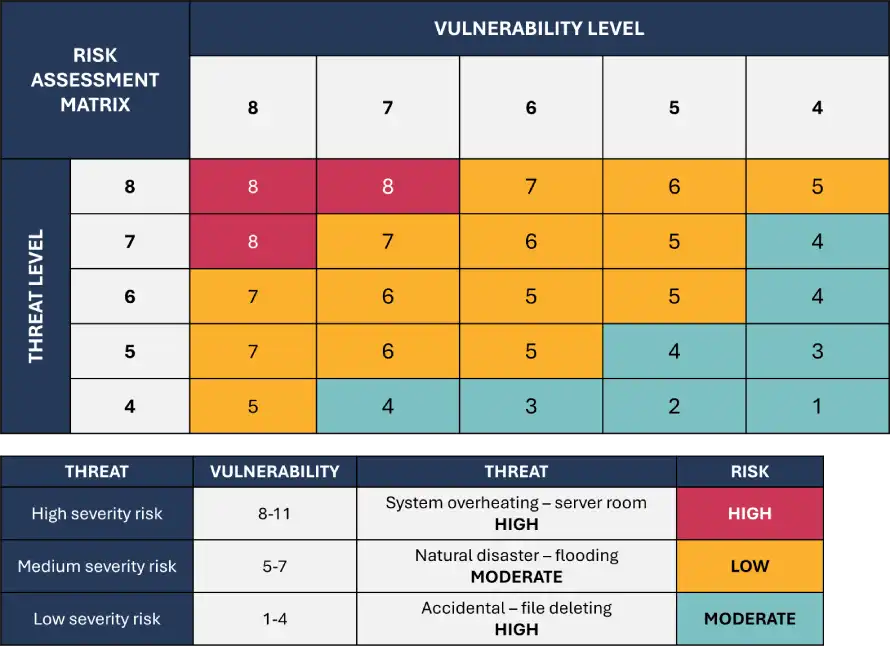
A Risk Management Matrix Change management principles , also referred to as a Probability and Impact Matrix, is a graphical representation used in project management to prioritise and manage risks. It allows project managers and teams to evaluate potential risks based on their likelihood of occurrence and potential impact on the project.
The matrix typically displays a grid with probability on one axis and impact on the other. Risks are plotted on this grid, enabling quick visual identification of high-priority risks that require immediate attention and action. Change management processes
Essential elements in a Risk Management Matrix:
- Probability: The chance of a risk happening (typically rated as low, medium, high)CONTACT USChange management frameworksSearch
- Impact: The severity of the outcome if the risk occurs (usually ranked from minor to major)
- Risk score: A value obtained by multiplying the probability and impact assessments. Change management challenges
Advantages of employing a Risk Management Matrix:
- Facilitates a clear, visual summary of potential project risks. Change management and business functions
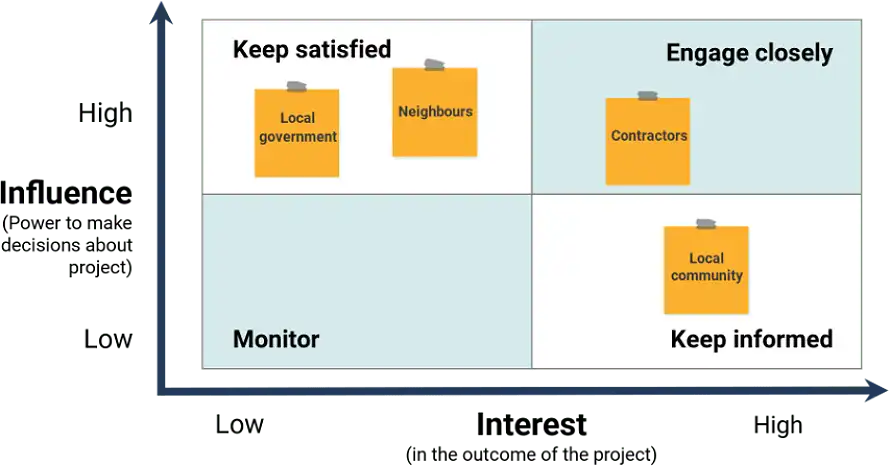
Financial and resource management When positive change is applied correctly, it helps to reduce waste and therefore reduce costs. Effective change management helps an organisation make smart choices. It increases productivity, decreases risks, and helps to improve the profitability of an organisation.
Earned Value Management (EVM) Change management principles
Earned Value Management Clear communicationCopied! (EVM) is a project management technique that uses scope, schedule, and cost data to assess a project’s progress and performance. It integrates scope, schedule, and cost measures to provide a comprehensive view of the project’s health. EVM compares the planned work with the actual completed work and the actual costs incurred, offering insights into both the status and future projections of the project.Search: Ensure transparency and regular updates throughout the process.Key takeaways
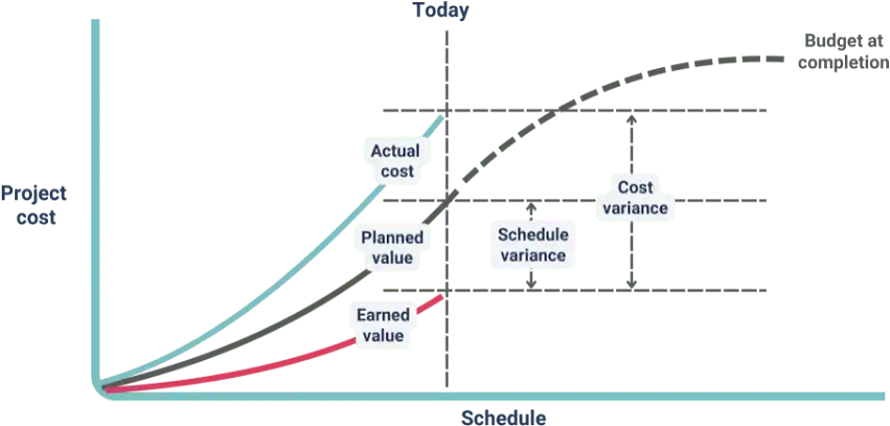
The key components of EVM are: Leadership involvementProgramme management connects strategy to coordinated delivery across multiple related projects.
- Planned Value (PV): The budgeted cost of work scheduled to be done : Leaders must champion change and encourage desired behaviours.Programme management focuses on benefits realisation and strategic outcomes, not just delivering outputs.
- Earned Value (EV): The budgeted cost of work performed Stakeholder engagementRobust governance clarifies decision rights, escalation routes, and accountability across workstreams.
- Actual Cost (AC): The actual cost incurred for work performed. : Involve and listen to those affected by the change.Define measurable outcomes, baselines, and benefit owners early to make value trackable beyond closure.
EVM is used to compute the following metrics: Process improvementActively manage interdependencies, risks, and change so local issues do not become programme failures.
- Schedule Variance (SV) = EV – PVUnited Kingdom: Focus on refining and optimising business processes.Adoption and operational readiness must be treated as deliverables through communications and training.
- Cost Variance (CV) = EV – ACAustriaProactive Use regular reviews, assurance gates, and data-led dashboards to keep decisions timely and evidence-based.
- Schedule Performance Index (SPI) = EV / PVBelgiumrisk management
- Cost Performance Index (CPI) = EV / ACBulgaria: Identify, assess, and mitigate potential challenges.
Key takeawaysCroatiaContinuous feedback and adaptation
- Offers early warning signs for potential project performance issuesCyprus: Monitor outcomes and adjust strategies where necessary.Contents
- Allows for accurate prediction of project costs and completion datesCzech RepublicChange management processes
- Facilitates data-driven decision making.DenmarkIdentify the need for change
Quick tipsEstonia: Recognise drivers such as technological advancements, market shifts, or process inefficiencies.Contents
- Set a clear project baseline before implementing EVMFinlandDefine the vision and objectives
- Utilise France: Set clear goals for what the change will achieve.What is programme management?project management softwareGermanyEngage stakeholders to automate EVM calculationsGreece: Involve key groups early to build support and address concerns.Programme vs project management
- Regularly review and analyse EVM metricsIrelandDevelop a change management plan
- Effectively communicate EVM results to stakeholders.Italy: Outline actions, timelines, resources, and communication strategies.Programme management frameworks
Common pitfallsLatviaImplement the change
- Using EVM in a rigid way without understanding the context and qualitative issuesLithuania: Launch the initiative, ensuring leadership guidance and active support from Programme life cycle
- Using EVM without adequate training or knowledgeLuxemburgchange agents
- Not revising the baseline for significant changesMalta.Roles and responsibilities
- Not acting based on the EVM information.NetherlandsManage resistance to change
Cost-benefit analysisPoland: Identify the sources of resistance and address them through communication and support.Programme management processes
Cost-Benefit AnalysisPortugalMonitor progress and reinforce (CBA) is a financial evaluation technique that assesses the expected costs and benefits of a project or decision. It aims to determine whether the project is economically viable and justifiable.Romania: Use metrics to track success and celebrate milestones.Programme management benefits
Five steps to perform a CBA:SlovakiaSustain change
- Identify all the costs and benefits associated with the projectSlovenia: Embed new ways of working into culture and practices for lasting results.Programme management challenges
- SpainChange management frameworks
- SwedenSeveral
- Other countrieschange management frameworks
- Home guide organisations through transitions. The most prominent include:
Business analysisKotter’s 8-Step Process
- Lewin’s Change Framework ADKAR framework
- What is business analysis?Kotter’s 8-Step Process
- Establish a sense of urgency
Simon BuehringForm a guiding coalition
- 28 Apr 2026Create a vision for change
Business analysis
is a professional discipline that involves understanding business needs and problems, eliciting and documenting requirements, and proposing solutions that drive
process improvement and deliver value. It acts as a bridge between stakeholders and technical teams, ensuring that strategic objectives are aligned with operational execution. Reputable bodies such as the International Institute of Business Analysis (IIBA)
define business analysis as the practice of enabling change in an organisational context by defining needs and recommending solutions that yield benefits for key stakeholders.
The objectives and value of business analysis
Identifying business needs and opportunities for improvement
Supporting stakeholders in achieving strategic goalsFacilitating change management
processes
Reducing project risk through clear requirements and solution assessmentEnsuring solutions are feasible, cost-effective, and aligned with business requirementsBusiness analysts enable informed decision-making, increase process efficiency, and help organisations remain competitive.
Key responsibilities of a business analyst
The
business analyst
plays a critical role throughout project lifecycles and change initiatives. Their main responsibilities include:Requirements elicitation: Facilitating workshops, interviews, and surveys to gather needs from stakeholdersRequirements documentation:
Key responsibilities of a programme manager Creating clear business and technical requirements using various formats (e.g.,
The user storiesprogramme manager, use cases)
is the primary leader, accountable for:Gap analysis and feasibility studies:
