
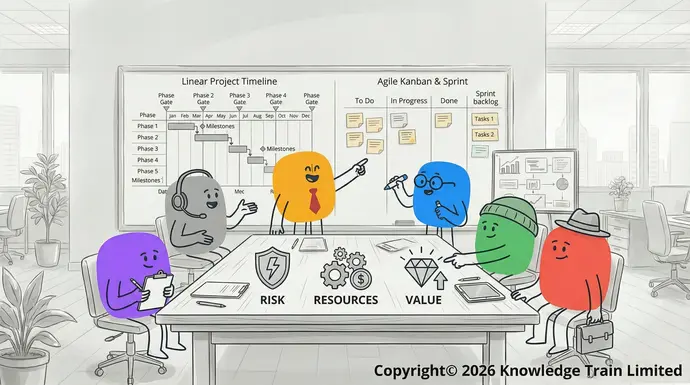
Core project management philosophies
Project management methodologies may be classified into two broad categories, based on their fundamental philosophies. These are linear and iterativeCopied!. It’s important to be aware of these core strategies when choosing the best approach for your project.Key takeaways
Linear (Waterfall) approachChoose a project approach that fits the work, the team, and the organisation.
Description and key principlesWaterfall suits stable requirements and benefits from clear phases, documentation, and predictable planning.
The Agile methods prioritise rapid, iterative delivery, close collaboration, and frequent feedback to handle change.WaterfallLean improves delivery by maximising customer value and removing waste, and Lean Six Sigma adds data-driven quality control. strategy is a linear approach where a project is broken down into distinct phases, and each phase is completed before progressing to the next. Core tenets of this approach include detailed upfront planning, comprehensive documentation at each phase, rigorous change control processes, and a strong emphasis on following the planned path.Hybrid approaches like Scrumban blend structure and flow to cope with shifting priorities and unexpected work.
Advantages and disadvantagesMethod selection should reflect project complexity, stakeholder involvement, risk, and organisational culture, and be reviewed at key milestones.
Advantages:
- Clear structure and defined milestones
- Well-defined deliverables
- Easier costs and timelines estimation.Contents
Disadvantages:
- Limited flexibility to accommodate changes
- Late identification of issues or misalignmentsContents
- Potentially longer development cycles.
Iterative (Agile) approachIntroduction
Description and key principles
AgileCore project management philosophies methodologies, on the other hand, emphasise flexibility, collaboration, and the rapid delivery of working products. Core tenets of Agile approaches include iterative development cycles (known as sprints), continuous feedback and adaptation, close collaboration with stakeholders, and a focus on delivering value early and frequently.
Advantages and disadvantagesTraditional project management methodologies
Advantages:
- Adaptability to changing requirementsAgile project management methodologies
- Early and frequent delivery of usable products
- Increased stakeholder satisfactionLean project management
- Quicker identification and resolution of issues.
Disadvantages:Hybrid and adaptive methodologies
- Risk of scope creep
- Challenges in estimating overall project timelinesChoosing the right methodology
- Requires highly skilled and self-motivated team members.
It’s worth noting that choosing between linear and iterative strategies depends on several factors, such as project complexity, stakeholder involvement, and the team’s capabilities. Additionally, some Conclusionprojects may benefit from a hybrid approach that combines elements of both strategies to leverage their respective strengths.FAQs
Traditional project management methodologiesHybrid and adaptive frameworks.
In this article, we will dive deep into several traditional We will review the strengths and weaknesses of each project management method, enabling you to select the most appropriate one for your next endeavor. Gain a better understanding of these methods, and it will be easier for you to lead your team to victory.project management<span style="display: inline-block; width: 0px; overflow: hidden; line-height: 0;" data-mce-type="bookmark" class="mce_SELRES_start"> methodologies. These have been in use for years, and if you are new to the field or are simply curious to learn more, read on!
Non-utilised talentThis prioritisation technique ensures that the focus remains on essential deliverables within time and resource constraints.
- combines
- Cycle buildLean principles
- Client checkpoint with Six Sigma’s data-driven approach to quality improvement. The goal is to reduce waste and variation in processes.
- Post-cycle review.DMAIC process
These stages promote iterative development and frequent stakeholder involvement.Lean Six Sigma projects use a process called DMAIC, which stands for Define, Measure, Analyse, Improve, and Control:
Hybrid and adaptive methodologies provide tailored solutions for complex and dynamic projects. By combining elements from various approaches, teams can create flexible frameworks that address specific project needs and organisational cultures.Define:
Choosing the right project management methodology Identify the problem and project goals
Factors to considerMeasure:
- Project complexity and size Collect data on the current process: Larger, complex projects may benefit from a more structured approach like Analyse:waterfall Identify root causes of problems or Improve:PRINCE2 Implement and verify solutions.Control:
- Team size and expertise Maintain the improved process.: Smaller, highly skilled teams may thrive using This structured approach allows teams to systematically improve processes and reduce variability.ALean project management provides a powerful framework for optimising gile methodsproject delivery.. By focusing on creating value and eliminating waste, teams can achieve better results with fewer resources. When combined with
- Industry standards and requirementsSix Sigma principles: Some industries have established preferences or regulations for specific methodologies.,
- Stakeholder involvementLean: Iterative methods like Scrum can work well when stakeholder involvement is high. offers a comprehensive toolkit for continuous improvement in
- Risk tolerance and adaptabilityproject management practices: Adaptive methodologies are more appropriate when the project requirements are uncertain or evolving..
Importance of organisational culture fitHybrid and adaptive methodologies
The methodology you choose should align with your organisation’s culture, values, and working style. Mismatch can result in resistance and decreased effectiveness.As the field of project management continues to evolve, hybrid and adaptive methodologies have emerged to meet the demands of complex and dynamic project environments. These approaches combine elements from various project management frameworks to create flexible and tailored solutions.
Remember, there is no one-size-fits-all methodology. Consider your project’s unique requirements and be flexible enough to adapt your approach as the project evolves.Scrumban (Scrum + Kanban)
Conclusionprioritising requirements
Recap of key methodologies, which includes:
We’ve covered various Must haveproject management methodologiesShould have, including traditional Could havewaterfallWon’t have this time., This prioritisation technique ensures that the focus remains on essential deliverables within time and resource constraints.PRINCE2Adaptive Project Framework (APF), and Flexibility in uncertain environmentsAAPFgile methodologies is designed to handle projects with high levels of uncertainty. It allows for continuous adaptation and adjustment as new information becomes available. like Key components of APFScrumAPF consists of five stages: and Kanban. We also touched on hybrid approaches like Scrumban that combine elements of different methodologies.Project scope
Importance of continuous learning and adaptationCycle plan
Project management is an ever-evolving field. To be successful, Cycle buildproject managersClient checkpoint must stay updated on new methodologies, tools, and industry best practices. The ability to adapt your approach based on the specific needs of your projects and teams is crucial.Post-cycle review.
It’s important to emphasise that no methodology is perfect for every situation. The key to success lies in understanding different methodologies and choosing the most appropriate one for each unique project.These stages promote iterative development and frequent stakeholder involvement.
FAQsHybrid and adaptive methodologies provide tailored solutions for complex and dynamic projects. By combining elements from various approaches, teams can create flexible frameworks that address specific project needs and organisational cultures.
What is the difference between Agile and Waterfall methodologies?Choosing the right project management methodology
Agile methodologies are iterative and flexible, while Waterfall is linear and sequential.Factors to consider
How do I know which project management methodology is best for my team?Project complexity and size
Consider factors like project complexity, team size, industry standards, and organisational culture.: Larger, complex projects may benefit from a more structured approach like
Can I combine different project management methodologies?waterfall
Yes, hybrid methodologies like Scrumban incorporate elements from multiple methodologies. or
What are the key benefits of using an Agile methodology?PRINCE2
Agile methodologies offer benefits such as flexibility, faster delivery, and improved stakeholder satisfaction..
How does Lean project management differ from traditional approaches?Team size and expertise
Lean focuses on eliminating waste and maximising value, while traditional methods emphasise detailed planning and control.: Smaller, highly skilled teams may thrive using
What role does software play in implementing project management methodologies?A
Software tools facilitate methodology implementation by enabling communication, task tracking, and resource management.
How often should I reassess my chosen project management methodology?
It’s a good practice to regularly evaluate the effectiveness of your methodology, especially during project milestones or when encountering new challenges.gile methods
Remember, the best project management methodology is the one that suits your project’s specific needs and your team. Don’t be afraid to adapt and refine your approach as necessary..
InfographicIndustry standards and requirements
