Project management methods: a guide to modern approachesSpain

- Hybrid approaches like Scrumban blend structure and flow to cope with shifting priorities and unexpected work.
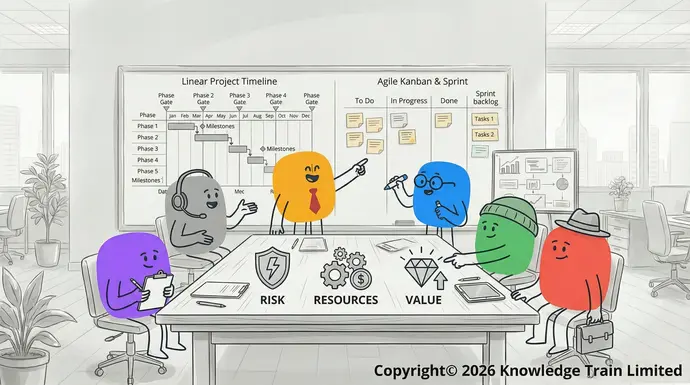
- Method selection should reflect project complexity, stakeholder involvement, risk, and organisational culture, and be reviewed at key milestones.
Introduction
Running a modern business requires that certain tasks are coordinated in a way that increases chances of getting results. Project managementContents methodology is a set of rules and processes that are implemented by teams in order to plan, develop, and deliver project outcomes. In this way, business people can make the most of the project to achieve business goals.
Choosing the right one is important for several reasons: the methodology should be applicable to your teams’ strong suits and their project needs it should also be helpful in communication and collaboration it needs to improve the process of resource allocation and risk managementContents and, finally, it is likely to increase the chances of project success.
This comprehensive guide will look at the most relevant PMO fact sheetproject management methodologies , including:PMO definition
- Traditional approaches like waterfallPMO functions and roles
- Agile methodologies such as Types of PMOsScrum and KanbanPMO best practices
- Lean project management principles
- Hybrid and adaptive frameworks.PMO certification & standards
We will review the strengths and weaknesses of each project management method, enabling you to select the most appropriate one for your next endeavor. Gain a better understanding of these methods, and it will be easier for you to lead your team to victory.
- Directly manages projects and assigns Project Managers. Exercises high control and is responsible for
- Detailed documentation at each stage.project delivery
Cons: and outcomes.
- Limited flexibility for changesOrganisations may adapt their PMO model based on size, maturity, and strategic needs. A PMO may evolve from supportive to controlling or directive as project management capability matures.
- Late identification of issuesPMO best practices
- Potentially lengthy development cycles.Implementing a PMO involves defining objectives, selecting the right PMO type, securing stakeholder support, setting up governance structures, and continuously reviewing processes. Best practices for successful PMO implementation include:
Critical Path Method (CPM)Aligning PMO objectives with organisational strategy.
Key concepts and implementationEngaging stakeholders and securing executive sponsorship.
CPMAdopting recognised standards and methodologies (such as those from is a scheduling technique for project activities. It involves identifying all necessary tasks, task dependencies, calculating the longest path of planned activities, and determining the minimum project duration.PMI
Suitable projects and industries).
CPM is commonly used in construction projects, product development, research initiatives, and event planning.Investing in PMO tools for tracking, reporting, and collaboration.
PRINCE2 (PRojects IN Controlled Environments)Developing competency through PMO certification and staff training.
Framework overviewEmphasising process improvement and
PRINCE2change management is a process-based method that emphasises organisation and control. Its key features include division into manageable stages, defined roles and responsibilities, product-based planning approach and a strong focus on business justification..
When to use PRINCE2PMO certification & standards
PRINCE2 is well-suited for large-scale government projects, IT implementations, business transformations and Professional recognition is available for PMO practitioners through PMO certification programmes. The Project Management Institute (PMI), a leading standards organisation, offers certifications such as the projectsProject Management Professional with a need for strict governance. (PMP) and Certified Associate in Project Management (CAPM). PMO-specific certifications such as the PMO-CP (PMO Certified Practitioner) are also available.
Project Management Body of Knowledge (PMBOK)Certifications
Core principles and processes validate competency in project, programme, and portfolio management, enhancing PMO effectiveness and credibility. Learn more about certification options on
PMBOKPMI.org is a comprehensive guide that offers best practices across five process groups:.
- InitiatingPMO in practice
- PlanningCorporate IT PMO:
- Executing A global retailer established an IT PMO to standardise project methodologies across numerous business units, leading to improved delivery times and enhanced resource management.
- Monitoring and ControllingGovernment Programme Office:
- Closing. A government department implemented a controlling PMO to oversee national infrastructure
It also encompasses ten knowledge areas, including scope, time, cost, and programmesquality management. This supported greater transparency, better risk management, and alignment with public policy objectives..Financial services PMO:
Applications in various industries A bank set up a directive PMO to directly manage regulatory compliance
PMBOK principles can be applied in information technology, healthcare, finance and banking, engineering and construction, and education industries, among others.projects
These traditional methodologies provide reliable frameworks for managing projects. They work best in situations where requirements are well-defined, and stability is preferred over flexibility. However, they can face challenges in rapidly changing environments or when continuous stakeholder feedback is essential., centralising project oversight for timely delivery.
Ultimately, the choice of methodology depends on the specific needs of your PMO vs. project managerprojectWhile a , the capabilities of your team, and the organisational culture you operate within. In some cases, a combination of different approaches may be the most effective solution.Project Manager
Agile project management methodologies is responsible for the planning, execution, and closure of individual projects, the PMO is a broader organisational entity. The PMO sets standards, provides resources and oversight, and may manage a portfolio of projects. In directive PMOs, the Project Manager may report directly to the PMO itself.
Agile methodologies FAQsemphasise flexibility, collaboration, and rapid delivery of value. These approaches have gained significant popularity, particularly in software development and other dynamic industries.Can a PMO be one person?
ScrumYes, a
Roles, events, and artifactsProject Management Office (PMO)
Scrum can consist of just one person. In smaller organisations or teams, a single PMO professional may handle essential functions such as tracking project performance, standardising documentation, and supporting is a lightweight framework that helps teams work together effectively. It consists of:Project Managers
| Roles. | EventsAlthough capacity is limited, even a one-person PMO can significantly improve project consistency and governance by establishing clear standards and frameworks. | ArtifactHow does a PMO add value? |
| Product OwnerA | Sprint PlanningPMO | Product Backlog adds value by improving project success rates, optimising resource allocation, and ensuring projects align with organisational objectives. It also enhances communication across teams, enforces compliance with methodologies, and provides transparency on project performance through dashboards and reporting. |
| Scrum MasterUltimately, a well-functioning PMO ensures that project investments deliver measurable business benefits. | Daily ScrumIs PMO a stressful job? | Sprint BacklogWhether a |
| Development TeamPMO role | Sprint Review is stressful depends on the organisation’s structure and culture. When supported by leadership and empowered to influence project decisions, PMO professionals typically thrive. However, if the PMO is under-resourced or lacks authority, managing multiple priorities without visible impact can create pressure and stress. | Review IncrementStrong governance, clear goals, and management support help minimise stress and enable PMO teams to work effectively. |
| Sprint RetrospectiveWhat are the 4 P’s of PMO? |
Sprint planning and executionThe 4 P’s of a
Scrum operates in time-boxed iterations known as PMOSprints are , typically ranging from 1 to 4 weeks. During each Sprint, the team commits to delivering a set of features.People, Product, Process,
Benefits and challenges and
Benefits:Project
- Improved product quality:
- Increased stakeholder satisfactionPeople:
- Better team collaboration. Define clear roles and responsibilities for the
Challenges:project
- Requires cultural shift team.
- Potential for scope creepProduct:
- Difficulty in estimating long-term projects. Ensure the right deliverables reach the right stakeholders.
KanbanProcess:
Visualising workflow with Kanban boards Implement consistent procedures to manage and control delivery.
KanbanProject: uses visual boards to represent work items as they move through different stages of completion. Oversee the successful execution of initiatives aligned with strategy.
Principles of KanbanWhat are the different types of PMOs?
Key principles include:The three main types of
- Visualise the workflowPMOs
- Limit Work In Progress (WIP) are:
- Manage flowSupportive PMO:
- Make process policies explicit Provides templates, best practices, and guidance to Project Managers.
- Implement feedback loops.Controlling PMO:
Industries benefiting from Kanban Enforces standards, methodologies, and reporting requirements.
Kanban is versatile and can be applied in various sectors, including software development, marketing and design, human resources, and manufacturing.Directive PMO:
Extreme Programming (XP) Takes direct ownership of
Key practices and valuesproject delivery
XP and management. emphasises technical excellence and customer satisfaction. Core practices include pair programming, test-driven development, continuous integration, and small, frequent releases.Each type varies in authority and responsibility, depending on organisational needs and project complexity.
Best scenarios for XP implementationWhat does a PMO do?
XP is particularly effective for projects with changing requirements, small to medium-sized development teams, and environments that value close collaboration with customers.A
CrystalPMO
Family of methodologies establishes and maintains project management standards across the organisation. It supports
CrystalProject Managers is a family of , ensures project governance, and aligns initiatives with business goals. The PMO often oversees project portfolios to prioritise strategic investments and optimise resource use.Agile methodologiesWhat does PMO stand for?
> and Lean project management<
strong>ProjectOrigins and principles of lean
>:Lean> is a philosophy that originated in the manufacturing industry, particularly in the production system of Toyota. The primary principle of Lean is to maximise customer value while minimising waste. Lean thinking has been adapted to other industries, including <ul>project management<li>People: Define clear roles and responsibilities for the project team.
- Ensure the right deliverables reach the right stakeholders.
Process: - Implement consistent procedures to manage and control delivery.
Project: - Oversee the successful execution of initiatives aligned with strategy.
- "}},{"@type":"Question","name":"What are the different types of PMOs?","acceptedAnswer":{"@type":"Answer","text":"
The three main types of PMOs are:
Provides templates, best practices, and guidance to Project Managers.
strong>Directive PMO:DMAIC process
> Takes direct ownership of project delivery and management.Lean Six Sigma projects use a process called DMAIC, which stands for Define, Measure, Analyse, Improve, and Control:
- >Define:> Identify the problem and project goals<
- p>Each type varies in authority and responsibility, depending on organisational needs and project complexity.Measure:>"}},{"@type":"Question","name":"What does a PMO do?","acceptedAnswer":{"@type":"Answer","text":" Collect data on the current process<
- p>A PMO establishes and maintains project management standards across the organisation. It supports Project Managers, ensures project governance, and aligns initiatives with business goals. The PMO often oversees project portfolios to prioritise strategic investments and optimise resource use.Analyse:>"}},{"@type":"Question","name":"What does PMO stand for?","acceptedAnswer":{"@type":"Answer","text":" Identify root causes of problems<
- p>Improve:<strong>PMO Implement and verify solutions
- > stands for Project Management Office. It is an organisational function responsible for standardising governance processes, sharing methodologies, tools, and techniques, and improving overall project success.Control:> Maintain the improved process.<
p>A PMO may vary in size—from a single individual to an enterprise-wide team—but its purpose remains the same: to improve project performance and ensure alignment with business strategy.This structured approach allows teams to systematically improve processes and reduce variability.
"}},{"@type":"Question","name":"What is the difference between a PMO and a Project Manager?","acceptedAnswer":{"@type":"Answer","text":"<p>The difference between a PMO and a Project Manager lies in scope and responsibility. A Project Manager delivers specific projects, managing budgets, timelines, and teams. The PMO, however, provides governance, guidance, and support to multiple projects, ensuring consistency and strategic alignment across the organisation.Lean project management provides a powerful framework for optimising >"}},{"@type":"Question","name":"What is the purpose of a PMO?","acceptedAnswer":{"@type":"Answer","text":"project delivery<p>The primary purpose of a PMO is to introduce structure, consistency, and strategic alignment to project management practices. By standardising processes and methodologies, a PMO helps organisations improve project success rates and realise greater value from project investments.. By focusing on creating value and eliminating waste, teams can achieve better results with fewer resources. When combined with
- Must have
- Should haveHow APM qualifications can help your career
- Could have
- Won’t have this time.Simon Buehring
This prioritisation technique ensures that the focus remains on essential deliverables within time and resource constraints.19 Feb 2026
Adaptive Project Framework (APF)
Flexibility in uncertain environmentsThe Association for Project Management (APM), a leading UK educational charity, offers qualifications that boost your career at any stage. Read on to discover how these credentials can enhance your professional journey.
APF is designed to handle projects with high levels of uncertainty. It allows for continuous adaptation and adjustment as new information becomes available.
Key components of APF
Simon BuehringHybrid and adaptive methodologies provide tailored solutions for complex and dynamic projects. By combining elements from various approaches, teams can create flexible frameworks that address specific project needs and organisational cultures.
Choosing the right project management methodology
Factors to consider19 Feb 2026
- Project complexity and size : Larger, complex projects may benefit from a more structured approach like Start your project management career with our free ebook. Learn about pathways and qualifications necessary for success in the field.waterfall or PRINCE2 .
- Team size and expertise : Smaller, highly skilled teams may thrive using A gile methodsManaging small projects.
- Industry standards and requirementsSimon Buehring: Some industries have established preferences or regulations for specific methodologies.19 Feb 2026
- Stakeholder involvement : Iterative methods like Scrum can work well when stakeholder involvement is high.Can large project management practices be scaled down? Explore the application of these practices in smaller projects by reading further.
- Risk tolerance and adaptability : Adaptive methodologies are more appropriate when the project requirements are uncertain or evolving.
Importance of organisational culture fit
The methodology you choose should align with your organisation’s culture, values, and working style. Mismatch can result in resistance and decreased effectiveness.
Remember, there is no one-size-fits-all methodology. Consider your project’s unique requirements and be flexible enough to adapt your approach as the project evolves.
Conclusion
Recap of key methodologiesGet to know the 10 key project management roles. Understand these roles and their responsibilities to create high-performing teams and deliver exceptional results.
We’ve covered various project management methodologies , including traditional waterfall , PRINCE2 , and AProject management games: Best simulations and activities for teamsgile methodologies like Simon BuehringScrum23 Apr 2026 and Kanban. We also touched on hybrid approaches like Scrumban that combine elements of different methodologies.
Importance of continuous learning and adaptationA project management game is a structured activity or simulation that helps people practise project planning and delivery decisions in a low risk setting. Teams use it in training, onboarding and team building workshops to build skills such as scope, schedule, risk and stakeholder management, often drawing on PMBOK Guide and Agile methods.
Project management is an ever-evolving field. To be successful, project managers must stay updated on new methodologies, tools, and industry best practices. The ability to adapt your approach based on the specific needs of your projects and teams is crucial.
It’s important to emphasise that no methodology is perfect for every situation. The key to success lies in understanding different methodologies and choosing the most appropriate one for each unique project.
FAQs
What is the difference between Agile and Waterfall methodologies?
Agile methodologies are iterative and flexible, while Waterfall is linear and sequential.
How do I know which project management methodology is best for my team?Project controls – your driver to project success
Consider factors like project complexity, team size, industry standards, and organisational culture.
Can I combine different project management methodologies?Knowledge Train
Yes, hybrid methodologies like Scrumban incorporate elements from multiple methodologies.19 Feb 2026
What are the key benefits of using an Agile methodology?
Agile methodologies offer benefits such as flexibility, faster delivery, and improved stakeholder satisfaction.Project controls are an essential part of project management. Find out how you can use them to measure project progress, predict outcomes and steer projects on the right course.
How does Lean project management differ from traditional approaches?
Lean focuses on eliminating waste and maximising value, while traditional methods emphasise detailed planning and control.
What role does software play in implementing project management methodologies?
Software tools facilitate methodology implementation by enabling communication, task tracking, and resource management.
How often should I reassess my chosen project management methodology?
It’s a good practice to regularly evaluate the effectiveness of your methodology, especially during project milestones or when encountering new challenges.
Remember, the best project management methodology is the one that suits your project’s specific needs and your team. Don’t be afraid to adapt and refine your approach as necessary.
InfographicPRINCE2 exam pass rates
