Save preferences

Manage {vendor_count} vendors
Read more about these purposes
- Accept
- Deny
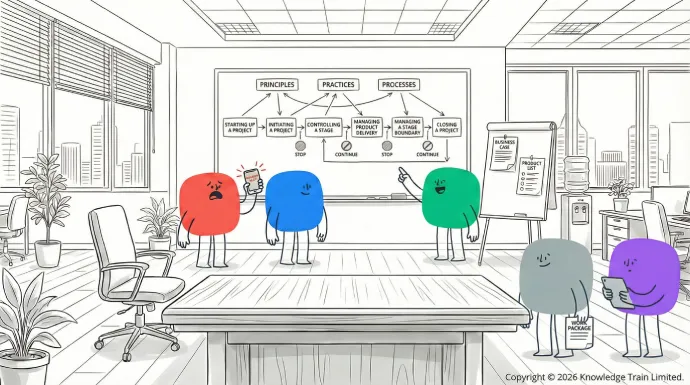
Every project is different, therefore the methodology must be applied differently and sensibly in all situations.PMI
People®
Projects involve PMI-PBA peopleSelf-paced course to prepare you for the exam (exam not included)., both direct participants and those impacted by a project. Recognizing their needs, skills, motivations, and the relationships among them is essential for setting up and managing the project effectively. The methodology describes how the people impacted by the project’s outcomes, must ‘buy in’ to the proposed changes, otherwise the changes will be unsuccessful, and the project will be a wasted investment.Business Analysis Learning Library (BALL)™
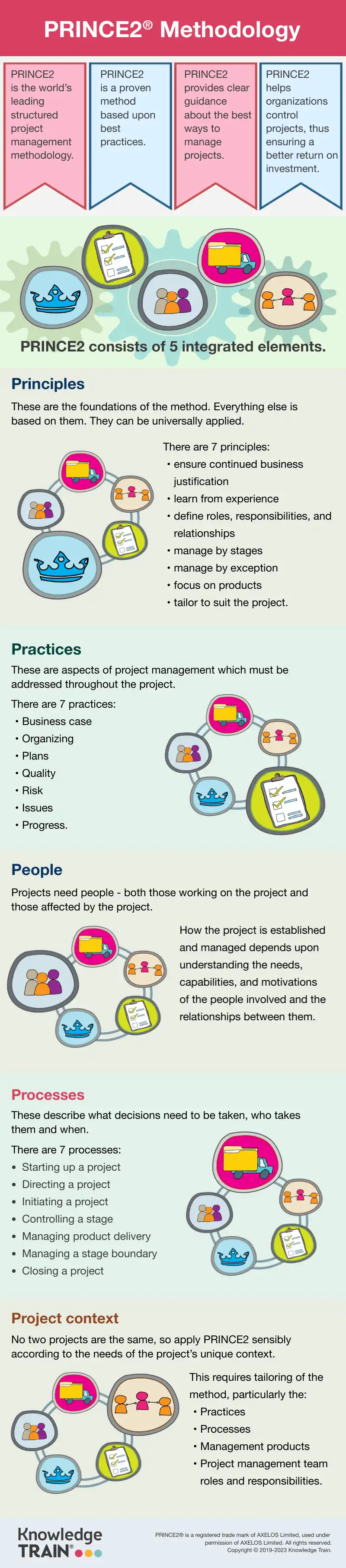
PracticesCHANGE MANAGEMENT
The APMG Change ManagementpracticesFoundation within the methodology are aspects of project management that are addressed throughout a project. They encompass areas like time, cost, risk, issues, quality, sustainability, and scope, common in other project management standards. These practices offer a decision-making framework, ensuring the project’s viability, desirability, and achievability from start to finish.Learn the fundamentals of enterprise change management.
For anyone familiar with the Practitioner Project Management Body of KnowledgeIncludes Foundation & Practitioner combined option. (PMBOK)PROGRAMME MANAGEMENT®MSP, the PRINCE2 practices are very similar to the knowledge areas of the PMBOK®®[2]Foundation .Learn the fundamentals of programme management.
The 7 practices in the PRINCE2 methodology are described below.Practitioner
Business caseIncludes Foundation & Practitioner combined option.
This practice focuses on applying the ‘ensure business justification’ principle. It describes documenting the project’s rationale, initially in an outline business case, which is detailed further during the first management stage. The INFORMATION TECHNOLOGY (IT)business caseITIL includes a cost-benefit analysis comparing project benefits against costs, timescales, and risks. It’s updated at each management stage’s end to guide the decision to continue or stop the project.®
OrganizingFoundation
This practice details the various project management team roles. Within Learn the fundamentals of ITIL service management.PRINCE2Strategist DPI , the project board is the top decision-making body, consisting of the project executive, senior user, and senior supplier.3-day ITIL Strategist: Direct, Plan & Improve (DPI) course.
It tasks the Specialist: DSV project manager3-day ITIL Specialist: Drive Stakeholder Value (DSV) course. with the day-to-day project management, who operates within set tolerances. The project manager, in turn, assigns work packages for delivery by a team manager.Specialist: CDS
The board operates on a ‘manage by exception’ principle, eliminating regular meetings with the project manager by receiving regular reports. Project assurance monitors project performance and advises both the project board and project manager.3-day ITIL Specialist: Create, Deliver and Support (CDS) course.
PlansIT Learning Library (ITLL)™
PRINCE2 recommends distinct plans for each level of the project management team. The project board uses a high-level BUSINESS LEARNING LIBRARY (BLL)™project planAgile Learning Library (ALL)™ to oversee project progress stage by stage. The project manager relies on a more detailed stage plan for in-stage progress, while team managers need detailed team plans to monitor their work package. Each plan is approved by the next highest management level.Business Analysis Learning Library (BALL)™
For planning, PRINCE2 suggests using product-based planning, emphasizing the ‘focus on products’ principles to identify products before using activity-based tools like Gantt charts.Compliance Learning Library (CLL)™
Plans outline the “what, when, who, and how much?” Once approved, plans are set as baselines and are subject to change control.IT Learning Library (ITLL)™