What is a Project Management Office (PMO)?

Key takeaways
A PMO improves delivery by combining governance, support, and portfolio visibility.
- A PMO sets standards and decision controls so projects stay aligned to business strategy and risk is managed early.Copied!
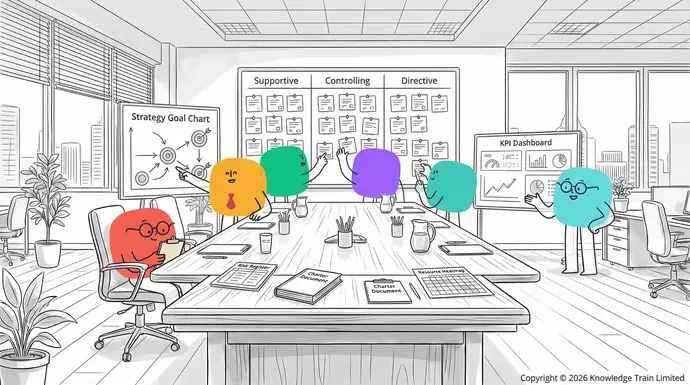
- Supportive, controlling, and directive PMOs differ mainly by authority, from guidance to direct ownership of delivery outcomes.Key takeaways
- Useful PMOs prioritise the portfolio using transparent criteria, balancing value, risk, and capacity constraints.PRINCE2 6th edition was updated to make the method more practical for modern projects.
- Dashboards work best when paired with short narrative context that explains variance and prompts clear decisions.AXELOS updated PRINCE2 after consultation to improve real world usability and relevance.
- Start with a clear charter and quick wins, then scale tools, training, and templates through continuous improvement.The 2017 manual is more readable, with clearer links between principles and themes and more practical guidance.
PMO definition, as well as practical examples of how to apply PRINCE2. Throughout the manual, there are also numerous tips, hints and definitions to enhance your understanding of the method.
A Project Management Office (PMO) is an organisational structure that defines and maintains project management standards, supports project teams, and ensures alignment with business objectives. PMOs play a crucial role in enabling successful project, programme and Finally, to keep up to date with modern project management trends, the manual also refers a lot to portfolio managementagile methods by offering governance, methodology, resource management and oversight. and there is guidance on how agile and PRINCE2 can be used together.
The concept of a PMO has evolved as organisations recognise the need for a dedicated group to enhance consistency, optimise resources, and improve Enhance your skills with our expert-led coursesproject delivery outcomes. PMOs may operate at the project, programme, or portfolio level and are commonly found in sectors such as IT , government, construction, and finance.Instructor-led
PMO functions and rolesPRINCE2 Practitioner (with Foundation) course
PMOs perform a wide range of functions, adapting their roles according to organisational needs. The main functions and roles typically include:
- Governance:£1,899 +vat Establishing frameworks, processes and controls for effective decision-making and risk managementSee all dates across the project lifecycle.
- Standardisation: Implementing and maintaining project management methodologiesSelf-paced, best practices, and standards.PRINCE2 Practitioner (with Foundation) self-paced online
- Support: Providing guidance, templates, tools, training and mentoring for Project Managers and teams.£1,399 +vat
- Methodology Enforcement: Ensuring consistent application of project management approaches for delivery excellence.Instructor-led
- Resource Management:PRINCE2 Foundation course Coordinating allocation and utilisation of project personnel, tools, and budgets.
- Portfolio Management£1,299 +vat: Overseeing and prioritising See all datesprojectsHow have the exams changed? to align with strategic objectives and maximise value.Both the
- Process Improvement:PRINCE2 Foundation Reviewing and refining and project deliveryPRINCE2 Practitioner processes to ensure continuous improvement. exams have been changed to reflect the changes to the methodology. The Practitioner exam question style has also changed to be more straightforward, something considered long overdue by many in the PRINCE2 community.
- Stakeholder Engagement:The PRINCE2 Foundation exam now features questions on tailoring and there are also more questions regarding the Principles. The number of questions has also been reduced from 75 to 60 and the pass mark has increased from 50% to 55%. However, it is still a multiple-choice exam for 1 hour. Acting as an interface between project teams, senior management, and other stakeholders.The PRINCE2 Practitioner exam is still a 2.5-hour multiple-choice exam. However, there are now questions from all parts of the PRINCE2 method, especially the Principles. The ‘assertion-reason’ style questions have now been removed and the number of questions has been reduced from 80 to 68. The pass mark has also increased from 50% to 55%.
- Change ManagementPerhaps the most major change, however, is that the PRINCE2 Re-registration exam no longer exists. This is due to the introduction of AXELOS Membership and the Continuing Professional Development (CPD) scheme. Please read the next question for further details.:How do I maintain my PRINCE2 status? Supporting change initiatives and minimising resistance through structured strategies.Since the 2017 update, you now have two options for renewing your status after expiry. You can either:
Types of PMOsa) Simply take a
PMOs are not one-size-fits-all. Their structure, authority and level of influence can vary significantly. The three primary PMO types are:PRINCE2 Practitioner
- Supportive PMO: exam again after 3 years. Provides consultative services, best practices, templates, and guidance. Has low control and operates as a resource for Project Managers.b) Join AXELOS Membership and keep your status up to date by accruing 20 CPD points per year over a 3-year period. CPD (Continuing Professional Development) points are gained by logging project management related activities in your Membership account. By gaining 20 CPD points per year, you will not have to take the Practitioner exam again.
- Controlling PMO:Upon successfully passing a Requires compliance with PRINCE2 examproject management, AXELOS will contact you regarding the membership scheme. It is up to you whether you sign up or not, but we recommend that you do. Alongside access to the CPD recording tool, you will also gain access to a host of useful resources. standards and methodologies. Has moderate control—enforces processes and reviews adherence.Subscribe to our exclusive offers and promotions
- Directive PMO: Directly manages projects and assigns Project Managers. Exercises high control and is responsible for Subscribe nowproject delivery and outcomes.
Organisations may adapt their PMO model based on size, maturity, and strategic needs. A PMO may evolve from supportive to controlling or directive as project management capability matures.
PMO best practices
Implementing a PMO involves defining objectives, selecting the right PMO type, securing stakeholder support, setting up governance structures, and continuously reviewing processes. Best practices for successful PMO implementation include:
- Aligning PMO objectives with organisational strategy.
- Engaging stakeholders and securing executive sponsorship.
- Adopting recognised standards and methodologies (such as those from PMI).
- Investing in PMO tools for tracking, reporting, and collaboration.
- Developing competency through PMO certification and staff training.
- Emphasising process improvement and {"@context":"https://schema.org","@type":"ImageObject","contentUrl":"https://www.knowledgetrain.co.uk/training-courses/prince2-2017-what-you-need-to-know-890x501-1.webp","description":"PRINCE2 2017: What You Need To Know","license":"https://www.knowledgetrain.co.uk/license","acquireLicensePage":"https://www.knowledgetrain.co.uk/license","creditText":"Knowledge Train","uploadDate":"2023-05-18T09:46:53.000Z","copyrightNotice":"© 2023 Knowledge Train Limited. All rights reserved.","creator":{"@type":"Organization","name":"Knowledge Train","url":"https://www.knowledgetrain.co.uk"}}change management .Related articles
PMO certification & standards
Professional recognition is available for PMO practitioners through PMO certification programmes. The Project Management Institute (PMI), a leading standards organisation, offers certifications such as the Project Management Professional (PMP) and Certified Associate in Project Management (CAPM). PMO-specific certifications such as the PMO-CP (PMO Certified Practitioner) are also available.
Certifications validate competency in project, programme, and portfolio management, enhancing PMO effectiveness and credibility. Learn more about certification options on PMI.org .
PMO in practice
- Corporate IT PMO: A global retailer established an IT PMO to standardise project methodologies across numerous business units, leading to improved delivery times and enhanced resource management.
- Government Programme Office: A government department implemented a controlling PMO to oversee national infrastructure programmesPRINCE2 training course reviews. This supported greater transparency, better risk management, and alignment with public policy objectives.
- Financial services PMO:Simon Buehring A bank set up a directive PMO to directly manage regulatory compliance 19 Feb 2026
lies in scope and responsibility. A Project Manager delivers specific projectsAccess a comprehensive PRINCE2 glossary of terms to support your understanding and exam preparation. Essential for students and practitioners alike., managing budgets, timelines, and teams. The PMO, however, provides governance, guidance, and support to multiple projects, ensuring consistency and strategic alignment across the organisation.
What is the purpose of a PMO?
The primary purpose of a PMO is to introduce structure, consistency, and strategic alignment to project management practices. By standardising processes and methodologies, a PMO helps organisations improve project success rates and realise greater value from project investments.
For further reading
For official standards and frameworks, visit PMI.orgPRINCE2 Foundation exam mock questions for comprehensive PMO and project management guidance.