What is a Project Management Office (PMO)?

Key takeaways
A PMO improves delivery by combining governance, support, and portfolio visibility.Choosing the right methodology
PMO definitionEarly and frequent delivery of usable products
A Project Management Office (PMO) is an organisational structure that defines and maintains project management standards, supports project teams, and ensures alignment with business objectives. PMOs play a crucial role in enabling successful project, programme and Increased stakeholder satisfactionportfolio managementQuicker identification and resolution of issues. by offering governance, methodology, resource management and oversight.Disadvantages:
The concept of a PMO has evolved as organisations recognise the need for a dedicated group to enhance consistency, optimise resources, and improve Risk of scope creepproject deliveryChallenges in estimating overall project timelines outcomes. PMOs may operate at the project, programme, or portfolio level and are commonly found in sectors such as Requires highly skilled and self-motivated team members.ITIt’s worth noting that choosing between linear and iterative strategies depends on several factors, such as project complexity, stakeholder involvement, and the team’s capabilities. Additionally, some , government, construction, and finance.projects
PMO functions and roles may benefit from a hybrid approach that combines elements of both strategies to leverage their respective strengths.
PMOs perform a wide range of functions, adapting their roles according to organisational needs. The main functions and roles typically include:Enhance your skills with our expert-led courses
- Governance: Establishing frameworks, processes and controls for effective decision-making and risk management across the project lifecycle.Instructor-led
- Standardisation:Introduction to Project Management course Implementing and maintaining project management methodologies£499 +vat, best practices, and standards.
- Support:See all dates Providing guidance, templates, tools, training and mentoring for Project Managers and teams.
- Methodology Enforcement: Ensuring consistent application of project management approachesInstructor-led for delivery excellence.Project Management Essentials
- Resource Management: Coordinating allocation and utilisation of project personnel, tools, and budgets.£999 +vat
- Portfolio Management :See all dates Overseeing and prioritising Traditional project management methodologiesprojectsIn this article, we will dive deep into several traditional to align with strategic objectives and maximise value.project management
- Process Improvement: methodologies. These have been in use for years, and if you are new to the field or are simply curious to learn more, read on! Reviewing and refining Waterfallproject deliveryProcess and stages processes to ensure continuous improvement.Waterfall
- Stakeholder Engagement: methodology follows a linear and sequential approach consisting of the following stages: Acting as an interface between project teams, senior management, and other stakeholders.Requirements gathering
- Change ManagementDesign:Implementation Supporting change initiatives and minimising resistance through structured strategies.Testing
Types of PMOsDeployment
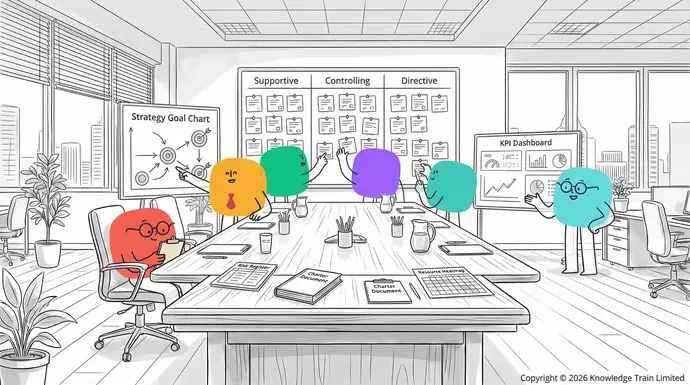
PMOs are not one-size-fits-all. Their structure, authority and level of influence can vary significantly. The three primary PMO types are:Maintenance.
- Supportive PMO:Each stage must be completed before proceeding to the next, with an emphasis on documentation and clear milestones. Provides consultative services, best practices, templates, and guidance. Has low control and operates as a resource for Project Managers.Best use cases
- Controlling PMO:Construction projects, manufacturing processes, large-scale infrastructure projects and projects with well-defined and stable requirements are particularly suitable for Waterfall. Requires compliance with Pros and consproject managementPros: standards and methodologies. Has moderate control—enforces processes and reviews adherence.Clear structure and timeline
- Directive PMO:Easy to understand and manage
, each named after a precious gemstone. Popular varPMO stands for Project Management Officeiants include:. It is an organisational function responsible for standardising governance processes, sharing methodologies, Crystal CleartoolsCrystal Yellow, and Crystal OrangetechniquesCrystal Red., and improving overall project success.Each variant is designed for different team sizes and project criticality.
A PMO may vary in size—from a single individual to an enterprise-wide team—but its purpose remains the same: to improve project performance and ensure alignment with Core principles and adaptabilitybusiness strategyCrystal methodologies share common principles, such as frequent delivery, reflective improvement, osmotic communication, personal safety and focus..The framework is highly adaptable, allowing teams to customise their approach based on project needs.
What is the difference between a PMO and a Project Manager?Feature Driven Development (FDD)
The difference between a Five processes of FDDPMOFDD consists of five main processes: and a Develop an overall modelProject ManagerBuild a features list lies in scope and responsibility. A Project Manager delivers specific Plan by featureprojectsDesign by feature, managing budgets, timelines, and teams. The PMO, however, provides governance, guidance, and support to multiple projects, ensuring consistency and strategic alignment across the organisation.Build by feature
What is the purpose of a PMO?Advantages for client-focused projects
The primary purpose of a FDD offers several benefits for client-centric projects:PMORegular, tangible progress is to introduce structure, consistency, and strategic alignment to project management practices. By standardising processes and methodologies, a PMO helps organisations improve project success rates and realise greater value from project investments.Early detection of errors
For further readingAccurate status reporting
For official standards and frameworks, visit Scalability for larger projects.PMI.orgAgile methodologies offer numerous advantages, including increased flexibility, faster delivery of value, and improved stakeholder satisfaction. However, they also present challenges, such as the need for cultural change and potential difficulties in long-term planning. for comprehensive PMO and project management guidance.When considering an Agile approach, evaluate your team’s skills, project requirements, and organisational culture. Some projects may benefit from combining elements of different Agile methodologies or even blending Agile with traditional approaches.