
Key takeaways
A PMO improves delivery by combining governance, support, and portfolio visibility.
- A PMO sets standards and decision controls so projects stay aligned to business strategy and risk is managed early.
- Supportive, controlling, and directive PMOs differ mainly by authority, from guidance to direct ownership of delivery outcomes.
- Useful PMOs prioritise the portfolio using transparent criteria, balancing value, risk, and capacity constraints.
- Dashboards work best when paired with short narrative context that explains variance and prompts clear decisions.Copied!
- Start with a clear charter and quick wins, then scale tools, training, and templates through continuous improvement.Key takeaways
- managing a stage boundary Acting as an interface between project teams, senior management, and other stakeholders. prepares the next stage plan for project board approval via the
- Change Managementdirecting a project: process. The project ends with Supporting change initiatives and minimising resistance through structured strategies.closing a project
Types of PMOs.
PMOs are not one-size-fits-all. Their structure, authority and level of influence can vary significantly. The three primary PMO types are:For a review of the latest edition of the PRINCE2 official guidance manual, read
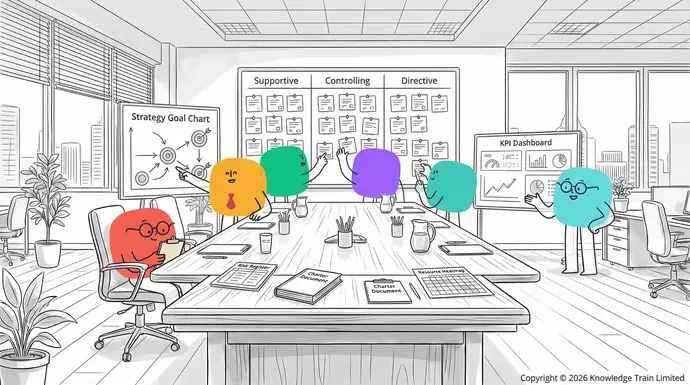
- Supportive PMO:PRINCE2 7th Edition – What’s different? Provides consultative services, best practices, templates, and guidance. Has low control and operates as a resource for Project Managers..
- Controlling PMO:Key control ideas used throughout Requires compliance with Business case and business justification:project management the project remains viable, desirable and achievable. standards and methodologies. Has moderate control—enforces processes and reviews adherence.Management by stages:
- Directive PMO: work is authorised and reviewed stage by stage, using a stage plan. Directly manages projects and assigns Project Managers. Exercises high control and is responsible for Management by exception:project delivery tolerances are set; exceptions are escalated to the project board. and outcomes.Defined management products:
Organisations may adapt their PMO model based on size, maturity, and strategic needs. A PMO may evolve from supportive to controlling or directive as project management capability matures. standard reports and registers enable consistent control.
PMO best practicesPRINCE2 principles
Implementing a PMO involves defining objectives, selecting the right PMO type, securing stakeholder support, setting up governance structures, and continuously reviewing processes. Best practices for successful PMO implementation include:The
- Aligning PMO objectives with organisational strategy.7 principles
- Engaging stakeholders and securing executive sponsorship. are mandatory ideas that must be present for a project to be considered PRINCE2 based. They guide decisions across governance, planning, controls and learning.
- Adopting recognised standards and methodologies (such as those from Continued business justification:PMI keep the business case valid and up to date.).Learn from experience:
- Investing in PMO tools for tracking, reporting, and collaboration. capture lessons and apply them throughout the project.
- Developing competency through PMO certification and staff training.Defined roles and responsibilities:
- Emphasising process improvement and change management ensure clear accountability across the project board and delivery roles..Manage by stages:
PMO certification & standards plan and authorise work in manageable chunks using a stage plan.
Professional recognition is available for PMO practitioners through PMO certification programmes. The Project Management Institute (PMI), a leading standards organisation, offers certifications such as the Manage by exception:Project Management Professional set tolerances and escalate only when they are forecast to be exceeded. (PMP) and Certified Associate in Project Management (CAPM). PMO-specific certifications such as the PMO-CP (PMO Certified Practitioner) are also available.Focus on products:
Certifications define, agree and verify outputs and acceptance criteria. validate competency in project, programme, and portfolio management, enhancing PMO effectiveness and credibility. Learn more about certification options on Tailor to suit the project:PMI.org scale controls to project size, risk and environment..Optional detail: organisations commonly tailor the amount of documentation while keeping decision points, roles, and change control discipline intact.
PMO in practiceFor a more in-depth description, read
- Corporate IT PMO:PRINCE2 principles A global retailer established an IT PMO to standardise project methodologies across numerous business units, leading to improved delivery times and enhanced resource management..
- Government Programme Office:PRINCE2 practices A government department implemented a controlling PMO to oversee national infrastructure The programmes7 practices. This supported greater transparency, better risk management, and alignment with public policy objectives. (used to be called themes) describe the project management disciplines that must be addressed continuously. They ensure the project is planned, controlled and aligned to the business case.
- Financial services PMO:Business case: A bank set up a directive PMO to directly manage regulatory compliance define and maintain the justification and benefits profile.projectsOrganisation:, centralising project oversight for timely delivery. establish the project management team structure and decision rights.
PMO vs. project managerQuality:
While a define quality expectations, acceptance criteria and quality control activities.Project ManagerPlans: is responsible for the planning, execution, and closure of individual projects, the PMO is a broader organisational entity. The PMO sets standards, provides resources and oversight, and may manage a portfolio of projects. In directive PMOs, the Project Manager may report directly to the PMO itself. create and maintain plans (including each stage plan) to control delivery.
FAQsRisk:
Can a PMO be one person? identify, assess and control uncertainty through risk management.
Yes, a Change:Project Management Office (PMO) assess and control changes via change control (issues, requests, and off spec). can consist of just one person. In smaller organisations or teams, a single PMO professional may handle essential functions such as tracking project performance, standardising documentation, and supporting Progress:Project Managers track performance, manage tolerances and report by exception..For more, read
Although capacity is limited, even a one-person PMO can significantly improve project consistency and governance by establishing clear standards and frameworks.PRINCE2 practices
How does a PMO add value?.
A PRINCE2 processesPMOThe adds value by improving project success rates, optimising resource allocation, and ensuring projects align with organisational objectives. It also enhances communication across teams, enforces compliance with methodologies, and provides transparency on project performance through dashboards and reporting.7 processes
Ultimately, a well-functioning PMO ensures that project investments deliver measurable business benefits. describe the lifecycle of a PRINCE2 project. Each process includes activities and recommended management products to support control and decision making.
Is PMO a stressful job?Starting up a project:
Whether a confirm the project is viable and appoint key roles.PMO roleDirecting a project: is stressful depends on the organisation’s structure and culture. When supported by leadership and empowered to influence project decisions, PMO professionals typically thrive. However, if the PMO is under-resourced or lacks authority, managing multiple priorities without visible impact can create pressure and stress. the project board authorises initiation, stages, exceptions and closure.
Strong governance, clear goals, and management support help minimise stress and enable PMO teams to work effectively.Initiating a project:
What are the 4 P’s of PMO? establish baselines such as the business case, plans and controls.
The 4 P’s of a Controlling a stage:PMO the project manager assigns work, monitors progress and manages issues. are Managing product delivery:People, Product, Process, teams accept work packages and deliver agreed products. and Managing a stage boundary:Project report stage results and plan the next stage plan for approval.:Closing a project:
- People: confirm acceptance, review performance and hand over products. Define clear roles and responsibilities for the For a more in-depth description, read projectPRINCE2 processes team..
- Product:PRINCE2 people Ensure the right deliverables reach the right stakeholders.PRINCE2 treats success as a people-centred change effort, not just processes.
- Process:Outcomes must be embedded in business as usual; leadership and culture drive success. Implement consistent procedures to manage and control delivery.Change management moves the organisation from current to target state, protecting the investment.
- Project:Stakeholder engagement thrives when ecosystem relationships are actively built and maintained. Oversee the successful execution of initiatives aligned with strategy.Co-creation with users improves fit, reduces handover risk, and boosts adoption.
What are the different types of PMOs?Temporary teams perform best with clear roles, psychological safety, and agreed ways of working for virtual or hybrid delivery.
The three main types of PMOsDelegating knowledge-based decisions near the source supports managing by exception, especially where trust is strong. are:For a more about people, read
- Supportive PMO:people in PRINCE2 Provides templates, best practices, and guidance to Project Managers..
- Controlling PMO:PRINCE2 roles and responsibilities Enforces standards, methodologies, and reporting requirements.PRINCE2 separates governance from management. The project board owns key decisions and provides direction, while the project manager manages day to day delivery.
- Directive PMO:Core governance and delivery roles Takes direct ownership of Project board:project delivery accountable for success; sets direction; approves the business case and tolerances. and management.Executive:
Each type varies in authority and responsibility, depending on organisational needs and project complexity. chairs the project board and owns the business case.
What does a PMO do?Senior User:
A represents users and ensures products meet needs.PMOSenior Supplier: establishes and maintains project management standards across the organisation. It supports represents suppliers and ensures technical integrity.Project ManagersProject manager:, ensures project governance, and aligns initiatives with business goals. The PMO often oversees project portfolios to prioritise strategic investments and optimise resource use. plans, delegates, monitors, controls and reports.
What does PMO stand for?Team manager:
PMO manages specialist delivery within work packages. stands for Project Support and PMO (Project Management Office):Project Management Office supports administration, reporting, configuration and standards.. It is an organisational function responsible for standardising governance processes, sharing methodologies, How escalation works in practicetoolsWhen time, cost, scope, quality, risk or benefit tolerances are forecast to be exceeded, the project manager escalates to the project board. This supports fast decisions while keeping routine control at the right level., and For a more in-depth description, read techniquesPRINCE2 roles and responsibilities, and improving overall project success..
A PMO may vary in size—from a single individual to an enterprise-wide team—but its purpose remains the same: to improve project performance and ensure alignment with PRINCE2 management productsbusiness strategyManagement products. are the documents, registers and reports used to run and control a PRINCE2 project. They support governance, progress tracking, change control and risk management. Many organisations use templates to make these consistent across projects and the PMO.
What is the difference between a PMO and a Project Manager?Common management products
The difference between a Business case:PMO documents business justification, costs, benefits, risks and value. and a Project brief:Project Manager initial definition used to decide whether to initiate. lies in scope and responsibility. A Project Manager delivers specific Project initiation documentation:projects the baseline set of controls and plans for the project., managing budgets, timelines, and teams. The PMO, however, provides governance, guidance, and support to multiple projects, ensuring consistency and strategic alignment across the organisation.Stage plan:
What is the purpose of a PMO? detailed plan for a management stage, approved at each boundary.
The primary purpose of a Risk register:PMO captures threats and opportunities; supports risk management actions. is to introduce structure, consistency, and strategic alignment to project management practices. By standardising processes and methodologies, a PMO helps organisations improve project success rates and realise greater value from project investments.Issue register:
For further reading logs issues, including change requests and off spec items.
For official standards and frameworks, visit Change control approach:PMI.org defines how change will be assessed and decided. for comprehensive PMO and project management guidance.Highlight report: