What is a Project Management Office (PMO)?Home

Key takeaways
A PMO improves delivery by combining governance, support, and portfolio visibility.
- A PMO sets standards and decision controls so projects stay aligned to business strategy and risk is managed early.
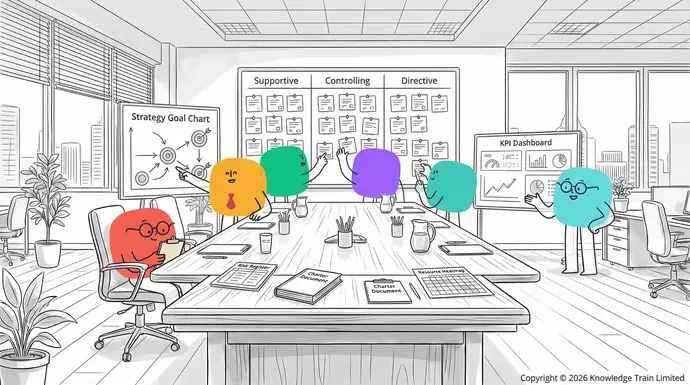
- Supportive, controlling, and directive PMOs differ mainly by authority, from guidance to direct ownership of delivery outcomes.
- Useful PMOs prioritise the portfolio using transparent criteria, balancing value, risk, and capacity constraints.
- Dashboards work best when paired with short narrative context that explains variance and prompts clear decisions.
- Start with a clear charter and quick wins, then scale tools, training, and templates through continuous improvement.
portfolio managementUnderstanding the RACI matrix by offering governance, methodology, resource management and oversight.A
The concept of a PMO has evolved as organisations recognise the need for a dedicated group to enhance consistency, optimise resources, and improve RACIproject delivery matrix is a chart that maps out roles and responsibilities for your projects and teams. It is based on a simple acronym: RACI, which stands for Responsible, Accountable, Consulted, and Informed. RACI as a framework is also sometimes known as the responsibility assignment matrix or RAM. outcomes. PMOs may operate at the project, programme, or portfolio level and are commonly found in sectors such as What does each letter stand for in RACI?ITResponsible:, government, construction, and finance. These are the people who actually do the work; they are the doers who are completing tasks and creating deliverables. For a task or deliverable, there can be one or more responsible people.
PMO functions and rolesAccountable:
PMOs perform a wide range of functions, adapting their roles according to organisational needs. The main functions and roles typically include: This person is ultimately answerable for the correct and timely completion of the task or deliverable. It is the only one who approves the work of the responsible people. For a task or deliverable, there can be one and only one accountable person.
- Governance:Consulted: Establishing frameworks, processes and controls for effective decision-making and These stakeholders have a role in providing information, inputs, or advice for the task or deliverable; they are consulted or actively involved in the discussion. But they are not the ones who do the work. For a task or deliverable, there can be one or more consulted people.risk managementInformed: across the project lifecycle. These people need to be kept updated on progress and developments for the task or deliverable; they do not have a direct contribution but must be notified of outcomes or major decisions.
- Standardisation:The main goal of RACI matrix is to improve Implementing and maintaining project efficiencyproject management methodologies and communication. Here are some of the benefits of using RACI matrix:, best practices, and standards.Defining roles
- Support:Better accountability Providing guidance, templates, tools, training and mentoring for Project Managers and teams.Smooth decision-making
- Methodology Enforcement:Minimising conflicts and duplications Ensuring consistent application of Optimising resource allocation.project management approachesYou can effectively use RACI matrix in the following situations: for delivery excellence.Projects
- Resource Management: with many stakeholders Coordinating allocation and utilisation of project personnel, tools, and budgets.Cross-functional teams working together
- Portfolio ManagementUnclear or overlapping roles/responsibilities:Organisational change or restructuring Overseeing and prioritising New team formation. Assigning a Responsible person.projectsIn practice, the RACI matrix helps to align with strategic objectives and maximise value.project managers
- Process Improvement: to clearly assign each task to one or more Responsible persons. This helps to avoid confusion and ensure that everyone knows who is doing what. The matrix also helps in Reviewing and refining stakeholder engagementproject delivery by identifying who needs to be consulted or informed at each stage of the project. processes to ensure continuous improvement.The RACI matrix is not always required, for example, for small and short-term projects or projects with a small team of stakeholders. In such cases, communication and coordination can be achieved in a less formal way. However, for most projects of medium and larger size, the use of a RACI matrix is a simple and effective way to organise work and improve communication.
- Stakeholder Engagement:Creating a RACI matrix Acting as an interface between project teams, senior management, and other stakeholders.Six steps guide to building a RACI chart
- Change ManagementThe following are the steps to create a RACI matrix::Identify the tasks Supporting change initiatives and minimising resistance through structured strategies.: List all the tasks and milestones of the project in the left column of the RACI matrix.
Types of PMOsDefine the stakeholders
PMOs are not one-size-fits-all. Their structure, authority and level of influence can vary significantly. The three primary PMO types are:: List all the project stakeholders in the top row of the matrix.
- Supportive PMO:Assign the roles Provides consultative services, best practices, templates, and guidance. Has low control and operates as a resource for Project Managers.: For each task, assign one of the four roles (R, A, C, I) to each stakeholder.
- Controlling PMO:Review and refine Requires compliance with : Check that each task has at least one R and one A, and that there are no conflicts or ambiguities in the assignments.project managementValidate standards and methodologies. Has moderate control—enforces processes and reviews adherence.: Confirm the RACI matrix with the team members and stakeholders to ensure accuracy and agreement.
- Directive PMO:Distribute Directly manages projects and assigns Project Managers. Exercises high control and is responsible for : Share the RACI matrix with all the stakeholders and make it accessible for reference and updates.project deliveryBest practices for assigning roles and outcomes.The following are some tips for assigning roles in a RACI matrix:
Organisations may adapt their PMO model based on size, maturity, and strategic needs. A PMO may evolve from supportive to controlling or directive as project management capability matures.Make sure that all the team members understand the RACI definitions and agree on the roles.
PMO best practicesAssign roles based on the skills, authority, and availability of the team members, and not just on their positions.
Implementing a PMO involves defining objectives, selecting the right PMO type, securing stakeholder support, setting up governance structures, and continuously reviewing processes. Best practices for successful PMO implementation include:
RACI matrix templates and toolsPMI.org.A RACI matrix can be created using different tools and templates. Here are some of them:
PMO in practiceSpreadsheet software
- Corporate IT PMO:: You can use a simple Excel or Google Sheets template to create a RACI matrix, which allows you to customise and format the chart. A global retailer established an IT PMO to standardise project methodologies across numerous business units, leading to improved delivery times and enhanced resource management.Project management software
- Government Programme Office:: Many project management tools, such as Monday.com, offer built-in RACI matrix features, which allow you to create, share, and update the matrix along with other project elements. A government department implemented a controlling PMO to oversee national infrastructure RACI matrix softwareprogrammes: There are some specialised software that focus on creating and managing RACI matrices, which offer advanced features and integrations.. This supported greater transparency, better risk management, and alignment with public policy objectives.Visual collaboration tools
- Financial services PMO:: There are some visual collaboration platforms, such as Miro, which offer interactive RACI matrix templates, which allow you to create and collaborate on the matrix visually. A bank set up a directive PMO to directly manage regulatory compliance Choose the tool that best suits your team’s needs and preferences, and that integrates well with your existing projectsproject management processes, centralising project oversight for timely delivery.. Remember that a RACI matrix is only as good as its clarity and consistency, so make sure that you use it correctly and regularly.
Planning are : Develop a detailed RACI matrix for all identified tasks and deliverables.People, Product, Process,Execution and : Apply the RACI matrix to allocate tasks, facilitate communication, and ensure accountability.ProjectMonitoring:: Continuously review and update RACI assignments as needed throughout the project.
- People:Closing Define clear roles and responsibilities for the : Evaluate the effectiveness of RACI for lessons learned and future projectprojects team..
- Product:Using RACI to enhance communication Ensure the right deliverables reach the right stakeholders.RACI charts establish clear
- Process:lines of communication Implement consistent procedures to manage and control delivery. by identifying who needs what information and when, Minimising unnecessary meetings and emails, clarifying decision-making processes, and ensuring all relevant parties are consulted.
- Project:Ask team members to consult the RACI matrix when sending updates or requesting input. Oversee the successful execution of initiatives aligned with strategy.Resolving conflicts and ambiguities in RACI assignments
What are the different types of PMOs?Facilitate discussions to resolve conflicts by reviewing the project scope and objectives, clarifying role definitions and expectations, considering team members’ skills and workloads, making necessary adjustments to balance responsibilities, and documenting and communicating any changes.
The three main types of Team members should have regular discussions about their RACI roles to avoid misunderstandings and encourage collaboration.PMOsRACI and Agile project management are:Although RACI is a common tool in the traditional project management, it can be adapted and integrated with
- Supportive PMO:Agile methodologies Provides templates, best practices, and guidance to Project Managers. as well. Here are some tips on how to do that:
- Controlling PMO:Use RACI for high-level project roles and responsibilities Enforces standards, methodologies, and reporting requirements.Adapt RACI for each sprint or iteration
- Directive PMO:Focus on team roles instead of individual assignments Takes direct ownership of Incorporate RACI discussions into sprint planning and retrospectives.project deliveryIn and management.Scrum
Each type varies in authority and responsibility, depending on organisational needs and project complexity., RACI can be used to define roles and responsibilities for each Scrum ceremony, epic, and user story. For example:
What does a PMO do?A Product Owner is Accountable for prioritising and approving the product backlog items.
A A PMOScrum Master establishes and maintains project management standards across the organisation. It supports is Responsible for facilitating the Scrum process and addressing impediments.Project ManagersThe Development Team is Responsible for delivering potentially shippable product increments., ensures project governance, and aligns initiatives with business goals. The PMO often oversees project portfolios to prioritise strategic investments and optimise resource use.By using RACI in Scrum, teams can achieve a balance between structure and flexibility.
What does PMO stand for?RACI matrix variations and alternatives
PMOIn addition to the standard RACI matrix, there are several variations and alternatives that can be used for specific project needs. Here are a few examples: stands for RASCI (adding the ‘supportive’ role)Project Management OfficeSupportive. It is an organisational function responsible for standardising governance processes, sharing methodologies, : People who support the Responsible person in completing the task.toolsThis could be useful for , and techniques, and improving overall project success.
A PMO may vary in size—from a single individual to an enterprise-wide team—but its purpose remains the same: to improve project performance and ensure alignment with business strategyprojects. that have resource needs and specialist help.
What is the difference between a PMO and a Project Manager?CARS (Communicate, Approve, Responsible, Support)
The difference between a CARS is a simplified version of RACI that uses only four roles:PMOCommunicate and a : Similar to Informed in RACIProject ManagerApprove lies in scope and responsibility. A Project Manager delivers specific : Equivalent to AccountableprojectsResponsible, managing budgets, timelines, and teams. The PMO, however, provides governance, guidance, and support to multiple projects, ensuring consistency and strategic alignment across the organisation.: Same as in RACI
What is the purpose of a PMO?Support
The primary purpose of a : Combines Consulted and Supportive roles.PMOThis can help making communication and approval fast and efficient. is to introduce structure, consistency, and strategic alignment to project management practices. By standardising processes and methodologies, a PMO helps organisations improve project success rates and realise greater value from project investments.DACI (Driver, Approver, Contributor, Informed)
For further readingDACI is an alternative to RACI that focuses on decision-making:
For official standards and frameworks, visit DriverPMI.org: The person in charge of driving the initiative forward (similar to Responsible) for comprehensive PMO and project management guidance.Approver