What is a Project Management Office (PMO)?Knowledge Train

Key takeawaysUse structured frameworks such as Kotter, Lewin, or ADKAR to sequence activities and maintain momentum.
A PMO improves delivery by combining governance, support, and portfolio visibility.Visible leadership sponsorship and consistent communication reduce uncertainty and resistance.
- A PMO sets standards and decision controls so projects stay aligned to business strategy and risk is managed early.Engage stakeholders early, using influence and impact mapping to target effort where it matters most.
- Supportive, controlling, and directive PMOs differ mainly by authority, from guidance to direct ownership of delivery outcomes.Integrate change work with project delivery so training, readiness, risks, and benefits stay aligned.
- Useful PMOs prioritise the portfolio using transparent criteria, balancing value, risk, and capacity constraints.Measure adoption with KPIs and feedback, then reinforce new behaviours through governance, coaching, and policy.
- Dashboards work best when paired with short narrative context that explains variance and prompts clear decisions.
- Start with a clear charter and quick wins, then scale tools, training, and templates through continuous improvement.
: Employees may fear job loss, uncertainty, or increased responsibilities.PMO adds value by improving project success rates, optimising resource allocation, and ensuring projects align with organisational objectives. It also enhances communication across teams, enforces compliance with methodologies, and provides transparency on project performance through dashboards and reporting.Solution
Ultimately, a well-functioning PMO ensures that project investments deliver measurable business benefits.: Foster open communication, involve employees in decision-making, and provide adequate support.
Is PMO a stressful job?Poor communication
Whether a : Inadequate information can cause confusion and low morale.PMO role is stressful depends on the organisation’s structure and culture. When supported by leadership and empowered to influence project decisions, PMO professionals typically thrive. However, if the PMO is under-resourced or lacks authority, managing multiple priorities without visible impact can create pressure and stress.Solution
Strong governance, clear goals, and management support help minimise stress and enable PMO teams to work effectively.: Communicate regularly, using clear and consistent messaging across channels.
What are the 4 P’s of PMO?Lack of leadership commitment
The 4 P’s of a : Without executive support, initiatives may falter.PMO are SolutionPeople, Product, Process,: Gain leadership buy-in and ensure visible commitment throughout the transition. and Cultural misalignmentProject: Change may conflict with existing organisational culture.:
- People:Solution Define clear roles and responsibilities for the : Integrate change efforts with culture change and organisational development strategies.projectInsufficient resources or planning team.: Poor planning can delay or derail change projects.
- Product: Ensure the right deliverables reach the right stakeholders.Solution
- Process:: Invest in Implement consistent procedures to manage and control delivery.project management
- Project:, transition planning, and risk assessment. Oversee the successful execution of initiatives aligned with strategy.Change management and business functions
What are the different types of PMOs?Organisational development
The three main types of : Change management techniques are often a core part of organisational development, aiming for long-term improvement in effectiveness.PMOsProject management are:: Integrating change management with
- Supportive PMO:project management Provides templates, best practices, and guidance to Project Managers. ensures project deliverables are adopted and sustained.
- Controlling PMO:Business transformation Enforces standards, methodologies, and reporting requirements.: Large-scale initiatives such as mergers or digitalisation depend on robust change management for success.
- Directive PMO:Stakeholder engagement Takes direct ownership of : Identifying and actively involving key stakeholders is crucial in minimising resistance and ensuring buy-in.project deliveryLeadership and management.: Strong, credible leadership drives the success of change initiatives through clear direction and support.
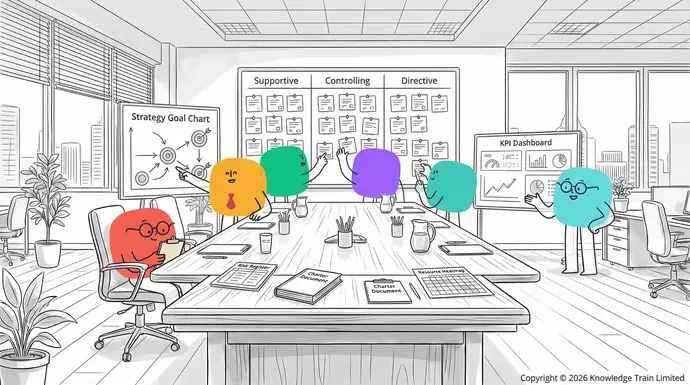
Each type varies in authority and responsibility, depending on organisational needs and project complexity.Change management best practices
What does a PMO do?Establish clear communication strategies
A tailored to different stakeholder groups.PMOAppoint dedicated change agents establishes and maintains project management standards across the organisation. It supports to guide and support the change process.Project ManagersUse data to inform decisions, ensures project governance, and aligns initiatives with business goals. The PMO often oversees project portfolios to prioritise strategic investments and optimise resource use. and measure progress through key performance indicators (KPIs).
What does PMO stand for?Encourage feedback
PMO from employees at every stage. stands for Provide training and supportProject Management Office to build new skills and confidence.. It is an organisational function responsible for standardising governance processes, sharing methodologies, Integrate change into company culturetools to ensure lasting results., and Summary of key frameworks used in change managementtechniquesModel, and improving overall project success.Core Steps
A PMO may vary in size—from a single individual to an enterprise-wide team—but its purpose remains the same: to improve project performance and ensure alignment with Main Focusbusiness strategyKotter’s 8-Step.8 outlined steps
What is the difference between a PMO and a Project Manager?Building urgency, vision, momentum
The difference between a Lewin’s ChangePMOUnfreeze, Change, Refreeze and a Preparing, transitioning, embeddingProject ManagerADKAR lies in scope and responsibility. A Project Manager delivers specific Awareness, Desire, Knowledge, Ability, ReinforcementprojectsIndividual adoption stages, managing budgets, timelines, and teams. The PMO, however, provides governance, guidance, and support to multiple projects, ensuring consistency and strategic alignment across the organisation.Related concepts in change management
What is the purpose of a PMO?Organisational development
The primary purpose of a PMO is to introduce structure, consistency, and strategic alignment to project management practices. By standardising processes and methodologies, a PMO helps organisations improve project success rates and realise greater value from project investments.
For further reading: A discipline focused on improving organisations through planned interventions in processes and culture.
For official standards and frameworks, visit Stakeholder engagementPMI.org: The ongoing process of involving those impacted by change in planning and implementation. for comprehensive PMO and project management guidance.Leadership in change management