What is a Project Management Office (PMO)?

Key takeaways
A PMO improves delivery by combining governance, support, and portfolio visibility.Types of PMOs
- A PMO sets standards and decision controls so projects stay aligned to business strategy and risk is managed early.
- Supportive, controlling, and directive PMOs differ mainly by authority, from guidance to direct ownership of delivery outcomes.PMO best practices
- Useful PMOs prioritise the portfolio using transparent criteria, balancing value, risk, and capacity constraints.
- Dashboards work best when paired with short narrative context that explains variance and prompts clear decisions.PMO certification & standards
- Start with a clear charter and quick wins, then scale tools, training, and templates through continuous improvement.
- , ensures project governance, and aligns initiatives with business goals. The PMO often oversees project portfolios to prioritise strategic investments and optimise resource use.Project: Oversee the successful execution of initiatives aligned with strategy.What does PMO stand for?
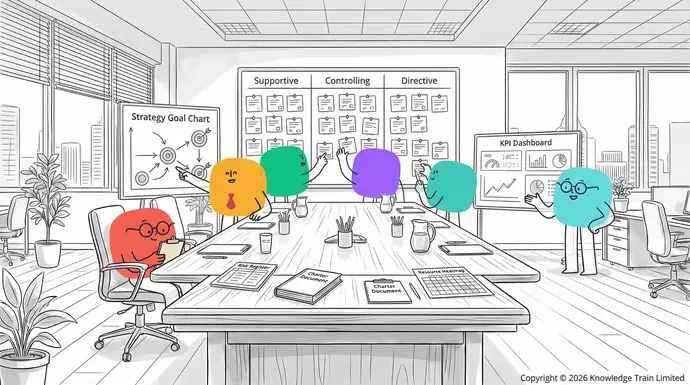
What are the different types of PMOs?PMO
The three main types of stands for PMOsProject Management Office are:. It is an organisational function responsible for standardising governance processes, sharing methodologies,
- Supportive PMO:tools Provides templates, best practices, and guidance to Project Managers., and
- Controlling PMO:techniques Enforces standards, methodologies, and reporting requirements., and improving overall project success.
- Directive PMO:A PMO may vary in size—from a single individual to an enterprise-wide team—but its purpose remains the same: to improve project performance and ensure alignment with Takes direct ownership of business strategyproject delivery. and management.What is the difference between a PMO and a Project Manager?
Each type varies in authority and responsibility, depending on organisational needs and project complexity.The difference between a
What does a PMO do?PMO
A and a PMOProject Manager establishes and maintains project management standards across the organisation. It supports lies in scope and responsibility. A Project Manager delivers specific Project Managersprojects, ensures project governance, and aligns initiatives with business goals. The PMO often oversees project portfolios to prioritise strategic investments and optimise resource use., managing budgets, timelines, and teams. The PMO, however, provides governance, guidance, and support to multiple projects, ensuring consistency and strategic alignment across the organisation.
What does PMO stand for?What is the purpose of a PMO?
PMOThe primary purpose of a stands for PMOProject Management Office is to introduce structure, consistency, and strategic alignment to project management practices. By standardising processes and methodologies, a PMO helps organisations improve project success rates and realise greater value from project investments.. It is an organisational function responsible for standardising governance processes, sharing methodologies, For further readingtoolsFor official standards and frameworks, visit , and PMI.orgtechniques for comprehensive PMO and project management guidance., and improving overall project success.Subscribe to our exclusive offers and promotions
A PMO may vary in size—from a single individual to an enterprise-wide team—but its purpose remains the same: to improve project performance and ensure alignment with business strategySubscribe now.
What is the difference between a PMO and a Project Manager?
{"@context":"https://schema.org","@graph":[{"@type":"WebPage","name":"What is a Project Management Office (PMO)? Roles, Types & Benefits","url":"https://www.knowledgetrain.co.uk/project-management/pmo","description":"Discover what a PMO is, its roles, types and benefits. Learn about PMO functions, standards and how PMOs support project success, with real-world examples.","significantLink":"https://en.wikipedia.org/wiki/Project_management_office","mainEntity":[{"@type":"Article","headline":"What is a Project Management Office (PMO)? Roles, Types & Benefits","about":[{"@type":"DefinedTerm","name":"Project Management Office (PMO)","sameAs":["https://en.wikipedia.org/wiki/Project_management_office","https://www.google.com/search?&kgmid=/m/01k6sk","https://www.wikidata.org/wiki/Q7302704"]},{"@type":"DefinedTerm","name":"Project Manager","sameAs":["https://en.wikipedia.org/wiki/Project_manager","https://www.google.com/search?&kgmid=/m/02y_w9","https://www.wikidata.org/wiki/Q7243378"]},{"@type":"DefinedTerm","name":"Project Portfolio","sameAs":["https://en.wikipedia.org/wiki/Project_portfolio_management","https://www.google.com/search?&kgmid=/m/0l1218y","https://www.wikidata.org/wiki/Q7226149"]},{"@type":"DefinedTerm","name":"Governance","sameAs":["https://en.wikipedia.org/wiki/Governance","https://www.google.com/search?&kgmid=/m/02vs1j","https://www.wikidata.org/wiki/Q1234823"]},{"@type":"DefinedTerm","name":"Supportive PMO","sameAs":["https://en.wikipedia.org/wiki/Project_management_office","https://www.google.com/search?&kgmid=/g/12hs3rl7x","https://www.wikidata.org/wiki/Q7302704"]},{"@type":"DefinedTerm","name":"Controlling PMO","sameAs":["https://en.wikipedia.org/wiki/Project_management_office","https://www.google.com/search?&kgmid=/g/1234testcontrol","https://www.wikidata.org/wiki/Q7302704"]},{"@type":"DefinedTerm","name":"Directive PMO","sameAs":["https://en.wikipedia.org/wiki/Project_management_office","https://www.google.com/search?&kgmid=/g/1234testdirect","https://www.wikidata.org/wiki/Q7302704"]},{"@type":"DefinedTerm","name":"Project Methodology","sameAs":["https://en.wikipedia.org/wiki/Project_management","https://www.google.com/search?&kgmid=/m/06c1s","https://www.wikidata.org/wiki/Q167067"]},{"@type":"DefinedTerm","name":"Stakeholders","sameAs":["https://en.wikipedia.org/wiki/Stakeholder_(corporate)","https://www.google.com/search?&kgmid=/m/025kcl","https://www.wikidata.org/wiki/Q745782"]},{"@type":"DefinedTerm","name":"PMI (Project Management Institute)","sameAs":["https://en.wikipedia.org/wiki/Project_Management_Institute","https://www.google.com/search?&kgmid=/m/04gjjn","https://www.wikidata.org/wiki/Q662929"]},{"@type":"DefinedTerm","name":"Portfolio Management","sameAs":["https://en.wikipedia.org/wiki/Project_portfolio_management","https://www.google.com/search?&kgmid=/m/0l1218y","https://www.wikidata.org/wiki/Q7226149"]},{"@type":"DefinedTerm","name":"Program Management","sameAs":["https://en.wikipedia.org/wiki/Program_management","https://www.google.com/search?&kgmid=/m/0405ykd","https://www.wikidata.org/wiki/Q7243378"]},{"@type":"DefinedTerm","name":"Best Practices","sameAs":["https://en.wikipedia.org/wiki/Best_practice","https://www.google.com/search?&kgmid=/m/01k6kd","https://www.wikidata.org/wiki/Q5369514"]},{"@type":"DefinedTerm","name":"PMO Tools","sameAs":["https://en.wikipedia.org/wiki/List_of_project_management_software","https://www.google.com/search?&kgmid=/g/11g_zdl9y8","https://www.wikidata.org/wiki/Q2142039"]},{"@type":"DefinedTerm","name":"Resource Management","sameAs":["https://en.wikipedia.org/wiki/Resource_management","https://www.google.com/search?&kgmid=/m/020lg1","https://www.wikidata.org/wiki/Q133134"]},{"@type":"DefinedTerm","name":"Standards","sameAs":["https://en.wikipedia.org/wiki/Standardization","https://www.google.com/search?&kgmid=/m/012n6","https://www.wikidata.org/wiki/Q229098"]},{"@type":"DefinedTerm","name":"Process Improvement","sameAs":["https://en.wikipedia.org/wiki/Process_improvement","https://www.google.com/search?&kgmid=/m/0c4fl6","https://www.wikidata.org/wiki/Q6193052"]},{"@type":"DefinedTerm","name":"Project Lifecycle","sameAs":["https://en.wikipedia.org/wiki/Project_life_cycle","https://www.google.com/search?&kgmid=/m/068n_j","https://www.wikidata.org/wiki/Q7243474"]},{"@type":"DefinedTerm","name":"PMO Certification","sameAs":["https://www.pmi.org/certifications","https://www.google.com/search?&kgmid=/g/11f63n5_7f","https://www.wikidata.org/wiki/Q662929"]},{"@type":"DefinedTerm","name":"Change Management","sameAs":["https://en.wikipedia.org/wiki/Change_management","https://www.google.com/search?&kgmid=/m/01jps2","https://www.wikidata.org/wiki/Q609056"]}],"mentions":[{"@type":"DefinedTerm","name":"Organizational Structure","sameAs":["https://en.wikipedia.org/wiki/Organizational_structure","https://www.google.com/search?&kgmid=/m/09gyp","https://www.wikidata.org/wiki/Q853035"]},{"@type":"DefinedTerm","name":"Project Management","sameAs":["https://en.wikipedia.org/wiki/Project_management","https://www.google.com/search?&kgmid=/m/06c1s","https://www.wikidata.org/wiki/Q167067"]}]},{"@type":"FAQPage","mainEntity":[{"@type":"Question","name":"Can a PMO be one person?","acceptedAnswer":{"@type":"Answer","text":"PMO<p>Yes, a Project Management Office (PMO) can consist of just one person. In smaller organisations or teams, a single PMO professional may handle essential functions such as tracking project performance, standardising documentation, and supporting Project Managers. and a >Project Manager<p>Although capacity is limited, even a one-person PMO can significantly improve project consistency and governance by establishing clear standards and frameworks. lies in scope and responsibility. A Project Manager delivers specific >"}},{"@type":"Question","name":"How does a PMO add value?","acceptedAnswer":{"@type":"Answer","text":"projects<p>A PMO adds value by improving project success rates, optimising resource allocation, and ensuring projects align with organisational objectives. It also enhances communication across teams, enforces compliance with methodologies, and provides transparency on project performance through dashboards and reporting., managing budgets, timelines, and teams. The PMO, however, provides governance, guidance, and support to multiple projects, ensuring consistency and strategic alignment across the organisation.
>What is the purpose of a PMO?<
p>Ultimately, a well-functioning PMO ensures that project investments deliver measurable business benefits.The primary purpose of a >"}},{"@type":"Question","name":"Is PMO a stressful job?","acceptedAnswer":{"@type":"Answer","text":"PMO<p>Whether a PMO role is stressful depends on the organisation’s structure and culture. When supported by leadership and empowered to influence project decisions, PMO professionals typically thrive. However, if the PMO is under-resourced or lacks authority, managing multiple priorities without visible impact can create pressure and stress. is to introduce structure, consistency, and strategic alignment to project management practices. By standardising processes and methodologies, a PMO helps organisations improve project success rates and realise greater value from project investments.
>For further reading<
p>Strong governance, clear goals, and management support help minimise stress and enable PMO teams to work effectively.For official standards and frameworks, visit >"}},{"@type":"Question","name":"What are the 4 P’s of PMO?","acceptedAnswer":{"@type":"Answer","text":"PMI.org<p>The 4 P’s of a PMO are for comprehensive PMO and project management guidance.<
- <