
- 23 Feb 2026Rigour can be maintained alongside speed by using consistent standards, templates and lightweight frameworks.
Business analysis: definition and overviewUncover how social media can enhance project management and professional growth. Discover the platforms and techniques that can aid your career.
Business analysis is a professional discipline that involves understanding business needs and problems, eliciting and documenting requirements, and proposing solutions that drive process improvement and deliver value. It acts as a bridge between stakeholders and technical teams, ensuring that strategic objectives are aligned with operational execution. Reputable bodies such as the International Institute of Business Analysis (IIBA) define business analysis as the practice of enabling change in an organisational context by defining needs and recommending solutions that yield benefits for key stakeholders.
The objectives and value of business analysis
- Identifying business needs and opportunities for improvementBook review: Applied Software Project Management
- Supporting stakeholders in achieving strategic goals
- Facilitating Simon Buehringchange management19 Feb 2026 processes
- Reducing project risk through clear requirements and solution assessmentExplore the practical applications of software project management in 'Applied Software Project Management'. Read our review for insights.
- Ensuring solutions are feasible, cost-effective, and aligned with business requirements
Business analysts enable informed decision-making, increase process efficiency, and help organisations remain competitive.
Key responsibilities of a business analyst
The business analyst plays a critical role throughout project lifecycles and change initiatives. Their main responsibilities include:
- Requirements elicitation: Facilitating workshops, interviews, and surveys to gather needs from stakeholdersPRINCE2 7th Edition – What’s different?
- Requirements documentation: Creating clear business and technical requirements using various formats (e.g., Simon Buehringuser stories19 Feb 2026, use cases)
- Gap analysis and feasibility studies:Explore the changes in PRINCE2 7th edition and why they are significant for project management professionals. Discover the updates by reading more. Assessing current and desired future states to highlight improvements and evaluate solution viability
- Stakeholder engagement: Communicating with diverse stakeholders to ensure requirements are validated and aligned
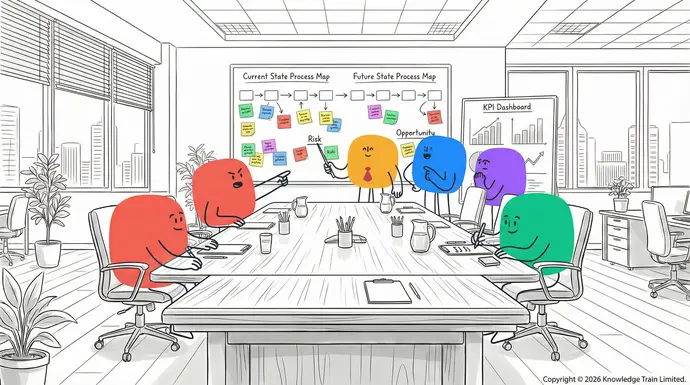
- Process mapping and business process modelling : Visualising workflows for process improvement opportunities
- Solution assessment and validation:What soft skills do project managers need? Reviewing proposals to ensure solutions address documented requirementsSimon Buehring and deliver value19 Feb 2026
- Change management : Supporting the transition of solutions into the business and managing effects on people and processesDiscover essential soft skills for project managers and why they are crucial for successful project delivery. Read on to enhance your skill set.
Main business analysis processes
| Process | Description |
|---|---|
| Requirements elicitation | Gathering information from stakeholders using interviews, workshops, observation, and document analysis |
| Requirements documentation | Capturing business and technical requirements in written formats, such as user storiesRACI matrix in project management, use cases, or requirement specifications |
| Requirements validationKnowledge Train | Ensuring requirements are accurate, feasible, and aligned with business goals19 Feb 2026 |
| Stakeholder engagement | Building relationships with all parties affected by the change to ensure their needs are metThe RACI matrix is an indispensable tool for project managers. In this article, we’ll show you how to use it to optimise communication and streamline decision-making on your projects. |
| Process improvement | Analysing existing workflows and recommending enhancements for efficiency |
| Solution assessment | Evaluating potential solutions against requirements |
| Change management |
Essential skills and competencies for business analysts
- Analytical and critical thinking
- Effective communication and stakeholder engagement
- Attention to detail in requirements documentation
- Problem-solving and solution assessment
- Knowledge of business and technical requirements
- Proficiency in process improvement and data analysis
Certification and career progression
BCS offers globally recognised certifications, such as Business Analysis Foundation , International Diploma in Business Analysis , Practitioner certificates in Requirements Engineering , Modelling Business Processes , and Business Analysis Practices .
The International Institute of Business Analysis (IIBA) offers globally recognised certifications, such as ECBA, CCBA, and CBAP, based on the BABOK Guide . Give us a callCertifications demonstrate expertise in requirements elicitation, stakeholder management, and business analysis best practices. Aspiring business analysts may also pursue project management+44 (0)207 148 5985 or change management qualificationsOr chat with us using the link at the bottom of the screen. to support broader career progression.Contact us with questions about the courses on this page, or about which project management certification or training is best for you.
FAQs
What is business analysis?[email protected]
Business analysis is the systematic investigation and evaluation of business needs to recommend solutions that achieve organisational objectives. It includes requirements gathering, stakeholder engagement, and process optimisation.Join Our Team
What does a business analyst do?
A business analyst identifies business problems, elicits requirements, engages stakeholders, and ensures that proposed solutions align with business goals. They act as a bridge between business and IT functions.[email protected]
What are the key techniques in business analysis? Copyright © 2005-2026 Knowledge Train Limited.
What qualifications or certification should a business analyst have?
Common ®certifications, MSP include BCS’s Business Analysis Foundation certificate, ®International Diploma in Business Analysis, ITIL, and Practitioner certificates in Business Analysis Practices, Requirements Engineering, and Modelling Business Processes.®
In addition, there are IIBA’s ECBA, CCBA, and CBAP, which validate knowledge of BABOK and proficiency in requirements elicitation, stakeholder engagement, and process improvement., P3O
How does business analysis differ from project management?®
Business analysis focuses on defining requirements and recommending solutions, while , PRINCE2project management® is concerned with planning, executing, and Agile, RESILIAdelivering projects® within scope, time, and budget constraints., and the Swirl logo are registered trademarks of the PeopleCert group. Used under licence from PeopleCert. All rights reserved. AgilePM