What is business analysis?Diplomas and degrees:

Key takeawaysCompleting an IT course opens up diverse career paths in the technology sector. Typical job roles include:
Business analysis turns business needs into clear requirements and evidence-based decisions.IT support specialist:
- Business analysis aligns strategic goals with delivery by bridging stakeholders and technical teams. Diagnose and resolve users’ technical issues.
- Clear requirements and validation reduce project risk and improve solution fit, cost and feasibility.Network administrator:
- Techniques like SWOT, gap analysis, process modelling and data analysis expose opportunities and bottlenecks. Plan, deploy and maintain computer networks.
- Embedding analysis in governance strengthens planning, transparency and measurable outcomes.Software developer:
- Rigour can be maintained alongside speed by using consistent standards, templates and lightweight frameworks. Create and maintain applications and systems.
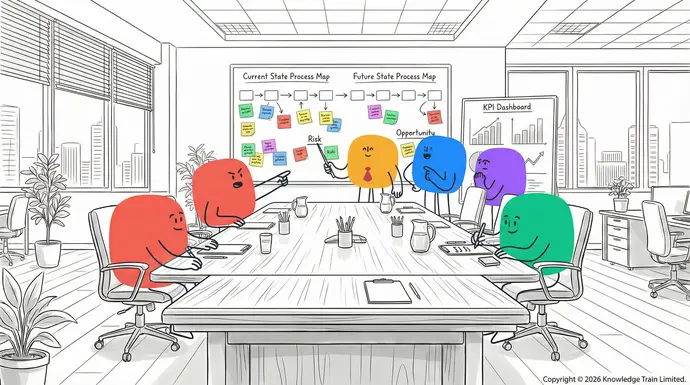
Business analysis: definition and overview, cloud computing, software development, and data science.
Business analysisWhich IT course is best for beginners? is a professional discipline that involves understanding business needs and problems, eliciting and documenting requirements, and proposing solutions that drive Courses in basic computer literacy, CompTIA IT Fundamentals, or introductory programming are suitable for beginners. Online platforms and colleges provide flexible entry-level options.process improvement and deliver value. It acts as a bridge between stakeholders and technical teams, ensuring that strategic objectives are aligned with operational execution. Reputable bodies such as the International Institute of Business Analysis (IIBA) define business analysis as the practice of enabling change in an organisational context by defining needs and recommending solutions that yield benefits for key stakeholders.
| What is ITIL? | Capturing business and technical requirements in written formats, such as user storiesSimon Buehring, use cases, or requirement specifications27 Mar 2026 |
| Requirements validation | Ensuring requirements are accurate, feasible, and aligned with business goalsNew to ITIL? This article explains the framework and certification levels, with a free ebook to get you started. Read on for your complete guide. |
| Stakeholder engagement | Building relationships with all parties affected by the change to ensure their needs are met |
| Process improvement | Analysing existing workflows and recommending enhancements for efficiency |
| Solution assessment | Evaluating potential solutions against requirements |
| Change management | Supporting successful adoption of new processes or systemsUltimate guide to IT Service Management careers |
Common business analysis techniques
- SWOT analysisSimon Buehring:4 Mar 2026 Identifying strengths, weaknesses, opportunities, and threats related to a business area or solution
- Gap analysis:Explore the variety of career paths within IT Service Management and how to enter this diverse field. Read on for a detailed guide. Comparing current and target states to identify improvement areas
- Use case modelling: Mapping user interactions with systems to define requirements
- Business process modelling: Creating diagrams (such as BPMN) to visualise business processes
- Stakeholder analysis: Identifying stakeholder interests, influence, and engagement needs
- User storiesWhat is DevOps: Free ebook: Documenting concise functional requirements, typically in Agile projectsSimon Buehring
- Feasibility study:6 Mar 2026 Analysing proposed solutions for practicality and viability
What does a business analyst do?
A business analyst identifies business problems, elicits requirements, engages stakeholders, and ensures that proposed solutions align with business goals. They act as a bridge between business and IT functions.
What are the key techniques in business analysis?
Common business analysis techniques include 19 Feb 2026SWOT analysis , gap analysis, requirements elicitation, process mapping, use case modelling, and stakeholder analysis.DevOps offers effective strategies for IT projects. Learn why it's considered a rewarding career and how to get started by reading further.
What are the main types of requirements in business analysis?
Business analysts work with business requirements (organisational goals), stakeholder requirements , and technical requirements (system or IT needs).ITIL v4 certification
What is the BABOK?
BABOK refers to the Business Analysis Body of Knowledge, a globally-accepted standard containing best practices, techniques, and competencies for business analysis, maintained by IIBA.Simon Buehring
What qualifications or certification should a business analyst have?30 Apr 2026
Common certificationsDiscover the ITIL v4 certification scheme and the paths available. View our infographic for an easy understanding of the certification levels. include BCS’s Business Analysis Foundation certificate, International Diploma in Business Analysis, and Practitioner certificates in Business Analysis Practices, Requirements Engineering, and Modelling Business Processes.