- External risksInstructor-led: These risks arise from factors outside the project’s control, such as economic conditions, regulatory changes, natural disasters, or market trends.Introduction to Project Management course
- Technical risks : Technical risks are associated with the technology or methodologies used in the project. They may involve issues like software glitches, hardware failures, integration challenges, or inadequate technical expertise.£499 +vat
- Financial risks : Financial risks impact the project’s budget, funding, or financial resources. They can include factors like unexpected cost overruns, currency fluctuations, or inadequate financial planning.See all dates
- Operational risks : Operational risks affect the day-to-day functioning of the project. They can encompass issues like human errors, process inefficiencies, supply chain disruptions, or equipment failures.
- Strategic risks : Strategic risks influence the project’s alignment with the organisation’s overall business goals. They may involve risks related to changing market demands, competitive pressures, or organisational changes.Instructor-led
Impact of risks on project successProject Management Essentials
Risks can have a variety of impacts on a project’s success:
- Positive effects£999 +vat: These could include opportunities for innovation or efficiency improvements
- Negative effectsSee all dates: These could lead to delays, cost overruns, or quality issues.Best practices for project communication
Effective Tailoring communication to different stakeholder groupsrisk managementSuccessful project communication demands thoughtful adaptation to meet the specific requirements of different stakeholder groups. Match your communication style and delivery approach to the preferences and information needs of each audience. Executive stakeholders require brief summaries that cover high-level information whereas team members benefit from detailed information that focuses on specific tasks. The customised approach delivers information that is both relevant and actionable to each group through their preferred format. is important for minimising negative impacts and maximising the potential for opportunities and overall project success.Balancing formal and informal communication
By identifying and assessing risks, A comprehensive communication strategy requires the integration of both formal and informal communication methods. Status reports and scheduled meetings serve as project managersformal communication can develop contingency plans and take proactive steps to mitigate potential problems. This helps increase the chances of achieving project goals and delivering value to stakeholders. channels that establish organisational structure and maintain accountability. Quick check-ins and instant messaging as
Common project management risksProject management software with communication features
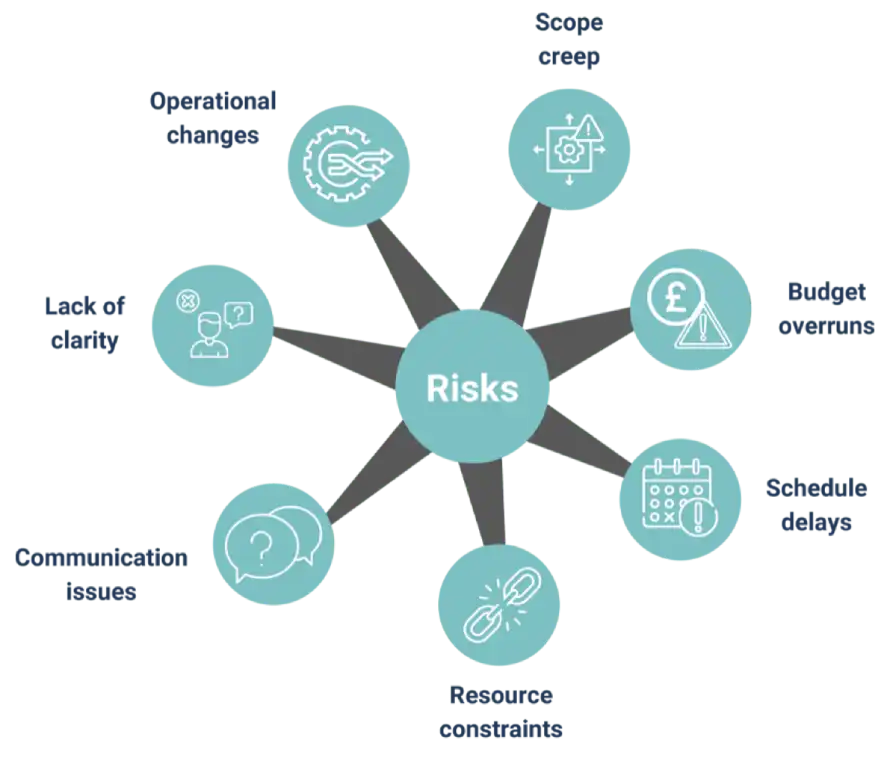
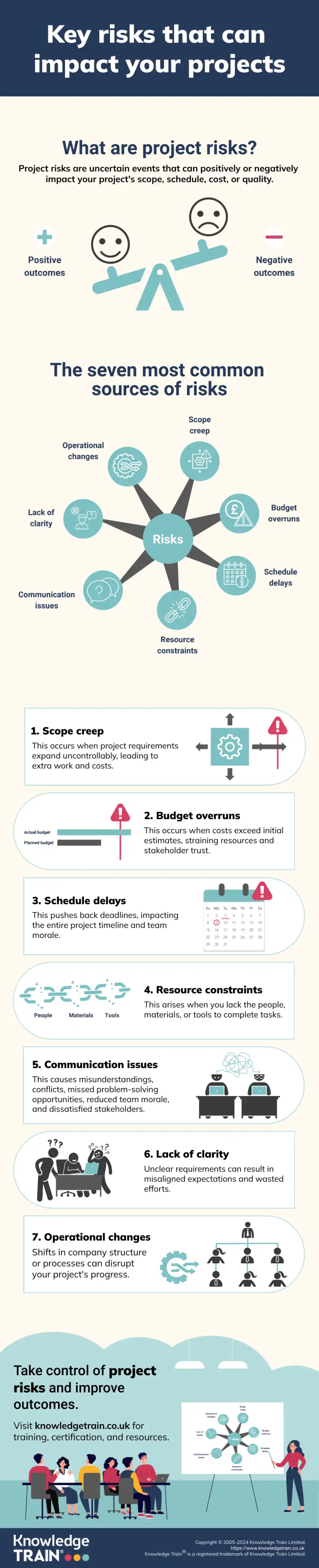
Scope creepProject management platforms provide strong communication tools to help you execute your strategy.
Common causesAsana
Scope creep together with is the uncontrolled expansion of a project’s scope without corresponding adjustments to time, budget, and resources. Common causes of scope creep include ambiguous initial requirements, lack of change control processes, Stakeholder pressure for additional features, and insufficient stakeholder engagement.Trello
Impact and
Scope creep can have several impacts on a project:Microsoft
- It can increase the project’s duration, require more resources and increase costs
- It can lead to delays and missed deadlinesProject
- It can cause the project to lose focus and drift away from its original objectivesdeliver tools for managing tasks and collaborating with teams. Choose
- It can lead to team burnout and demotivation.Jira
To prevent scope creep, it is crucial to have a clear understanding of the project’s objectives and requirements, and to establish change control processes to manage and approve any changes to the project scope. or
Budget overrunsBasecamp
Common causes for more advanced solutions as they provide superior reporting and stakeholder management functions. These platforms feature customisable dashboards while also providing automated notifications alongside integrated messaging systems to improve your communication workflows.
Budget overruns occur when the actual cost of a project exceeds the initially allocated budget. Common causes of budget overruns include inaccurate cost estimation, scope changes, unforeseen expenses, and poor resource management.Free and paid templates for creating communication plans
ImpactA wide selection of templates exists to help you begin your communication planning process. Downloadable templates provided by professional organisations and
Prevent budget problems by performing a detailed cost analysis and ensuring financial reporting is transparent throughout the project.project management
Schedule delays institutes are available at no cost. Consultancies and software providers offer paid solutions that deliver industry-specific frameworks for tailored needs. The templates usually contain sections dedicated to stakeholder analysis as well as communication matrices and schedule planning.
Common causesTips for customising templates to fit specific project needs
Schedule delaysAdjust project templates to match the specific needs of your project. Begin by pinpointing the main communication obstacles and essential priorities your project faces. Update stakeholder classifications to represent the unique groups within your audience. Change the communication channels and their frequencies based on your team’s preferences and the project timeline. Make sure you include all relevant company-specific terminology and reporting structures into your template. A customised template that you develop with careful consideration leads to a communication plan that better supports your project’s success. can occur due to a variety of reasons:Case studies
- Unrealistic time estimatesSmall-scale project
- Resource unavailabilityThe app development team at the
- Dependency conflictssoftware startup
- External factors (e.g. weather, supplier delays). created a strategic communication framework to guide their project. The team adopted a hybrid approach which incorporated daily stand-ups along with weekly email updates and a shared project dashboard. This communication strategy-maintained team coordination and provided stakeholders with continuous updates during development. The communication plan achieved its goals through the successful timely achievement of project milestones along with investor satisfaction expressed through positive feedback.
ImpactLarge-scale complex project
Schedule delays can lead to missed deadlines and milestones, increased costs due to prolonged project duration, reduced stakeholder satisfaction and potential loss of competitive advantage.Multiple regions experienced a global Enterprise Resource Planning (ERP) implementation by a
To address time-related risks, implement effective project scheduling techniques and regularly monitor project progress.multinational corporation
Resource constraints. The organisation’s extensive communication plan incorporated multilingual town halls together with newsletters tailored for each region and established a dedicated intranet portal. The organisation utilised cultural liaisons to manage regional variations while maintaining uniform messaging across multiple communication platforms. The strong strategy produced effective
Types of resource riskschange management
Resource risks and stakeholder support which led to widespread adoption of the new system throughout all business divisions. can take various forms, such as:Enhance your skills with our expert-led courses
- Skill shortages
- Equipment or material unavailability
- Insufficient funding
- Limited time availability.
Impact on project performanceInstructor-led
Effects on project outcomesSee all dates
Lack of clarity can lead to misaligned expectations, rework and wasted resources, delayed decision-making and compromised project quality.Conclusion
Invest time in gathering and documenting clear requirements and maintain ongoing stakeholder engagement to ensure alignment.Successful
Operational changes
How can I measure the effectiveness of my project communication plan?project planning to accommodate operational shifts.
- Reviewing historical information from similar projects
- Conducting stakeholder interviews
- Analysing project documentation.
Create a risk register{"@context":"https://schema.org","@type":"ImageObject","contentUrl":"https://www.knowledgetrain.co.uk/training-courses/project-communication-plan-infographic-v1.1.webp","description":"Project communication plan infographic","license":"https://www.knowledgetrain.co.uk/license","acquireLicensePage":"https://www.knowledgetrain.co.uk/license","creditText":"Knowledge Train","uploadDate":"2024-09-28T09:00:32.000Z","copyrightNotice":"© 2024 Knowledge Train Limited. All rights reserved.","creator":{"@type":"Organization","name":"Knowledge Train","url":"https://www.knowledgetrain.co.uk"}} to document all identified risks.
Risk assessment and prioritisationRelated articles
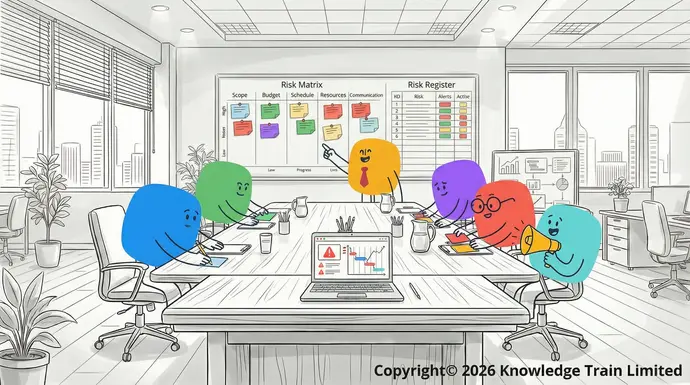
After identifying risks, assess their potential impact and likelihood of occurrence. Tools you can use include:
- Risk matrix : Plot risks on a chart based on their probability and impact
- Quantitative analysis : Assign numerical values to risks
- Qualitative analysis : Categorise risks based on severity.
Prioritise risks based on their potential impact.
Risk response planning
For each prioritised risk, develop a response strategy. Common responses include:
- Avoidance : Eliminate the threat by changing project plans
- MitigationCommunicating effectively in projects: insights by Bina Champaneria: Reduce the probability or impact of the risk
- TransferSimon Buehring: Shift the risk to a third party (e.g. insurance)19 Feb 2026
- Acceptance : Acknowledge the risk and prepare contingency plans.Bina Champaneria explores effective communication in project management. Gain valuable insights into enhancing professional communication by reading on.
Document your response strategies in a risk management plan.
Risk monitoring and control
Continuously monitor risks throughout the project lifecycle. This includes:
- Regular risk reviews and updates
- Tracking risk triggers and early warning signs
- Implementing planned responses when necessary
- Evaluating the effectiveness of risk responses.
Adjust your risk management approach as needed based on new information and changing project conditions.PRINCE2 project context
By following this structured process, you can effectively manage risks and increase your project’s chances of success.
Tools and techniques for project risk management
Risk register
A risk register is a document that lists all identified risks along with their potential impact and planned mitigation. Components to include are:
- Risk description
- Probability and impact assessment
- Risk ownerThe importance of a business case
- Mitigation strategies
- Contingency plans.Simon Buehring
Maintain your risk register throughout the project, regularly updating it as needed.19 Feb 2026
SWOT analysis
SWOT analysisUnderstand why a business case is crucial for informed decision-making and effective resource allocation. Read on to master how to craft a powerful business case. is used to identify factors that may impact your project:
- Strengths: Project advantages
- Weaknesses: Areas for improvement
- Opportunities: Potential benefits
- Threats: Possible risks.
Performing a SWOT analysis gives you a well-rounded view of your project’s risk landscape.
Brainstorming sessions
Organise structured Top 10 project management booksbrainstorming sessions with your team to identify potential risks. Encourage open discussion and creative thinking. Techniques you can use include:Simon Buehring
- Nominal group technique19 Feb 2026
- Affinity diagramming
- Mind mapping.Explore the top 10 project management books recommended by professionals. Find your next read and level up your project management knowledge.
Brainstorming sessions can help identify risks that might be overlooked otherwise.
Project management software
Project management software is a valuable tool for helping to streamline your risk management processes. Features to consider include:
- Risk tracking and monitoring
- Automated alerts for risk triggers
- Collaboration tools for team communication
- Reporting capabilities for stakeholder updates.Project controls – your driver to project success
Project management software can greatly improve your ability to manage risks throughout your project.
Strategies for mitigating common project risksKnowledge Train
Preventing scope creep19 Feb 2026
- Clearly define project boundaries and scope during the planning stage
- Implement a change control process to evaluate and approve scope changesProject controls are an essential part of project management. Find out how you can use them to measure project progress, predict outcomes and steer projects on the right course.
- Communicate the impact of scope changes to all stakeholders.
Managing budget risks
- Accurate cost estimation and inclusion of contingency reserves
- Regular budget monitoring and reporting
- Cost control measures and prioritisation of expenses.
Addressing schedule delays
- Utilise critical path analysisProject management KPIs to identify key milestones and dependencies
- Build buffer time into Knowledge Trainproject schedules19 Feb 2026
- Regularly review and adjust timelines based on progress updates.
Optimising resource allocationDiscover the most important KPIs in project management. Check out our project management KPIs guide and learn how to use them.
- Conduct thorough resource planning at the outset of the project
- Utilise resource levelling techniques to balance workloads
- Maintain a skills inventory to quickly identify and address skill gaps.
Improving communication
- Establish clear communication channels and protocols
- Schedule regular team meetings and stakeholder updatesAgile PMO
- Utilise collaboration tools to facilitate information sharing.
Ensuring clarity in project requirementsSimon Buehring
- Conduct thorough requirements gathering sessions with stakeholders19 Feb 2026
- Create detailed, unambiguous project specifications
- Implement formal requirements review and approval process.Learn how a PMO can enhance organization value by supporting project goals. Discover the role of a PMO in modern business by scrolling down.
Adapting to changes
- Stay informed of potential changes within the organisation
- Build flexibility into project plans to accommodate operational shifts
- Develop contingency plans for significant operational disruptions.
By following these tips, you can avoid most of the common pitfalls that can cause problems in your projects. Keep in mind that risk management is a continuous process. It is important to revisit the steps in this process as you continue with your project.
Best practices for effective risk managementPRINCE2 study formats
Proactive approach to risk identification
- Try to spot potential risks at the start of a Simon Buehringproject19 Feb 2026
- Ask team members to raise red flags as soon as possible
- Look at past data and apply any relevant lessons learnt.Compare the four study formats for PRINCE2 certification to find the best fit for your learning style and schedule. Read on for details.
Regular risk assessment
- Hold regular check-ins to review identified risks and their status
- Re-evaluate risks as the project progresses and circumstances change
- Revise risk mitigation plans as necessary.
Stakeholder involvement in risk management
- Include stakeholders in identifying and assessing risksTop 10 project tracker tools to boost your productivity
- Keep stakeholders informed of risk management plans and progress
- Seek stakeholder input on risk mitigation strategies.Knowledge Train
Continuous learning and improvement19 Feb 2026
- Record lessons learnt from risk management successes and failures
- Share information with other project teams to improve organisational risk managementDiscover our top 10 picks of project tracker tools to power up your productivity. These game-changing solutions will help you streamline your workflow and smash your goals!
- Invest in ongoing training and development of risk management skills.
Follow these tips to help you establish a positive risk management culture and improve project success.
Conclusion
Recap of key points
Effective project risk management is a multi-faceted approach that involves identifying and assessing potential risks, developing mitigation strategies, utilising appropriate tools and techniques, and implementing best practices for continuous improvement.
These elements form a comprehensive framework for managing uncertainties in project management.
Importance of ongoing risk management
Risk management is an ongoing process that requires constant vigilance, regular reassessment and adaptation to changing project conditions.Give us a call
By prioritising risk management throughout the project lifecycle, you increase the likelihood of project success. Remember, proactive risk management is an investment in your project’s future, safeguarding its objectives and deliverables.
FAQs
What is the difference between internal and external project risks?+44 (0)207 148 5985
Internal risks are those that originate within the project or organisation, while external risks stem from outside factors beyond the direct control of the project team.
How often should risk assessments be conducted during a project?Or chat with us using the link at the bottom of the screen.
Risk assessments should be conducted regularly throughout a project, often at predetermined intervals or key project milestones. Monthly risk assessments are typical for most projects.Contact us with questions about the courses on this page, or about which project management certification or training is best for you.
What role do stakeholders play in project risk management?Finance FAQs
Stakeholders can provide valuable input in identifying risks, assessing their potential impact, and helping to develop risk mitigation strategies.Contact
Can all project risks be eliminated?Cookies
No, not all project risks can be eliminated. The focus should be on effectively managing and mitigating risks.Privacy
How can small teams effectively manage project risks with limited resources?Terms
Small teams can prioritise risks based on their potential impact, use simple risk assessment tools, and leverage the diverse expertise of team members to ensure comprehensive risk management.Customer Support
Infographic