is a key aspect of project management that can help increase the likelihood of project success. This involves the process of identifying, assessing, and mitigating risks that can threaten the project.Real-world applications and use cases
In this article, we will explore some of the risks that can arise on projects and how to deal with them effectively. We will discuss the following topics:
- The definition and importance of understanding project risksRelated resources
- The different types of common project risks
- The process of risk management on projectsFAQs
- The tools and techniques used in risk managementWhat is Agile project management?
- The strategies for effective risk mitigationAgile project management
- The best practices for successful risk management on projects. is an iterative approach to planning, executing, and
By the end of this article, you will be able to:delivering projects
- Identify potential risks on your projects by breaking work into small, manageable increments known as iterations or sprints. Rather than following a strict linear plan,
- Apply effective risk management strategiesAgile
- Improve the chances of your project’s success. focuses on adaptability, team collaboration, and continuous delivery of value to stakeholders.
You can also learn about project risk management on a Agile principlesproject management course emphasise close communication, incremental progress, and regular feedback cycles to enhance quality and meet customer needs. such as The Agile Manifesto: Values and principlesPRINCE2 courseThe or an Agile ManifestoAPM course underpins Agile project management, defining four core values and twelve guiding principles. These foster a culture of collaboration, adaptability, and response to change..Agile Manifesto core values
Let’s begin and explore the world of Individuals and interactions over processes and toolsproject risk managementWorking software (or product) over comprehensive documentation and how to protect your projects from potential risks.Customer collaboration over contract negotiation
Understanding project risksResponding to change over following a plan
Definition of project riskTwelve principles of Agile
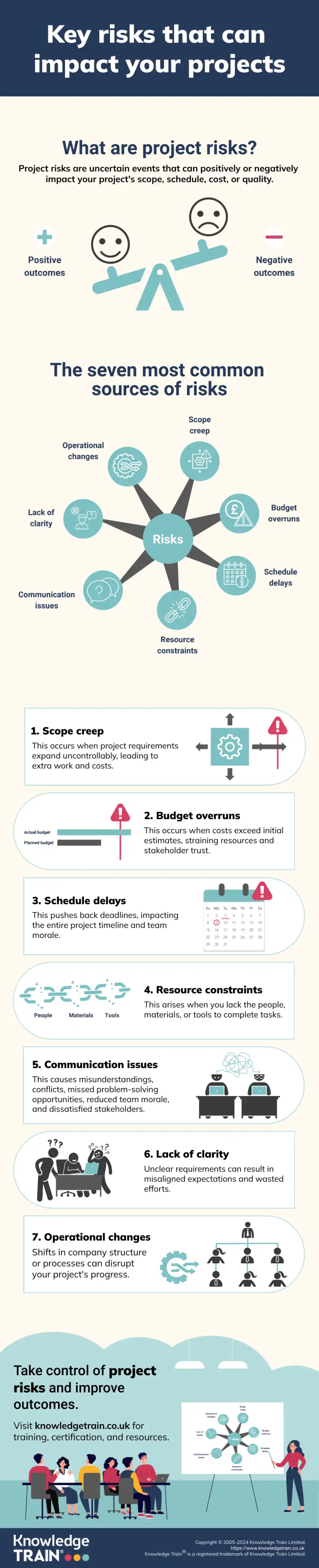
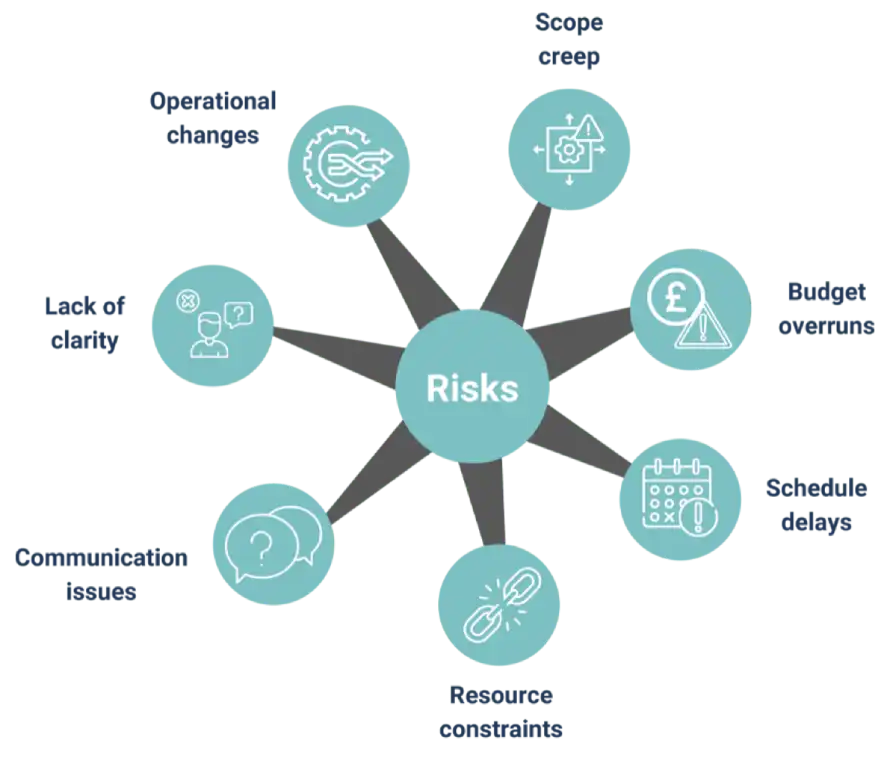
A Customer satisfaction through early and continuous deliveryproject riskWelcome changing requirements, even late in development refers to an uncertain event or condition that, if it occurs, has the potential to either positively or negatively affect the outcome of a project. Risks can impact project objectives such as scope, schedule, cost, or quality. Examples of project risks include changes in customer requirements, budget constraints, delays in schedules, technical issues, resource shortages, and more.Deliver working products frequently
Agile project management
Conduct thorough resource planning and maintain open communication with stakeholders to proactively address resource-related issues. contrasts this with its focus on flexible planning, iterative progress, and stakeholder feedback throughout:
Communication issuesAspect
Importance of effective communicationAgile
Effective communicationWaterfall is vital for project success. It facilitates alignment of project objectives, timely issue resolution, stakeholder engagement and buy-in and efficient team collaboration.Approach
Consequences of poor communicationIterative and incremental
Poor communication can lead to misunderstandings and conflicts, missed opportunities for problem-solving, reduced team morale and productivity and stakeholder dissatisfaction.Sequential and linear
Establish clear communication channels and protocols to promote open and transparent dialogue throughout the project.Flexibility
Lack of clarityHighly adaptive to change
Sources of unclear requirementsChange-resistant
Unclear requirementsCustomer Involvement can stem from ambiguous project objectives, insufficient stakeholder input, lack of detailed documentation and changing business needs.Continuous collaboration
Effects on project outcomesPrimarily at start/end
Lack of clarity can lead to misaligned expectations, rework and wasted resources, delayed decision-making and compromised project quality.
Regular meetings to assess and improve processes
Risk management processDeliverables:
Risk identification Outputs produced at the end of each iteration
The first step in risk management is to identify potential risks that could impact your project. Some common techniques include:Continuous Improvement:
- Brainstorming with team members Commitment to reflect and implement enhanced ways of working
- Reviewing historical information from similar Benefits of Agile project managementprojectsAccelerated delivery of value through iterative increments
- Conducting stakeholder interviewsImproved team collaboration and transparency
- Analysing project documentation.Quick response to customer feedback and market changes
Create a Reduced project risks and higher stakeholder satisfactionrisk registerHigh-quality deliverables due to continuous review
- TransferConstruction:: Shift the risk to a third party (e.g. insurance) Early delivery of completed sections, iterative design
- AcceptanceAuthoritative standards organisations like the : Acknowledge the risk and prepare contingency plans.Agile Business Consortium
Document your response strategies in a risk management plan.,
Risk monitoring and controlAgile Alliance
Continuously monitor risks throughout the project lifecycle. This includes:,
- Regular risk reviews and updatesScrum.org
- Tracking risk triggers and early warning signs, and
- Implementing planned responses when necessaryProject Management Institute (PMI)
- Evaluating the effectiveness of risk responses. provide resources, definitions, and
Adjust your risk management approach as needed based on new information and changing project conditions.certifications
By following this structured process, you can effectively manage risks and increase your project’s chances of success. for Agile professionals.