Risk management on projects

Strong risk management improves delivery certainty by surfacing threats early and agreeing responses.
- Define risks as uncertain events that can help or harm scope, schedule, cost, or quality.
- Classify risks (internal, external, technical, financial, operational, strategic) to avoid blind spots.
- Use a repeatable cycle: identify, assess likelihood and impact, plan responses, then monitor and adapt.
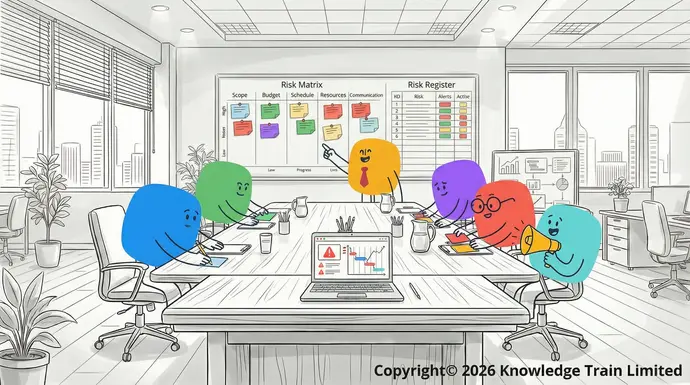
- Maintain a live risk register, supported by tools such as a risk matrix, SWOT, and project software alerts.
- Prevent common failures by controlling scope changes, monitoring budgets, managing dependencies, and planning resources.
- Keep stakeholders engaged with clear communication so risks are understood, owned, and acted on.
Understanding project risks
Definition of project risk
A project risk refers to an uncertain event or condition that, if it occurs, has the potential to either positively or negatively affect the outcome of a project. Risks can impact project objectives such as scope, schedule, cost, or quality. Examples of project risks include changes in customer requirements, budget constraints, delays in schedules, technical issues, resource shortages, and more.
Types of project risks
Project risks can be classified into various categories, including:
- Internal risks : These risks originate from within the project or the organisation itself. They can be related to factors such as team dynamics, resource availability, or management decisions.
- External risks : These risks arise from factors outside the project’s control, such as economic conditions, regulatory changes, natural disasters, or market trends.
- Technical risks : Technical risks are associated with the technology or methodologies used in the project. They may involve issues like software glitches, hardware failures, integration challenges, or inadequate technical expertise.
- Financial risks : Financial risks impact the project’s budget, funding, or financial resources. They can include factors like unexpected cost overruns, currency fluctuations, or inadequate financial planning.
- Operational risks : Operational risks affect the day-to-day functioning of the project. They can encompass issues like human errors, process inefficiencies, supply chain disruptions, or equipment failures.
- Strategic risks : Strategic risks influence the project’s alignment with the organisation’s overall business goals. They may involve risks related to changing market demands, competitive pressures, or organisational changes.
Impact of risks on project success
Risks can have a variety of impacts on a project’s success:
- Positive effects : These could include opportunities for innovation or efficiency improvements
- Negative effects : These could lead to delays, cost overruns, or quality issues.
Effective risk management is important for minimising negative impacts and maximising the potential for opportunities and overall project success.
By identifying and assessing risks, project managers can develop contingency plans and take proactive steps to mitigate potential problems. This helps increase the chances of achieving project goals and delivering value to stakeholders.
Common project management risks
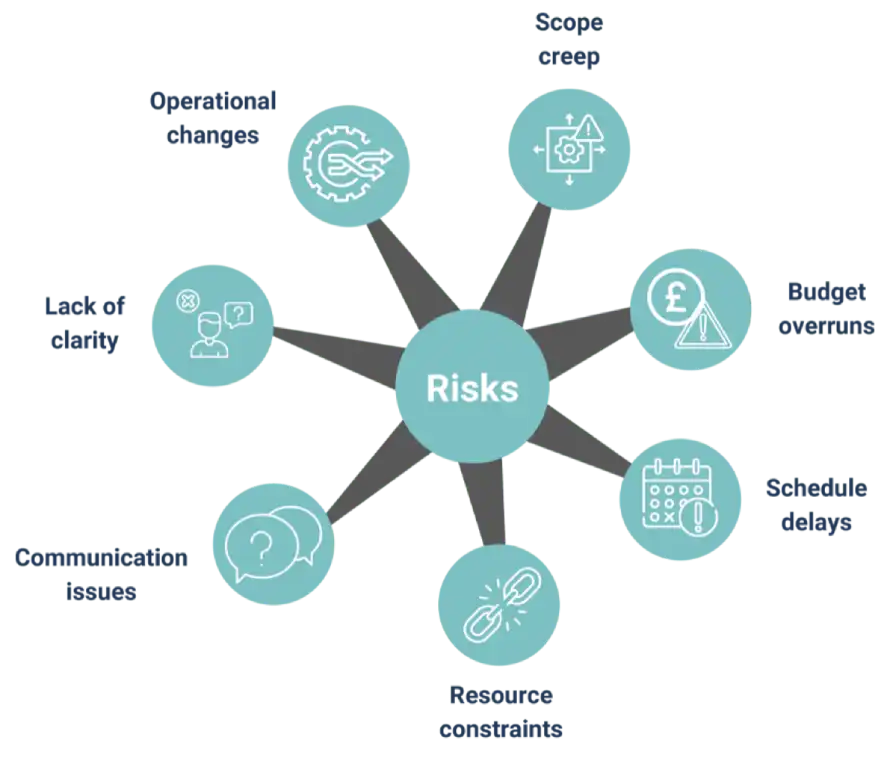
Scope creep
Common causes
Scope creep is the uncontrolled expansion of a project’s scope without corresponding adjustments to time, budget, and resources. Common causes of scope creep include ambiguous initial requirements, lack of change control processes, Stakeholder pressure for additional features, and insufficient stakeholder engagement.
Impact
Scope creep can have several impacts on a project:
- It can increase the project’s duration, require more resources and increase costs
- It can lead to delays and missed deadlines
- It can cause the project to lose focus and drift away from its original objectives
- It can lead to team burnout and demotivation.
To prevent scope creep, it is crucial to have a clear understanding of the project’s objectives and requirements, and to establish change control processes to manage and approve any changes to the project scope.
Budget overruns
Common causes
Budget overruns occur when the actual cost of a project exceeds the initially allocated budget. Common causes of budget overruns include inaccurate cost estimation, scope changes, unforeseen expenses, and poor resource management.
Impact
Prevent budget problems by performing a detailed cost analysis and ensuring financial reporting is transparent throughout the project.
Schedule delays
Common causes
Schedule delays can occur due to a variety of reasons:
- Unrealistic time estimates
- Resource unavailability
- Dependency conflicts
- External factors (e.g. weather, supplier delays).
Impact
Schedule delays can lead to missed deadlines and milestones, increased costs due to prolonged project duration, reduced stakeholder satisfaction and potential loss of competitive advantage.
To address time-related risks, implement effective project scheduling techniques and regularly monitor project progress.
Resource constraints
Types of resource risks
Resource risks can take various forms, such as:
- Skill shortages
- Equipment or material unavailability
- Insufficient funding
- Limited time availability.
Impact on project performance
Resource constraints can result in reduced productivity, compromised quality of deliverables, increased stress on team members and potential project delays.
Conduct thorough resource planning and maintain open communication with stakeholders to proactively address resource-related issues.
Communication issues
Importance of effective communication
Effective communication is vital for project success. It facilitates alignment of project objectives, timely issue resolution, stakeholder engagement and buy-in and efficient team collaboration.
Consequences of poor communication
Poor communication can lead to misunderstandings and conflicts, missed opportunities for problem-solving, reduced team morale and productivity and stakeholder dissatisfaction.
Establish clear communication channels and protocols to promote open and transparent dialogue throughout the project.
Lack of clarity
Sources of unclear requirements
Unclear requirements can stem from ambiguous project objectives, insufficient stakeholder input, lack of detailed documentation and changing business needs.
Effects on project outcomes
Lack of clarity can lead to misaligned expectations, rework and wasted resources, delayed decision-making and compromised project quality.
Invest time in gathering and documenting clear requirements and maintain ongoing stakeholder engagement to ensure alignment.
Operational changes
Types of operational risks
Operational changes can include:
- Organisational restructuring
- Process modifications
- Technology upgrades
- Regulatory changes.
Impact on project execution
Operational changes can affect projects by disrupting established workflows, requiring additional training or resources, altering project priorities and necessitating scope or timeline adjustments.
Stay informed about potential organisational changes and maintain flexibility in project planning to accommodate operational shifts.
By knowing about common project management risks, you can make specific plans to help prevent or overcome them. In addition, proactive risk management involves:
- Regular risk assessments
- Clear communication with stakeholders
- Robust change management processes
- Continuous monitoring and adaptation.
Keep in mind that effective risk management is an ongoing process that needs careful monitoring and flexibility throughout the project. If you plan and work for these common risks, you will be able to increase the probability of success in your project.
Risk management process
Risk identification
The first step in risk management is to identify potential risks that could impact your project. Some common techniques include:
- Brainstorming with team members
- Reviewing historical information from similar projects
- Conducting stakeholder interviews
- Analysing project documentation.
Create a risk register to document all identified risks.
Risk assessment and prioritisation
After identifying risks, assess their potential impact and likelihood of occurrence. Tools you can use include:
- Risk matrix : Plot risks on a chart based on their probability and impact
- Quantitative analysis : Assign numerical values to risks
- : Categorise risks based on severity.
Prioritise risks based on their potential impact.