
How do you implement P3O in an organisation?project planningTo implement to accommodate operational shifts.P3O
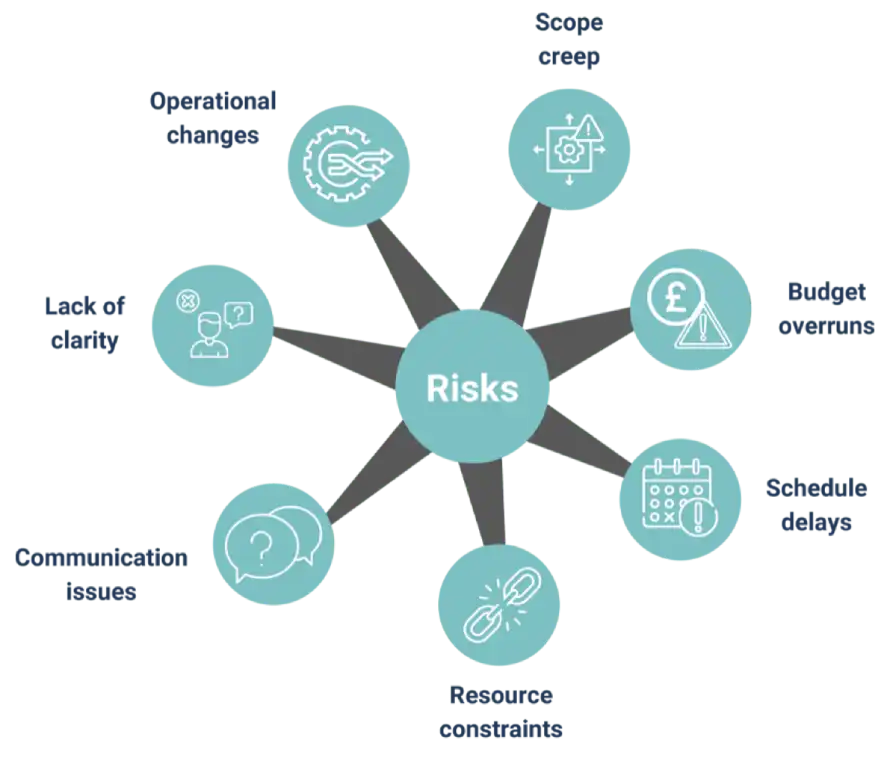
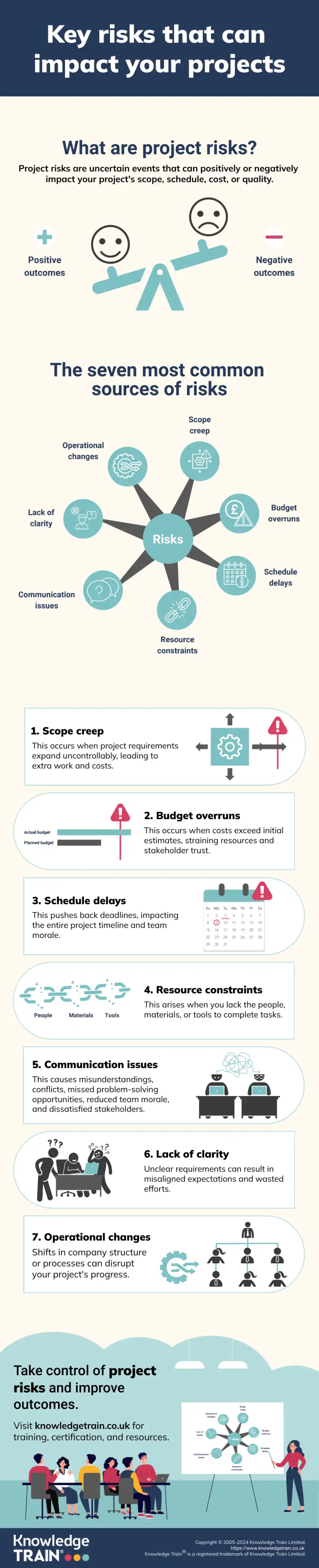
By knowing about common project management risks, you can make specific plans to help prevent or overcome them. In addition, proactive risk management involves: in an organisation, begin by assessing current maturity and needs, then develop a business case for establishing the framework. Design appropriate support structures—centralised or distributed—define roles, governance processes, and reporting lines, and engage stakeholders throughout the process.
- Regular risk assessmentsFinally, establish performance measures to evaluate the P3O’s effectiveness and identify opportunities for continuous improvement.
- Clear communication with stakeholdersHow is Agile PMO different from traditional PMO?
- Robust change management processesThe
- Continuous monitoring and adaptation.Agile PMO
Keep in mind that effective risk management is an ongoing process that needs careful monitoring and flexibility throughout the project. If you plan and work for these common risks, you will be able to increase the probability of success in your project. differs from the
Risk management processtraditional PMO
Risk identification in several key ways, reflecting
The first step in risk management is to identify potential risks that could impact your project. Some common techniques include:Agile principles
- Brainstorming with team members versus traditional
- Reviewing historical information from similar Waterfallprojects approaches.
- Conducting stakeholder interviewsApproach to management:
- Analysing project documentation. Traditional PMOs emphasise detailed upfront planning and strict adherence to scope, schedule, and budget, while Agile PMOs support flexibility and iterative progress.
Create a Role and function:risk register Traditional PMOs focus on governance and control. Agile PMOs act as facilitators, promoting collaboration and continuous improvement. to document all identified risks.Planning and execution:
Risk assessment and prioritisation Traditional PMOs follow fixed plans; Agile PMOs use iterative planning with frequent reassessment.
After identifying risks, assess their potential impact and likelihood of occurrence. Tools you can use include:Measurement:
- Risk matrix Traditional PMOs measure success by compliance and deliverables; Agile PMOs focus on value delivery and customer satisfaction.: Plot risks on a chart based on their probability and impactCulture:
- Establish clear communication channels and protocols
- Schedule regular team meetings and stakeholder updates{"@context":"https://schema.org","@graph":[{"@type":"WebPage","name":"P3O: Portfolio, Programme & Project Offices Explained","url":"https://www.knowledgetrain.co.uk/project-management/pmo/p3o","description":"Discover what P3O is, its model, benefits, best practices, roles, certification, and how to implement P3O for project, programme and portfolio success.","significantLink":"https://www.axelos.com/certifications/propath/p3o","mainEntity":[{"@type":"Article","headline":"P3O: An Overview of Portfolio, Programme and Project Offices","about":[{"@type":"DefinedTerm","name":"P3O","sameAs":["https://en.wikipedia.org/wiki/P3O","https://www.google.com/search?&kgmid=/m/0jn7w3q","https://www.wikidata.org/wiki/Q17379449"]},{"@type":"DefinedTerm","name":"Portfolio Management","sameAs":["https://en.wikipedia.org/wiki/Portfolio_management","https://www.google.com/search?&kgmid=/m/02qk1v0","https://www.wikidata.org/wiki/Q724433"]}],"mentions":[{"@type":"DefinedTerm","name":"Programme Management","sameAs":["https://en.wikipedia.org/wiki/Programme_management","https://www.google.com/search?&kgmid=/m/03mgbb","https://www.wikidata.org/wiki/Q1474120"]},{"@type":"DefinedTerm","name":"Project Management","sameAs":["https://en.wikipedia.org/wiki/Project_management","https://www.google.com/search?&kgmid=/m/07tdq","https://www.wikidata.org/wiki/Q171468"]},{"@type":"DefinedTerm","name":"Project Management Office","sameAs":["https://en.wikipedia.org/wiki/Project_management_office","https://www.google.com/search?&kgmid=/g/11c5k3dn_1","https://www.wikidata.org/wiki/Q7245704"]},{"@type":"DefinedTerm","name":"Best Practices","sameAs":["https://en.wikipedia.org/wiki/Best_practice","https://www.google.com/search?&kgmid=/m/03fjc","https://www.wikidata.org/wiki/Q3563928"]},{"@type":"DefinedTerm","name":"Methodology","sameAs":["https://en.wikipedia.org/wiki/Methodology","https://www.google.com/search?&kgmid=/m/04c927","https://www.wikidata.org/wiki/Q188092"]},{"@type":"DefinedTerm","name":"Business Case","sameAs":["https://en.wikipedia.org/wiki/Business_case","https://www.google.com/search?&kgmid=/g/120z_cgq","https://www.wikidata.org/wiki/Q18479145"]},{"@type":"DefinedTerm","name":"Governance","sameAs":["https://en.wikipedia.org/wiki/Governance","https://www.google.com/search?&kgmid=/m/02pjh","https://www.wikidata.org/wiki/Q749040"]},{"@type":"DefinedTerm","name":"Roles and Responsibilities","sameAs":["https://en.wikipedia.org/wiki/Responsibility_assignment_matrix","https://www.google.com/search?&kgmid=/m/026jvnw","https://www.wikidata.org/wiki/Q21569410"]},{"@type":"DefinedTerm","name":"Implementation Steps","sameAs":["https://en.wikipedia.org/wiki/Implementation","https://www.google.com/search?&kgmid=/m/04gxwqd","https://www.wikidata.org/wiki/Q11028"]},{"@type":"DefinedTerm","name":"Benefits","sameAs":["https://en.wikipedia.org/wiki/Benefit_(disambiguation)","https://www.google.com/search?&kgmid=/m/024jsn","https://www.wikidata.org/wiki/Q851883"]},{"@type":"DefinedTerm","name":"Certification","sameAs":["https://en.wikipedia.org/wiki/Professional_certification","https://www.google.com/search?&kgmid=/m/033t2r","https://www.wikidata.org/wiki/Q144931"]},{"@type":"DefinedTerm","name":"Framework","sameAs":["https://en.wikipedia.org/wiki/Framework","https://www.google.com/search?&kgmid=/m/030s3s","https://www.wikidata.org/wiki/Q1299249"]},{"@type":"DefinedTerm","name":"Centre of Excellence","sameAs":["https://en.wikipedia.org/wiki/Centre_of_excellence","https://www.google.com/search?&kgmid=/m/028k8c","https://www.wikidata.org/wiki/Q5015605"]},{"@type":"DefinedTerm","name":"Decision-Making","sameAs":["https://en.wikipedia.org/wiki/Decision-making","https://www.google.com/search?&kgmid=/m/0csx1","https://www.wikidata.org/wiki/Q937764"]},{"@type":"DefinedTerm","name":"Stakeholder Engagement","sameAs":["https://en.wikipedia.org/wiki/Stakeholder_engagement","https://www.google.com/search?&kgmid=/g/11bctxkksm","https://www.wikidata.org/wiki/Q7602994"]},{"@type":"DefinedTerm","name":"Risk Management","sameAs":["https://en.wikipedia.org/wiki/Risk_management","https://www.google.com/search?&kgmid=/m/09dxw","https://www.wikidata.org/wiki/Q178950"]}]},{"@type":"FAQPage","mainEntity":[{"@type":"Question","name":"How do you implement P3O in an organisation?","acceptedAnswer":{"@type":"Answer","text":"
To implement P3O in an organisation, begin by assessing current maturity and needs, then develop a business case for establishing the framework. Design appropriate support structures—centralised or distributed—define roles, governance processes, and reporting lines, and engage stakeholders throughout the process.
Finally, establish performance measures to evaluate the P3O’s effectiveness and identify opportunities for continuous improvement. - "}},{"@type":"Question","name":"How is Agile PMO different from traditional PMO?","acceptedAnswer":{"@type":"Answer","text":"
The Agile PMO differs from the traditional PMO in several key ways, reflecting Agile principles versus traditional Waterfall approaches.
Approach to management: Traditional PMOs emphasise detailed upfront planning and strict adherence to scope, schedule, and budget, while Agile PMOs support flexibility and iterative progress.
Role and function:
Traditional PMOs focus on governance and control. Agile PMOs act as facilitators, promoting collaboration and continuous improvement.
Planning and execution: - Traditional PMOs follow fixed plans; Agile PMOs use iterative planning with frequent reassessment.
Measurement: Traditional PMOs measure success by compliance and deliverables; Agile PMOs focus on value delivery and customer satisfaction.
Culture:
- Traditional PMOs operate hierarchically, while Agile PMOs encourage empowerment and servant leadership.
- "}},{"@type":"Question","name":"Is P3O certification worth it?","acceptedAnswer":{"@type":"Answer","text":"
Yes, obtaining P3O certification is worthwhile if you aim to advance your career in PMO, portfolio, or programme management. The certification enhances your understanding of how to structure and manage effective support offices and provides insights into implementing best practices across portfolios, programmes, and projects.
- "}},{"@type":"Question","name":"Is P3O worth it?","acceptedAnswer":{"@type":"Answer","text":"
Yes, implementing P3O can be extremely valuable. It improves governance, aligns change initiatives with strategic objectives, and ensures resources are optimally allocated across programmes and projects.
The P3O certification is highly recommended for PMO managers, portfolio managers, and business analysts. It provides practical guidance on aligning project management methods with strategic goals to enhance organisational performance and value delivery.
"}},{"@type":"Question","name":"What is P3O?","acceptedAnswer":{"@type":"Answer","text":"
stands for Portfolio, Programme and Project Offices. It is a best practice framework that helps organisations establish and manage support structures for effective portfolio, programme, and project management. The framework improves governance, decision-making, and alignment with strategic business goals.
"}},{"@type":"Question","name":"What is P3O certification?","acceptedAnswer":{"@type":"Answer","text":"< is an ongoing process that requires constant vigilance, regular reassessment and adaptation to changing project conditions.p>P3O certification validates your ability to apply and manage the framework effectively. It demonstrates understanding of the principles, processes, and techniques required to design and operate a portfolio, programme, or project office.
P3O certification is available at two levels:
– covers fundamental concepts and terminology.
– focuses on applying and tailoring the P3O model to real-world organisations.
"}},{"@type":"Question","name":"What is P3O model?","acceptedAnswer":
P3O project management is an integrated framework that helps organisations design governance structures supporting effective delivery of portfolios, programmes, and projects. It promotes informed decision-making, optimal resource use, and alignment with strategic objectives.
By providing a structured model, P3O helps ensure that project outcomes contribute directly to business success.
"}},{"@type":"Question","name":"What is the difference between PMO and P3O?","acceptedAnswer":{"@type":"Answer","text":"The main difference between a PMO and P3O lies in scope. A PMO typically supports individual projects, while P3O provides an overarching framework that coordinates multiple PMOs and ensures alignment across portfolios and programmes.
< p>P3O offers a strategic layer that connects project delivery with business objectives through standardised processes and governance models.< p>The refers to the formal Portfolio, Programme and Project Offices certifications, which validate knowledge of the framework’s principles and application. Widely recognised in the UK and globally, these certifications are ideal for professionals managing or leading PMO functions.