
Key takeaways
Strong delivery comes from choosing and combining techniques that fit your project’s uncertainty, scale, and stakeholders.
- Use a Work Breakdown Structure to define scope clearly and create reliable estimates and ownership.
- Use Gantt charts and network diagrams to visualise sequencing, dependencies, and progress.
- Apply CPM and PERT to identify critical work, quantify schedule risk, and test scenarios.
- Use Kanban to manage flow, limit work in progress, and surface blockers early.
- Prioritise uncertainty with a risk matrix and stakeholder mapping to guide action and communication.
- Track delivery health with EVM and cost-benefit analysis to support timely, evidence-based decisions.
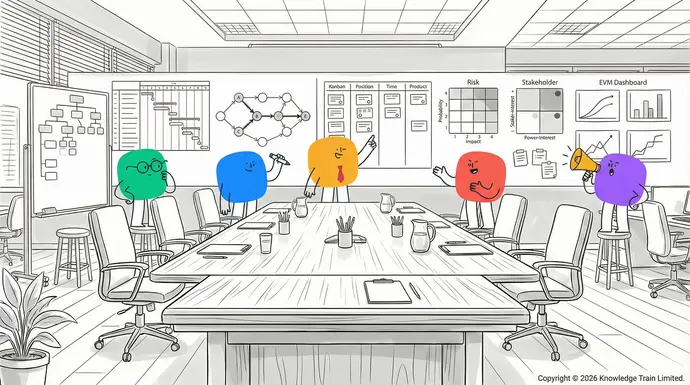
Introduction to project management techniques
Project management techniques have become an essential aspect of modern businesses, allowing organisations to achieve their objectives, meet deadlines, and deliver value to their stakeholders. These techniques refer to the tools and methodologies that project managers and teams use to plan, execute, and control projects efficiently. 3) The Daily StandupProject management techniques have been in existence for centuries, and they have evolved to meet the changing needs of businesses and the latest technological developments.4) Sprint Review
The history of project management techniques dates to ancient times when large-scale projects such as the construction of the pyramids and the Great Wall of China were undertaken. However, modern project management started to emerge in the mid-20th century with the development of techniques such as the Gantt chart and the Critical Path Method (CPM). As businesses became more complex and globalised, new methodologies emerged to address the diverse project needs of different industries.
Today, there are many project management techniques that project managers can use to achieve success. In this article, we will discuss 11 essential project management techniques that every 5) Sprint Retrospectiveproject manager should know. Each technique has its benefits and is suitable for different types of projects and organisational cultures. Project managers need to understand the various project management techniques available and choose the ones that best fit their projects and organisational cultures. They should also be adaptable to change as 6) Product incrementproject needs and circumstances evolve.Final delivery
Project planning and visualisationIntroduction
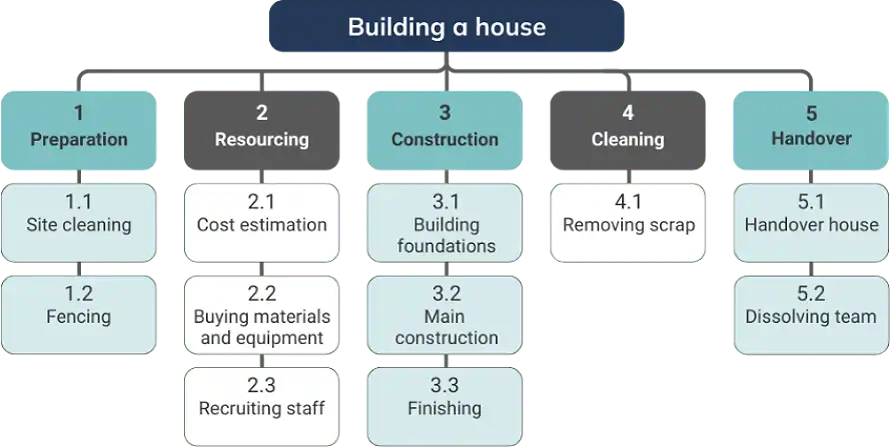
Developing a WBSInstructor-led typically requires input from the project team and stakeholders to ensure it is comprehensive and accurate. A WBS is usually presented as a tree diagram or outline, with each level representing an increased level of detail and each item on the same level representing a similar type of work. Note that the term ‘tree’ is used by many software systems and it is not necessarily drawn as a tree.Certified Scrum Master course
A WBS becomes the foundation for other project management processes£699 +vat
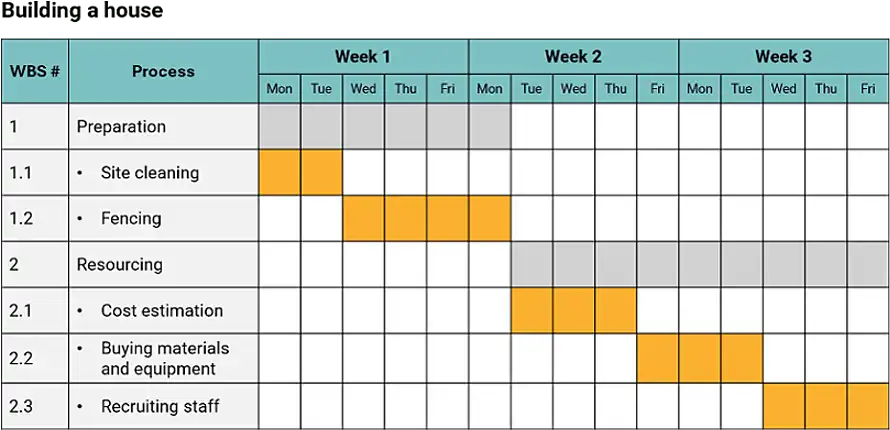
Some modern Gantt chart software provides additional features such as colour-coding of tasks, milestone markers, and linking of dependent tasks. Some tools also allow for resource allocation and workload management directly from the Gantt view.
Gantt charts are most useful when you want to provide an overview of the entire project. However, for large and complex projects, they may become cluttered and difficult to read. Despite this, Gantt charts remain a popular tool for project managers because of their intuitive design and ability to communicate complex scheduling information quickly and clearly.
Project network diagrams
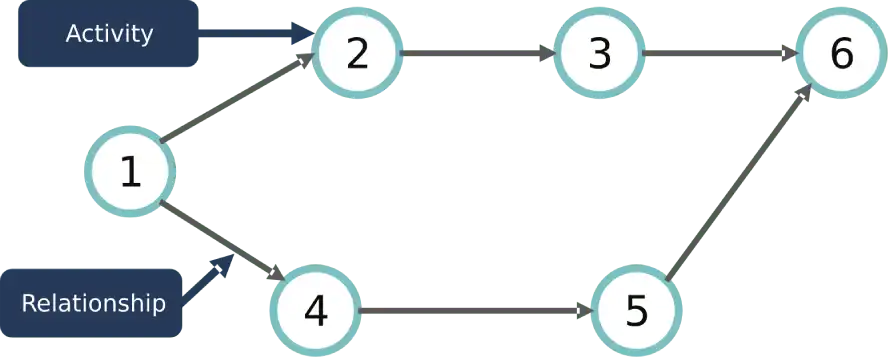
Project Network DiagramsSelf-paced, as the name implies, are graphical representations of a project’s tasks and their relationships, showing how the project activities are sequenced and interrelated. These diagrams provide a visual depiction of the project flow and are commonly used in project management methodologies that include Critical Path Method (CPM) and Program Evaluation and Review Technique (PERT).Scrum Essentials self-paced online
Network diagrams typically use nodes to represent tasks or activities and arrows to indicate dependencies between these tasks. They allow for a clear visualisation of task sequences and can help project managers identify potential bottlenecks or critical paths in the project schedule£499 +vat.1) Select Scrum team
Key takeawaysOne of the most difficult parts when creating a project is figuring out roles and responsibilities. Begin by identifying the roles people will take for the project.
- Visual representation of task dependenciesThe three roles on a Scrum team are:
- Identify critical path and potential schedule risksProduct Owner
- Facilitate resource allocation and schedule optimisation.The
Quick tipsProduct Owner
- Begin with a clear list of all project tasks and their dependencies. should be someone with authority, availability and vision. They represent the customer and continuously communicate the priorities and vision to the team.
- Use software tools for easy creation and updating of network diagrams.Scrum Master
- Regularly review and update the diagram as the project progresses.The
- Utilise color-coding to highlight critical paths or high-risk activities.Scrum Master
Common pitfalls acts as a facilitator between the Product Owner and the Development Team. The Scrum Master will also work to remove impediments that may inhibit the Development Team reaching the sprint goal. The person does not, however, provide day-to-day directions or give instructions to the Development Team.
- Overlooking important task dependencies.Development Team
- Creating overly complex diagrams that are difficult to understand.The Development Team are self-organized and responsible for developing the product.
- Failing to update the diagram as project scope or timelines change.Do
- Neglecting to consider resource constraints when analysing the network.Force anyone to take on the role of the
By learning project network diagrams, managers can enhance their ability to plan, schedule, and control complex projects effectively.Scrum Master
Scheduling and time managementI can hear new bands that are suited to my taste
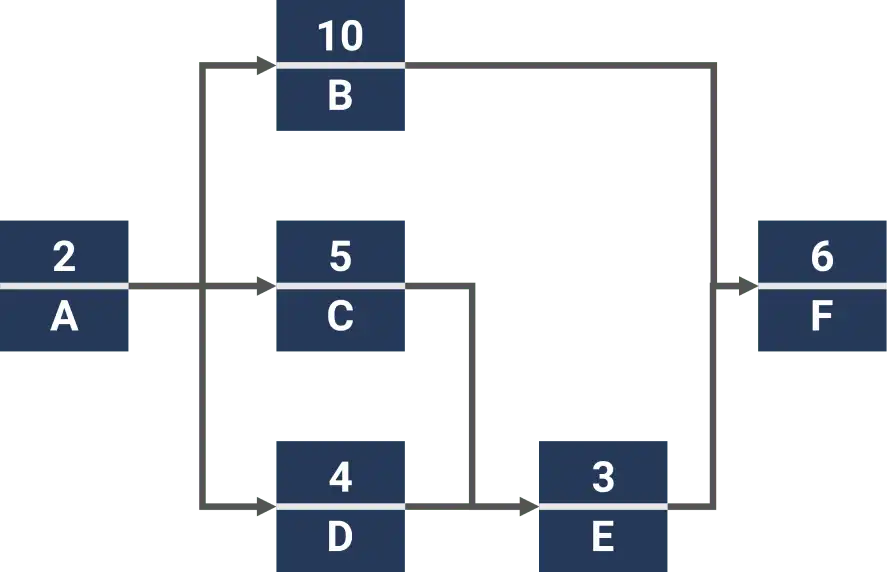
Critical Path Method (CPM)Sprint backlog
The The Product Owner presents the highest priority user stories from the product backlog to the Development Team.Critical Path MethodThe Development Team decide on what they are able complete for the sprint and break (CPM) is a fundamental project management technique used to determine the longest sequence of dependent tasks that must be completed for a project to be finished on time. This sequence of tasks is known as the critical path. The CPM was first developed in the late 1950s and has since been widely adopted for user storiesproject scheduling into tasks, estimating the effort and transferring them to a sprint backlog. and control in various industries.Definition of “done”
CPM involves the following key steps:It is essential that the
- Identifying all project tasksScrum Master
- Determining task dependencies and Product Owner provide a set of acceptance criteria for each user story. Acceptance criteria is what determines whether the
- Estimating task durationsuser story
- Calculating the earliest and latest start and finish times for each task is complete. It can also be referred to as the definition of “done”.
- Identifying the critical path and the float time for non-critical tasks.The table below shows two user stories with two sets of acceptance criteria.
The critical path represents the sequence of tasks that directly affects the project’s overall duration. Any delay in a critical path task will result in a delay in the project completion date, unless the delay is addressed through corrective action.As a
CPM offers several benefits:I want
- Provides a visual overview of project schedulesso that
- Highlights tasks that have the most significant impact on project durationAcceptance criteria
- Reduced waste of time and resources.
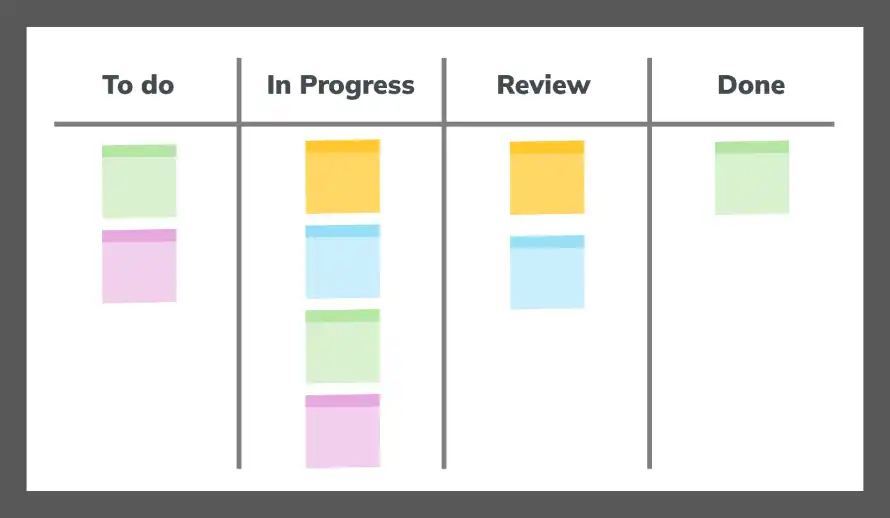
Kanban boards can be physical or digital. A physical board can be as simple as a whiteboard and some sticky notes. A digital board is a virtual representation of the physical board that can be accessed and updated by the team members using project management software. Digital boards offer more features, such as automatic updates, task details, and integration with other tools.
Implementing Kanban boards is easy, but it requires the team to be committed to updating the board regularly and following the work-in-progress limits.
Risk and stakeholder management
Risk management matrixSelf-paced
A Scrum Essentials self-paced onlineRisk Management Matrix , also referred to as a Probability and Impact Matrix, is a graphical representation used in project management to prioritise and manage risks. It allows project managers and teams to evaluate potential risks based on their likelihood of occurrence and potential impact on the project.£499 +vat
The matrix typically displays a grid with probability on one axis and impact on the other. Risks are plotted on this grid, enabling quick visual identification of high-priority risks that require immediate attention and action.4) Sprint Review
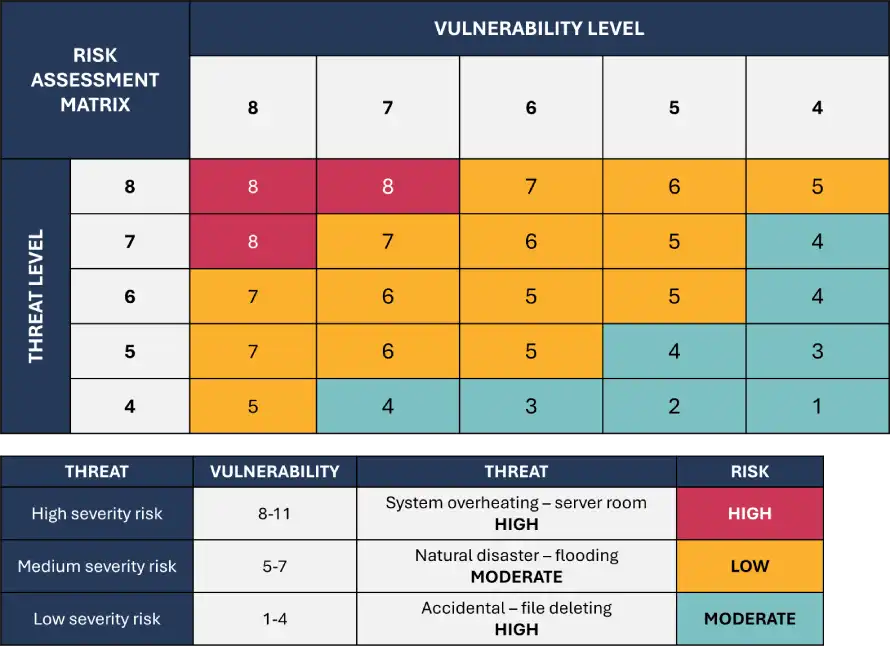
Essential elements in a Risk Management Matrix:By the end of each sprint, the Development Team should deliver a potentially shippable product increment. In other words, the product increment should be in a useable condition. No incomplete work should be presented during a sprint review.
- Probability: The chance of a risk happening (typically rated as low, medium, high)During a sprint review, the team present what they have accomplished during the sprint. They demonstrate the functionality of the product increment to the Product Owner and customer. The purpose of the sprint review is to get feedback from everyone on the product increment. After the feedback is shared, the next set of product backlog items can be discussed.
- Impact: The severity of the outcome if the risk occurs (usually ranked from minor to major)Do
- Risk score: A value obtained by multiplying the probability and impact assessments.Let everyone provide feedback and suggest new ideas
Advantages of employing a Risk Management Matrix:Make changes to the product backlog when necessary
- Facilitates a clear, visual summary of potential project risks.Don’t
- Assists in prioritising risk responses.Use the sprint review as a signoff or user acceptance meeting
- Improves risk communication with stakeholders.Top Tip
- Aids in making more informed decisions.Don’t forget to focus on the end users. Make sure to fully involve them during the sprint review. It may seem difficult collaborating with your customers because of the fear of making changes or hearing criticism, but it is easier to hear everything sooner rather than later.
Tips for effective use:5) Sprint Retrospective
- Update the matrix regularly as new risks emerge or situations evolve.During a sprint retrospective, the team evaluate the whole sprint. The two main questions that are asked are “what went well?” and “what can be improved in the next sprint?”
- Engage the whole project team in risk identification and evaluation.Do
- Formulate specific mitigation or contingency plans for prioritised risks.Make a list of what to start, stop, and continue
- Periodically review and revise risk ratings and assumptions.Don’t
By systematically identifying, evaluating, and addressing risks, Point fingers or blame. Try to be constructive insteadproject managersTop Tip can proactively manage potential challenges and opportunities, thereby enhancing the project’s chances of success.Get creative! Play games and keep people moving. Engage in mentally stimulating activities and help to break down tension
Stakeholder mapping6) Product increment
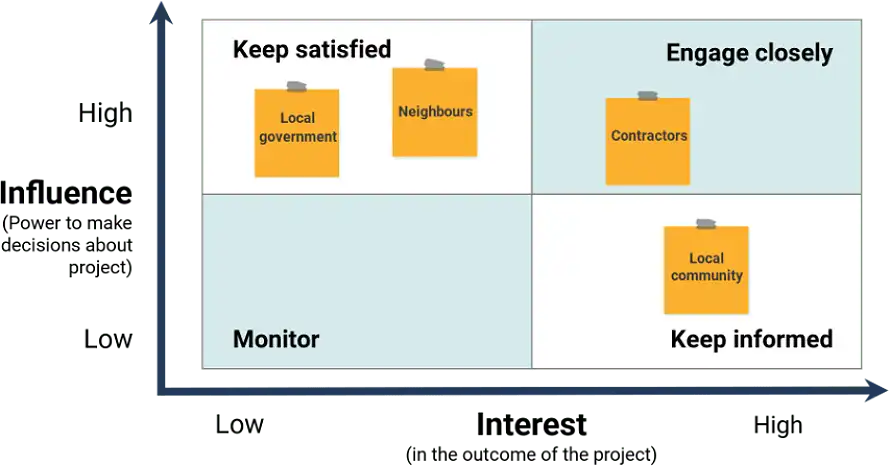
Stakeholder mappingThe product increment is the output of all the product backlog items completed during the sprint (plus any previous sprints). It must be fully functional, in a useable condition and meet the allocated acceptance criteria or definition of done. The Product Owner decides whether to release the product increment. is a visual technique to analyse and prioritise stakeholders for your project based on their interest, influence, and impact on the project.Interim delivery
Key takeawaysDuring an interim delivery, the product increment is tested by the customer. If the product is incomplete, the Development Team return to the product backlog to prepare for another sprint. This cycle repeats until all user stories are completed to the Product Owner’s satisfaction.
- Recognise all potential stakeholders, those who may affect or be affected by the project.Do
- Help prioritise stakeholders based on their influence and interest in the project.Remember what was discussed during the sprint retrospective and apply it to the next sprint
- Facilitate communication planning with stakeholders.Don’t
- Aid in Dwell on past mistakes. Move on and learn from whatever went wrong during the previous sprintrisk managementTop Tip and informed decision making.It’s easy to get caught up in preparing for the next sprint, but don’t forget to celebrate achievements and good results from the previous sprint. This gives you some room to breathe and get pumped up for the next cycle
Quick tipsPractice makes perfect! If you are new to
- Use a power/interest grid to plot stakeholders.Scrum
- Update the stakeholder map regularly as the project evolves., you might not get everything right at the beginning. Learning takes practice and the more you do, the better you will be at using the technique
- Identify both positive and negative stakeholders.Enhance your skills with our expert-led courses
- Customise communication plans for different stakeholder groups.
- Engage team members in the mapping process for a broader view.
Common pitfalls
- Missing less apparent stakeholders.Instructor-led
- Not reassessing stakeholder positions over time.Certified Scrum Master course
- Ignoring low-power stakeholders.
- Overlooking the need for individual engagement strategies.£699 +vat
- Assuming stakeholders’ interests do not change.
Project success can be achieved by carefully identifying and communicating with key project stakeholders. The concept of a stakeholder map can be explained as the graphical representation of project stakeholders. The process to be performed for conducting a stakeholder mapping analysis is very crucial for the project success. When starting with a new project, the first phase in stakeholder mapping analysis is to conduct a stakeholder identification process. The stakeholder identification process in a project involves categorising the identified stakeholders based on their impact on the project and their level of influence in the project.See all dates
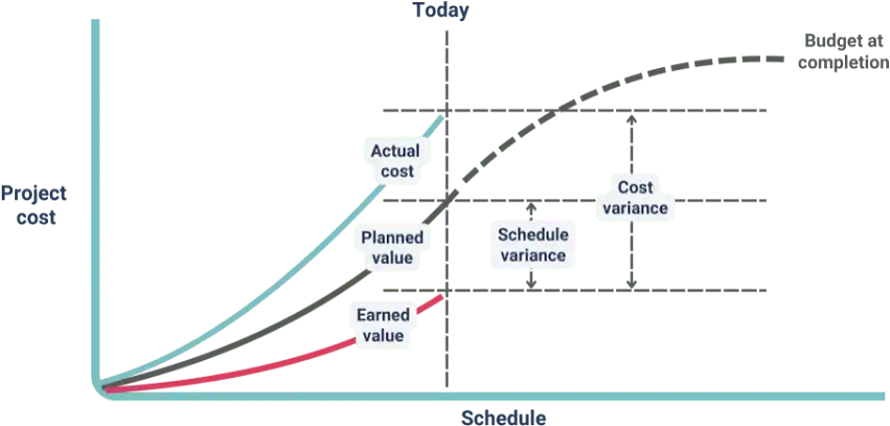
- to automate EVM calculationsSimon Buehring
- Regularly review and analyse EVM metrics19 Feb 2026
- Effectively communicate EVM results to stakeholders.
Common pitfallsDiscover how Lean principles focus on customer satisfaction and drive organizational goals. Learn more about Lean and Lean Six Sigma here.
- Using EVM in a rigid way without understanding the context and qualitative issues
- Using EVM without adequate training or knowledge
- Not revising the baseline for significant changes
- Not acting based on the EVM information.
Cost-benefit analysis
Cost-Benefit Analysis
- Identify all the costs and benefits associated with the project
- Monetise the costs and benefits in monetary termsSimon Buehring
- Compare the present value of costs and benefits using metrics such as net present value (NPV) or benefit-cost ratio (BCR)23 Feb 2026
- Analyse the sensitivity of the results to changes in assumptions or inputs
- Decide based on the CBA results and other criteria.Choosing between PMP and Agile certification can be crucial. Read on to compare these paths and decide which suits your career goals best.
Key takeaways
- CBA provides a clear and transparent financial justification for a project
- It helps prioritise projects with the highest return on investment (ROI)
- It supports objective and rational decision-making.
Quick tips
- Identify and include all relevant costs and benefits, both tangible and intangible
- Use realistic and consistent assumptions and data sources
- Involve subject matter experts in the analysis process
- Review and update the CBA regularly to reflect changes in the project or environment.
Common pitfalls
- Overlooking or underestimating hidden or long-term costs or benefits
- Overestimating the benefits or underestimating the costs
- Not considering alternative options or the status quo
- Not accounting for risks and uncertainties.
Resource levelling
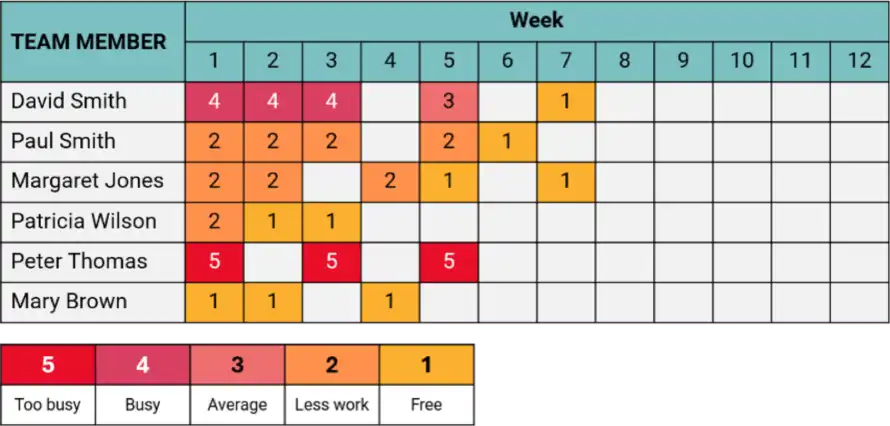
Resource levelling is a technique for managing project resources to achieve optimal resource utilisation. It involves adjusting the allocation of resources to tasks so that resource demand does not exceed the available supply. By smoothing out the use of resources, resource levelling can reduce overallocation and idle time.
Key takeaways
- Resource levelling can lead to better resource utilisation and increased productivity.
- It can help avoid burnout and reduce project risks.Agile transformation: What should ‘good’ look like (and what to be wary of)?
- It can help project managers create more realistic schedulesSevcan Yasa.23 Feb 2026
Quick tips
- Identify resource constraints early in the project planning process.Unlock the secrets of successful Agile transformation. Scroll down to watch the insightful webinar video now.
- Use project management software that includes resource levelling capabilities.
- Prioritise critical path activities when levelling resources.
- Communicate any resource changes to team members and stakeholders.
Common pitfalls
- Over-optimising resources at the expense of meeting project deadlines.
- Forgetting to account for the skill sets of individual resources when reallocating them.The challenges with Agile
- Failing to update the resource levelling as the project progresses.
- Overlooking the impact of resource levelling on project costs.Simon Buehring
Conclusion19 Feb 2026
Project managers can add the project management techniques described in this article to their project management toolkits. The larger the toolkit, the better equipped they are to handle the challenges their projects throw at them.Learn about the hurdles of shifting to Agile with insights from a top training provider. Read on for common organizational challenges.
Project managers who effectively implement these techniques can improve their project plans , resource scheduling, time and cost management, risks and stakeholders’ management and project performance.
Informed decisions and right use of these techniques can help project managers deliver better project outcomes.
FAQs
What are the most essential project management techniques?
Some of the most important and effective ones include Gantt charts, Work Breakdown Structure , CPM, Kanban boards and Risk Analysis.
How do Gantt charts help in project management?
Gantt charts are versatile project management tools. A Gantt chart could help in many ways: from getting you started on your tasks and giving you deadlines to plotting out your timeline and tracking your progress, all the way to giving you an eagle eye on task dependencies and seeing bottlenecks.
What is the Work Breakdown Structure (WBS), and why is it important?Agile principles
A Work Breakdown Structure or a WBS is a project management technique that decomposes a project into smaller pieces for easier management. A WBSSimon Buehring is critical for task organisation, time and cost estimation and more it allows you to build a clear scope for your project and help you to not get overwhelmed and not forget anything important.19 Feb 2026
How can Kanban boards improve project workflow?
Kanban boards are visual tools that can help you and your team to visualise and manage tasks and workflows. Kanban boards will help your team collaborate, limit work-in-progress, and manage processes more efficiently, they also help you to see the bottlenecks easily. Kanban boards are a more popular tool for recurring processes and Understand how Agile principles revolutionize project delivery and quality. Read on to learn about their application in various industries.Agile project management .
What is the Critical Path Method (CPM), and how does it help in scheduling?
The Critical Path Method or CPM is a project scheduling technique that analyses your project in terms of tasks’ sequence and duration. CPM will help you to identify the longest chain of dependent tasks in your project, the so-called critical path, which would then help you in your decision-making: it will allow you to see what your project’s minimal duration is and what tasks can be delayed or rescheduled without affecting the project in general. The CPM is very useful in resource planning and allocation, as well as ensuring you have a solid deadline.
What is Scrum, and how does it fit into Agile project management?
Scrum DSDM principles: A visual guideScrum Master ), events (sprint planning, daily stand-ups) and tools (sprint backlog). Scrum helps teams to plan and manage their work, adapt to changing requirements, and deliver value quickly.Simon Buehring
How does Agile project management differ from traditional methods?19 Feb 2026
Agile is an iterative and incremental approach to product development that values flexibility, collaboration, and customer satisfaction over following a rigid plan. Agile teams embrace change even late in the project, and they focus on delivering working solutions regularly rather than following a fixed set of requirements. Agile is all about continuous improvement and responding to feedback, and there are different ways (frameworks) to do it.Learn about DSDM principles through our visual guide and see their response to traditional process flaws. Scroll for more insights.
Infographic
