
Key takeaways
Strong delivery comes from choosing and combining techniques that fit your project’s uncertainty, scale, and stakeholders.
- Use a Work Breakdown Structure to define scope clearly and create reliable estimates and ownership.
- Use Gantt charts and network diagrams to visualise sequencing, dependencies, and progress.Copied!
- Apply CPM and PERT to identify critical work, quantify schedule risk, and test scenarios.Key takeaways
- Use Kanban to manage flow, limit work in progress, and surface blockers early.APM is the UK chartered professional body that sets expectations for project delivery and professional development.
- Prioritise uncertainty with a risk matrix and stakeholder mapping to guide action and communication.APM supports better project, programme, and portfolio outcomes through standards, guidance, and a shared professional language.
- Track delivery health with EVM and cost-benefit analysis to support timely, evidence-based decisions.PFQ builds fundamentals, PMQ validates broader knowledge, and ChPP recognises assessed competence and judgement in practice.
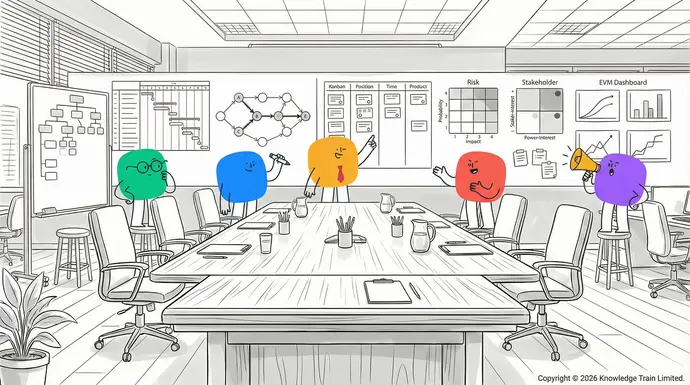
Introduction to project management techniquesHistory and governance
Project management techniques have become an essential aspect of modern businesses, allowing organisations to achieve their objectives, meet deadlines, and deliver value to their stakeholders. These techniques refer to the tools and methodologies that project managers and teams use to plan, execute, and control projects efficiently. Project management techniquesSources have been in existence for centuries, and they have evolved to meet the changing needs of businesses and the latest technological developments.
The history of project management techniques dates to ancient times when large-scale projects such as the construction of the pyramids and the Great Wall of China were undertaken. However, modern project management started to emerge in the mid-20th century with the development of techniques such as the Gantt chart and the Critical Path Method (CPM). As businesses became more complex and globalised, new methodologies emerged to address the diverse project needs of different industries.FAQs
Today, there are many project management techniques that project managers can use to achieve success. In this article, we will discuss 11 essential project management techniques that every Key factsproject managerThe Association for Project Management (APM) is a United Kingdom based professional association for project management. It supports the profession through membership, qualifications, standards, and guidance such as the APM Body of Knowledge. should know. Each technique has its benefits and is suitable for different types of projects and organisational cultures. Project managers need to understand the various project management techniques available and choose the ones that best fit their projects and organisational cultures. They should also be adaptable to change as Not to be confused withproject: APM can also mean Applications Performance Monitoring or other industry acronyms. This page is about the needs and circumstances evolve.Association for Project Management
Project planning and visualisation in the UK.
Work Breakdown Structure (WBS)Full name
The Association for Project ManagementWork Breakdown StructureAcronym (WBS) is a project management technique that involves breaking down a project into smaller, more manageable components. It is a hierarchical decomposition of the total scope of work and provides a visual representation of all the tasks required to complete a project.APM (acronym)
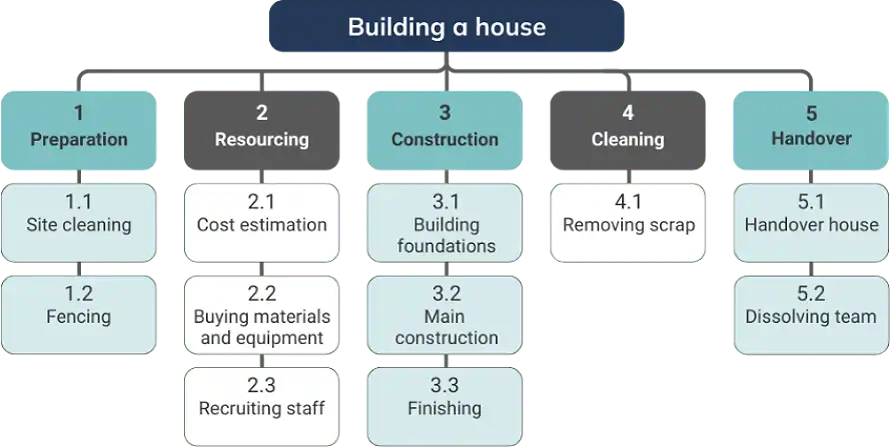
The essence of a WBS is to break down the final deliverable into smaller, more manageable components called work packages. It starts with the final deliverable at the top and is subdivided in a tree structure, where each level of detail represents an increasingly granular level of the project components. These components are typically organised into phases, deliverables, and work packages. By definition, WBS becomes more detailed as you go deeper into the tree. In Organisation typeproject managementProfessional association (professional body for project management), WBS is used to:Country
- Define and organise the total scope of a projectUnited Kingdom
- Ensure all the work required is included, and nothing outside the scope is addedHeadquarters
- Create a foundation for estimating costs, duration, and resourcesBuckinghamshire, England (UK)
- Assign responsibilities to team membersMission
- Develop a To advance the discipline of project management and support project professionals and organisations.project scheduleCore services and budget.Professional membership, qualifications and certification, events and community, publications and guidance, Continuing Professional Development (CPD)
Developing a Flagship qualificationsWBSAPM Project Fundamentals Qualification (PFQ), APM Project Management Qualification (PMQ), Chartered Project Professional (ChPP) typically requires input from the project team and stakeholders to ensure it is comprehensive and accurate. A WBS is usually presented as a tree diagram or outline, with each level representing an increased level of detail and each item on the same level representing a similar type of work. Note that the term ‘tree’ is used by many software systems and it is not necessarily drawn as a tree.Membership types
A WBS becomes the foundation for other Student, Associate, Full, Fellow (grade availability and criteria vary)project management processesOfficial website, including risk assessment, task assignments, and progress tracking. It helps the project team to provide a common structure for the whole project, and other details and activities are based on the work breakdown structure.https://www.apm.org.uk/
Gantt chartsWhat APM does for project management in the UK
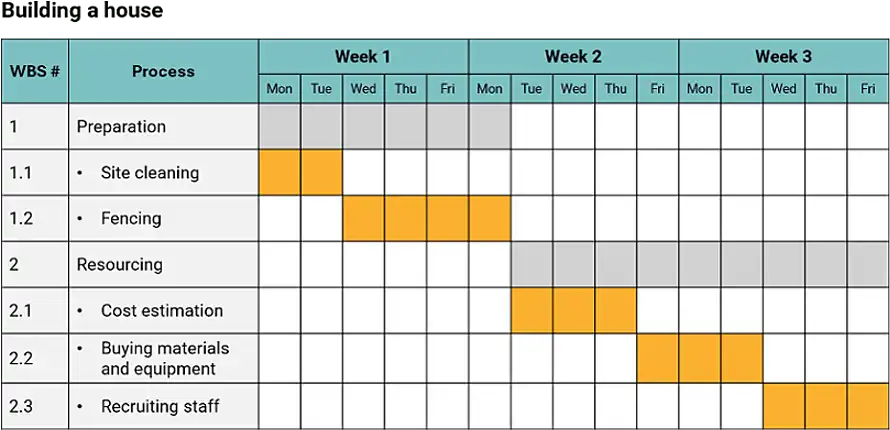
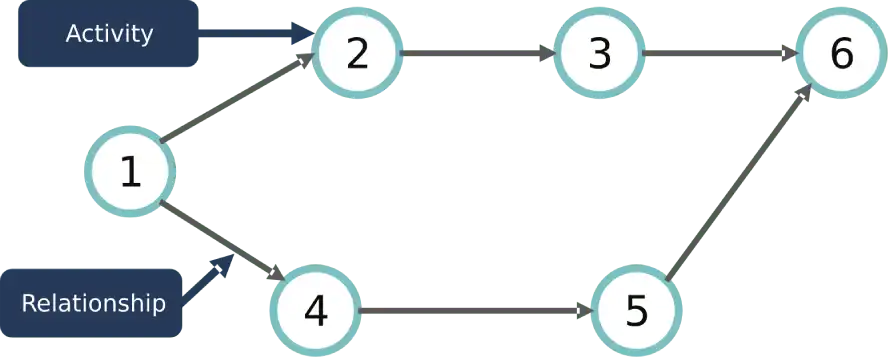
Scheduling and time managementportfolio management
Critical Path Method (CPM).
The PrerequisitesCritical Path Method: Demonstrable experience and evidence of professional practice, typically supported by membership and CPD. (CPM) is a fundamental project management technique used to determine the longest sequence of dependent tasks that must be completed for a project to be finished on time. This sequence of tasks is known as the critical path. The CPM was first developed in the late 1950s and has since been widely adopted for Formatproject scheduling: Application with evidence and assessment (process can evolve over time). and control in various industries.Outcomes
CPM involves the following key steps:: Professional recognition that you can apply good practice, leadership, and governance in real delivery contexts.
- Identifying all project tasksHow APM qualifications relate to PRINCE2 and other methodologies
- Determining task dependenciesAPM qualifications are generally methodology agnostic and focus on transferable principles and knowledge.
- Estimating task durationsPRINCE2
- Calculating the earliest and latest start and finish times for each task is a project management methodology used widely in the UK and beyond; many organisations use PRINCE2 alongside APM aligned learning. In practice, PRINCE2 may provide a structured method for managing stages and controls, while APM learning may broaden understanding across domains such as governance, stakeholder engagement, risk, and professionalism.
- Identifying the critical path and the float time for non-critical tasks.APM Body of Knowledge
The critical path represents the sequence of tasks that directly affects the project’s overall duration. Any delay in a critical path task will result in a delay in the project completion date, unless the delay is addressed through corrective action.The
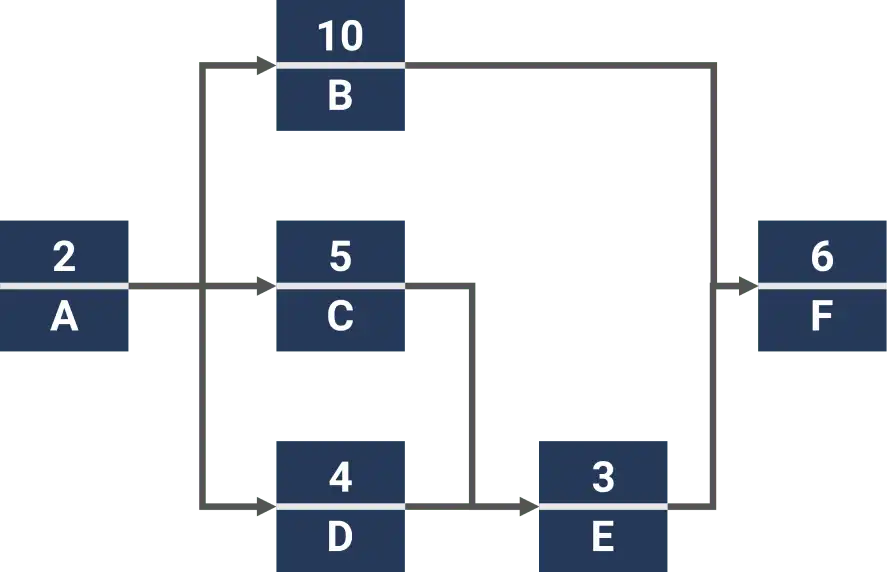
CPM offers several benefits:APM Body of Knowledge
Publications and guidance supporting better project delivery and governance.Kanban Boards are a visual project management tool that originated in Toyota’s lean manufacturing system and have since become popular in various industries, particularly in software development and Career support, including frameworks and pathways for project roles.Agile project Chartered status and what it meansmanagementAPM holds .chartered status (chartered body)
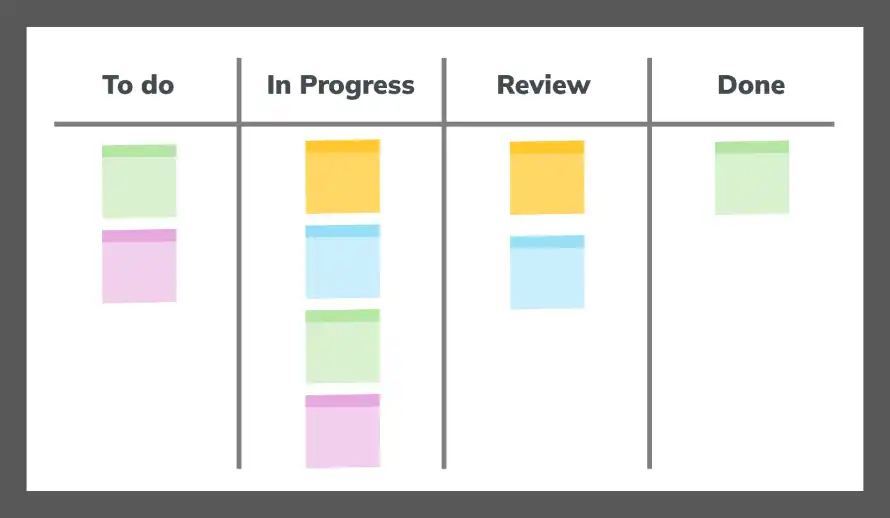
A Kanban board is a visual tool that helps teams manage their work using Kanban methodology. The board is divided into columns that represent the stages of a workflow, for example, “To Do”, “In Progress”, and “Done”. Cards or sticky notes are placed on the board to represent the work items or tasks, and they are moved from one column to another as the work progresses. This way, the team can: as the professional body for project management in the UK. In general, chartered status signals formal recognition and a public interest role in maintaining standards, professionalism, and development routes within a discipline.
- Visualise workflow: The status of all tasks is visible at a glance.For individuals, chartered recognition is commonly associated with assessed competence, professional behaviours, and continuing development rather than only passing a knowledge exam.
- Limit work in progress: Limits are set on the number of tasks in each column to avoid overloading the team.APM vs PMI
- Manage flow: Blockers are quickly identified and resolved.Some people compare APM with the
- Continuous improvement: The team optimises the workflow over time.Project Management Institute (
Benefits of using Kanban boards include:PMI
- Improved transparency and communication)
- Increased focus and productivity when deciding on training, certification routes, or professional membership. Both support project management, but they have different histories, geographies, and qualification portfolios.
- Flexibility to adapt to changing prioritiesFactor
- Reduced waste of time and resources.APM (UK professional body)
Kanban boards can be physical or digital. A physical board can be as simple as a whiteboard and some sticky notes. A digital board is a virtual representation of the physical board that can be accessed and updated by the team members using PMI (global professional body)project management softwareGeography focus. Digital boards offer more features, such as automatic updates, task details, and integration with other tools.United Kingdom centred, with wider international reach through members and partners
Implementing Kanban boards is easy, but it requires the team to be committed to updating the board regularly and following the work-in-progress limits.International membership and certifications used globally
Risk and stakeholder managementCommon certifications
Risk management matrixPFQ, PMQ, ChPP
A PMP (Project Management Professional) and other PMI credentialsRisk Management MatrixPrimary emphasis, also referred to as a Probability and Impact Matrix, is a graphical representation used in project management to prioritise and manage risks. It allows project managers and teams to evaluate potential risks based on their likelihood of occurrence and potential impact on the project.Professional body, membership grades, standards, and UK chartered role
The matrix typically displays a grid with probability on one axis and impact on the other. Risks are plotted on this grid, enabling quick visual identification of high-priority risks that require immediate attention and action.Professional body with a broad certification ecosystem and global communities
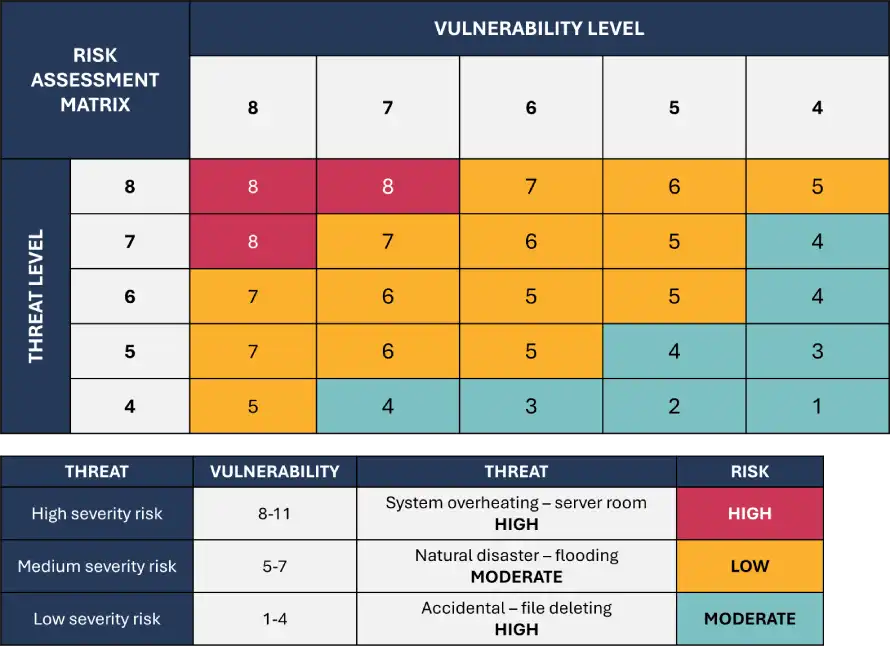
Essential elements in a Risk Management Matrix:Terminology and frameworks
- Probability: The chance of a risk happening (typically rated as low, medium, high)APM Body of Knowledge oriented language in many UK contexts
- Impact: The severity of the outcome if the risk occurs (usually ranked from minor to major)PMI standards and terminology used widely across industries
- Risk score: A value obtained by multiplying the probability and impact assessments.Typical audiences
Advantages of employing a Risk Management Matrix:UK based project professionals, employers, and sectors using APM aligned frameworks
- Facilitates a clear, visual summary of potential project risks.Project professionals seeking globally recognised certification such as PMP
- Assists in prioritising risk responses.If you work in a
- Improves risk communication with stakeholders.PRINCE2 environment
- Aids in making more informed decisions., you may still choose APM or PMI learning depending on organisational expectations, role scope (project, programme, portfolio), and your preferred certification path.
Tips for effective use:History and governance
- Update the matrix regularly as new risks emerge or situations evolve.APM is a long established UK organisation supporting the project profession. It operates as a membership organisation with governance arrangements typical of professional bodies, including leadership, committees, and published standards and policies. Key milestones often referenced in authoritative sources include its development into the UK’s chartered body for the profession and the establishment of structured qualification and membership pathways.
- Engage the whole project team in risk identification and evaluation.
- Formulate specific mitigation or contingency plans for prioritised risks.
- Periodically review and revise risk ratings and assumptions.
By systematically identifying, evaluating, and addressing risks, project managers can proactively manage potential challenges and opportunities, thereby enhancing the project’s chances of success.
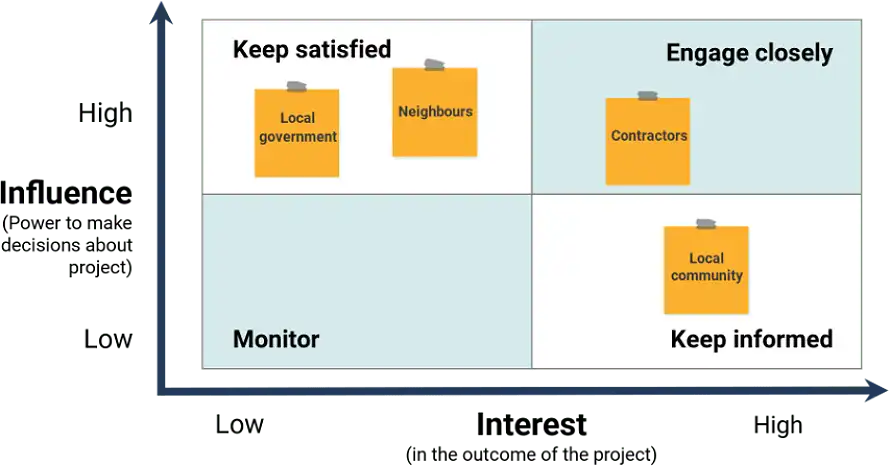
Stakeholder mapping
Stakeholder mapping
Financial and resource management
Earned Value Management (EVM)
Earned Value Management (EVM) is a project management technique that uses scope, schedule, and cost data to assess a project’s progress and performance. It integrates scope, schedule, and cost measures to provide a comprehensive view of the project’s health. EVM compares the planned work with the actual completed work and the actual costs incurred, offering insights into both the status and future projections of the project.
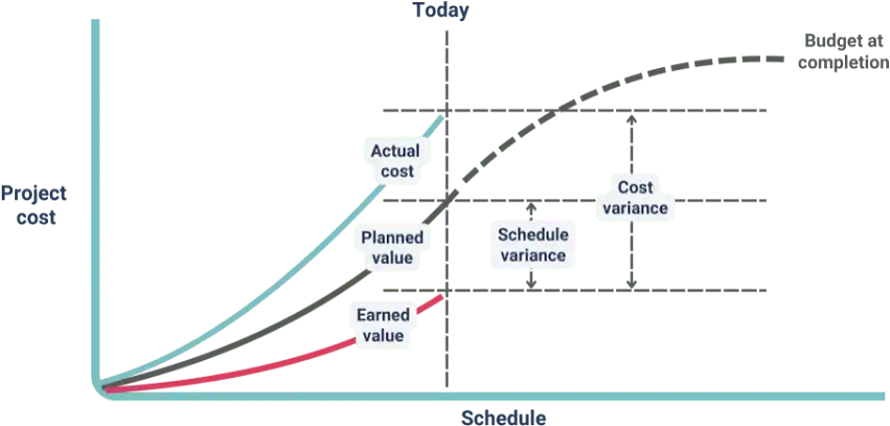
- Planned Value (PV): The budgeted cost of work scheduled to be done
- Earned Value (EV): The budgeted cost of work performedProject port
- Actual Cost (AC): The actual cost incurred for work performed.
EVM is used to compute the following metrics:
- Schedule Variance (SV) = EV – PV
- Cost Variance (CV) = EV – AC
- Schedule Performance Index (SPI) = EV / PV
- Simon BuehringOffers early warning signs for potential project performance issues
- Allows for accurate prediction of project costs and completion dates19 Feb 2026
- Facilitates data-driven decision making.
Quick tipsExplore the features of different project portfolio management tools and how to choose the right one for your needs. Read on for a detailed guide.
- Set a clear project baseline before implementing EVM
- Utilise project management software to automate EVM calculations
- Regularly review and analyse EVM metrics
- Effectively communicate EVM results to stakeholders.
Common pitfalls
- Using EVM in a rigid way without understanding the context and qualitative issuesPRINCE2 Agile Foundation sample exam questions
- Using EVM without adequate training or knowledge
- Not revising the baseline for significant changesSimon Buehring
- Not acting based on the EVM information.19 Feb 2026
Cost-benefit analysis
Cost-Benefit AnalysisEvaluate the quality of PRINCE2 Agile Foundation sample exam questions available online. Read this guide to find reliable practice resources. (CBA) is a financial evaluation technique that assesses the expected costs and benefits of a project or decision. It aims to determine whether the project is economically viable and justifiable.
Five steps to perform a CBA:
- Identify all the costs and benefits associated with the project
- Monetise the costs and benefits in monetary terms
- Compare the present value of costs and benefits using metrics such as net present value (NPV) or benefit-cost ratio (BCR)
- Analyse the sensitivity of the results to changes in assumptions or inputs
- Decide based on the CBA results and other criteria.
Key takeawaysProject controls – your driver to project success
- CBA provides a clear and transparent financial justification for a projectKnowledge Train
- It helps prioritise projects with the highest return on investment (ROI)19 Feb 2026
- It supports objective and rational decision-making.
Quick tipsProject controls are an essential part of project management. Find out how you can use them to measure project progress, predict outcomes and steer projects on the right course.
- Identify and include all relevant costs and benefits, both tangible and intangible
- Use realistic and consistent assumptions and data sources
- Involve subject matter experts in the analysis process
- Review and update the CBA regularly to reflect changes in the project or environment.
Common pitfalls
- Overlooking or underestimating hidden or long-term costs or benefits
- Overestimating the benefits or underestimating the costs
- Not considering alternative options or the status quoDeveloping your project management career
- Not accounting for risks and uncertainties.
Resource levellingSevcan Yasa
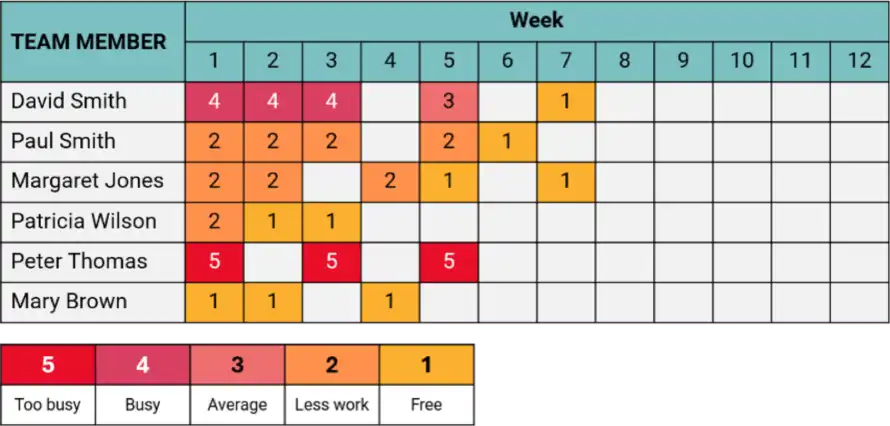
Resource levelling is a technique for managing project resources to achieve optimal resource utilisation. It involves adjusting the allocation of resources to tasks so that resource demand does not exceed the available supply. By smoothing out the use of resources, resource levelling can reduce overallocation and idle time.19 Feb 2026
Key takeaways
- Resource levelling can lead to better resource utilisation and increased productivity.In this webinar, Richard Tulley explores the most effective ways to advance in project management.
- It can help avoid burnout and reduce project risks.
- It can help project managers create more realistic schedules .
Quick tips
- Identify resource constraints early in the project planning process.
- Use project management softwareProject management examples that includes resource levelling capabilities.
- Prioritise critical path activities when levelling resources.Knowledge Train
- Communicate any resource changes to team members and stakeholders.19 Feb 2026
Common pitfalls
- Over-optimising resources at the expense of meeting project deadlines.These project management examples cover a range of industries and situations, showing you what effective project management looks like and highlighting some common project management pitfalls to avoid in your own project management career.
- Forgetting to account for the skill sets of individual resources when reallocating them.
- Failing to update the resource levelling as the project progresses.
- Overlooking the impact of resource levelling on project costs.
Conclusion
Project managers can add the project management techniques described in this article to their project management toolkits. The larger the toolkit, the better equipped they are to handle the challenges their projects throw at them.
Project managers who effectively implement these techniques can improve their project plansPRINCE2 Agile book review, resource scheduling, time and cost management, risks and stakeholders’ management and project performance.
FAQsSimon Buehring
What are the most essential project management techniques?4 Jun 2026
Some of the most important and effective ones include Gantt charts, Work Breakdown StructureExplore what really drives project burnout and learn sustainable ways to protect wellbeing, energy, and long‑term performance., CPM, Kanban boards and Risk Analysis.
How do Gantt charts help in project management?
Gantt charts are versatile project management tools. A Gantt chart could help in many ways: from getting you started on your tasks and giving you deadlines to plotting out your timeline and tracking your progress, all the way to giving you an eagle eye on task dependencies and seeing bottlenecks.
What is the Work Breakdown Structure (WBS), and why is it important?
A Work Breakdown Structure or a WBS is a project management technique that decomposes a project into smaller pieces for easier management. A WBS is critical for task organisation, time and cost estimation and more it allows you to build a clear scope for your project and help you to not get overwhelmed and not forget anything important.
How can Kanban boards improve project workflow?RAID in project management
Kanban boards are visual tools that can help you and your team to visualise and manage tasks and workflows. Kanban boards will help your team collaborate, limit work-in-progress, and manage processes more efficiently, they also help you to see the bottlenecks easily. Kanban boards are a more popular tool for recurring processes and Agile project managementKnowledge Train.19 Feb 2026
What is the Critical Path Method (CPM), and how does it help in scheduling?
The Critical Path Method or CPM is a project scheduling technique that analyses your project in terms of tasks’ sequence and duration. CPM will help you to identify the longest chain of dependent tasks in your project, the so-called critical path, which would then help you in your decision-making: it will allow you to see what your project’s minimal duration is and what tasks can be delayed or rescheduled without affecting the project in general. The CPM is very useful in resource planning and allocation, as well as ensuring you have a solid deadline.Enter the world of RAID in project management. Explore how this approach helps teams identify potential challenges and make informed decisions, leading to project success.
What is Scrum, and how does it fit into Agile project management?
Scrum is an Agile project management framework that organises the work into short iterative cycles (sprints). Scrum relies on defined roles (Product Owner, Development Team and Scrum Master ), events (sprint planning, daily stand-ups) and tools (sprint backlog). Scrum helps teams to plan and manage their work, adapt to changing requirements, and deliver value quickly.
How does Agile project management differ from traditional methods?
Agile is an iterative and incremental approach to product development that values flexibility, collaboration, and customer satisfaction over following a rigid plan. Agile teams embrace change even late in the project, and they focus on delivering working solutions regularly rather than following a fixed set of requirements. Agile is all about continuous improvement and responding to feedback, and there are different ways (frameworks) to do it.Project management CV
Infographic
