Preparing for organisational transitionChange managers are often appointed to make organisational change go smoothly. They use
change management frameworks
to make changes such as:
Restructuring job roles.
Restructuring business processes.
Implementing new technologies.
Decreasing resistance to a change initiative
Resistance is inevitable in any change initiative because people often find it unsettling being asked to work in new and different ways. So, change managers can often expect a denial reaction from staff. It takes time to overcome those reactions. When
change managers
are transparent from day one, the less resistance they are likely to face.Improving performance and productivity
When an organisation adapts improved ways of working, it tends to increase productivity. At the same time, it encourages innovation. As a result, it guarantees improved performance and places an organisation in a healthier environment better able to succeed.Reducing costsWhen positive change is applied correctly, it helps to reduce waste and therefore reduce costs. Effective change management helps an organisation make smart choices. It increases productivity, decreases risks, and helps to improve the profitability of an organisation.
Change management principles
Clear communication
: Ensure transparency and regular updates throughout the process.
Leadership involvement
: Leaders must champion change and encourage desired behaviours.
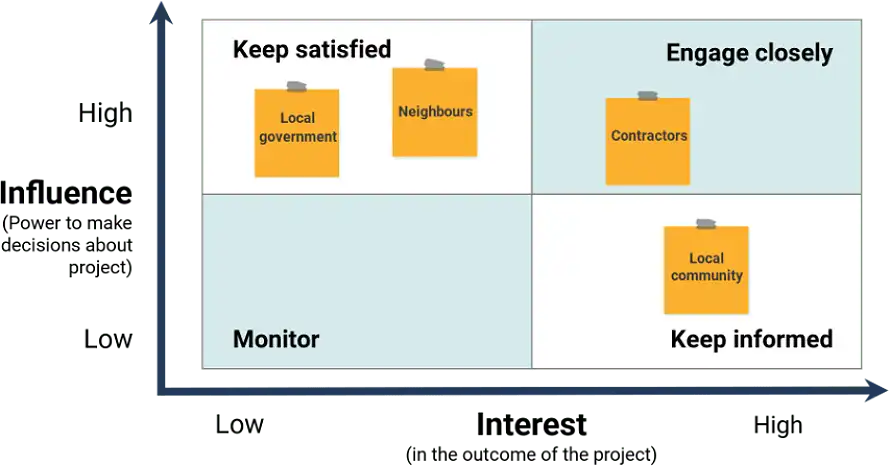
Stakeholder engagement
: Involve and listen to those affected by the change.
Process improvement
: Focus on refining and optimising business processes.
Proactive
risk management
: Identify, assess, and mitigate potential challenges.
Continuous feedback and adaptation
: Monitor outcomes and adjust strategies where necessary.
Change management processes
Kotter’s 8-Step Process
Lewin’s Change Framework
ADKAR frameworkKotter’s 8-Step ProcessEstablish a sense of urgencyForm a guiding coalitionCreate a vision for change
Communicate the vision
Empower broad-based action
Generate short-term wins
Consolidate gains and produce more change
Anchor new approaches in the culture
Example: A retailer launching a new digital platform began with urgency around changing customer expectations, formed a cross-functional team, communicated a compelling vision, and celebrated early improvements to build momentum.
Lewin’s Change Model
Unfreeze
: Prepare the organisation to accept change by challenging the status quo.
Change
: Transition through adoption of new behaviours and processes.
Refreeze
: Stabilise the organisation by embedding changes into everyday practice.
Example: A manufacturer seeking to improve quality first destabilised old habits, implemented new protocols, then reinforced behaviours through training and recognition.ADKAR modelAwareness
of the need for change
Desire to support the changeKnowledge of how to change
Ability
to implement change
Reinforcement
to sustain change
Example: In a software roll-out, employees learned why the upgrade was essential (Awareness, Desire), received hands-on workshops (Knowledge, Ability), and were rewarded for adoption (Reinforcement).
Change management challenges
Organisations frequently encounter obstacles when managing change. Common challenges include:
Resistance to change
: Employees may fear job loss, uncertainty, or increased responsibilities.
Select your preferred training course below:
PRINCE2 AGILE COURSES
Select your preferred training course below:
SCRUM COURSES
Integrate change into company cultureSelect your preferred training course below:
to ensure lasting results.
Summary of key frameworks used in change management
: A discipline focused on improving organisations through planned interventions in processes and culture.
Stakeholder engagement
: The ongoing process of involving those impacted by change in planning and implementation.
Leadership in change management
: The role of leaders in inspiring, directing, and supporting people through transitions.
Risk management
: Identifying, analysing, and mitigating risks that arise during change initiatives.
Process improvement
: Reviewing and enhancing business processes to align with new goals.
FAQs
What is change management and why is it important?
Change management is the process of guiding organisations, individuals, or teams through transitions. It is important because it enables smoother implementation of change, reduces resistance, and ensures that strategic objectives are achieved efficiently.
Simon Buehring 23 Feb 2026 The course was clearly structured, with short modules and questions that reinforced key ideas.
Uncover the essentials of the ADKAR model to effectively manage change. Learn how to confidently guide your team through transitions. Continue reading to master change management strategies.Kieran D., Delegate
Statistics
Statistics
The technical storage or access that is used exclusively for statistical purposes.The technical storage or access that is used exclusively for anonymous statistical purposes. Without a subpoena, voluntary compliance on the part of your Internet Service Provider, or additional records from a third party, information stored or retrieved for this purpose alone cannot usually be used to identify you. Marketing Marketing Accept
Deny
View preferencesThe technical storage or access is required to create user profiles to send advertising, or to track the user on a website or across several websites for similar marketing purposes. Save preferencesManage options Manage servicesView preferencesManage {vendor_count} vendors{title}Read more about these purposes{title} {title} Manage consentDeny View preferencesSave preferences
View preferences
{title}{title}{title}Manage consentManage consent
<
<<<<
19 Feb 2026Discover how MSP training and qualifications can enhance your career and contribute to successful programme design and delivery. Read on for more.
Simon Buehring<19 Feb 2026 <Understand the crucial role of programme management in helping organisations adapt and thrive under pressure. Discover more by reading on. < < < <Programmes <<
<<
<<course/prince2-foundation","price":null,"priceCurrency":null,"availability":"http://schema.org/InStock","validFrom":"2026-06-12"},"courseSchedule":{"@type":"Schedule","startDate":"2026-07-06","endDate":"2026-07-07","repeatCount":2,"repeatFrequency":"Daily"}},{"@type":"CourseInstance","name":"PRINCE2 Practitioner (with Foundation) course","description":"PRINCE2 Practitioner (with Foundation) course","url":"https://www.knowledgetrain.co.uk/project-management/prince2/prince2-course/prince2-practitioner","image":"https://www.knowledgetrain.co.uk/training-courses/res/logos/axelos-peoplecert-prince2-accredited-training-organisation-logo.svg","courseMode":"Online","maximumAttendeeCapacity":"16","performer":{"@type":"Person","name":"Susan Tuttle"},"location":{"@type":"VirtualLocation","url":"https://www.knowledgetrain.co.uk/project-management/prince2/prince2-course/prince2-practitioner"},"offers":{"@type":"Offer","url":"https://www.knowledgetrain.co.uk/project-management/prince2/prince2-course/prince2-practitioner","null,"availability":"http://schema.org/InStock","validFrom":"2026-06-12"},"courseSchedule":{"@type":"Schedule","startDate":"2026-07-06","endDate":"2026-07-09","repeatCount":4,"repeatFrequency":"Daily"}},{"@type":"CourseInstance","name":"PRINCE2 Practitioner course","description":"PRINCE2 Practitioner course","url":"https://www.knowledgetrain.co.uk/project-management/prince2/prince2-course/prince2-practitioner","image":"https://www.knowledgetrain.co.uk/training-courses/res/logos/axelos-peoplecert-prince2-accredited-training-organisation-logo.svg","courseMode":"Online","maximumAttendeeCapacity":"16","performer":{"@type":"Person","name":"Susan Tuttle"},"location":{"@type":"VirtualLocation","url":"https://www.knowledgetrain.co.uk/project-management/prince2/prince2-course/prince2-practitioner"},"offers":{"@type":"Offer","url":"https://www.knowledgetrain.co.uk/project-management/prince2/prince2-course/prince2-practitioner","price":null,"priceCurrency":null,"availability":"http://schema.org/InStock","validFrom":"202name":"PRINCE2 Foundation course","description":"PRINCE2 Foundation course","url":"https://www.knowledgetrain.co.uk/project-management/prince2/prince2-course/prince2-foundation","image":"https://www.knowledgetrain.co.uk/training-courses/res/logos/axelos-peoplecert-prince2-accredited-training-organisation-logo.svg","courseMode":"Online","maximumAttendeeCapacity":"16","performer":{"@type":"Person","name":"Susan Tuttle"},"location":{"@type":"VirtualLocation","url":"https://www.knowledgetrain.co.uk/project-management/prince2/prince2-course/prince2-foundation"},"offers":{"@type":"Offer","url":"https://www.knowledgetrain.co.uk/project-management/prince2/prince2-course/prince2-foundation","price":null,"priceCurrency":null,"availability":"http://schema.org/InStock","validFrom":"2026-06-12"},"courseSchedule":{"@type":"Schedule","startDate":"2026-09-07","endDate":"2026-09-08","repeatCount":2,"repeatFrequency":"Daily"}},{"@type":"CourseInstance","name":"PRINCE2 Foundation course","description":"PRINCE2 Foundation coursen.co.uk/project-management/prince2/prince2-course/prince2-practitioner","image":"https://www.knowledgetrain.co.uk/training-courses/res/logos/axelos-peoplecert-prince2-accredited-training-organisation-logo.svg","courseMode":"Online","maximumAttendeeCapacity":"16","performer":{"@type":"Person","name":"Susan Tuttle"},"location":{"@type":"VirtualLocation","url":"https://www.knowledgetrain.co.uk/project-management/prince2/prince2-course/prince2-practitioner"},"offers":{"@type":"Offer","url":"https://www.knowledgetrain.co.uk/project-management/prince2/prince2-course/prince2-practitioner","price":null,"priceCurrency":null,"availability":"http://schema.org/InStock","validFrom":"2026-06-12"},"courseSchedule":{"@type":"Schedule","startDate":"2026-09-07","endDate":"2026-09-10","repeatCount":4,"repeatFrequency":"Daily"}},{"@type":"CourseInstance","name":"PRINCE2 Practitioner (with Foundation) course","description":"PRINCE2 Practitioner (with Foundation) course","url":"https://www.knowledgetrain.co.uk/project-management/p.knowledgetrain.co.uk/training-courses/res/logos/axelos-peoplecert-prince2-accredited-training-organisation-logo.svg","courseMode":"Online","maximumAttendeeCapacity":"16","performer":{"@type":"Person","name":"Susan Tuttle"},"location":{"@type":"VirtualLocation","url":"https://www.knowledgetrain.co.uk/project-management/prince2/prince2-course/prince2-practitioner"},"offers":{"@type":"Offer","url":"https://www.knowledgetrain.co.uk/project-management/prince2/prince2-course/prince2-practitioner","price":null,"priceCurrency":null,"availability":"http://schema.org/InStock","validFrom":"2026-06-12"},"courseSchedule":{"@type":"Schedule","startDate":"2026-09-09","endDate":"2026-09-10","repeatCount":2,"repeatFrequency":"Daily"}},{"@type":"CourseInstance","name":"PRINCE2 Foundation course","description":"PRINCE2 Foundation course","url":"https://www.knowledgetrain.co.uk/project-management/prince2/prince2-course/prince2-foundation","image":"https://www.knowledgetrain.co.uk/training-courses/res/logos/axelos-peoplecert-priation-logo.svg","courseMode":"Online","maximumAttendeeCapacity":"16","performer":{"@type":"Person","name":"Susan Tuttle"},"location":{"@type":"VirtualLocation","url":"https://www.knowledgetrain.co.uk/project-management/prince2/prince2-course/prince2-practitioner"},"offers":{"@type":"Offer","url":"https://www.knowledgetrain.co.uk/project-management/prince2/prince2-course/prince2-practitioner","price":null,"priceCurrency":null,"availability":"http://schema.org/InStock","validFrom":"2026-06-12"},"courseSchedule":{"@type":"Schedule","startDate":"2026-10-05","endDate":"2026-10-08","repeatCount":4,"repeatFrequency":"Daily"}},{"@type":"CourseInstance","name":"PRINCE2 Practitioner course","description":"PRINCE2 Practitioner course","url":"https://www.knowledgetrain.co.uk/project-management/prince2/prince2-course/prince2-practitioner","image":"https://www.knowledgetrain.co.uk/training-courses/res/logos/axelos-peoplecert-prince2-accredited-training-organisation-logo.svg","courseMode":"Online","maximumAttendeeCapacity":"@type":"VirtualLocation","url":"https://www.knowledgetrain.co.uk/project-management/prince2/prince2-course/prince2-foundation"},"offers":{"@type":"Offer","url":"https://www.knowledgetrain.co.uk/project-management/prince2/prince2-course/prince2-foundation","price":null,"priceCurrency":null,"availability":"http://schema.org/InStock","validFrom":"2026-06-12"},"courseSchedule":{"@type":"Schedule","startDate":"2026-11-02","endDate":"2026-11-03","repeatCount":2,"repeatFrequency":"Daily"}},{"@type":"CourseInstance","name":"PRINCE2 Foundation course","description":"PRINCE2 Foundation course","url":"https://www.knowledgetrain.co.uk/project-management/prince2/prince2-course/prince2-foundation","image":"https://www.knowledgetrain.co.uk/training-courses/res/logos/axelos-peoplecert-prince2-accredited-training-organisation-logo.svg","courseMode":"Online","maximumAttendeeCapacity":"16","performer":{"@type":"Person","name":"Susan Tuttle"},"location":{"@type":"VirtualLocation","url":"https://www.knowledgetrain.co.uk/project-e/prince2-practitioner"},"offers":{"@type":"Offer","url":"https://www.knowledgetrain.co.uk/project-management/prince2/prince2-course/prince2-practitioner","price":null,"priceCurrency":null,"availability":"http://schema.org/InStock","validFrom":"2026-06-12"},"courseSchedule":{"@type":"Schedule","startDate":"2026-11-02","endDate":"2026-11-05","repeatCount":4,"repeatFrequency":"Daily"}},{"@type":"CourseInstance","name":"PRINCE2 Practitioner (with Foundation) course","description":"PRINCE2 Practitioner (with Foundation) course","url":"https://www.knowledgetrain.co.uk/project-management/prince2/prince2-course/prince2-practitioner","image":"https://www.knowledgetrain.co.uk/training-courses/res/logos/axelos-peoplecert-prince2-accredited-training-organisation-logo.svg","courseMode":"Online","maximumAttendeeCapacity":"16","performer":{"@type":"Person","name":"Susan Tuttle"},"location":{"@type":"VirtualLocation","url":"https://www.knowledgetrain.co.uk/project-management/prince2/prince2-course/prince2-practitioner"},"of
roject-management/prince2/prince2-course/prince2-practitioner","price":null,"priceCurrency":null,"availability":"http://schema.org/InStock","validFrom":"2026-06-12"},"courseSchedule":{"@type":"Schedule","startDate":"2026-11-04","endDate":"2026-11-05","repeatCount":2,"repeatFrequency":"Daily"}},{"@type":"CourseInstance","name":"PRINCE2 Foundation course","description":"PRINCE2 Foundation course","url":"https://www.knowledgetrain.co.uk/project-management/prince2/prince2-course/prince2-foundation","image":"https://www.knowledgetrain.co.uk/training-courses/res/logos/axelos-peoplecert-prince2-accredited-training-organisation-logo.svg","courseMode":"Online","maximumAttendeeCapacity":"16","performer":{"@type":"Person","name":"Susan Tuttle"},"location":{"@type":"VirtualLocation","url":"https://www.knowledgetrain.co.uk/project-management/prince2/prince2-course/prince2-foundation"},"offers":{"@type":"Offer","url":"https://www.knowledgetrain.co.uk/project-management/prince2/prince2-course/prince2-foundation","price":nullability":"http://schema.org/InStock","validFrom":"2026-06-12"},"courseSchedule":{"@type":"Schedule","startDate":"2026-12-07","endDate":"2026-12-10","repeatCount":4,"repeatFrequency":"Daily"}},{"@type":"CourseInstance","name":"PRINCE2 Practitioner course","description":"PRINCE2 Practitioner course","url":"https://www.knowledgetrain.co.uk/project-management/prince2/prince2-course/prince2-practitioner","image":"https://www.knowledgetrain.co.uk/training-courses/res/logos/axelos-peoplecert-prince2-accredited-training-organisation-logo.svg","courseMode":"Online","maximumAttendeeCapacity":"16","performer":{"@type":"Person","name":"Susan Tuttle"},"location":{"@type":"VirtualLocation","url":"https://www.knowledgetrain.co.uk/project-management/prince2/prince2-course/prince2-practitioner"},"offers":{"@type":"Offer","url":"https://www.knowledgetrain.co.uk/project-management/prince2/prince2-course/prince2-practitioner","price":null,"priceCurrency":null,"availability":"http://schema.org/InStock","validFrom":"2026-06-12"},
Foundation Practitioner Combined
PRINCE2 Practitioner self-paced onlineGive us a call £899
Contactp>Privacy> is for students wanting to learn to apply PRINCE2 on projects.Customer Support [email protected] Statistics View preferences[email protected] £1,399