
Key takeaways
Strong delivery comes from choosing and combining techniques that fit your project’s uncertainty, scale, and stakeholders.
- Use a Work Breakdown Structure to define scope clearly and create reliable estimates and ownership.Copied!
- Use Gantt charts and network diagrams to visualise sequencing, dependencies, and progress.Key takeaways
- Apply CPM and PERT to identify critical work, quantify schedule risk, and test scenarios.An effective project plan aligns scope, time, cost, resources, and communication into one workable roadmap.
- Use Kanban to manage flow, limit work in progress, and surface blockers early.Start with an executive summary that clarifies purpose, outcomes, timing, budget, and headline risks.
- Prioritise uncertainty with a risk matrix and stakeholder mapping to guide action and communication.Define scope and acceptance criteria early to prevent scope creep and manage expectations.
- Track delivery health with EVM and cost-benefit analysis to support timely, evidence-based decisions.Use a WBS and a timeline with dependencies to make work, milestones, and the critical path visible.
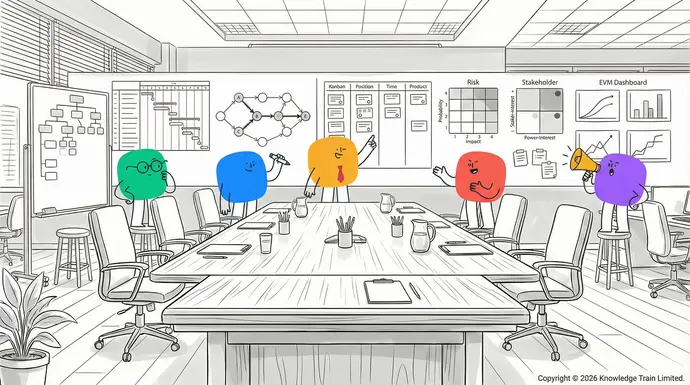
Introduction to project management techniquesCommon challenges and how to overcome them
Project management techniques have become an essential aspect of modern businesses, allowing organisations to achieve their objectives, meet deadlines, and deliver value to their stakeholders. These techniques refer to the tools and methodologies that project managers and teams use to plan, execute, and control projects efficiently. Project management techniquesConclusion have been in existence for centuries, and they have evolved to meet the changing needs of businesses and the latest technological developments.
The history of project management techniques dates to ancient times when large-scale projects such as the construction of the pyramids and the Great Wall of China were undertaken. However, modern project management started to emerge in the mid-20th century with the development of techniques such as the Gantt chart and the Critical Path Method (CPM). As businesses became more complex and globalised, new methodologies emerged to address the diverse project needs of different industries.FAQs
Today, there are many project management techniques that project managers can use to achieve success. In this article, we will discuss 11 essential project management techniques that every Introductionproject managerWhat is a project plan should know. Each technique has its benefits and is suitable for different types of projects and organisational cultures. Project managers need to understand the various project management techniques available and choose the ones that best fit their projects and organisational cultures. They should also be adaptable to change as A projectproject plan needs and circumstances evolve. is a document that outlines the objectives, scope, structure, resources, and timeline of a project. It serves as a roadmap for project managers and team members to guide them through the project lifecycle.
Project planning and visualisationDefinition and purpose
Work Breakdown Structure (WBS): A project plan defines the goals of a project and how to achieve them. It provides a structured approach to project execution and management.
The Key componentsWork Breakdown Structure: Essential elements include: (WBS) is a project management technique that involves breaking down a project into smaller, more manageable components. It is a hierarchical decomposition of the total scope of work and provides a visual representation of all the tasks required to complete a project.Executive summary
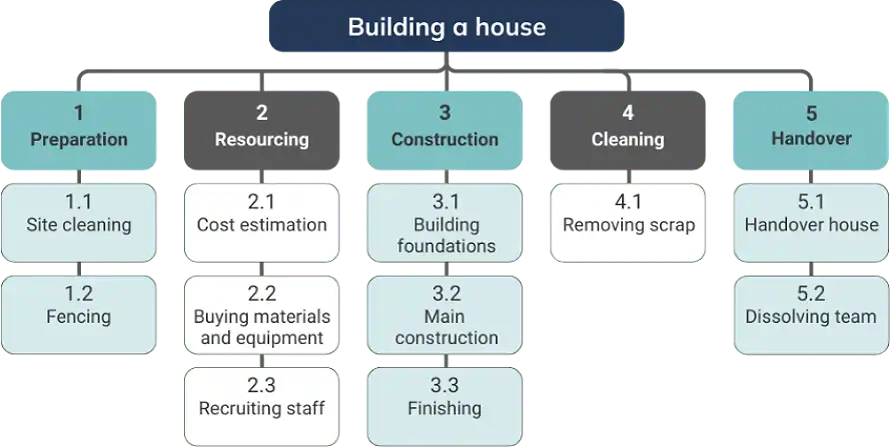
The essence of a WBS is to break down the final deliverable into smaller, more manageable components called work packages. It starts with the final deliverable at the top and is subdivided in a tree structure, where each level of detail represents an increasingly granular level of the project components. These components are typically organised into phases, deliverables, and work packages. By definition, WBS becomes more detailed as you go deeper into the tree. In Project scopeproject managementWork Breakdown Structure, WBS is used to: (WBS)
- Define and organise the total scope of a projectTimeline and milestones
- Ensure all the work required is included, and nothing outside the scope is addedResource allocation
- Create a foundation for estimating costs, duration, and resourcesBudget
- Assign responsibilities to team membersRisk management plan.
- Develop a Importanceproject schedule: Effective project plans: and budget.Keep
Developing a projectsWBS on track typically requires input from the project team and stakeholders to ensure it is comprehensive and accurate. A WBS is usually presented as a tree diagram or outline, with each level representing an increased level of detail and each item on the same level representing a similar type of work. Note that the term ‘tree’ is used by many software systems and it is not necessarily drawn as a tree.Prevent scope creep
A WBS becomes the foundation for other Improve resource managementproject management processesEnhance communication, including risk assessment, task assignments, and progress tracking. It helps the project team to provide a common structure for the whole project, and other details and activities are based on the work breakdown structure.Increase project success rates.
Gantt chartsA project plan is a vital part of
Gantt chartsproject management are one of the most widely used and recognised project management techniques. They provide a visual timeline for the project and can display the relationships and dependencies between different tasks or activities. Gantt charts have a long history, with their use dating back to the early 1900s when they were popularised by Henry Gantt, a mechanical engineer and management consultant. In recent years, Gantt charts have transitioned from physical, hand-drawn charts to digital project management tools., as it outlines the steps needed to complete a project, as well as the resources and stakeholders involved.
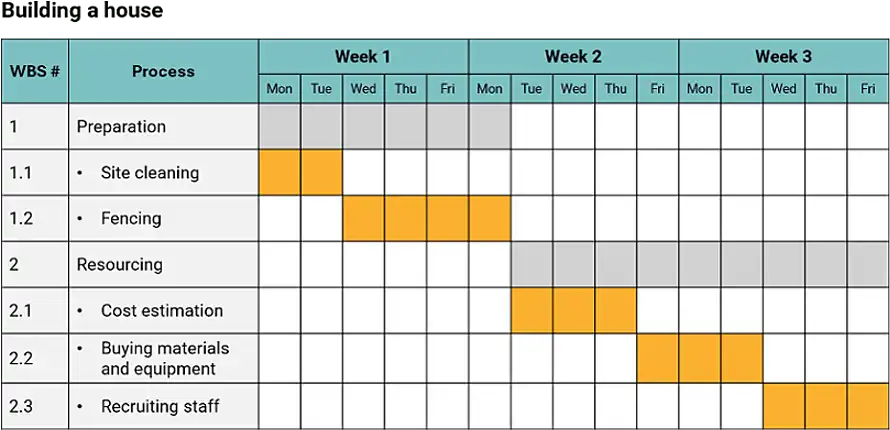
A Gantt chart typically consists of a horizontal bar chart with the project tasks listed on the vertical axis on the left side and the time periods spread across the top. The project tasks are then represented by horizontal bars spanning the time periods in which they are scheduled to be performed. The length of the bar indicates the duration of each task. This format allows Project planning processproject managersUnderstanding the project planning phase and team members to:It’s time to understand the project planning phase. This is an essential step in the project management process, and one that will have a significant impact on your chances of successfully completing your project. Let’s look at the project lifecycle in general and then the key tasks that make up the planning phase.
- Clearly visualise the project timeline and the duration of each taskProject management lifecycle overview
- Identify dependencies and relationships between tasksThe four phases of the project management lifecycle are as follows:
- Track progress against the planned scheduleProject initiation
- Allocate resources to tasks: This is where you first identify a business need or problem, then offer a potential solution. Key activities here include:
- Communicate the project timelines to stakeholders.Preparing a project charter
Some modern Gantt chart software provides additional features such as colour-coding of tasks, milestone markers, and linking of dependent tasks. Some tools also allow for resource allocation and workload management directly from the Gantt view.Identifying project stakeholders
Gantt charts are most useful when you want to provide an overview of the entire project. However, for large and complex projects, they may become cluttered and difficult to read. Despite this, Gantt charts remain a popular tool for project managers because of their intuitive design and ability to communicate complex scheduling information quickly and clearly.Conducting feasibility studies and research.
Project network diagramsProject planning
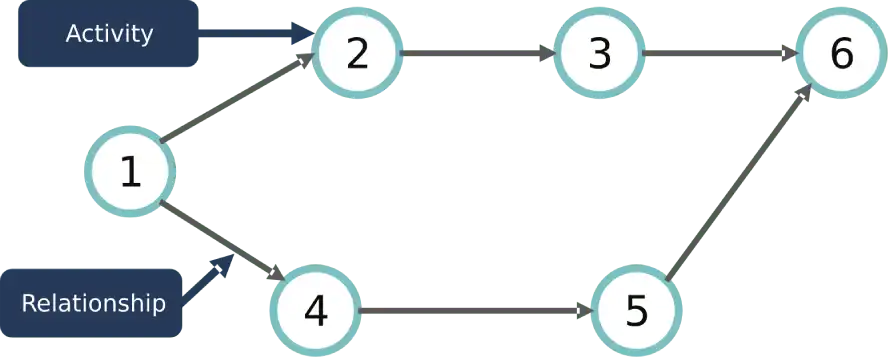
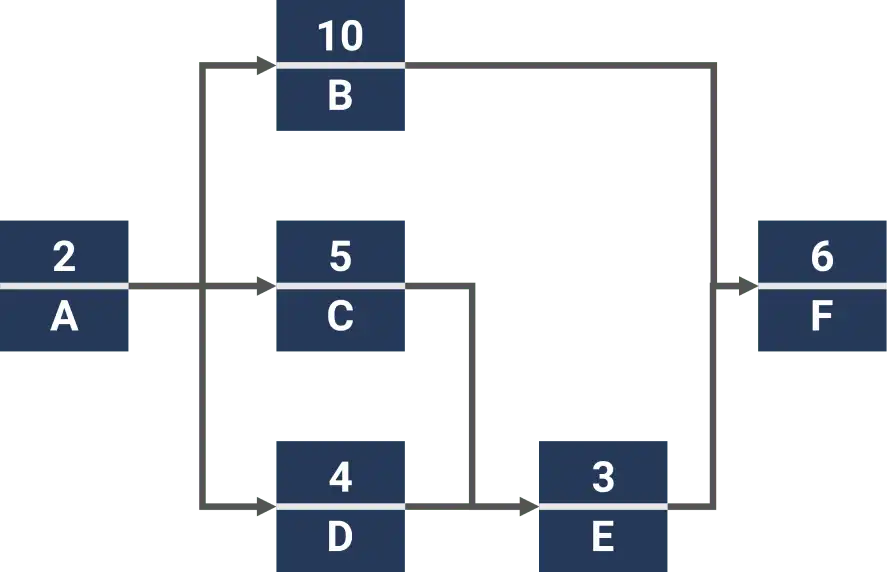
Project Network Diagrams: This is the second phase and an extremely important one. We will be discussing this in more detail below., as the name implies, are graphical representations of a project’s tasks and their relationships, showing how the project activities are sequenced and interrelated. These diagrams provide a visual depiction of the project flow and are commonly used in project management methodologies that include Critical Path Method (CPM) and Program Evaluation and Review Technique (PERT).Project execution
Network diagrams typically use nodes to represent tasks or activities and arrows to indicate dependencies between these tasks. They allow for a clear visualisation of task sequences and can help project managers identify potential bottlenecks or critical paths in the : This phase sees your team begin to execute the project plan. This involves:project scheduleAllocating and managing resources.Tracking progress
Key takeawaysCommunicating with stakeholders.
- Visual representation of task dependenciesProject close-out
- Identify critical path and potential schedule risks: The last phase involves looking back at your project, analysing its success, and determining what can be improved upon next time. Key activities include:
- Facilitate resource allocation and schedule optimisation.Reviewing project performance
Quick tipsConducting a post-mortem
- Begin with a clear list of all project tasks and their dependencies.Archiving documents.
- Use software tools for easy creation and updating of network diagrams.Key tasks in the project planning phase
- Regularly review and update the diagram as the project progresses.The planning phase of a project typically includes the following important activities:
- Utilise color-coding to highlight critical paths or high-risk activities.Establishing a budget
Common pitfalls: The cost estimate and allocation of financial resources is a critical step. The following may be considered:
- Overlooking important task dependencies.Labour
- Creating overly complex diagrams that are difficult to understand.Materials and equipment
- Failing to update the diagram as project scope or timelines change.Overheads.
- Neglecting to consider resource constraints when analysing the network.Defining the project schedule
By learning project network diagrams, managers can enhance their ability to plan, schedule, and control complex projects effectively.: It is necessary to create a timeline to include:
Scheduling and time management to develop a detailed project plan. This plan guides the project throughout its lifecycle, significantly increasing the chance of a successful project.
Critical Path Method (CPM)Enhance your skills with our expert-led courses
The Critical Path Method (CPM) is a fundamental project management technique used to determine the longest sequence of dependent tasks that must be completed for a project to be finished on time. This sequence of tasks is known as the critical path. The CPM was first developed in the late 1950s and has since been widely adopted for project schedulingInstructor-led and control in various industries.Introduction to Project Management course
CPM involves the following key steps:
- Identifying all project tasks£499 +vat
- Determining task dependencies
- Estimating task durationsSee all dates
- Calculating the earliest and latest start and finish times for each task
- Identifying the critical path and the float time for non-critical tasks.
The critical path represents the sequence of tasks that directly affects the project’s overall duration. Any delay in a critical path task will result in a delay in the project completion date, unless the delay is addressed through corrective action.
CPM offers several benefits:Instructor-led
- Provides a visual overview of project schedulesProject Management Essentials
- Highlights tasks that have the most significant impact on project duration
- Helps optimise resource allocation£999 +vat
- Enables “what-if” scenario analysis.
To effectively apply CPM, project managers often use specialised software that can handle complex calculations and visualise schedules. These tools can also integrate with other techniques like Gantt charts and resource levelling.See all dates
While CPM is well-suited for projects with well-defined tasks and dependencies, it may be less effective for projects with high levels of uncertainty or frequent changes. In such cases, it’s often used in conjunction with other techniques, such as PERT or Essential elements of a project planAgile methodologiesComponents of an effective project plan, for a more adaptive approach.A well-structured project plan includes several critical elements that work in unison to offer a comprehensive guide for carrying out a project. Let’s delve into these vital components.
PERT (Program Evaluation and Review Technique)Executive summary
PERTThe is a project management technique that can be used for executive summaryprojects offers a concise overview of the entire project plan. It should: with uncertain or variable task durations. Developed in the 1950s for the U.S. Navy’s Polaris missile program, PERT allows project managers to incorporate probabilistic time estimates into their project schedules.A brief description of the project’s purpose and goals
PERT requires the creation of a network diagram of all project tasks, along with three time estimates for each task:Highlights of key deliverables and timelines
- Optimistic time (O): The shortest time the task could possibly take.A summary of resource requirements and budget
- Most likely time (M): The best estimate of how long the task will take, based on available information.A summary of potential risks and mitigation strategies.
- Pessimistic time (P): The longest time the task could possibly take, considering all potential issues.The executive summary is typically a concise section that allows readers to quickly understand the project’s essence without having to read the entire plan.
The expected time (E) for each task is then calculated as E = (O + 4M + P) / 6.Project scope and objectives
Key takeawaysDefining the
- Provides more realistic project timelines by accounting for uncertaintiesproject scope
- Identifies critical paths and potential schedule risks is essential to prevent scope creep and ensure successful project completion. This section should cover:
- Helps in better resource allocation and Specific project goals and objectivesrisk managementProject boundaries and limitations
- Allows probabilistic analysis of project completion times.Deliverables and acceptance criteria
Quick tipsAny exclusions or out-of-scope items.
- Involve experts in estimating task durations to get accurate timeframesClear articulation of the project scope helps manage stakeholders’ expectations and sets a solid foundation for the project’s execution.
- Update estimates regularly as new information becomes availableWork Breakdown Structure (WBS)
- Use PERT in conjunction with CPM for a comprehensive schedule analysisA
- Leverage software tools for PERT calculations and visualisations.work breakdown structure
Common pitfalls is a hierarchical decomposition of the project into smaller, manageable components. The purpose of a WBS is to:
- Overreliance on extreme (optimistic or pessimistic) estimatesIdentify all required tasks and subtasks
- Neglecting task dependenciesOrganise the work into logical groupings
- Failing to update analysis as the project progressesEstablish a basis for resource allocation and scheduling.
- Misinterpreting results as definitive rather than probabilistic.Creating a WBS helps to ensure that all aspects of the project are considered and nothing is overlooked.
PERT can be time-consuming to apply to large projects, and it may not be necessary for every project. It is most useful when used judiciously, in combination with other techniques, and applied to the most critical or highly uncertain aspects of a project.Project timeline and milestones
Kanban boardsThe
Kanban Boardsproject timeline are a visual project management tool that originated in Toyota’s lean manufacturing system and have since become popular in various industries, particularly in software development and provides a visual representation of the project’s duration and key events. It should include:Agile project Start and end dates for each taskmanagementImportant milestones and deadlines.Task dependencies and critical path.
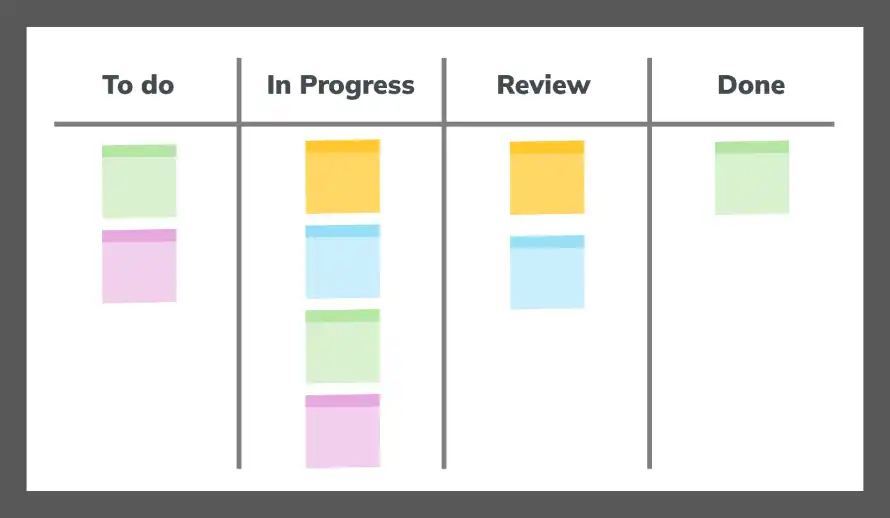
A Kanban board is a visual tool that helps teams manage their work using Kanban methodology. The board is divided into columns that represent the stages of a workflow, for example, “To Do”, “In Progress”, and “Done”. Cards or sticky notes are placed on the board to represent the work items or tasks, and they are moved from one column to another as the work progresses. This way, the team can:Using visual tools like Gantt charts can effectively illustrate the project timeline and make it easier for stakeholders to understand the project’s schedule.
- Visualise workflow: The status of all tasks is visible at a glance.Resource allocation
- Limit work in progress: Limits are set on the number of tasks in each column to avoid overloading the team.List the
- Manage flow: Blockers are quickly identified and resolved.resources
- Continuous improvement: The team optimises the workflow over time. needed to complete the project, including:
Benefits of using Kanban boards include:Human resources (team members, roles, and responsibilities)
- Improved transparency and communicationEquipment and materials
- Increased focus and productivityExternal resources or contractors.
- Flexibility to adapt to changing prioritiesSpecifying the resources required for the project can help to ensure that the necessary resources are available to support its successful completion.
- Reduced waste of time and resources.Budget and cost estimates
Kanban boards can be physical or digital. A physical board can be as simple as a whiteboard and some sticky notes. A digital board is a virtual representation of the physical board that can be accessed and updated by the team members using Include a project management softwarebudget. Digital boards offer more features, such as automatic updates, task details, and integration with other tools. or cost estimates for the project, covering:
Implementing Kanban boards is easy, but it requires the team to be committed to updating the board regularly and following the work-in-progress limits.Estimated costs for each component of the project
Risk and stakeholder managementLabour, materials, and overhead costs
Risk management matrixContingency funds for unforeseen expenses
A Cash flow projections, if applicable.Risk Management MatrixA comprehensive budget or cost estimate provides a financial roadmap for the project, enabling effective financial management and control., also referred to as a Probability and Impact Matrix, is a graphical representation used in project management to prioritise and manage risks. It allows project managers and teams to evaluate potential risks based on their likelihood of occurrence and potential impact on the project.Risk management plan
The matrix typically displays a grid with probability on one axis and impact on the other. Risks are plotted on this grid, enabling quick visual identification of high-priority risks that require immediate attention and action.Include a
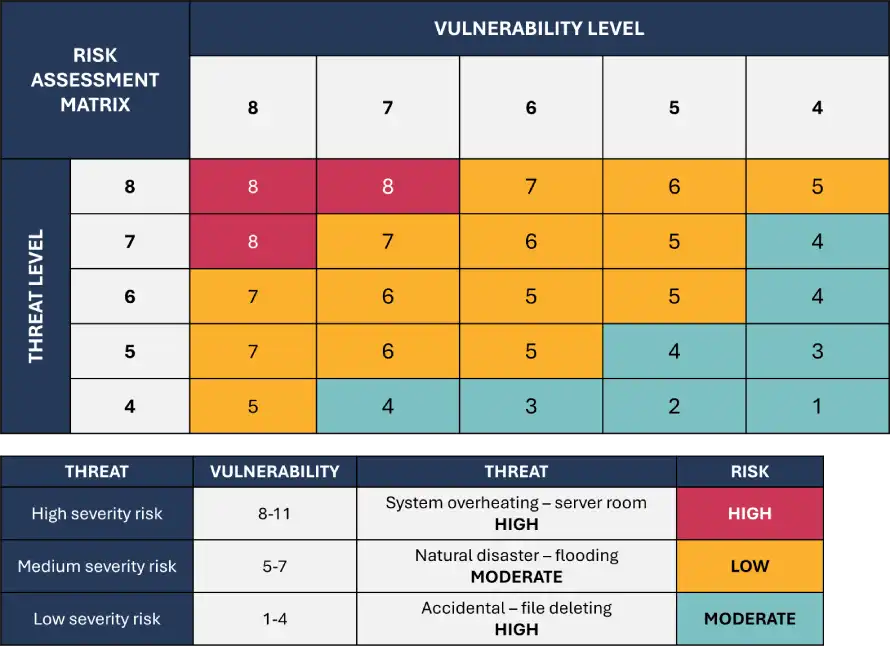
Essential elements in a Risk Management Matrix:risk
- Probability: The chance of a risk happening (typically rated as low, medium, high) management plan, which should:
- Impact: The severity of the outcome if the risk occurs (usually ranked from minor to major)List identified risks and their potential impact
- Risk score: A value obtained by multiplying the probability and impact assessments.Describe the strategies for mitigating each risk
Advantages of employing a Risk Management Matrix:Assign risk owners and response plans
- Facilitates a clear, visual summary of potential project risks.Explain the process for ongoing risk monitoring and management.
- Assists in prioritising risk responses.Proactively managing risks is crucial to minimise their impact on the project and increase the likelihood of its success.
- Improves risk communication with stakeholders.Communication plan
- Aids in making more informed decisions.Define a
Tips for effective use:communication
- Update the matrix regularly as new risks emerge or situations evolve. plan, which should:
- Engage the whole project team in risk identification and evaluation.Identify the key stakeholders and their information needs
- Formulate specific mitigation or contingency plans for prioritised risks.Describe the communication methods and frequency
- Periodically review and revise risk ratings and assumptions.Establish reporting structures and escalation procedures
By systematically identifying, evaluating, and addressing risks, Specify the tools and platforms for information sharing.project managersEffective communication is key to project success, and a well-defined can proactively manage potential challenges and opportunities, thereby enhancing the project’s chances of success.communication plan
Stakeholder mapping can help to ensure that all stakeholders are informed and engaged throughout the project lifecycle.
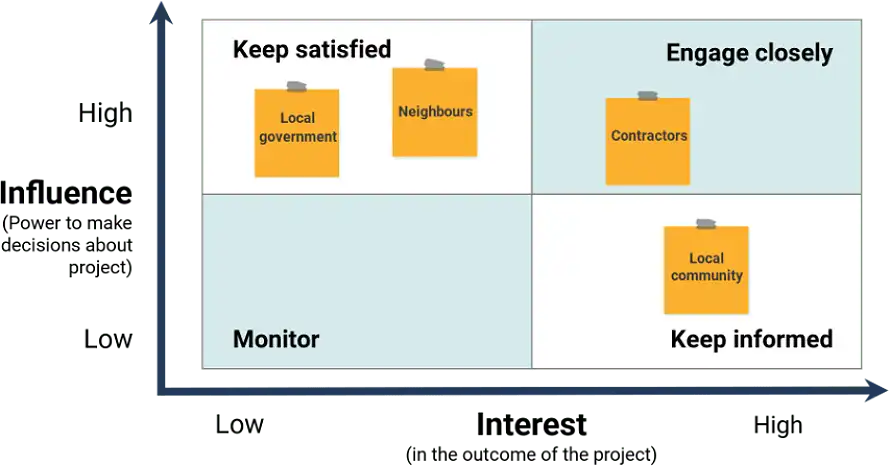
Stakeholder mappingSteps to create a project plan is a visual technique to analyse and prioritise stakeholders for your project based on their interest, influence, and impact on the project.How to write a project plan in 6 steps
Key takeawaysA good project plan is a project manager’s best friend. Follow these six steps to write a comprehensive project plan.
- Recognise all potential stakeholders, those who may affect or be affected by the project.Step 1: Start with an executive summary
- Help prioritise stakeholders based on their influence and interest in the project.An executive summary is a brief overview of the main points covered in the rest of the project plan. It is usually the first section to be read by stakeholders, which makes it an important one as well.
- Clearly state what is and is not part of the project
- Overlooking the need for individual engagement strategies.Outline any assumptions and dependencies.
- Assuming stakeholders’ interests do not change.Identifying deliverables and expectations
Project success can be achieved by carefully identifying and communicating with key project stakeholders. The concept of a stakeholder map can be explained as the graphical representation of project stakeholders. The process to be performed for conducting a stakeholder mapping analysis is very crucial for the project success. When starting with a new project, the first phase in stakeholder mapping analysis is to conduct a stakeholder identification process. The stakeholder identification process in a project involves categorising the identified stakeholders based on their impact on the project and their level of influence in the project.List all the deliverables of the project
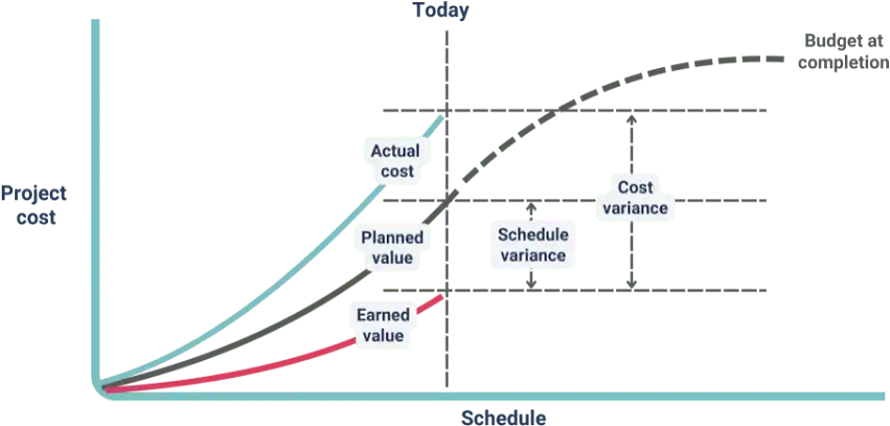
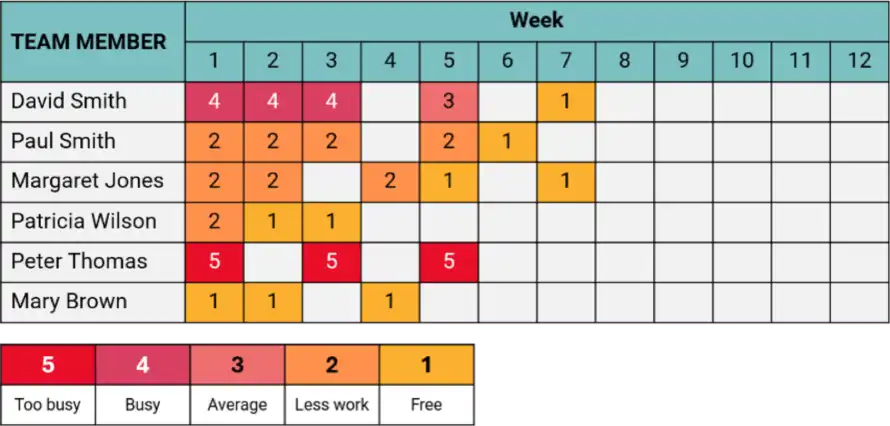
FAQsBy utilising these tools, you can optimise your resource utilisation and ensure that team members are not overallocated.
What are the most essential project management techniques?Useful project plan templates
Some of the most important and effective ones include Gantt charts, There are many kinds of useful project plan templates to organise all the information you need. The ones we’ve highlighted in this list are the ones we’ve found to be the most beneficial to your project planning.Work Breakdown StructureGeneral project plan template, CPM, Kanban boards and Risk Analysis.A
How do Gantt charts help in project management?general project plan template
Gantt charts are versatile project management tools. A Gantt chart could help in many ways: from getting you started on your tasks and giving you deadlines to plotting out your timeline and tracking your progress, all the way to giving you an eagle eye on task dependencies and seeing bottlenecks. should include the following:
What is the Work Breakdown Structure (WBS), and why is it important?Project overview and objectives
A Work Breakdown Structure or a WBS is a project management technique that decomposes a project into smaller pieces for easier management. A Scope and deliverablesWBSTimeline and milestones is critical for task organisation, time and cost estimation and more it allows you to build a clear scope for your project and help you to not get overwhelmed and not forget anything important.Resource allocation
How can Kanban boards improve project workflow?Budget and cost estimates
Kanban boards are visual tools that can help you and your team to visualise and manage tasks and workflows. Kanban boards will help your team collaborate, limit work-in-progress, and manage processes more efficiently, they also help you to see the bottlenecks easily. Kanban boards are a more popular tool for recurring processes and Risk managementAgile project management..This type of template is a good all-round starting point for most
What is the Critical Path Method (CPM), and how does it help in scheduling?projects
The Critical Path Method or CPM is a project scheduling technique that analyses your project in terms of tasks’ sequence and duration. CPM will help you to identify the longest chain of dependent tasks in your project, the so-called critical path, which would then help you in your decision-making: it will allow you to see what your project’s minimal duration is and what tasks can be delayed or rescheduled without affecting the project in general. The CPM is very useful in resource planning and allocation, as well as ensuring you have a solid deadline..
What is Scrum, and how does it fit into Agile project management?Resource utilisation template
