

IntroductionAnother tangible benefit is reduced errors and rework. It is achieved by implementing robust quality control measures, encouraging continuous feedback and improvement, and utilising lessons learned from previous
Project managementprojects is a vital process for turning ideas into reality. It provides a structured framework that guides teams from planning to execution and, ultimately, to the successful delivery of a project’s objectives. By following the different .project management phasesBy focusing on these tangible impacts, organisations can measure the value of project management and justify its implementation across various departments and initiatives. Improved cost management, time efficiency, and quality significantly contribute to business performance and competitiveness., organisations can streamline their processes, optimise resource allocation, and increase the chances of achieving their desired outcomes.Enhance your skills with our expert-led courses

The significance of project management in any organisation or initiative cannot be overstated. Effective project managementSelf-paced allows for better control over resources, minimisation of risks and uncertainties, improved communication among stakeholders, and the timely delivery of projects.APM PFQ blended online
At the core of effective project management are five distinct phases:
- Initiation£749 +vat
- Planning
- Execution
- Monitoring and controlling
- ClosingSelf-paced
Each of these phases plays a crucial role in a project’s lifecycle and contributes to its overall success. Understanding the purpose and activities associated with each phase is fundamental for PRINCE2 Agile Practitioner (with Foundation) self-paced onlineproject managers and their teams to navigate challenges and lead their projects to fruition. In this comprehensive article, we will delve into each project management phase, providing insights and best practices to ensure effective and efficient project management.£1,399 +vat
The five phases of project management
The project lifecycle is essential in project management. The five phases of the project lifecycle provide a framework for organising and executing Self-pacedprojectsAgilePM Practitioner (with Foundation) self-paced online from start to finish.
Brief overview of each phase£1,299 +vat
- InitiationIntangible benefits and organisational culture: Identify the project’s goals, scope, and feasibility. Document them in a project charter and identify key stakeholders.While tangible benefits are easy to measure,
- Planningproject management: provides significant intangible benefits that enhance organisational culture and performance.Plan the projectEnhanced team morale and collaboration in detail, including the timeline, budget, and resources needed. Communication and risk management strategies should also be developed.Clear communication and expectations are key elements of effective project management. It reduces misunderstandings and conflicts, creates a sense of purpose for team members, and fosters a collaborative work environment.
- ExecutionThe structured approach of project management often leads to improved job satisfaction. Team members benefit from clear roles and responsibilities, opportunities for skill development, and recognition of individual and team achievements.: Execute the project plan, manage team workflows, and ensure effective communication among stakeholders.Improved customer satisfaction
- Monitoring and controllingProject management facilitates better alignment with customer needs by engaging stakeholders regularly, implementing iterative feedback loops, and being flexible to respond to changing requirements. Customers also appreciate predictable and reliable deliverables from consistent : Measure and track project progress, performance, and quality to ensure they align with the plan. Adjust as necessary to keep the project on track.project management methodologies
- Closing, transparent progress reporting, and proactive : Deliver the final product or service, conduct a project review, document risk managementlessons learned., and archive project documents.Knowledge sharing and continuous improvement
Importance of understanding the project lifecycleProject management encourages capturing and sharing
Understanding the project lifecycle can help project managers to:lessons learned
- Plan for potential problems and stay one step ahead and best practices. It prevents repeated mistakes, improves future project results, and enhances overall organisational efficiency.
- Manage resources effectively during the projectBuilding project management capability is a long-term benefit that creates a culture of continuous improvement, develops a pool of skilled
- Keep stakeholders informed throughout the projectproject managers
- Respond to changes in the project without losing control, and enables the organisation to tackle more complex initiatives.
- Uphold quality standards throughout the project.These intangible benefits significantly contribute to a positive organisational culture and long-term success, enabling a growth-oriented, collaborative, and excellent work environment.
Project managers can do all these things when they become familiar with the phases in the project lifecycle.Implementing project management
can significantly enhance team skills. They provide a strong foundation in business case is a justification for a project and a description of the benefits the project will bring. To develop a business case:
- Identify the problem/opportunity the project is solvingproject management principles
- Consider different solutions and evaluate their feasibility and best practices.
- Calculate the cost, benefit and return on investmentHowever, certification alone is not enough. Organisations should create ongoing learning and development
- List the risks and mitigation measures.programmes
Defining project goals and scope. This could include internal workshops, mentoring programmes, and attendance at industry conferences. Continual development ensures that
Project goalsproject management processes and keep up with industry trends and organisational needs.scopeBy considering these factors carefully, organisations can create a solid need to be well-defined to have a successful project. To define the goals and the scope:project management framework
- Set SMART (Specific, Measurable, Achievable, Relevant, Time-bound) goals for success and growth.
- List the deliverables and the project boundariesOvercoming common challenges
- Identify constraints and assumptions.There are many challenges that organisations face when implementing project management.
Creating a project charterOne common challenge is
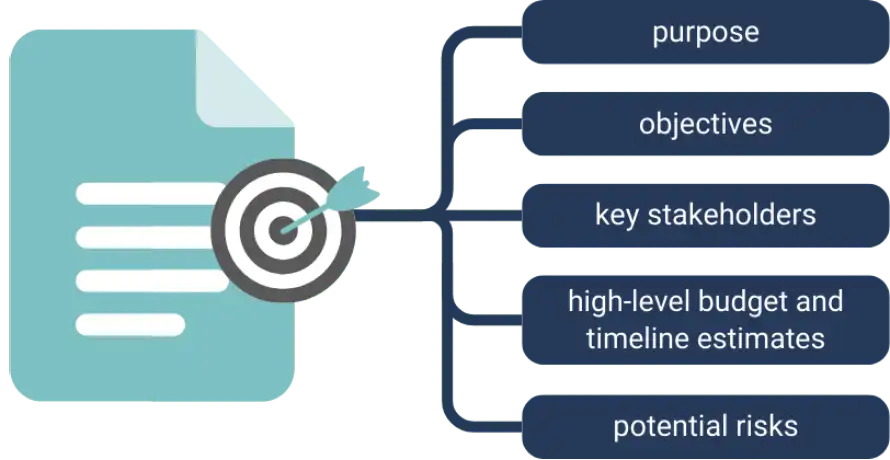
The resistance to changeproject charter, as staff may be reluctant to adopt new methodologies. To overcome this, organisations should communicate the benefits of project management and involve staff in the implementation process. serves as the project’s formal authorisation document. It should include:Another challenge is
| Key Elementsresource constraints | Description. Limited budgets or staff may prevent organisations from adopting comprehensive tools or training programmes. Prioritising key components and implementing changes incrementally can help address this issue. |
|---|---|
| Project purposeFinally, finding the right | Clear statement of the project’s objectivesbalance between rigour and flexibility |
| Scope is critical for effective project management. Too much rigidity can stifle creativity and flexibility, while too little structure can lead to chaos. Organisations should aim for a middle ground, establishing core processes while allowing for adjustments based on the needs of each project. | High-level description of what’s included and excludedBy acknowledging and addressing these challenges, organisations can navigate the transition to effective |
| Timelines | Estimated start and end datesproject management practices |
| Budget and reap the associated benefits. | Initial cost estimatesEnhance your skills with our expert-led courses |
| Key stakeholders | List of individuals or groups with vested interest |
Identifying key stakeholders
Stakeholder identificationSelf-paced is an important part of the successful project. To manage your stakeholders, first make a stakeholder register of all the parties involved and then map out their interests, influence, and impact on the project. Lastly, create a communication strategy for each stakeholder.APM PFQ blended online
When each of these components has been properly considered during the initiation phase, a project manager has set the stage for the rest of the project lifecycle.
2. Project planning£749 +vat
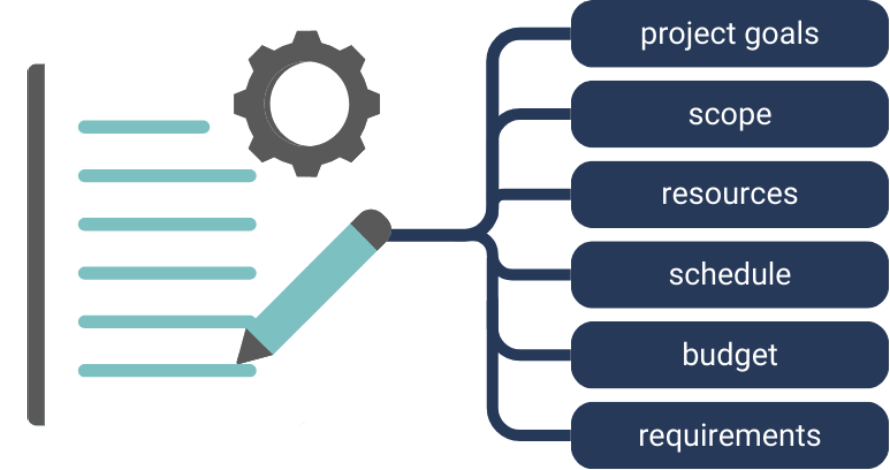
The planning process is vital in ensuring that a project will be successful. It involves the development of a project plan .
The Self-pacedproject planPRINCE2 Agile Practitioner (with Foundation) self-paced online elaborates on the project charter. It includes the following major components: the technical requirements, the work breakdown structure£1,399 +vat (which outlines the work to be performed), the resource management plan, and the schedule for the work and major milestones.

| keholders | Identify all parties involved in communication |
| Frequency | Determine how often updates will be shared |
| Channels | Specify methods of communication (e.g., emails, meetings) |
| Content | Outline what information will be shared |
| Responsibilities | Assign roles for creating and disseminating information |
Risk assessment and mitigation strategies
Successful risk management includes:Project controls – your driver to project success
- Identifying potential risks
- Determining their likelihood and impactKnowledge Train
- Developing mitigation strategies for the highest priority risks19 Feb 2026
- Continuously monitoring and updating the risk assessments throughout the project.
Change management planningProject controls are an essential part of project management. Find out how you can use them to measure project progress, predict outcomes and steer projects on the right course.
Change management planning should include establishing a process for proposing and approving changes to the project scope, schedule, or budget, defining roles and responsibilities in the change management process, establishing criteria for evaluating the impact of proposed changes, and creating a system for documenting and communicating approved changes.
By carefully considering each of these aspects during the planning phase, project managers can set the stage for a successful project execution and delivery.
3. Project execution
This is the stage where planning turns into action. The work must be supervised and managed at this point in time.
Implementing the project plan
Executing the project planWaterfall method involves:
- Delegate tasks to team members based on their skills and availabilityKnowledge Train
- Ensure they have the resources they need to complete their tasks19 Feb 2026
- Track progress against the schedule
- Resolve issues as they occur.Learn about the linear and sequential approach to software development and project management called the waterfall method. The article will detail the steps, pros, and cons of this method.
Managing team workflows
Efficient workflow management is crucial for maintaining productivity. Consider the following strategies:
| Strategy | Description |
|---|---|
| Clear roles | Define responsibilities for each team memberPRINCE2 Agile certification |
| Open communication | Encourage sharing of ideas and concernsSimon Buehring |
| Shared goals19 Feb 2026 | Align team efforts towards common objectives |
| Conflict resolutionConsidering PRINCE2 Agile certification? Discover how it integrates PRINCE2 with Agile concepts to advance your project management skills. | Address disagreements promptly and constructively |
Utilising project management tools
Project management tools can be leveraged to improve execution efficiency. Task management software can be used to track progress and deadlines. Collaboration platforms can centralise communication and file sharing. Time-tracking tools can be implemented to monitor resource allocation and productivity. Reporting dashboards can be utilised to provide real-time project status updates.
By effectively implementing these strategies during the execution phase, project managers can ensure smooth project progression and maintain team momentum towards achieving project goals.
4. Project monitoring and controlling
Monitoring and controlling involves keeping a check on all activities that are being executed to ensure that they are following the project plan.
Tracking progress against goals
Effective progress tracking involves:
- Regularly compare actual performance to planned objectives
- Identify variances and their causesPRINCE2 project context
- Take corrective action to address any deviations from the plan
- Update stakeholders on the project’s status and any major changes.Simon Buehring
Establishing Critical Success Factors (CSF) and Key Performance Indicators (KPI)19 Feb 2026
CSFs and Tailor your PRINCE2 project to the unique context of your organization. Read on to learn how to adapt the methodology for optimal results.KPIs are essential for measuring project success:
| Metric | Description |
|---|---|
| CSFs | High-level goals that must be achieved for project success |
| KPIs | Quantifiable measurements that indicate progress towards CSFsTop 10 project management books |
You can follow these best practices to implement effective progress tracking strategies; first, you must identify CSFs that are aligned with your project goals. Once you have identified CSFs develop KPIs for each CSF that can effectively track the progress towards them and periodically review and update your KPIs as the project progresses.
Managing budget and resourcesSimon Buehring
To manage budget and resources effectively, it is important to track spending against budget, monitor resource allocation to ensure they are being used efficiently, identify potential resource bottlenecks or shortages early on and implement cost-saving measures where necessary.19 Feb 2026
Adjusting plans as necessary
Project plans may need to be adjusted to overcome unforeseen obstacles, to do this effectively, regularly review the project to identify areas that may need to be changed, evaluate the potential impact of proposed changes on the project scope, timeline and budget, communicate any changes to all relevant stakeholders and update project documentation to reflect approved changes.Explore the top 10 project management books recommended by professionals. Find your next read and level up your project management knowledge.
By carefully monitoring and controlling these aspects, project managers can ensure their projects stay on track and adapt to changes as needed.
5. Project closing
Project closing is the phase that formally completes the project . It’s when you finalise project deliverables, review performance, and document learnings for future reference.
Delivering final project outcomes
Final delivery
How often should I conduct project status meetings?
The frequency of project status meetings will vary depending on the complexity and duration of your project. Weekly meetings are the norm, but you can adjust as needed to find a balance between communication and productivity.Request a quote
What are some common project management pitfalls to avoid?
Some common project management mistakes to avoid include inadequate stakeholder communication, poor risk management, setting unrealistic timelines or budgets, lack of clear objectives, and insufficient resource allocation.
To avoid these mistakes, it is important to carefully plan, monitor, and proactively solve problems throughout the project lifecycle.
Infographic
