
PMO best practicesCommon causes
Implementing a PMO involves defining objectives, selecting the right PMO type, securing stakeholder support, setting up governance structures, and continuously reviewing processes. Best practices for successful PMO implementation include:Service ownerScope creep
- Aligning PMO objectives with organisational strategy.Process owner is the uncontrolled expansion of a project’s scope without corresponding adjustments to time, budget, and resources. Common causes of scope creep include ambiguous initial requirements, lack of change control processes, Stakeholder pressure for additional features, and insufficient stakeholder engagement.
- Engaging stakeholders and securing executive sponsorship.Change managerImpact
- Adopting recognised standards and methodologies (such as those from Incident managerScope creep can have several impacts on a project:PMIConfiguration managerIt can increase the project’s duration, require more resources and increase costs).ITIL certification pathwaysIt can lead to delays and missed deadlines
- Investing in PMO tools for tracking, reporting, and collaboration.ITIL certificationIt can cause the project to lose focus and drift away from its original objectives
- Developing competency through PMO certification and staff training. validates It can lead to team burnout and demotivation.
- Emphasising process improvement and ITTo prevent scope creep, it is crucial to have a clear understanding of the project’s objectives and requirements, and to establish change control processes to manage and approve any changes to the project scope.change management professionals’ knowledge of ITIL framework, processes, and practices. Certification is managed globally, often starting with the Budget overruns.ITIL FoundationCommon causes
PMO certification & standards and advancing through more specialised levels.Budget overruns
Professional recognition is available for PMO practitioners through PMO certification programmes. The Project Management Institute (PMI), a leading standards organisation, offers certifications such as the ITIL Foundation occur when the actual cost of a project exceeds the initially allocated budget. Common causes of budget overruns include inaccurate cost estimation, scope changes, unforeseen expenses, and poor resource management.Project Management ProfessionalITIL 4 Specialist: Create, Deliver and SupportImpact (PMP) and Certified Associate in Project Management (CAPM). PMO-specific certifications such as the PMO-CP (PMO Certified Practitioner) are also available.ITIL 4 Specialist: Drive Stakeholder ValuePrevent budget problems by performing a detailed cost analysis and ensuring financial reporting is transparent throughout the project.
CertificationsITIL 4 Strategist: Direct, Plan and ImproveSchedule delays validate competency in project, programme, and portfolio management, enhancing PMO effectiveness and credibility. Learn more about certification options on CertificationsCommon causesPMI.org benefit Schedule delays.careers in IT service management can occur due to a variety of reasons:
PMO in practice, IT strategy, and IT governance, and are aligned with globally recognised standards such as Unrealistic time estimates
- Corporate IT PMO:ISO/IEC 20000Resource unavailability A global retailer established an IT PMO to standardise project methodologies across numerous business units, leading to improved delivery times and enhanced resource management..Dependency conflicts
- Government Programme Office:Benefits of ITILExternal factors (e.g. weather, supplier delays). A government department implemented a controlling PMO to oversee national infrastructure Standardises IT service management across the organisationImpactprogrammesImproves service delivery and qualitySchedule delays can lead to missed deadlines and milestones, increased costs due to prolonged project duration, reduced stakeholder satisfaction and potential loss of competitive advantage.. This supported greater transparency, better risk management, and alignment with public policy objectives.Facilitates continual improvement and efficiencyTo address time-related risks, implement effective project scheduling techniques and regularly monitor project progress.
- Financial services PMO:Reduces IT risks and service outagesResource constraints A bank set up a directive PMO to directly manage regulatory compliance Enhances collaboration between Types of resource risksprojectsITResource risks, centralising project oversight for timely delivery. and other business units can take various forms, such as:
PMO vs. project managerSupports compliance with international standardsSkill shortages
While a Enables measurable value creation for stakeholdersEquipment or material unavailabilityProject ManagerITIL vs other ITSM frameworksInsufficient funding is responsible for the planning, execution, and closure of individual projects, the PMO is a broader organisational entity. The PMO sets standards, provides resources and oversight, and may manage a portfolio of projects. In directive PMOs, the Project Manager may report directly to the PMO itself.Comparison: ITIL, COBIT, and ISO/IEC 20000Limited time availability.
Framework
Scope
Main FocusStrengthsITILIT Service ManagementBest practices, service lifecycle, continual improvement
Comprehensive, widely recognised, flexible
COBIT
IT GovernanceControl, audit, risk management
Alignment of IT with business goals, strong compliance
ISO/IEC 20000
IT Service Management standardCertification, compliance,
quality management
Internationally accredited, structured, measurable
FAQsWhat is ITIL and how does it work?ITIL is a set of best practices and principles for IT service management, helping organisations manage IT services throughout their lifecycle – from strategy to continual improvement – by providing standardised processes and roles.What is meant by ITIL certification?ITIL certification demonstrates an individual’s understanding of ITIL concepts, processes, and practices. It verifies their ability to apply ITIL methods to enhance IT service management within organisations.What are the 5 stages of ITIL?
- Earlier versions of ITIL outlined five stages in the service lifecycle: service strategy, service design, service transition, service operation, and continual service improvement. ITIL 4 introduces a more flexible service value system but retains the focus on continual value delivery.Is ITIL still relevant in 2026?Yes, ITIL remains highly relevant, especially with updates in ITIL 4 addressing digital transformation, cloud computing, agile
- , and DevOps
- methodologies to help organisations modernise their ITSM practices.How does ITIL compare to COBIT or ISO/IEC 20000?
- Project:ITIL offers best practices for ITSM, COBIT focuses on Oversee the successful execution of initiatives aligned with strategy.ITClear communication with stakeholders
What are the different types of PMOs? governance and control, while ISO/IEC 20000 is an international certification standard for IT service management. Many organisations use ITIL alongside COBIT or ISO/IEC 20000 for a holistic approach.Robust change management processes
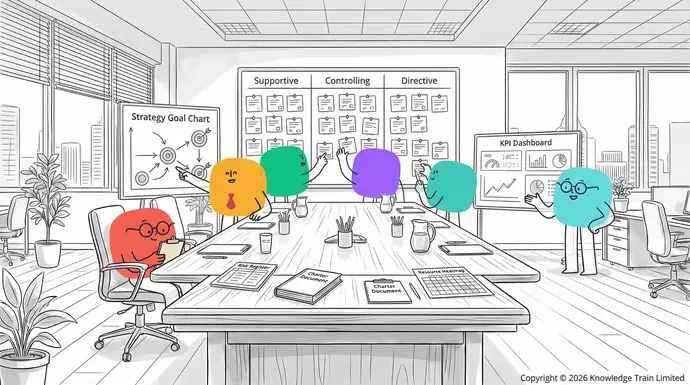
The three main types of References & Further ReadingContinuous monitoring and adaptation.PMOsPeopleCert ITIL overviewKeep in mind that effective risk management is an ongoing process that needs careful monitoring and flexibility throughout the project. If you plan and work for these common risks, you will be able to increase the probability of success in your project. are:ITIL article (Wikipedia)Risk management process
- Supportive PMO:ISO/IEC 20000 standardRisk identification Provides templates, best practices, and guidance to Project Managers.ISACA COBIT resourcesThe first step in risk management is to identify potential risks that could impact your project. Some common techniques include:
- Controlling PMO:Subscribe to our exclusive offers and promotionsBrainstorming with team members Enforces standards, methodologies, and reporting requirements. Reviewing historical information from similar
- Directive PMO:Subscribe nowprojects Takes direct ownership of Conducting stakeholder interviewsproject deliveryAnalysing project documentation. and management. Create a
Each type varies in authority and responsibility, depending on organisational needs and project complexity.{"@context":"https://schema.org","@type":"WebPage","name":"What is ITIL? Definition, Framework, and Key Principles [2024]","url":"https://www.knowledgetrain.co.uk/it/itil","description":"Learn what ITIL is, how it supports IT Service Management, ITIL 4 updates, core processes, benefits, certification pathways, and comparisons to other frameworks.","significantLink":"https://www.axelos.com/best-practice-solutions/itil","mainEntity":[{"@type":"Article","headline":"What is ITIL? Definition, Framework, and Principles","about":[{"@type":"DefinedTerm","name":"ITIL","sameAs":["https://en.wikipedia.org/wiki/ITIL","https://www.google.com/search?&kgmid=/m/089g82","https://www.wikidata.org/wiki/Q194196"]},{"@type":"DefinedTerm","name":"IT Service Management","sameAs":["https://en.wikipedia.org/wiki/IT_service_management","https://www.google.com/search?&kgmid=/m/04y49qw","https://www.wikidata.org/wiki/Q605259"]}],"mentions":[{"@type":"DefinedTerm","name":"Information Technology Infrastructure Library","sameAs":["https://en.wikipedia.org/wiki/ITIL","https://www.google.com/search?&kgmid=/m/089g82","https://www.wikidata.org/wiki/Q194196"]},{"@type":"DefinedTerm","name":"Axelos","sameAs":["https://en.wikipedia.org/wiki/Axelos","https://www.google.com/search?&kgmid=/m/01368z1k","https://www.wikidata.org/wiki/Q17012409"]},{"@type":"DefinedTerm","name":"ITSM","sameAs":["https://en.wikipedia.org/wiki/IT_service_management","https://www.google.com/search?&kgmid=/m/04y49qw","https://www.wikidata.org/wiki/Q605259"]},{"@type":"DefinedTerm","name":"Best practices","sameAs":["https://en.wikipedia.org/wiki/Best_practice","https://www.google.com/search?&kgmid=/m/015b0g","https://www.wikidata.org/wiki/Q83481"]},{"@type":"DefinedTerm","name":"Framework","sameAs":["https://en.wikipedia.org/wiki/Framework","https://www.google.com/search?&kgmid=/m/02phhy","https://www.wikidata.org/wiki/Q191307"]},{"@type":"DefinedTerm","name":"ITIL 4","sameAs":["https://www.axelos.com/best-practice-solutions/itil/what-is-itil-4","https://www.wikidata.org/wiki/Q105691011"]},{"@type":"DefinedTerm","name":"ITIL certification","sameAs":["https://www.axelos.com/certifications/itil-certifications/itil-4-certifications","https://www.wikidata.org/wiki/Q62754744"]},{"@type":"DefinedTerm","name":"Processes","sameAs":["https://en.wikipedia.org/wiki/Business_process","https://www.google.com/search?&kgmid=/m/0f7_f","https://www.wikidata.org/wiki/Q570854"]},{"@type":"DefinedTerm","name":"Service lifecycle","sameAs":["https://en.wikipedia.org/wiki/Product_lifecycle_management","https://www.wikidata.org/wiki/Q264168"]},{"@type":"DefinedTerm","name":"Service value system","sameAs":["https://www.axelos.com/resource-hub/blog/serving-up-the-service-value-system/","https://www.wikidata.org/wiki/Q105691173"]},{"@type":"DefinedTerm","name":"Continual improvement","sameAs":["https://en.wikipedia.org/wiki/Continuous_improvement_process","https://www.google.com/search?&kgmid=/m/02vxn","https://www.wikidata.org/wiki/Q1702811"]},{"@type":"DefinedTerm","name":"Change management","sameAs":["https://en.wikipedia.org/wiki/Change_management","https://www.google.com/search?&kgmid=/m/0l8yv","https://www.wikidata.org/wiki/Q1189288"]},{"@type":"DefinedTerm","name":"Incident management","sameAs":["https://en.wikipedia.org/wiki/Incident_management_(ITSM)","https://www.google.com/search?&kgmid=/g/11c4_dj1zr","https://www.wikidata.org/wiki/Q11776337"]},{"@type":"DefinedTerm","name":"Problem management","sameAs":["https://en.wikipedia.org/wiki/Problem_management","https://www.google.com/search?&kgmid=/g/11gmwxjnlm","https://www.wikidata.org/wiki/Q17012646"]},{"@type":"DefinedTerm","name":"Service desk","sameAs":["https://en.wikipedia.org/wiki/Help_desk","https://www.google.com/search?&kgmid=/m/02233k","https://www.wikidata.org/wiki/Q744005"]},{"@type":"DefinedTerm","name":"Configuration management","sameAs":["https://en.wikipedia.org/wiki/Configuration_management","https://www.google.com/search?&kgmid=/m/01jq_6","https://www.wikidata.org/wiki/Q672828"]},{"@type":"DefinedTerm","name":"ISO/IEC 20000","sameAs":["https://en.wikipedia.org/wiki/ISO/IEC_20000","https://www.google.com/search?&kgmid=/m/0g8wpgj","https://www.wikidata.org/wiki/Q1141094"]},{"@type":"DefinedTerm","name":"COBIT","sameAs":["https://en.wikipedia.org/wiki/COBIT","https://www.google.com/search?&kgmid=/m/06y1b6","https://www.wikidata.org/wiki/Q1137992"]},{"@type":"DefinedTerm","name":"Value streams","sameAs":["https://en.wikipedia.org/wiki/Value_stream","https://www.google.com/search?&kgmid=/m/05h3t4","https://www.wikidata.org/wiki/Q17020946"]},{"@type":"DefinedTerm","name":"IT governance","sameAs":["https://en.wikipedia.org/wiki/IT_governance","https://www.google.com/search?&kgmid=/m/04w713","https://www.wikidata.org/wiki/Q604560"]},{"@type":"DefinedTerm","name":"Roles and responsibilities","sameAs":["https://en.wikipedia.org/wiki/Responsibility_assignment_matrix","https://www.google.com/search?&kgmid=/m/04pd2d","https://www.wikidata.org/wiki/Q1861482"]},{"@type":"DefinedTerm","name":"ITIL Foundation","sameAs":["https://www.axelos.com/certifications/itil-certifications/itil-4-certifications/itil-4-foundation-certificate-in-it-service-management","https://www.wikidata.org/wiki/Q11775916"]},{"@type":"DefinedTerm","name":"IT strategy","sameAs":["https://en.wikipedia.org/wiki/Information_technology","https://www.google.com/search?&kgmid=/m/03scnj","https://www.wikidata.org/wiki/Q11661"]}]},{"@type":"FAQPage","mainEntity":[{"@type":"Question","name":"What is ITIL and how does it work?","acceptedAnswer":{"@type":"Answer","text":"ITIL is a set of best practices and principles for IT service management, helping organisations manage IT services throughout their lifecycle by providing standardised processes, practices, and roles."}},{"@type":"Question","name":"What is meant by ITIL certification?","acceptedAnswer":{"@type":"Answer","text":"ITIL certification demonstrates an individual's knowledge of the ITIL framework and their ability to implement ITSM best practices, supporting career progression in IT service roles."}},{"@type":"Question","name":"What are the 5 stages of ITIL?","acceptedAnswer":{"@type":"Answer","text":"The five stages in earlier ITIL versions were service strategy, service design, service transition, service operation, and continual service improvement. ITIL 4 takes a more flexible, value-driven approach."}},{"@type":"Question","name":"Is ITIL still relevant in 2024?","acceptedAnswer":{"@type":"Answer","text":"Yes, ITIL remains essential for ITSM, evolving with ITIL 4 to address agile, digital transformation, and modern business needs."}},{"@type":"Question","name":"How does ITIL compare to COBIT or ISO/IEC 20000?","acceptedAnswer":{"@type":"Answer","text":"ITIL focuses on ITSM best practices, COBIT on IT governance and controls, while ISO/IEC 20000 is a certifiable standard. They can be used separately or together for comprehensive IT management."}}]}]}risk register
What does a PMO do? to document all identified risks.
A Related articlesRisk assessment and prioritisationPMO After identifying risks, assess their potential impact and likelihood of occurrence. Tools you can use include: establishes and maintains project management standards across the organisation. It supports Risk matrixProject Managers : Plot risks on a chart based on their probability and impact, ensures project governance, and aligns initiatives with business goals. The PMO often oversees project portfolios to prioritise strategic investments and optimise resource use. Quantitative analysis
What does PMO stand for?
What is cybersecurity? Types, threats and best practices Knowledge Train