What is a Project Management Office (PMO)?

Key takeawaysUnderstanding projects and programmes
A PMO improves delivery by combining governance, support, and portfolio visibility.
- A PMO sets standards and decision controls so projects stay aligned to business strategy and risk is managed early.Key differences
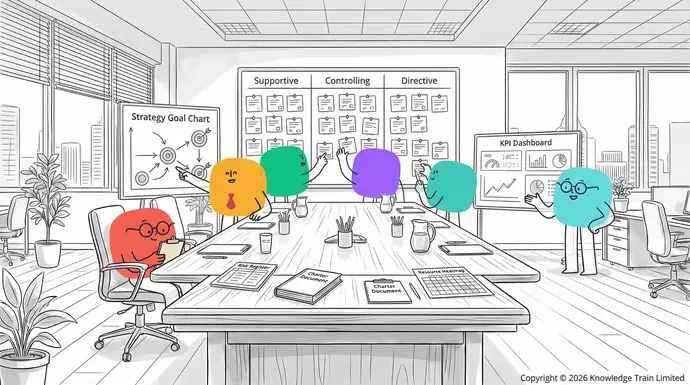
- Supportive, controlling, and directive PMOs differ mainly by authority, from guidance to direct ownership of delivery outcomes.
- Useful PMOs prioritise the portfolio using transparent criteria, balancing value, risk, and capacity constraints.Roles and responsibilities
- Dashboards work best when paired with short narrative context that explains variance and prompts clear decisions.
- Start with a clear charter and quick wins, then scale tools, training, and templates through continuous improvement.Tools and methodologies
PMO definitionCharacteristics of programmes
A Project Management Office (PMO) is an organisational structure that defines and maintains project management standards, supports project teams, and ensures alignment with business objectives. PMOs play a crucial role in enabling successful project, programme and Multiple projectsportfolio management: Programmes involve the coordinated management of several interrelated projects by offering governance, methodology, resource management and oversight.Longer duration
The concept of a PMO has evolved as organisations recognise the need for a dedicated group to enhance consistency, optimise resources, and improve : Programmes typically last several years or may be ongoingproject deliveryStrategic focus outcomes. PMOs may operate at the project, programme, or portfolio level and are commonly found in sectors such as : Programmes are aligned with the organisation’s goalsITEvolving nature, government, construction, and finance.: Programmes adapt to changing business needs.
PMO functions and rolesProgramme objectives and strategic alignment
PMOs perform a wide range of functions, adapting their roles according to organisational needs. The main functions and roles typically include:Programmes focus on realising
- Governance:strategic benefits Establishing frameworks, processes and controls for effective decision-making and for the organisation. They are concerned with creating value and supporting business objectives. Key aspects of programmes include:risk managementValue creation across the project lifecycle.: Delivering outcomes that contribute to the organisation’s strategic goals
- Standardisation:Change management Implementing and maintaining : Facilitating organisational transformations and initiativesproject management methodologiesStakeholder engagement, best practices, and standards.: Managing complex relationships across multiple projects
- Support:Risk mitigation Providing guidance, templates, tools, training and mentoring for Project Managers and teams.: Addressing broader and long-term risks.
- Methodology Enforcement:Programme managers are responsible for ensuring that individual projects within the programme contribute to the overall strategic objectives. They maintain flexibility to adapt to changing business environments while maximising benefits realisation. Ensuring consistent application of In conclusion, understanding the distinctions between projects and programmes is critical for effective management and organisational success. By recognising the differences in scope, objectives, and management approaches, organisations can better allocate resources, manage stakeholders, and navigate the complexities of the modern business landscape.project management approachesKey differences between project and programme management for delivery excellence.It is of crucial importance for the representatives of organisational leadership to have a good awareness of key difference between project and programme management, which will be further elaborated by focusing on five areas.
- Resource Management:Scope and focus Coordinating allocation and utilisation of project personnel, tools, and budgets.Project management
- Portfolio ManagementProject management is defined by the creation of :specific deliverables Overseeing and prioritising within a defined scope and set of constraints. The emphasis is placed on achieving measurable objectives, completing tasks efficiently, and producing tangible results.projectsProject managers to align with strategic objectives and maximise value. are focused on delivering according to predetermined quality standards while optimising resource use.
- Process Improvement:Programme management Reviewing and refining Programme management, on the other hand, has a wider perspective and is oriented towards project deliverylong-term value processes to ensure continuous improvement. creation. Aspects such as aligning multiple projects with organisational strategy, maximising benefits across interrelated initiatives, and adapting to changing business needs are central to programme management.
- Stakeholder Engagement:Programme managers focus on the overall outcomes and results that align with strategic objectives. Acting as an interface between project teams, senior management, and other stakeholders.Time frame and duration
- Change ManagementProjects:Projects are Supporting change initiatives and minimising resistance through structured strategies.time-bound activities
Types of PMOs. They typically have fixed start and end dates and a defined project lifecycle. Milestones and deadlines are established to track progress, and projects are often closed once the deliverables are completed.
PMOs are not one-size-fits-all. Their structure, authority and level of influence can vary significantly. The three primary PMO types are:Project managers are primarily concerned with adhering to the schedule and delivering on time.
- Supportive PMO:Programmes Provides consultative services, best practices, templates, and guidance. Has low control and operates as a resource for Project Managers.Programmes
- Controlling PMO:, in contrast, can span Requires compliance with longer timeframesproject management. They often have more fluid timelines that can adapt to shifts in strategy and priorities. Evaluation and adjustment are ongoing processes, and programmes may continue for as long as they are delivering benefits. standards and methodologies. Has moderate control—enforces processes and reviews adherence.Programme managers have a long-term perspective and balance short-term project requirements with future opportunities.
- Directive PMO:Stakeholder management Directly manages projects and assigns Project Managers. Exercises high control and is responsible for Project levelproject deliveryProject stakeholder management is a and outcomes.targeted approach
Organisations may adapt their PMO model based on size, maturity, and strategic needs. A PMO may evolve from supportive to controlling or directive as project management capability matures. that focuses on individuals or groups directly impacted by the project. This includes managing expectations within the project’s scope and ensuring communication of project-specific information.
PMO best practicesProject managers build and maintain relationships critical to the project’s immediate success.
Implementing a PMO involves defining objectives, selecting the right PMO type, securing stakeholder support, setting up governance structures, and continuously reviewing processes. Best practices for successful PMO implementation include:Programme level
- Aligning PMO objectives with organisational strategy.Programme stakeholder management is a
- Engaging stakeholders and securing executive sponsorship.broader approach
- Adopting recognised standards and methodologies (such as those from that involves engaging a wider range of stakeholders across multiple projects within a programme. Balancing the conflicting interests and priorities of these stakeholders and fostering long-term relationships beyond the lifecycle of individual projects is a key aspect of programme stakeholder management.PMIProgramme managers navigate complex stakeholder networks to maintain support for the programme.).Risk management
- Investing in PMO tools for tracking, reporting, and collaboration.Project risks
- Developing competency through PMO certification and staff training.Project risk management
- Emphasising process improvement and centres on change managementspecific risks. and opportunities associated with a project. This includes identifying risks within the project’s scope, developing risk response strategies for known risks, and continuously monitoring and controlling risk impacts on project objectives.
PMO certification & standardsProject managers aim to minimise uncertainty and potential threats to project outcomes.
Professional recognition is available for PMO practitioners through PMO certification programmes. The Project Management Institute (PMI), a leading standards organisation, offers certifications such as the Programme risksProject Management ProfessionalProgramme risk management takes a (PMP) and Certified Associate in Project Management (CAPM). PMO-specific certifications such as the PMO-CP (PMO Certified Practitioner) are also available.broader perspective
Certifications and considers the interconnected risks across multiple projects. This involves managing strategic risks that can impact organisational goals and adapting to emerging risks and opportunities that arise during the programme’s lifecycle. validate competency in project, programme, and portfolio management, enhancing PMO effectiveness and credibility. Learn more about certification options on Programme managers have a holistic view of risk and consider its implications on the entire programme.PMI.orgChange management.Projects
PMO in practiceChange management within projects is often focused on
- Corporate IT PMO:minimising disruptions A global retailer established an IT PMO to standardise project methodologies across numerous business units, leading to improved delivery times and enhanced resource management. and changes to the project’s scope and plan. The goal is to maintain stability and adhere to the defined project constraints and objectives.
- Government Programme Office:Project managers often implement strict change control procedures to prevent scope creep and stay on track. A government department implemented a controlling PMO to oversee national infrastructure ProgrammesprogrammesChange management within programmes, on the other hand, is more . This supported greater transparency, better risk management, and alignment with public policy objectives.adaptive and flexible
- Financial services PMO:. Programmes embrace change as an opportunity for improvement and benefit maximisation. Programme managers may encourage adaptive responses to shifting priorities, realign A bank set up a directive PMO to directly manage regulatory compliance projectsprojects to capitalise on new opportunities, and continuously optimise the programme’s outcomes., centralising project oversight for timely delivery.Programme managers leverage change to drive value creation across the programme.
PMO vs. project managerUnderstanding these core differences allows organisations to take full advantage of both project and programme management.
While a Enhance your skills with our expert-led coursesProject Manager is responsible for the planning, execution, and closure of individual projects, the PMO is a broader organisational entity. The PMO sets standards, provides resources and oversight, and may manage a portfolio of projects. In directive PMOs, the Project Manager may report directly to the PMO itself.
FAQs
Project and programme managers play pivotal roles in the success of organisational initiatives. This section provides an overview of their key responsibilities, the essential skills they should possess, and the dynamics of their are People, Product, Process, and Project:
What are the different types of PMOs?Analytical and problem-solving capabilities
The three main types of Monitoring progress and ensuring timely completionPMOsTime management and organisational proficiency are:Managing project risks and issues
- Supportive PMO:Technical knowledge relevant to the project domain. Provides templates, best practices, and guidance to Project Managers.Communicating with stakeholders.
- Controlling PMO:Programme manager Enforces standards, methodologies, and reporting requirements.Key responsibilities
- Directive PMO:Skills and competencies Takes direct ownership of Aligning programme objectives with organisational strategyproject deliveryVision and strategic thinking and management.Overseeing multiple project managers and their projects
Each type varies in authority and responsibility, depending on organisational needs and project complexity.Change management expertise
What does a PMO do?Managing interdependencies between projects
A Advanced stakeholder management skillsPMOEnsuring overall programme benefits realisation establishes and maintains project management standards across the organisation. It supports Financial acumen and budget oversightProject ManagersAdapting the programme to changing business needs, ensures project governance, and aligns initiatives with business goals. The PMO often oversees project portfolios to prioritise strategic investments and optimise resource use.Risk management
What does PMO stand for? across multiple projects
PMOEngaging with senior stakeholders and executives. stands for Leadership in complex, ambiguous environments.Project Management OfficeHow project and programme managers work together. It is an organisational function responsible for standardising governance processes, sharing methodologies, Project and programme managers collaborate in various ways to drive organisational success. Key aspects of their interaction include:toolsClear communication, and : Both roles exchange regular updates and information.techniquesAligned objectives, and improving overall project success.: Project goals support and align with the programme’s desired outcomes.
A PMO may vary in size—from a single individual to an enterprise-wide team—but its purpose remains the same: to improve project performance and ensure alignment with Resource optimisationbusiness strategy: They coordinate resource allocation across projects for efficiency..Risk mitigation
What is the difference between a PMO and a Project Manager?: Potential cross-project risks are identified and addressed collaboratively.
The difference between a Change managementPMO: Adaptations are made to changes in programme strategy. and a Stakeholder engagementProject Manager: Communication at different levels is coordinated. lies in scope and responsibility. A Project Manager delivers specific Working in unison, project and programme managers create synergy that elevates the organisation’s overall performance.projectsTools and methodologies, managing budgets, timelines, and teams. The PMO, however, provides governance, guidance, and support to multiple projects, ensuring consistency and strategic alignment across the organisation.Project and programme management often require specialised tools and methodologies to succeed. This section highlights some of the most prominent tools and techniques used in both fields, including approaches like
What is the purpose of a PMO?Agile
The primary purpose of a and PMODevOps is to introduce structure, consistency, and strategic alignment to project management practices. By standardising processes and methodologies, a PMO helps organisations improve project success rates and realise greater value from project investments..
For further readingProject management tools and techniques
For official standards and frameworks, visit Project managers have a wide array of PMI.orgtools and techniques for comprehensive PMO and project management guidance. to guide them through the stages of project management. These include: