What is business analysis?

Key takeaways
Business analysis turns business needs into clear requirements and evidence-based decisions.Scrum framework
- Business analysis aligns strategic goals with delivery by bridging stakeholders and technical teams.
- Clear requirements and validation reduce project risk and improve solution fit, cost and feasibility.Simon Buehring
- Techniques like SWOT, gap analysis, process modelling and data analysis expose opportunities and bottlenecks.19 Feb 2026
- Embedding analysis in governance strengthens planning, transparency and measurable outcomes.
- Rigour can be maintained alongside speed by using consistent standards, templates and lightweight frameworks.Explore the 6 essential principles of the Scrum framework that guide successful projects. Scroll down for an in-depth look.
- Creating clear business and technical requirements using various formats (e.g., user stories , use cases)
- Gap analysis and feasibility studies: Assessing current and desired future states to highlight improvements and evaluate solution viability
- Stakeholder engagement: Communicating with diverse stakeholders to ensure requirements are validated and aligned
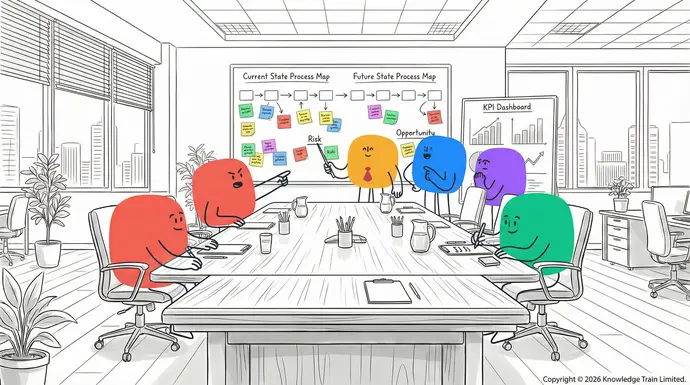
- Process mapping and business process modelling : Visualising workflows for process improvement opportunities
- Solution assessment and validation: Reviewing proposals to ensure solutions address documented requirements and deliver value
- Change management :Give us a call Supporting the transition of solutions into the business and managing effects on people and processes
Main business analysis processes
| Process+44 (0)207 148 5985 | Description |
|---|---|
| Requirements elicitationOr chat with us using the link at the bottom of the screen. | Gathering information from stakeholders using interviews, workshops, observation, and document analysisContact us with questions about the courses on this page, or about which project management certification or training is best for you. |
| Requirements documentationFinance FAQs | Capturing business and technical requirements in written formats, such as Contactuser storiesCookies, use cases, or requirement specificationsPrivacy |
| Requirements validationTerms | Ensuring requirements are accurate, feasible, and aligned with business goalsCustomer Support |
| Stakeholder engagement | Building relationships with all parties affected by the change to ensure their needs are met[email protected] |
| Process improvementJoin Our Team | Analysing existing workflows and recommending enhancements for efficiency |
| Solution assessment[email protected] | Evaluating potential solutions against requirements Copyright © 2005-2026 Knowledge Train Limited. |
| Change management Registered in UK: 5566983. | Supporting successful adoption of new processes or systems Registered VAT: GB872413526. |
Common business analysis techniques Knowledge Train
- SWOT analysis®: is a registered trademark of Knowledge Train Limited. Identifying strengths, weaknesses, opportunities, and threats related to a business area or solution 20 Old Bailey, London, EC4M 7AN, England, United Kingdom.
- Gap analysis: Knowledge Train are experts in project management, PRINCE2, agile and change management training and certification. Choose from a full range of instructor-led and self-paced Comparing current and target states to identify improvement areasproject management courses
- Use case modelling:, a Mapping user interactions with systems to define requirementsPRINCE2 course
- Business process modelling:, or an Creating diagrams (such as BPMN) to visualise business processesagile project management course
- Stakeholder analysis: to boost your career. Identifying stakeholder interests, influence, and engagement needsPRINCE2
- User stories®:, MSP Documenting concise functional requirements, typically in Agile projects®
- Feasibility study:, ITIL Analysing proposed solutions for practicality and viability®
- Data analysis:, P3O Using quantitative and qualitative data to inform decision-making®
Business analysis tools and methodologies, PRINCE2
Key tools®
- Requirements management software (for example, Jira, Confluence, or Azure Agile, RESILIADevOps®), and the Swirl logo are registered trademarks of the PeopleCert group. Used under licence from PeopleCert. All rights reserved. AgilePM
- Process mapping tools (such as Visio, Lucidchart)®
- Mind mapping and collaboration software and AgileBA
- Data analysis tools (for example, Excel, Power BI)®
Methodologies are registered trademarks of Agile Business Consortium Limited. All rights reserved. The APMG International AgilePM and Swirl Device logo, APMG International AgileBA and Swirl Device Logo, APMG International Change Management and APMG International Better Business Cases and Swirl Device logo are trademarks of The APM Group Limited, used under permission of The APM Group Limited. All rights reserved. Better Business Cases™ is a trademark of Her Majesty’s Treasury. All rights reserved. DevOps Foundation
- BABOK (Business Analysis Body of Knowledge):® The leading global standard published by is a registered mark of the DevOps Institute. “PMI”, “PMBOKIIBA®, outlining best practices and techniques for business analysis Guide”, “PMP” and “CAPM” are registered marks of Project Management Institute, Inc. Knowledge Train Scrum Essentials™, Business Learning Library (BLL)™, Business Analysis Learning Library (BALL)™, Agile Learning Library (ALL)™, IT Learning Library (ITLL)™, and Compliance Learning Library (CLL)™ are trademarks of Knowledge Train Limited. All rights reserved.
- AgileKnowledge Train Ltd is an Introducer Appointed Representative of NewDay Cards Ltd for the Newpay finance product provided by NewDay Ltd. NewDay Cards Ltd acts as a credit broker, not a lender. We will introduce you exclusively to Newpay finance products provided by NewDay Limited under this Introducer Appointed Representative arrangement. Finance available from other lenders is not covered by this arrangement. NewDay Ltd and Newday Cards Ltd are authorised and regulated by the Financial Conduct Authority (ref nos 690292 and 682417 respectively).: An iterative methodology focusing on flexibility, frequent delivery, and collaboration (often using user stories)
- Waterfall methodology : A linear, phased project approach suitable for well-defined requirements
Choosing the right methodology depends on project size, risk, stakeholder needs, and desired adaptability.Search
Essential skills and competencies for business analysts
- Analytical and critical thinking
- Effective communication and stakeholder engagement
- Attention to detail in requirements documentation
- Problem-solving and solution assessment
- Knowledge of business and technical requirements
- Proficiency in process improvement and data analysis
Certification and career progression
BCS Request a quote offers globally recognised certifications, such as Business Analysis Foundation , International Diploma in Business Analysis , Practitioner certificates in Requirements Engineering , Modelling Business ProcessesManage Consent, and Business Analysis PracticesTo provide the best experiences, we use technologies like cookies to store and/or access device information. Consenting to these technologies will allow us to process data such as browsing behavior or unique IDs on this site. Not consenting or withdrawing consent, may adversely affect certain features and functions..
The International Institute of Business Analysis (IIBA) offers globally recognised certifications, such as ECBA, CCBA, and CBAP, based on the BABOK GuideFunctional. Certifications demonstrate expertise in requirements elicitation, stakeholder management, and business analysis best practices. Aspiring business analysts may also pursue project management or Functionalchange management qualifications to support broader career progression. Always active
FAQsThe technical storage or access is strictly necessary for the legitimate purpose of enabling the use of a specific service explicitly requested by the subscriber or user, or for the sole purpose of carrying out the transmission of a communication over an electronic communications network.
What is business analysis?
Business analysis is the systematic investigation and evaluation of business needs to recommend solutions that achieve organisational objectives. It includes requirements gathering, stakeholder engagement, and process optimisation.
What does a business analyst do?
A business analyst identifies business problems, elicits requirements, engages stakeholders, and ensures that proposed solutions align with business goals. They act as a bridge between business and IT functions.
What are the key techniques in business analysis?Preferences
Common business analysis techniques include SWOT analysisPreferences, gap analysis, requirements elicitation, process mapping, use case modelling, and stakeholder analysis.
What are the main types of requirements in business analysis?
Business analysts work with business requirements (organisational goals), stakeholder requirements , and technical requirementsThe technical storage or access is necessary for the legitimate purpose of storing preferences that are not requested by the subscriber or user. (system or IT needs).
What is the BABOK?
BABOK refers to the Business Analysis Body of Knowledge, a globally-accepted standard containing best practices, techniques, and competencies for business analysis, maintained by IIBA.
What qualifications or certification should a business analyst have?
Common Statisticscertifications include BCS’s Business Analysis Foundation certificate, International Diploma in Business Analysis , and Practitioner certificates in Business Analysis Practices, Requirements Engineering, and Modelling Business Processes.Statistics
In addition, there are IIBA’s ECBA, CCBA, and CBAP, which validate knowledge of BABOK and proficiency in requirements elicitation, stakeholder engagement, and process improvement.
How does business analysis differ from project management?
Business analysis focuses on defining requirements and recommending solutions, while project management is concerned with planning, executing, and delivering projects within scope, time, and budget constraints.