What is business analysis?Supportive PMO:

Key takeaways.
Business analysis turns business needs into clear requirements and evidence-based decisions.What is the difference between a PMO and a Project Manager?
- Business analysis aligns strategic goals with delivery by bridging stakeholders and technical teams.The difference between a
- Clear requirements and validation reduce project risk and improve solution fit, cost and feasibility.PMO
- Techniques like SWOT, gap analysis, process modelling and data analysis expose opportunities and bottlenecks. and a
- Embedding analysis in governance strengthens planning, transparency and measurable outcomes.Project Manager
- Rigour can be maintained alongside speed by using consistent standards, templates and lightweight frameworks. lies in scope and responsibility. A Project Manager delivers specific
Ensure the right deliverables reach the right stakeholders.
- >Requirements elicitation:<li> Facilitating workshops, interviews, and surveys to gather needs from stakeholders<
- strong>Project:Requirements documentation:> Oversee the successful execution of initiatives aligned with strategy. Creating clear business and technical requirements using various formats (e.g., >user stories>"}},{"@type":"Question","name":"What are the different types of PMOs?","acceptedAnswer":{"@type":"Answer","text":", use cases)<
- p>The three main types of PMOs are:Gap analysis and feasibility studies:> Assessing current and desired future states to highlight improvements and evaluate solution viability<
- ul>Stakeholder engagement:<li> Communicating with diverse stakeholders to ensure requirements are validated and aligned<
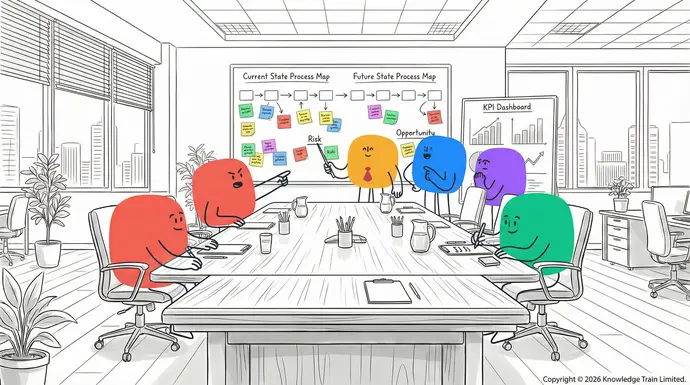
- strong>Supportive PMO:Process mapping and > Provides templates, best practices, and guidance to Project Managers.business process modelling>:<li> Visualising workflows for process improvement opportunities<
- strong>Controlling PMO:Solution assessment and validation:> Enforces standards, methodologies, and reporting requirements. Reviewing proposals to ensure solutions address documented >requirements<li> and deliver value<
- strong>Directive PMO:Change management> Takes direct ownership of project delivery and management.:> Supporting the transition of solutions into the business and managing effects on people and processes
>Main business analysis processes<
, and 28 Apr 2026technical requirements (system or IT needs).Understand the costs of PRINCE2 Agile courses and what to expect beyond the course fee. Read on to plan your budget effectively.
What is the BABOK?
BABOK refers to the Business Analysis Body of Knowledge, a globally-accepted standard containing best practices, techniques, and competencies for business analysis, maintained by IIBA.
What qualifications or certification should a business analyst have?
Common certifications include BCS’s Business Analysis Foundation certificate, International Diploma in Business Analysis , and Practitioner certificates in Business Analysis Practices, Requirements Engineering, and Modelling Business Processes.WBS – Work Breakdown Structure
In addition, there are IIBA’s ECBA, CCBA, and CBAP, which validate knowledge of BABOK and proficiency in requirements elicitation, stakeholder engagement, and process improvement.
How does business analysis differ from project management?Knowledge Train
Business analysis focuses on defining requirements and recommending solutions, while 19 Feb 2026project management is concerned with planning, executing, and If you want to ensure that your project is managed successfully, then you need to be sure to use the Work Breakdown Structure. Read this guide to learn more about this valuable tool and how you can use it.delivering projects within scope, time, and budget constraints.